


First-Time Safari: Your Pre-Trip Anxiety Guide (Nothing to Fear)
Booking your first safari comes with questions most people won't voice: Will I be safe? What if I need a wee? Will a lion eat me? This guide answers the some of the common questions we get from first time safari goers with honest, practical reassurance. Because these concerns are normal, and the answers are usually better than you're imagining.
If you're booking your first safari and you have questions like 'What if an animal charges?' or 'What if I get sick?' or 'What if I need a wee?' or 'What if I'm actually terrified the whole time?' — this post is for you. Because those questions are totally normal, very common (even if people aren’t asking them outright) and the answers are probably not what you're imagining.
The Questions Nobody Wants to Ask (But Everyone Thinks About)
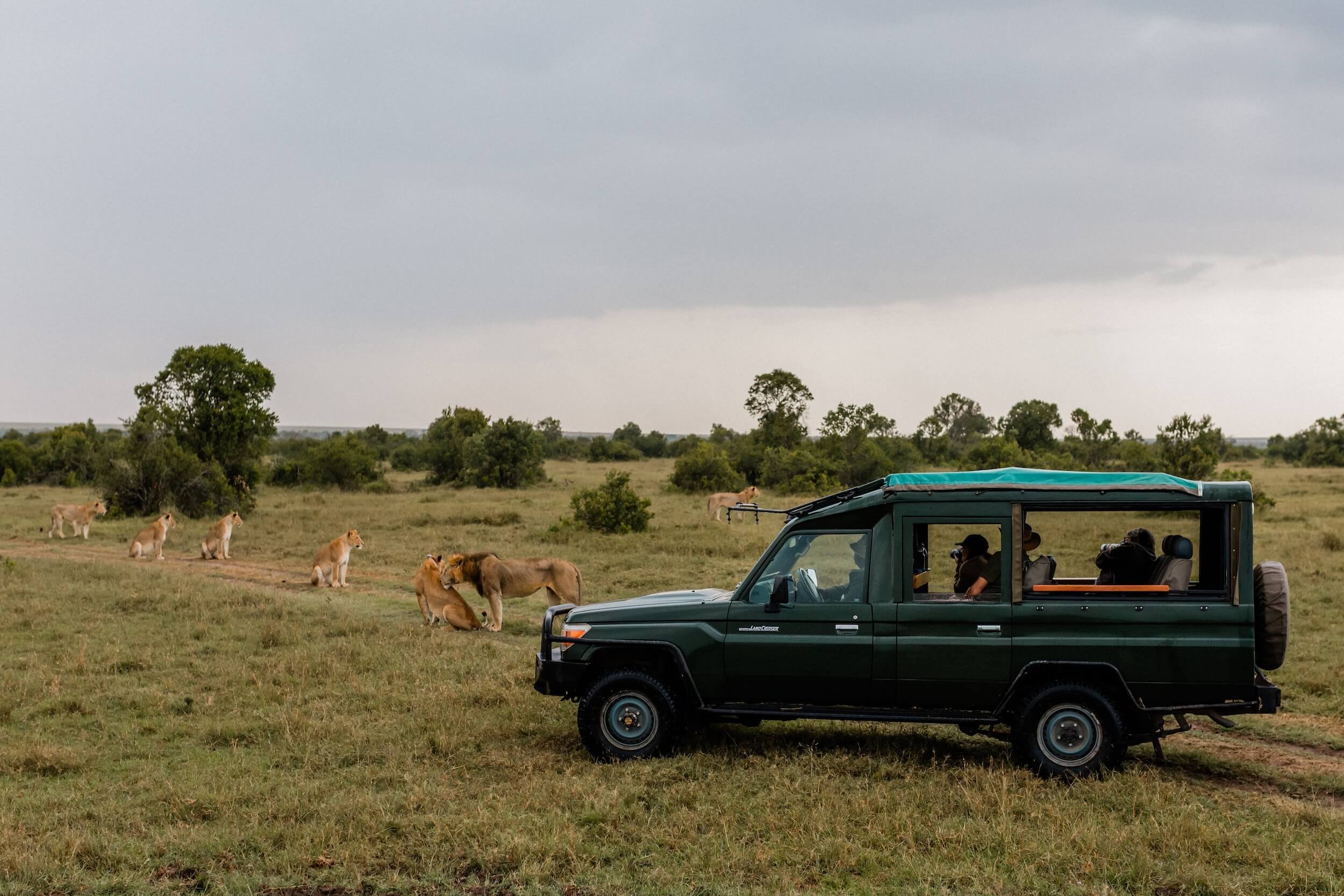
What if a lion attacks the vehicle?
Lions in Kenyan parks and conservancies almost never attack vehicles unless they are aggressively provoked. In fact in some places lions are incredibly comfortably with vehicles and even use them for shade! That’s because lions don't see a vehicle full of people as prey — they see you as a whole obstacle, like a rock.
If you’re travelling with an ethical safari operator (and we very much hope you are) your guide will tell you to keep your limbs in the vehicle at lion sightings, not to sit on the roof and not to make loud disruptive noises around lions. This is so that they continue to see the vehicle as one unit, rather than a lot of gawking people.
In the wild, the general rule is “leave the wildlife alone and it will leave you alone.”
What if I need to wee on safari?
We get this question a lot, and it’s really understandable. Our guides are very used to being requested pee breaks on safari so never feel embarrassed to speak up.
In Kenya, though you aren’t permitted to leave your vehicle in national parks, you can often pop behind the back of the vehicle in a quite spot and in private conservancies like Ol Pejeta you can stop wherever you’d like that’s appropriate.
For the most part we’d recommend you get comfortable with a bush wee. That’s the easiest option to make sure your movements are not restricted. But, Ol Pejeta does also have a handful of toilets scattered around the conservancy so we tell our guests to just let their guide know if they prefer using a toilet, then you can plan your journey around accommodating a stop here.
Is game driving safe?
This is the safest way to experience Kenya’s wildlife and, so long as you’re in the care of a professional safari guide, you are entirely safe in your vehicle. But safety is more often than not how you feel rather than what is actually happening, so if you ever don’t feel comfortable don’t be afraid to speak up and ask your guide to put more distance between yourself and a specific animal.

What if I see something that horrifies me?
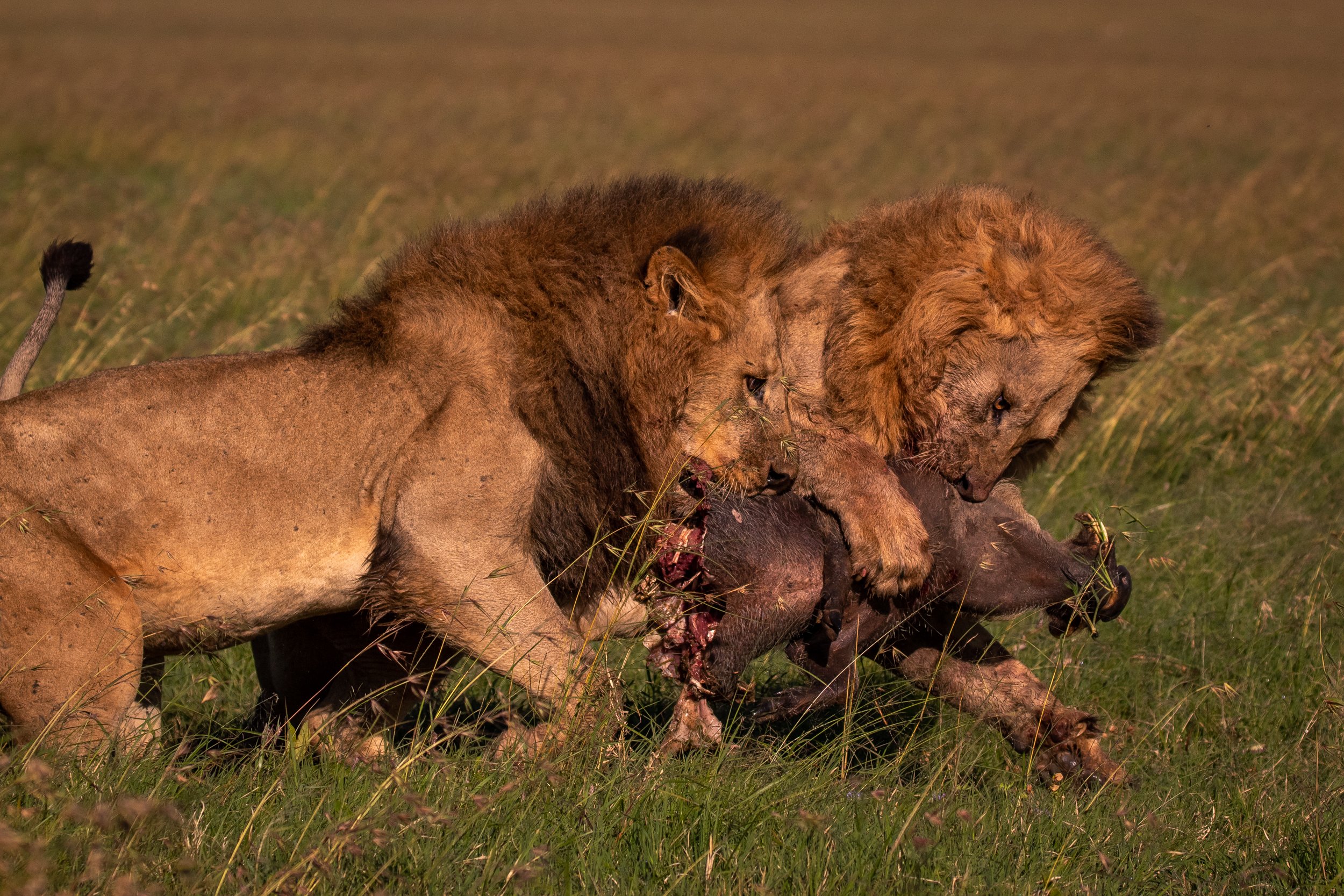
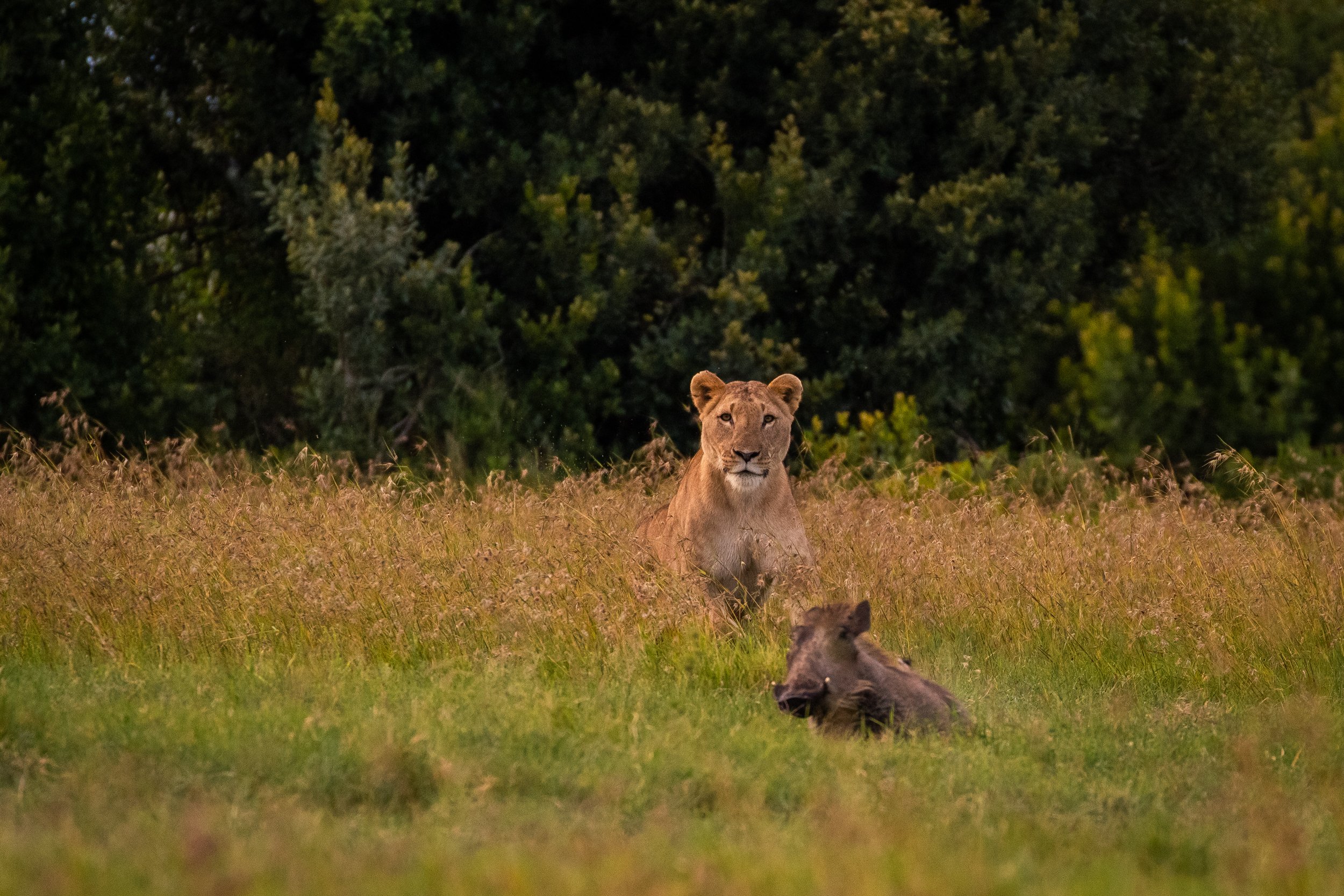
Seeing predation in the wild is intense and profound. It's can be violent and sometimes quite shocking, but it can help to remember that you’re witnessing the food chain functioning exactly as it has for millions of years — it's a moment of genuine ecological reality. Most first-time safari guests who see a kill report it as one of the highlights of their trip. If you’re not comfortable with it though, or you’re not sure you will be, it pays to have a private vehicle for your safari so you can simply ask your guide to navigate away from any sightings that you don’t want to be a part of.
The Physical Reality of Safari
Activity level: Low. You're sitting down most of the day. Game drives can involve an hour or two of active movement, but you're in a vehicle moving slowly. We provide yoga mats in all our rooms for people to move a little after their game drives, and the entire property is fenced so you can take a walk and stretch your legs this way too.
Comfort: High. At The Safari Cottages you're sleeping in a comfortable cottage with good food and hot water. You're not camping. You're not roughing it. Most tented camps in Kenya will also be extremely comfortable. Some provide hot and cold running water, some run on more basic systems - it’s worth considering your comfort levels when you choose your accommodation.
Difficulty: Minimal. There's nothing difficult about a safari (except waking up early if you like a lie in). Everything else is leisure, food, and observation.
The Emotional Reality
Most first-time safari guests report that they feel safe and well cared for and are usually taken aback by the quality of the wildlife experiences they have on a safari with us. In our experience it only takes two or three days before most guests have shifted from 'am I safe?' to 'can I stay longer?'

Your first safari doesn't have to be scary. Book your stay at Ol Pejeta Safari Cottages and let us know it's your first time. We'll structure your trip to ease your anxieties and help you fall in love with the bush.
More from The Safari Cottages blog




5-Night Safari Itinerary at Ol Pejeta: What We'd Recommend
Five nights at The Safari Cottages is a different kind of safari altogether. You move from ticking animals off a sighting list to living in rhythm with the bush. The extra days unlock full-day trips out, unhurried night drives and encounters with rhinos you can’t have anywhere else in the world. Here's exactly how to structure it.
Five nights at The Safari Cottages offers you an entirely different experience. You move from ticking animals off a sighting list to actually living in rhythm with the bush. If you’re considering settling in and staying a little longer than the standard three nights, this is how we'd suggest you structure it…
Your Itinerary: Day by Day
Day One: Arriving and Settling In
Arrival
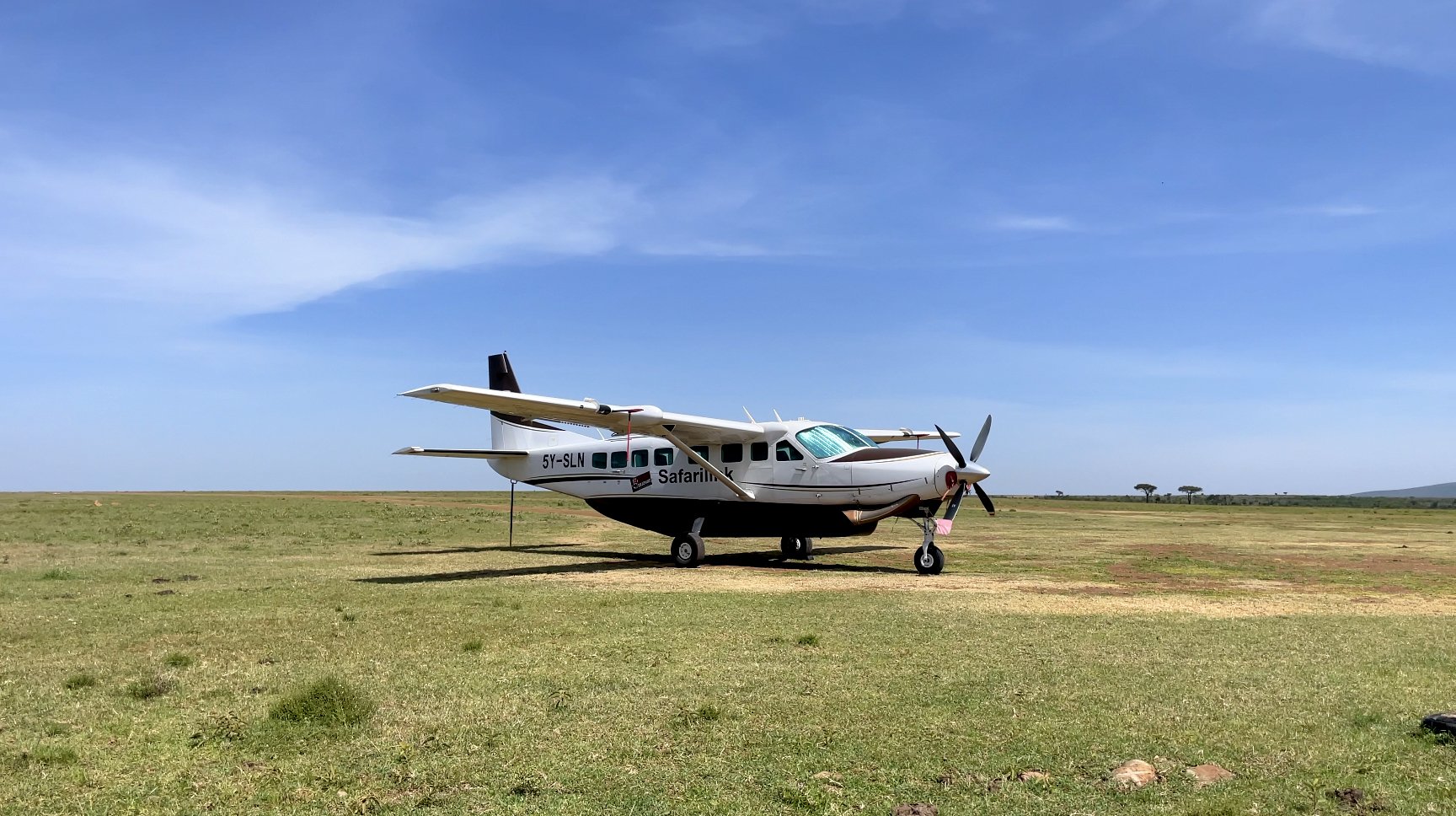
You can drive up from Nairobi or fly into our local airstrip, Kamok. In both cases you’ll likely be in the bush by midday and then it’s around a one hour drive to Ol Pejeta Safari Cottages. You’ll settle in, enjoying lunch alfresco and watching the wildlife amble down the river and then have a bit of down time - catch up on sleep, read a book, take a walk around the property. Relax and let it soak in.
Late Afternoon Game Drive
After a cup of tea at four o’clock you’ll meet your guide and set out on your first drive on the conservancy. You'll see elephants, buffalo, zebra, impala, giraffe. Maybe leopard or lion. The guides are learning your preferences and figuring out what your priorities are, so they can structure the following days accordingly. You’ll return after sunset to a roaring fire and dinner under the stars.
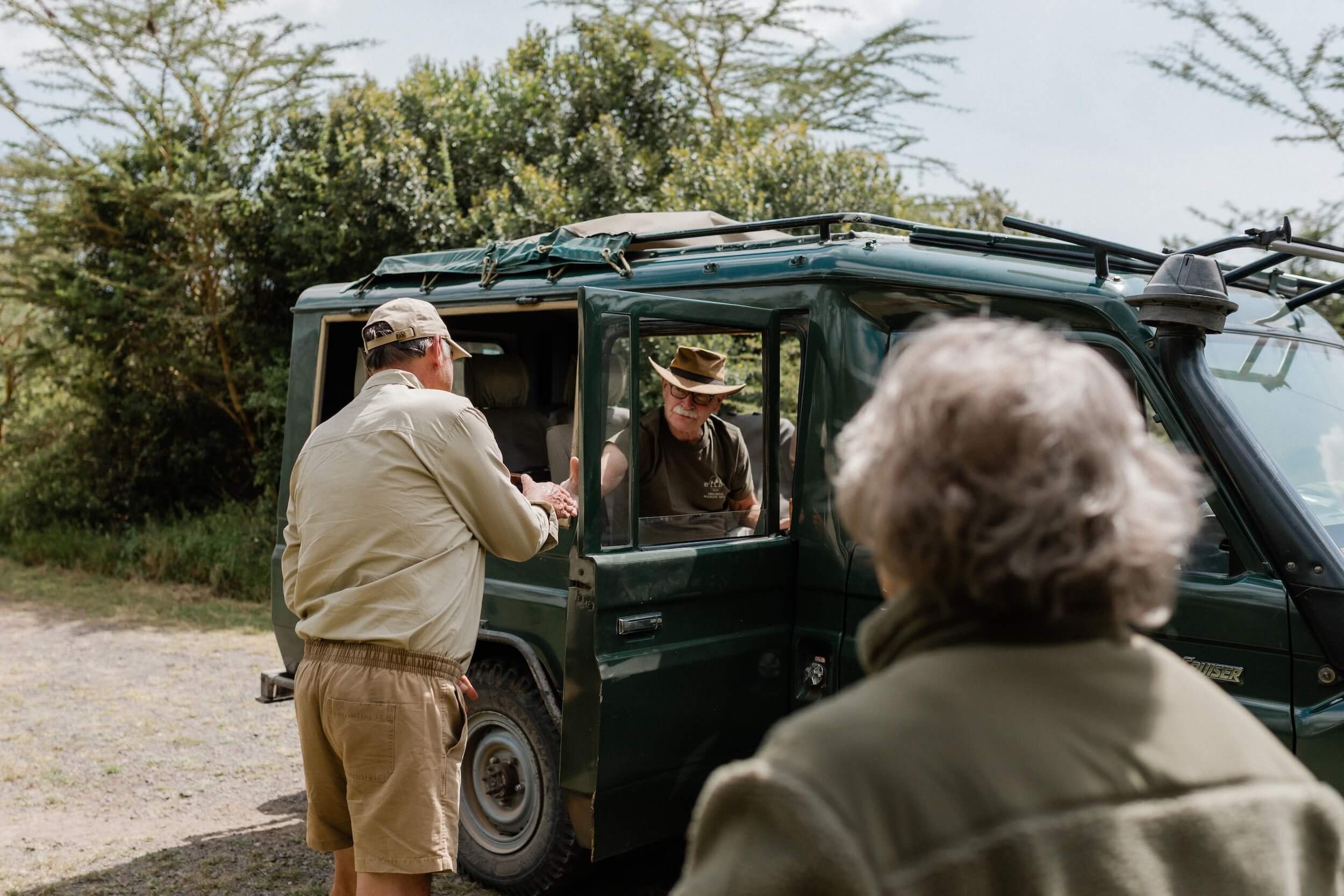
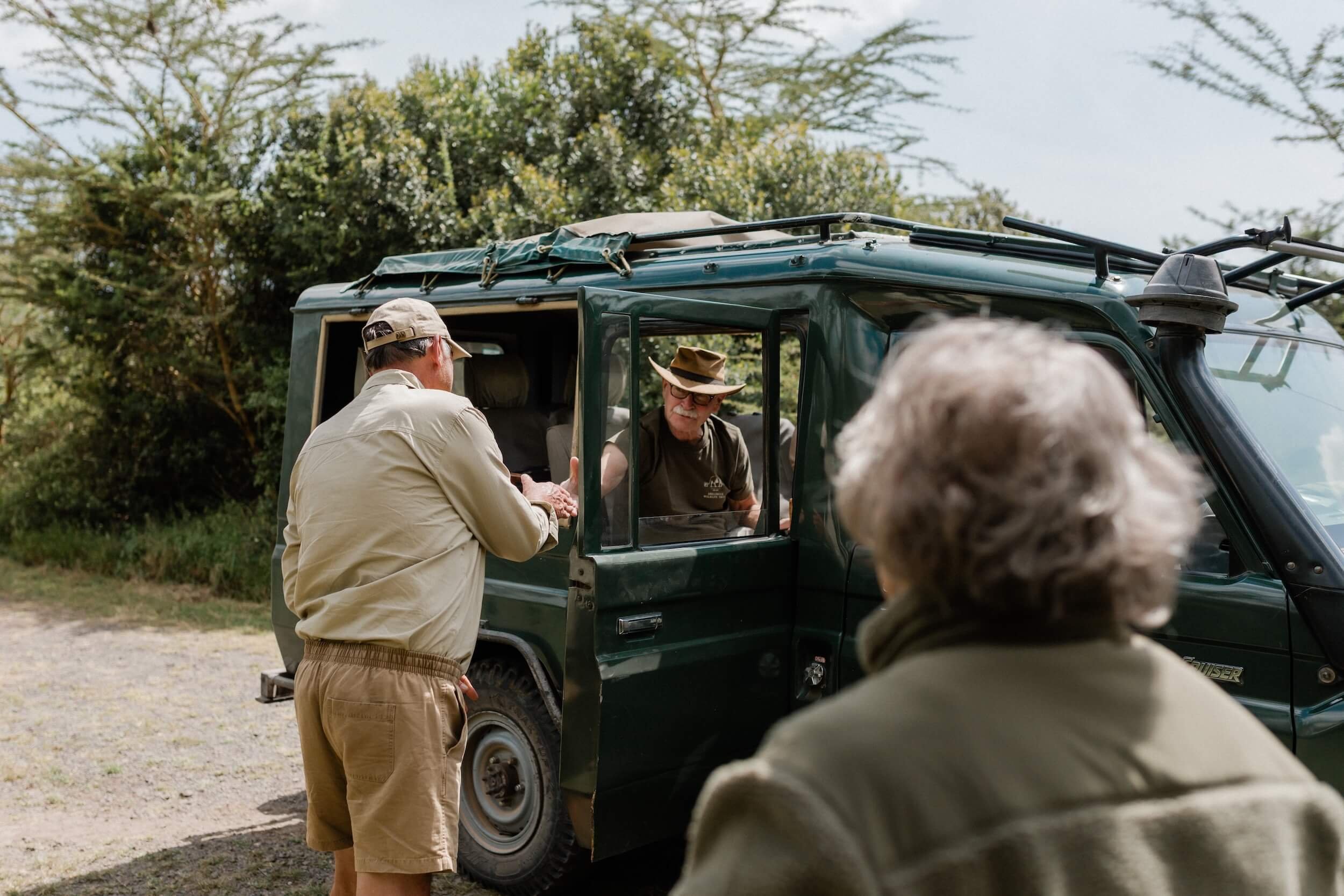
Arriving at The Safari Cottages
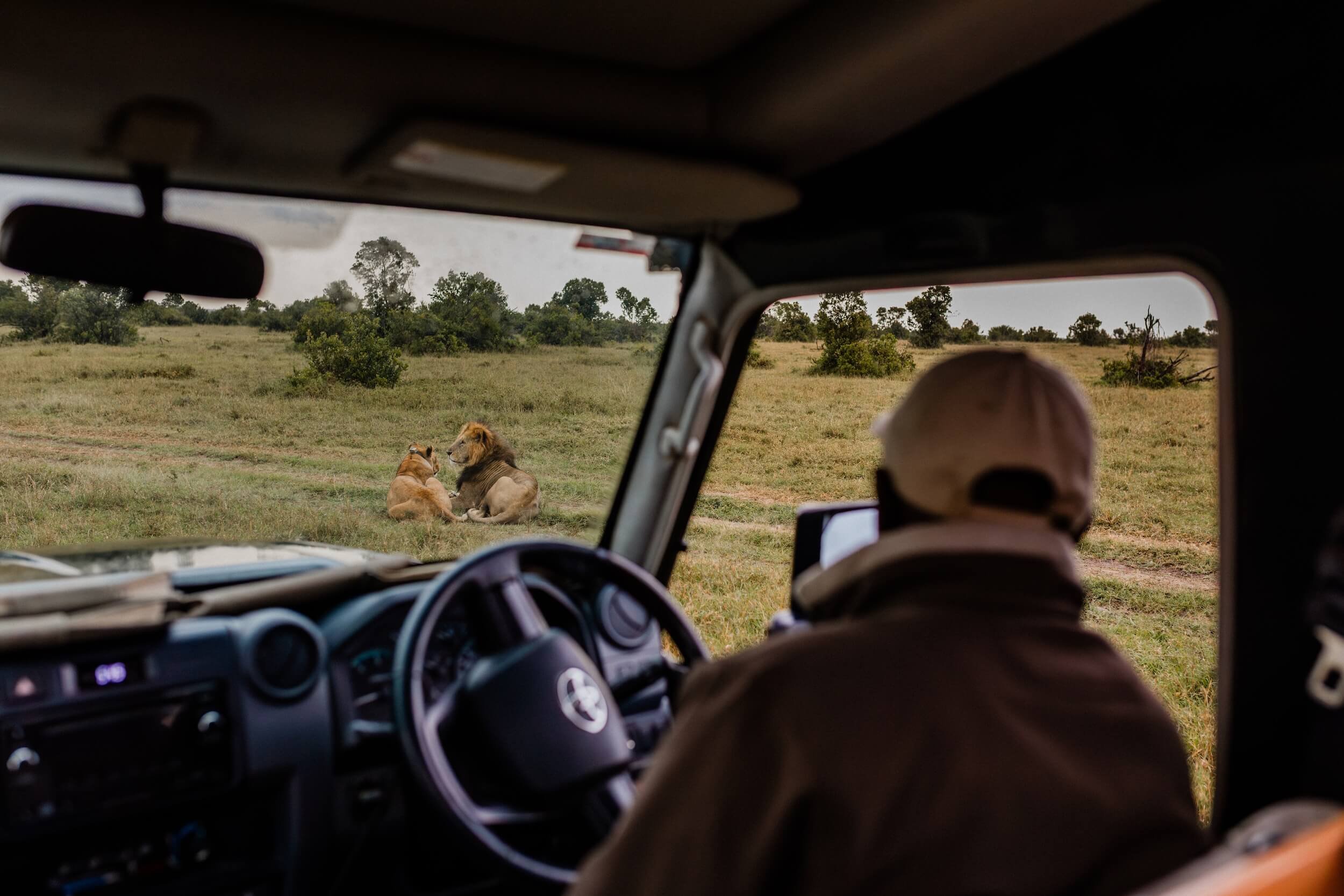
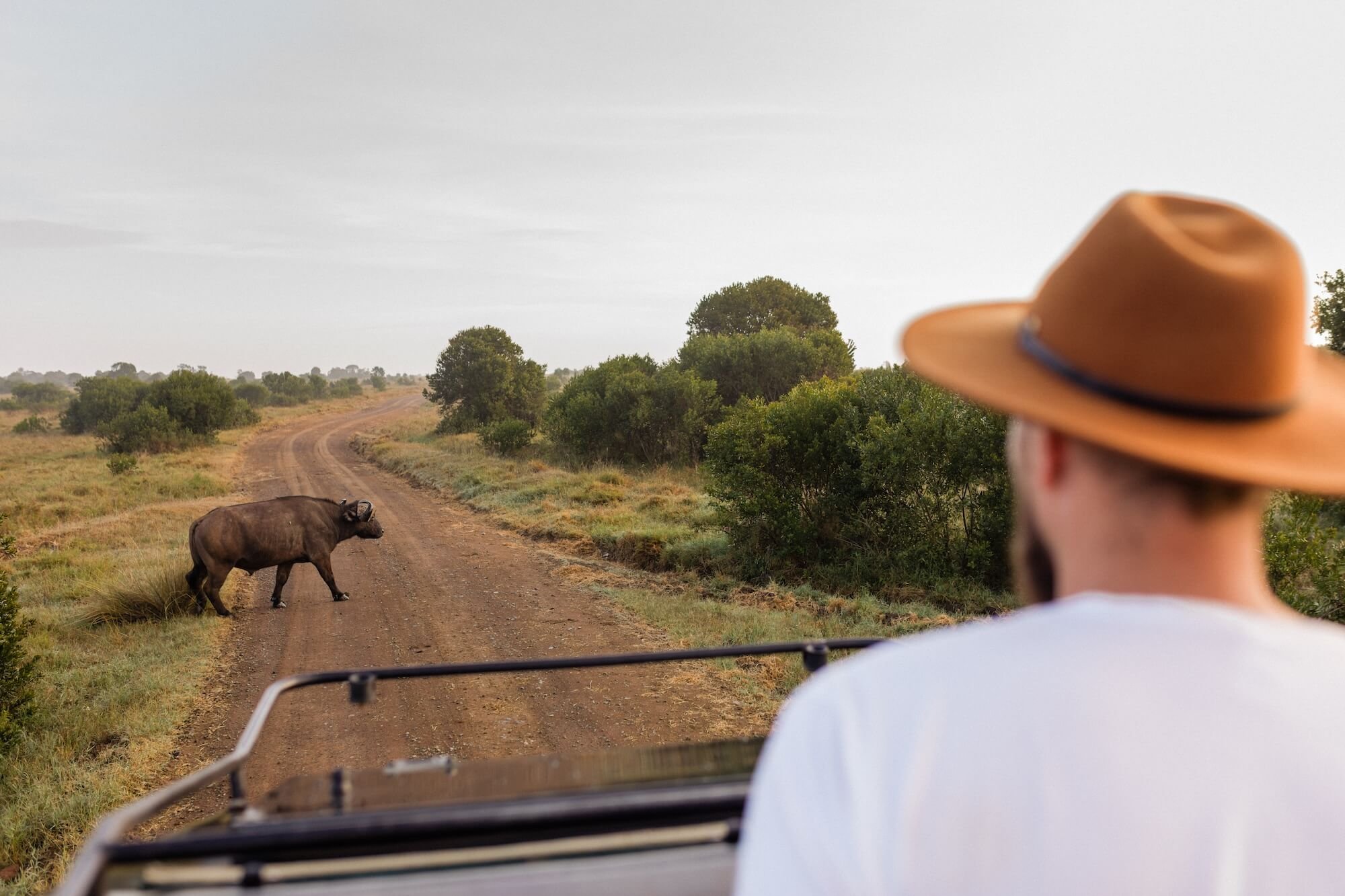
An afternoon game drive with your guide
Day Two: A Full Day of Ol Pejeta’s Wildlife
MORNING
Dawn Game Drive: You’ll be woken at dawn with a cup of freshly brewed tea or coffee then you’ll embark on a morning game drive. You'll see predators returning from hunts, babies springing across the plains and birds in early morning feeding frenzies. Depending on what the guides find, you might sit long with one sighting or amble across the plains taking it all in.
Here’s what you can see on a safari to Ol Pejeta.
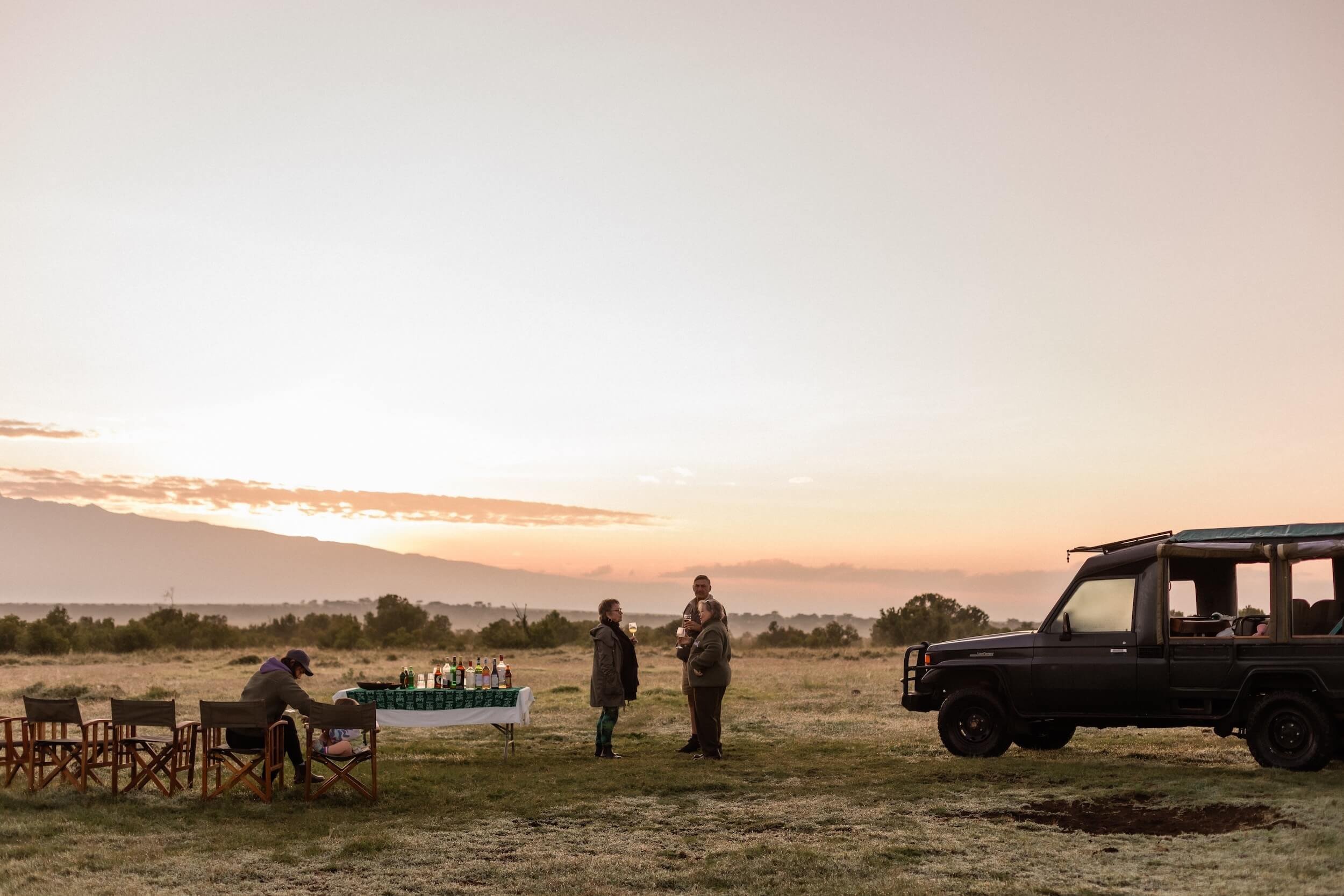
Mid-Morning Picnic Breakfast: As the sun rises a little higher over Mt Kenya your guide will find somewhere to pull over. You can jump out the vehicle and stretch your legs. He’ll set up a picnic table and a few picnic chairs for breakfast. This is usually a selection of fruits and fruit salad, Sonja’s famous granola, some baked goodies and something “hot” that travels well.
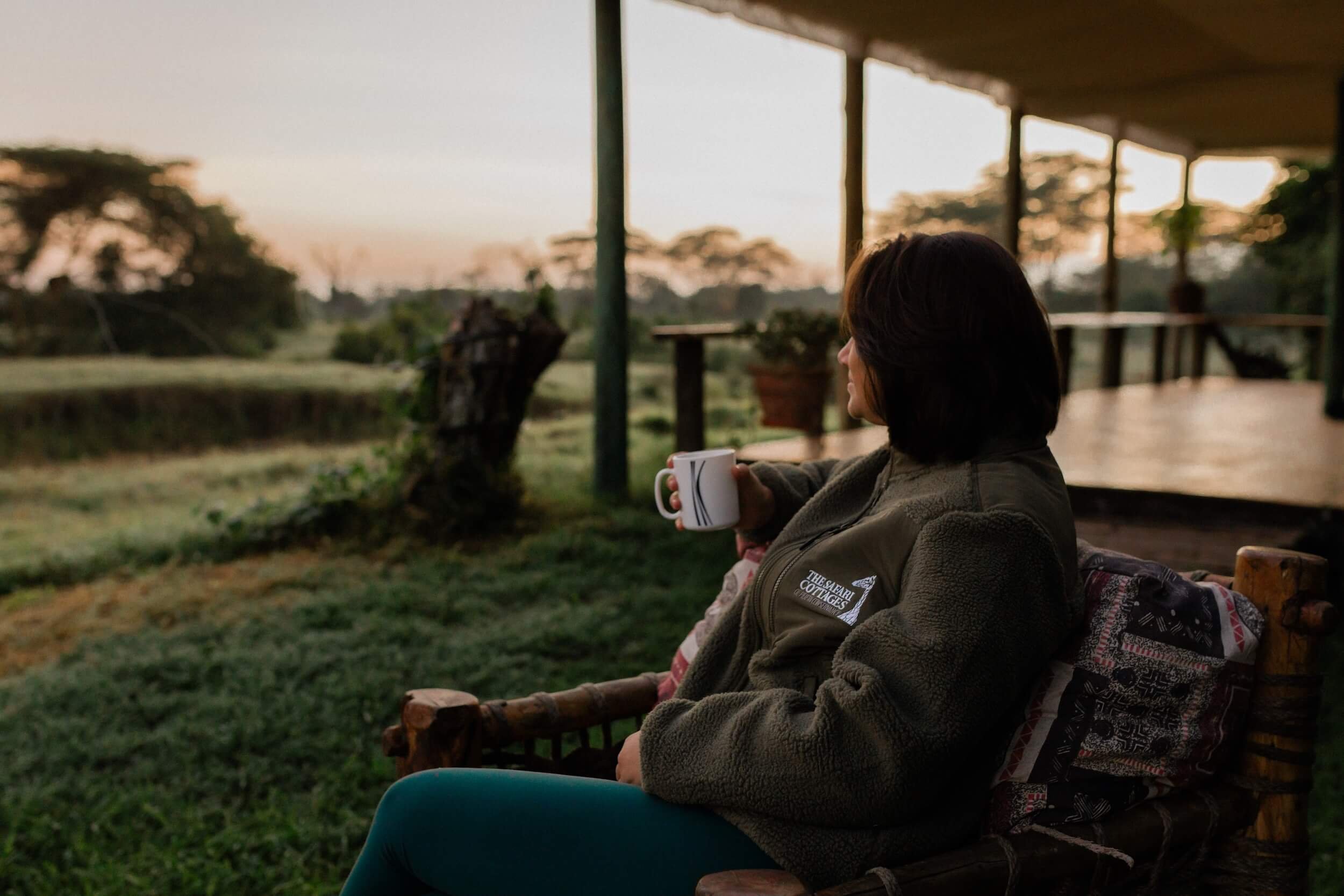
A morning coffee at dawn before your game drive

Tucking into a picnic breakfast in the bush
AFTERNOON
Lunch and Downtime: It’s been a full morning out and you’ve been up since dawn, so a delicious lunch followed by a siesta will likely be just what the doctor ordered. If you’re still bouncing with energy though this afternoon is a great opportunity to wander down to the staff camp and ask Dominic or Vicky for a tour of our kitchen garden.
Late Afternoon: You’ll head out again this afternoon for a late afternoon game drive. When the sun starts to slink below the horizon your guide will pull over the vehicle and pour you your favourite drink whilst you watch the sky light up and the world grow slowly dark. On your drive home tonight be sure to keep your eyes peeled for leopards, zorillas or nightjars. Arrive home in time for dinner and probably an early bedtime.
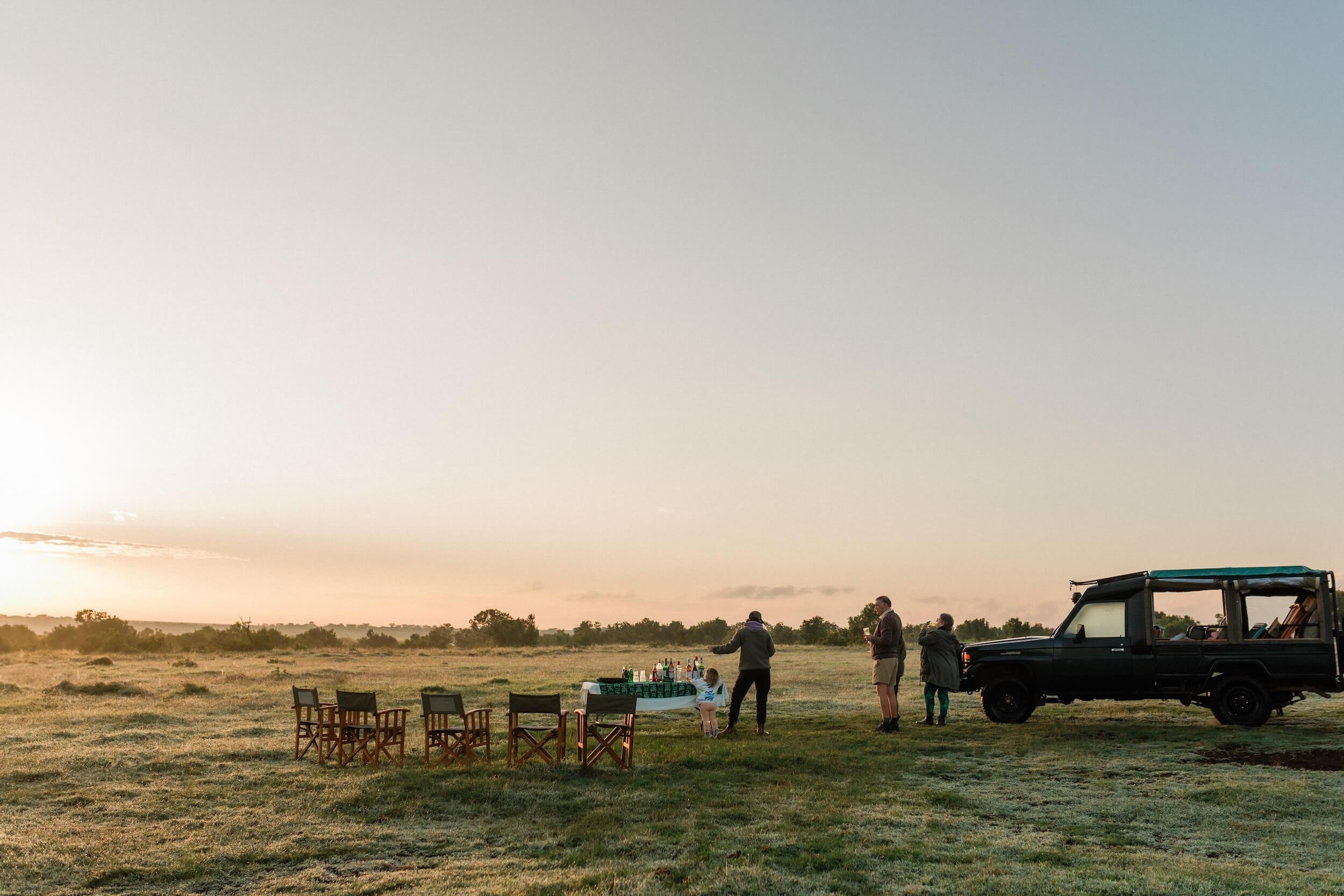
Watching the sun set across the plains
Day Three: Conservation
MORNING
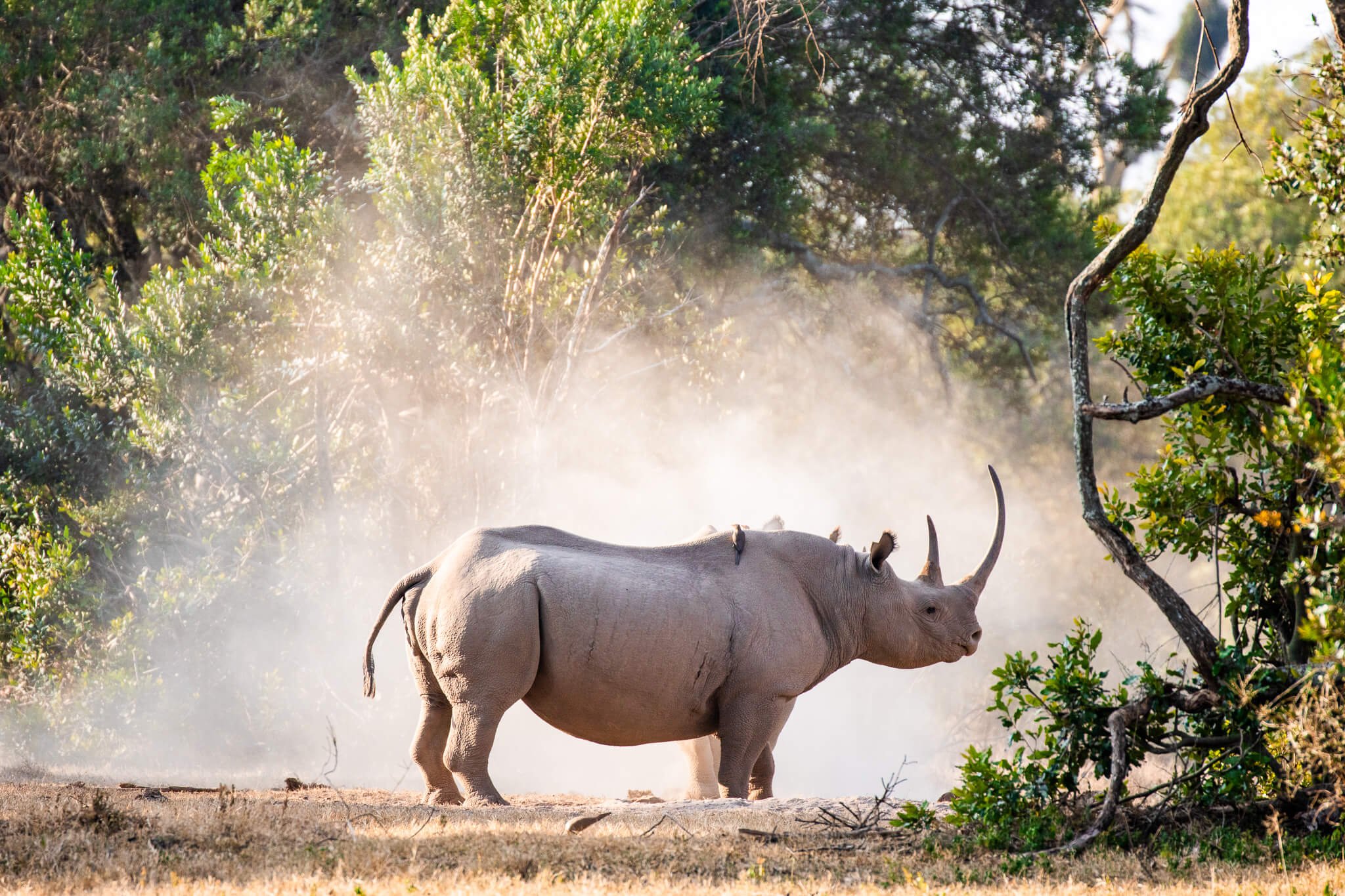
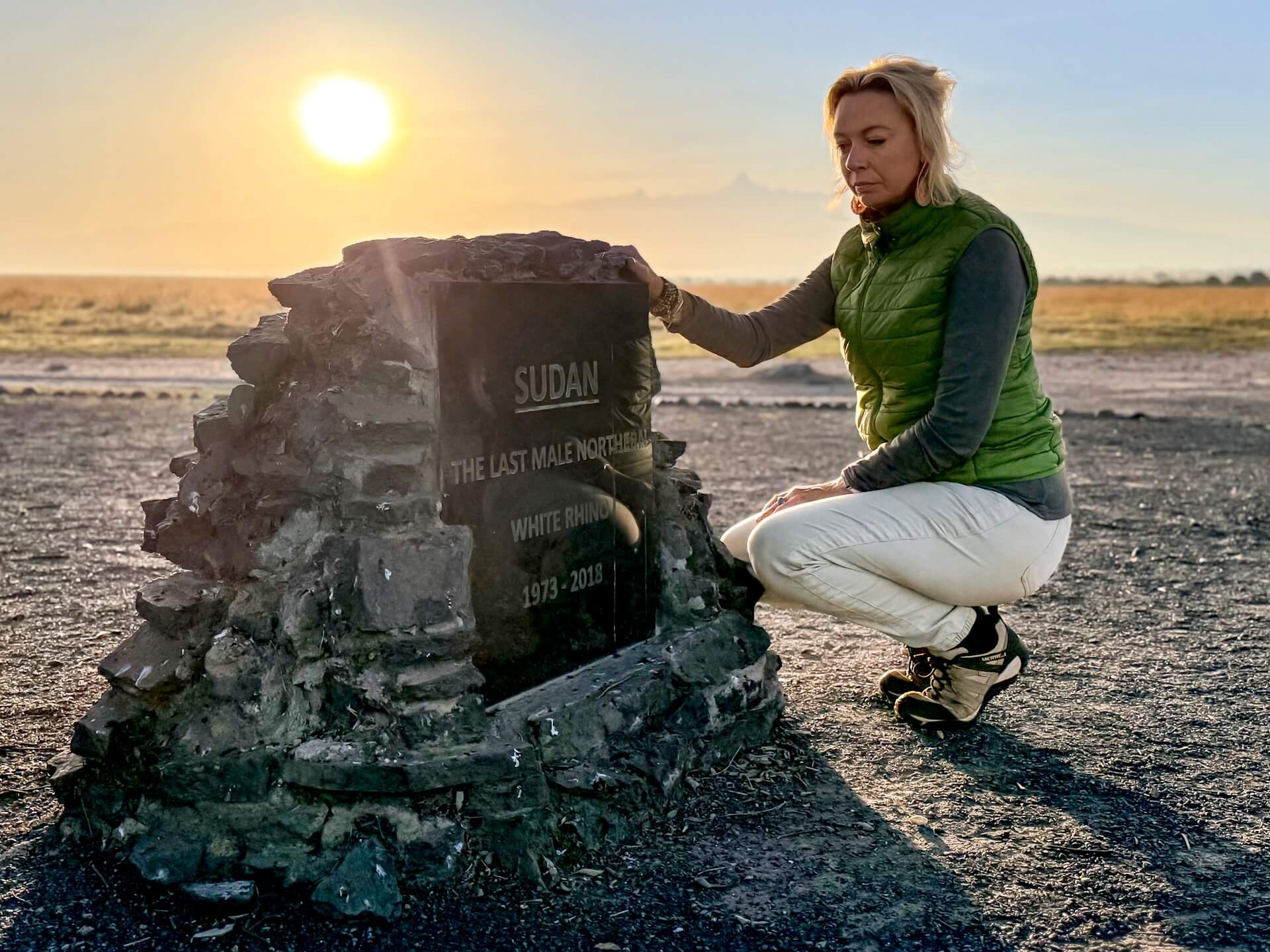
Visit the Northern White Rhinos: After breakfast at camp today you’ll have the incredible honour of meeting the last two northern white rhinos left on our planet, as well as their caretakers. You’ll learn all about rhino conservation from the people on the ground, doing the work every day. Explore the conservation centre too, and meet Baraka - a blind black rhino that was rescued and rehabilitated right here on Ol Pejeta.
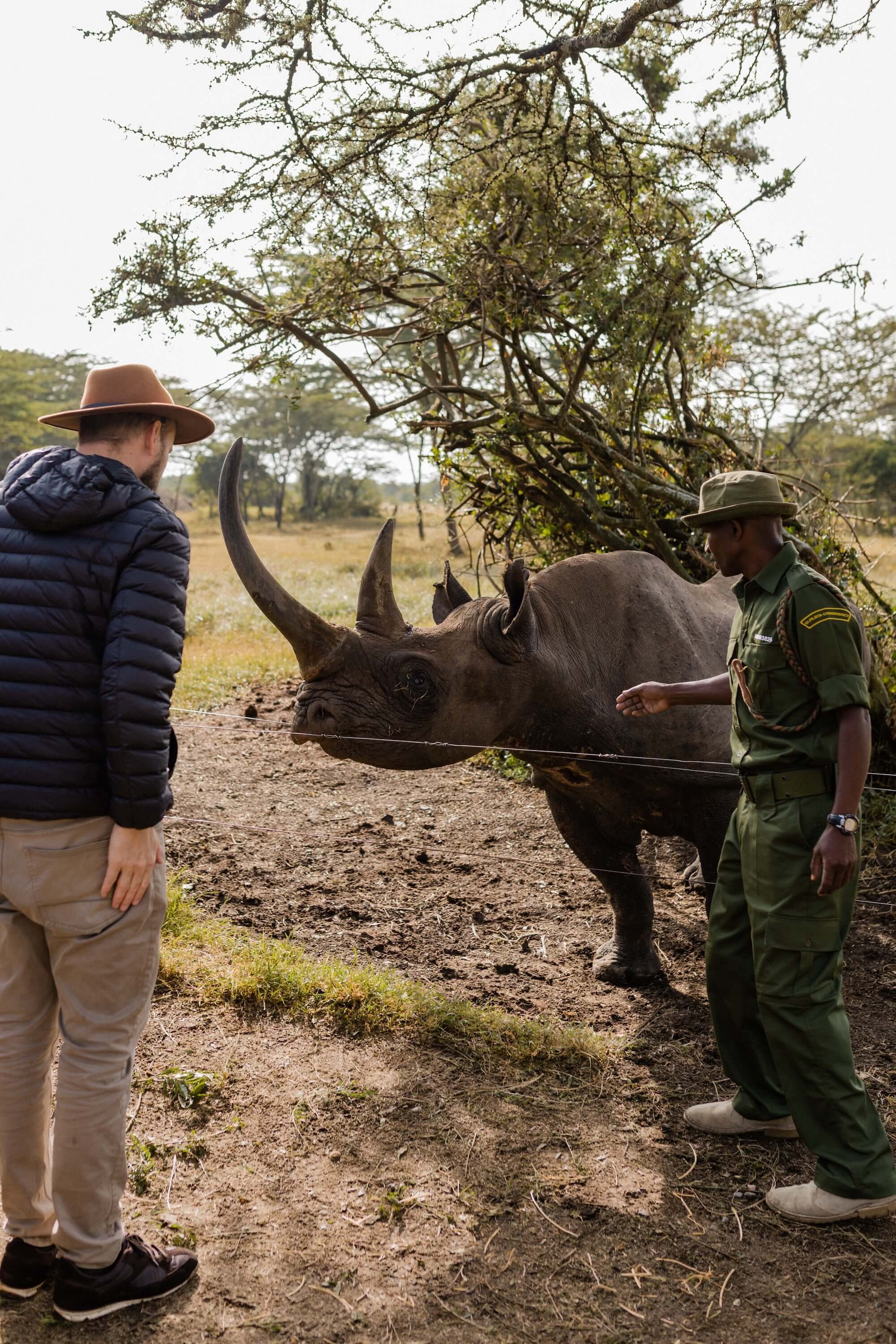
Meeting Baraka - rescued black rhino

One of the last Northern White Rhinos left in the world
AFTERNOON
Visit the Sweetwaters Chimpanzee Sanctuary: After lunch and a siesta you’ll head to the nearby Sweetwaters Chimpanzee Sanctuary. The sanctuary rescues chimps from the illegal trade and gives them the best life possible in captivity. When you watch them — really watch them — you understand something about intelligence, trauma, resilience, and inner lives recognisably similar to ours.
Night Drive: Enjoy your sundowner around the fire this evening, and an early dinner before you jump back into the vehicle and explore the conservancy after dark on a night drive. Nocturnal species are completely different from day animals. A leopard hunting at night moves with focused intensity. A serval is delicate and quick. Porcupines waddle through the grass and hyena clans move with purpose and hierarchy you can watch unfold.
Day Four: Day Trip
Full Day: Our central location in the heart of Laikipia means we are ideally placed for you to explore a little further afield. After an early breakfast at your safari cottage you’ll head out for the day with your guide to explore Mt Kenya, or the Aberdares or perhaps the Ngare Ndare forest. These areas are less about wildlife and more about incredible scenery, birdlife and the chance to hike and witness exciting and dramatic landscapes. You’ll carry a picnic lunch with you and return late after dark, for dinner.
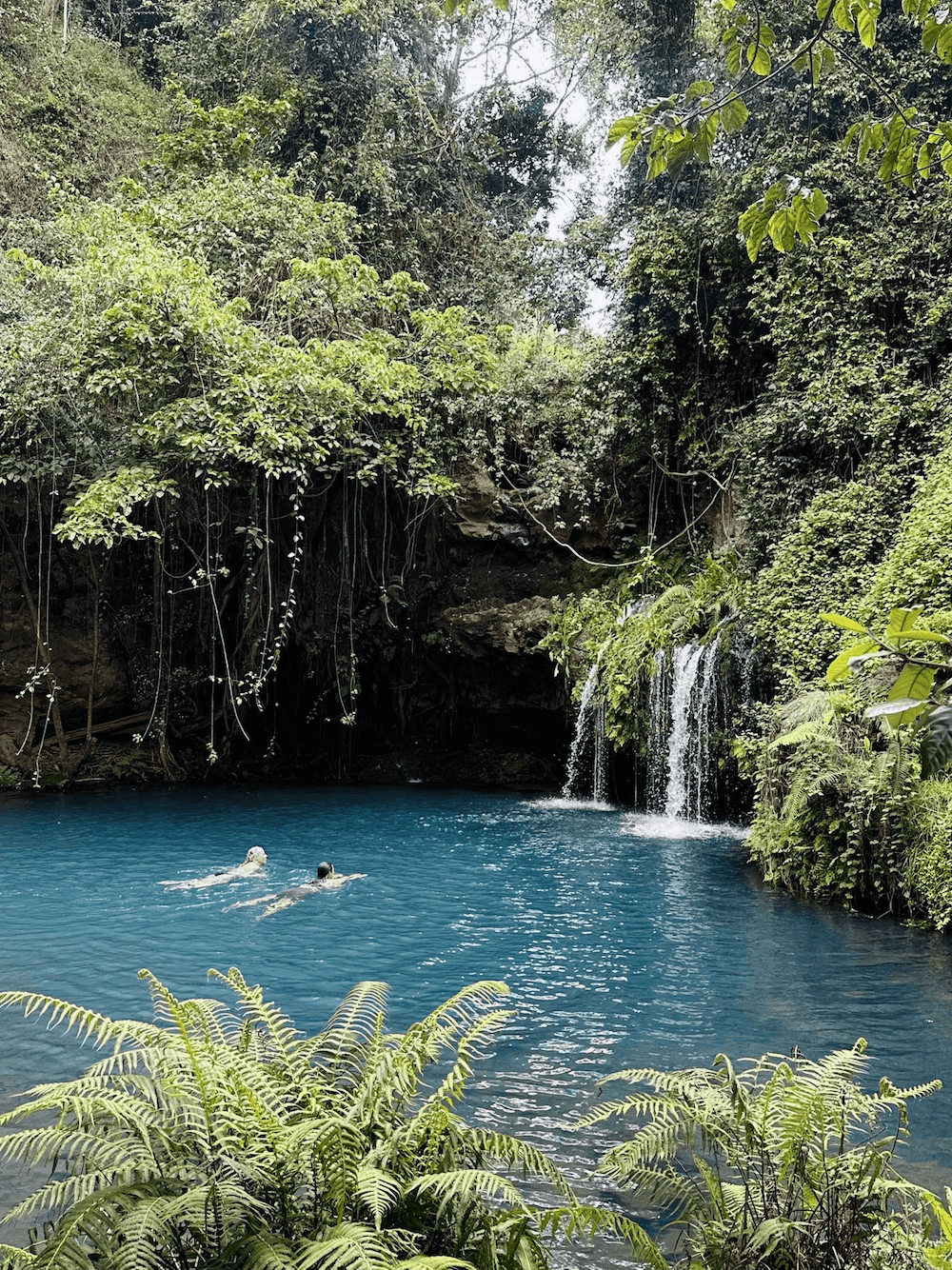
A day trip to Ngare Ndare
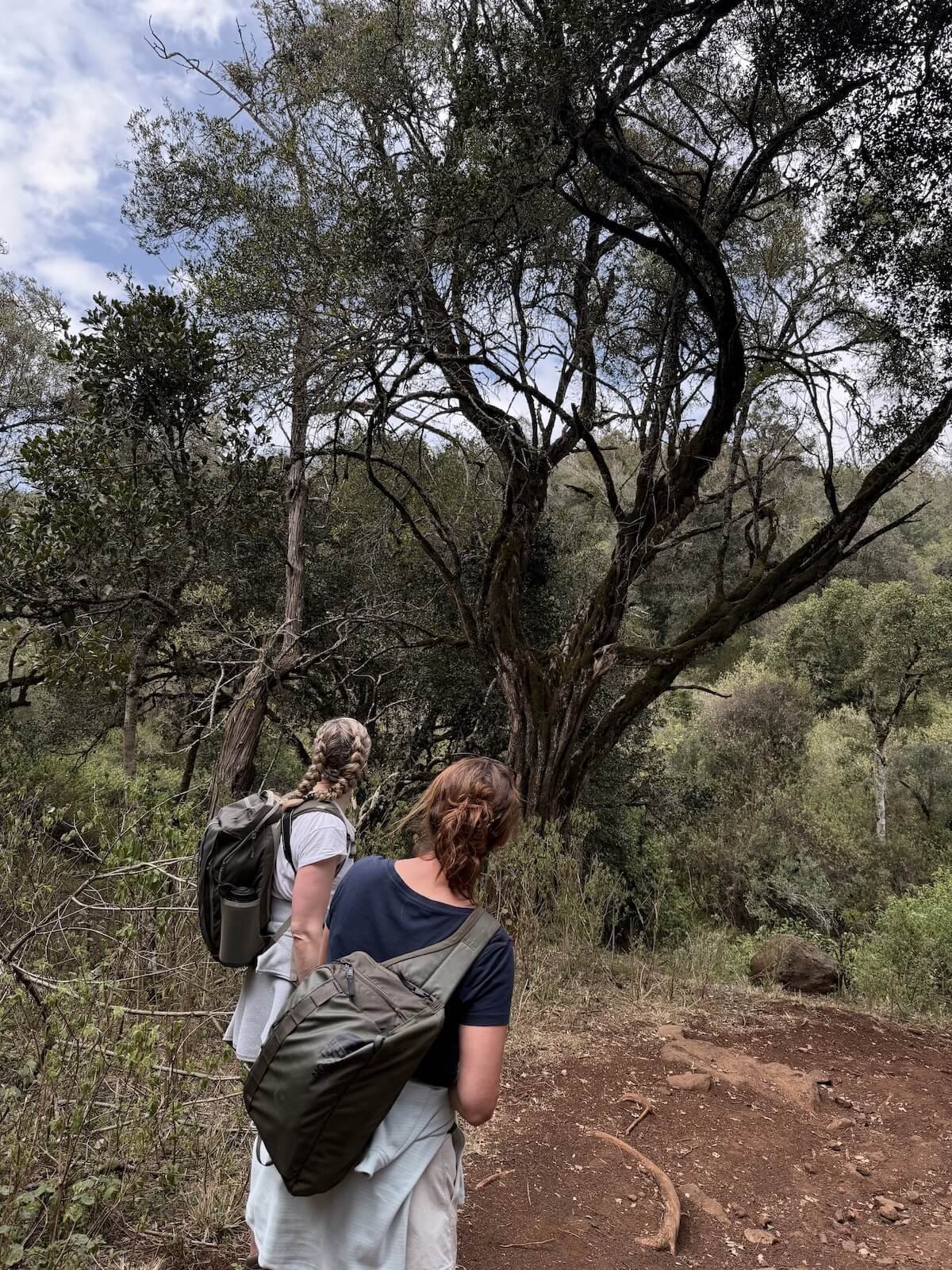
Hiking in Ngare Ngare
Day Five: Classic Safari Day
Early Morning Game Drive and Picnic Breakfast: It’s your final day on safari today and it’s your chance to see of experience anything you haven’t managed to just yet. Let your guide know what that is - they will always do their best to make sure you leave fully satisfied. Otherwise it’s a great opportunity to sit back and enjoy the magic of the bush unfolding without the pressure of an agenda. This is our favourite way to safari because you never know what will pop up!
Lunch, Tea and a Final Game Drive: After some downtime at your private safari cottage today (or maybe you challenged the staff to a volleyball game!) you will head out for a final afternoon game drive, stopping to enjoy a sundowner and a night drive on the way home. If your askari hasn’t yet embroiled you in his stories from home, he just might do so tonight - ask for some marshmallows to roast over the fire after dinner and enjoy one final heart-to-heart with the people who have poured their hearts into this place.
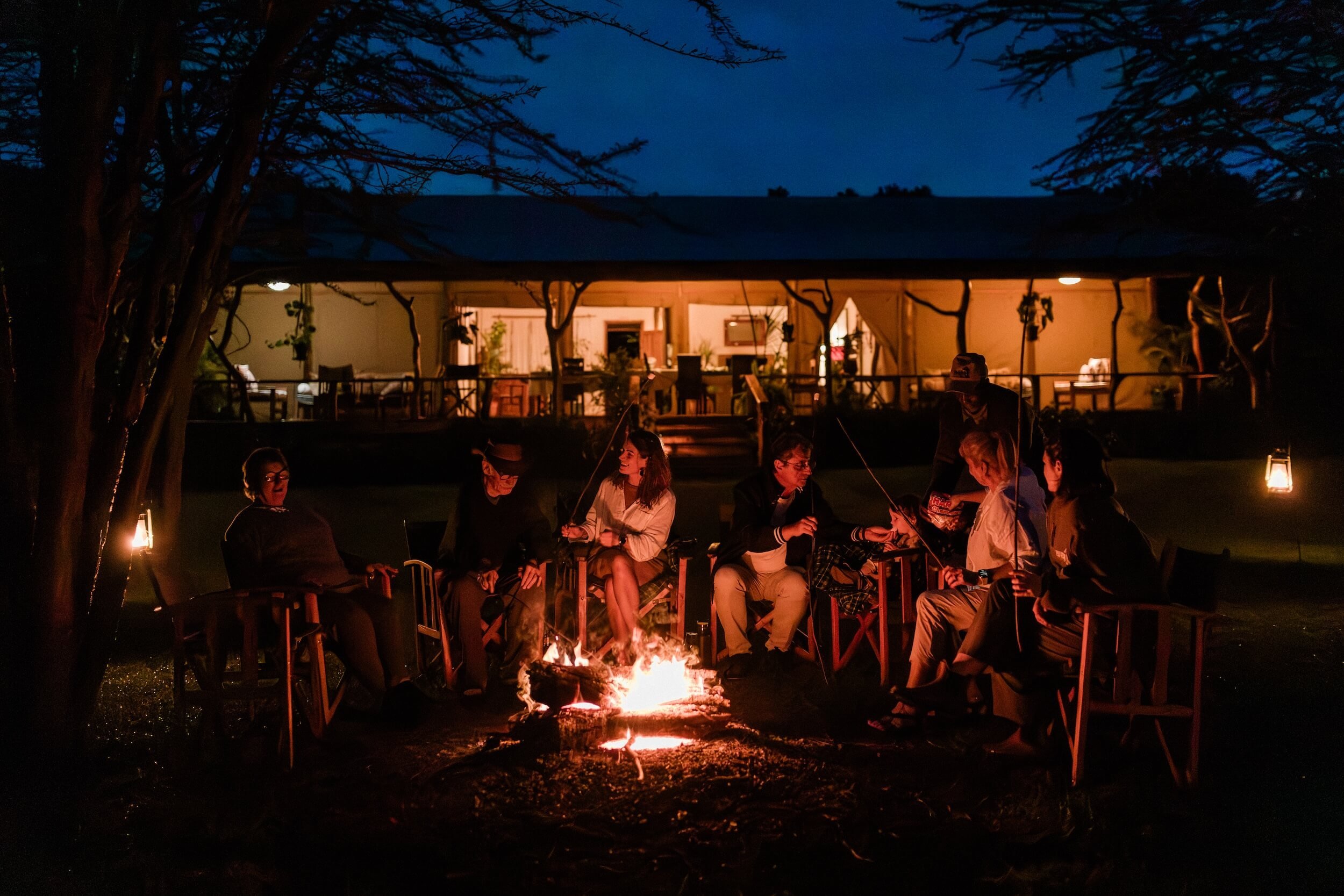
Roasting marshmallows around an evening fire
Day Six: Departure
After a leisurely breakfast at camp this morning your guide will assist you onto a flight or to meet your road transfer out of Ol Pejeta and on to your next destination. The longer you stay, the more the conservcany reveals itself and we hope that, by now, you’ve settled deeply into the rhythm of nature.
Customizing Your Stay
This is a template. Your actual itinerary shapes around what you're interested in (big cats, birds, conservation, your families specific needs), your comfort level with walking, and what the bush gives you on the day. Your guides know this conservancy intimately — they'll make the decisions that matter and do their very best to ensure you have a safari of a lifetime!
ESTIMATED COSTS FOR THIS 5-NIGHT OL PEJETA SAFARI COTTAGES SAFARI
High Season 2026 (15 June - 31 October & 16 - 31st Dec 2026): USD3,900 per person
High Season 2027: (1 Jan - 7 Jan & 15 June - 31 October 2027): USD4,070 per person
Low Season 2027: (01 May - 14 June 2027): USD3,060 per person (includes 1 night free!)
Notes on pricing:
Prices include accommodation, all meals, drinks and a private vehicle and guide. Transport to and from Ol Pejeta is not included.
The above prices are based on two people sharing
Children under 12 are half price and under 3 are free
Please contact us with the number of people in your party and the ages of any children + your preferred travel dates for a personal and accurate quote
BOOK YOUR 5-NIGHT SAFARI AT OL PEJETA SAFARI COTTAGES
Keep reading
Family Safari in Kenya: Visiting Ol Pejeta with Kids
Planning a family safari in Kenya? Discover why Ol Pejeta Safari Cottages is perfect for kids of all ages — private guides, flexible schedules & unforgettable wildlife.
The idea of a family safari often comes with a quiet hesitation. Will the children cope with early mornings? Is it safe? Will teenagers be bored, or toddlers overwhelmed? These are the kinds of questions and concerns we hear all the time — and they're completely understandable.
The truth is that a well-planned family safari isn't just possible. It's one of the most remarkable things you can do together. Watching your child see an elephant for the first time, or hearing them whisper as a lion walks past the vehicle, creates the kind of shared memory that stays with a family for a lifetime.
Ol Pejeta Conservancy, in the heart of Kenya's Laikipia region, is one of the most family-friendly safari destinations in East Africa. Here's everything you need to know before you book.
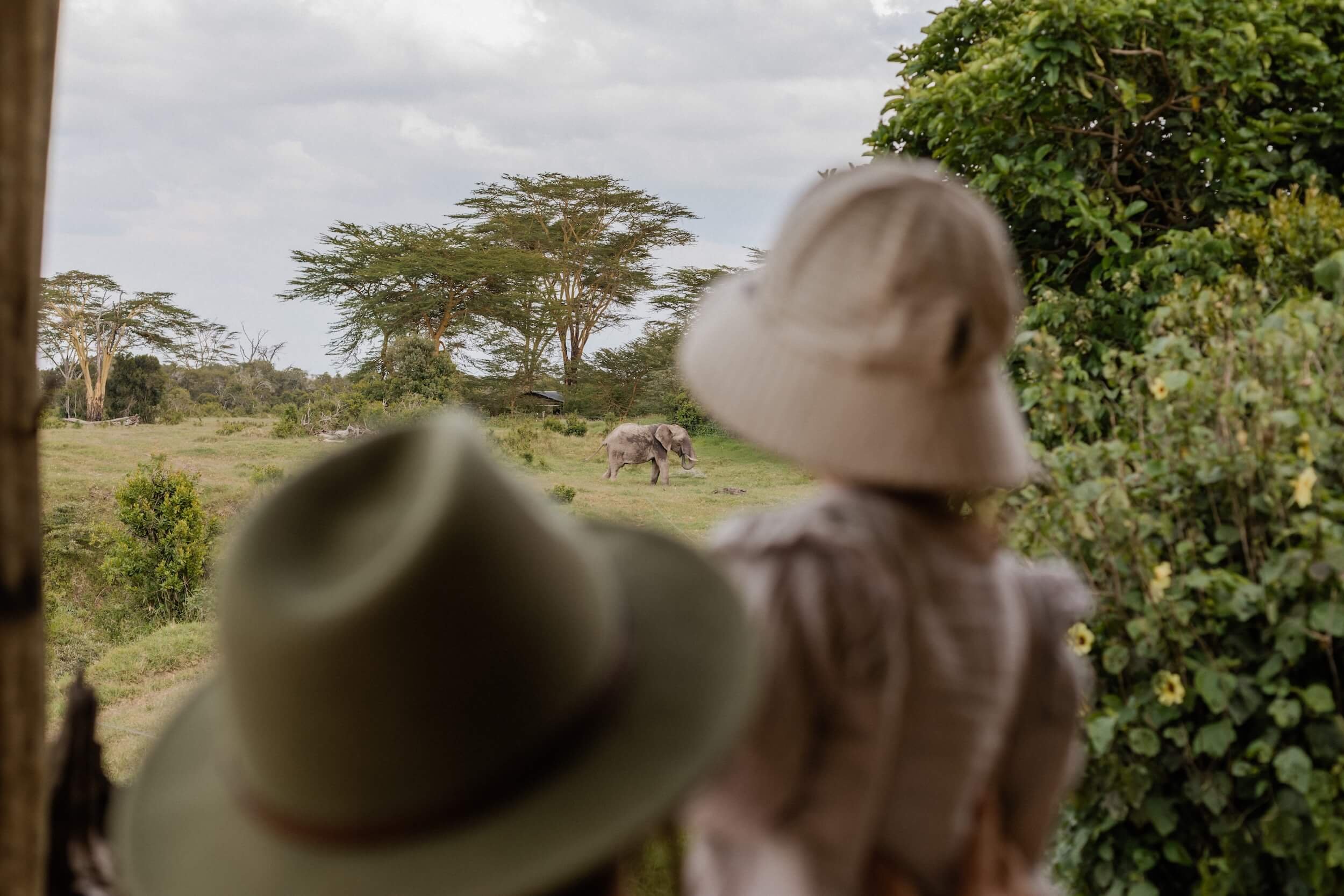
A guest at The Safari Cottages watches an elephant with her daughter over lunchtime
Is Ol Pejeta Suitable for Families?
The short answer is yes — we welcome families of all ages to The Safari Cottages year-round and, in many ways, Ol Pejeta is better suited to families than Kenya's busier national parks.
Safety comes first. Ol Pejeta is a fenced conservancy with strict wildlife protocols and highly experienced guides driving within strict speed limits on open terrain. Game drives take place in enclosed vehicles, and your guide will always brief you and your family before heading out. Children are safe, well-supervised, and — in our experience — far braver than their parents expect.
Shorter game drives are entirely possible. Unlike fixed itinerary tours, a private safari at The Safari Cottages means your schedule is yours. If younger children need to return home after two hours, that's exactly what happens. There's no pressure to stay out until everyone is exhausted. You go when you're ready, and you come back when you've had enough.
Private guiding makes all the difference. Shared game drives can be frustrating with children — especially if little ones need a snack, a wriggle, or a bathroom stop. With a private guide and vehicle dedicated entirely to your family, the pace, the route, and the conversation are all shaped around you. Your guide can adapt their storytelling to suit a six-year-old just as easily as a sixteen-year-old.
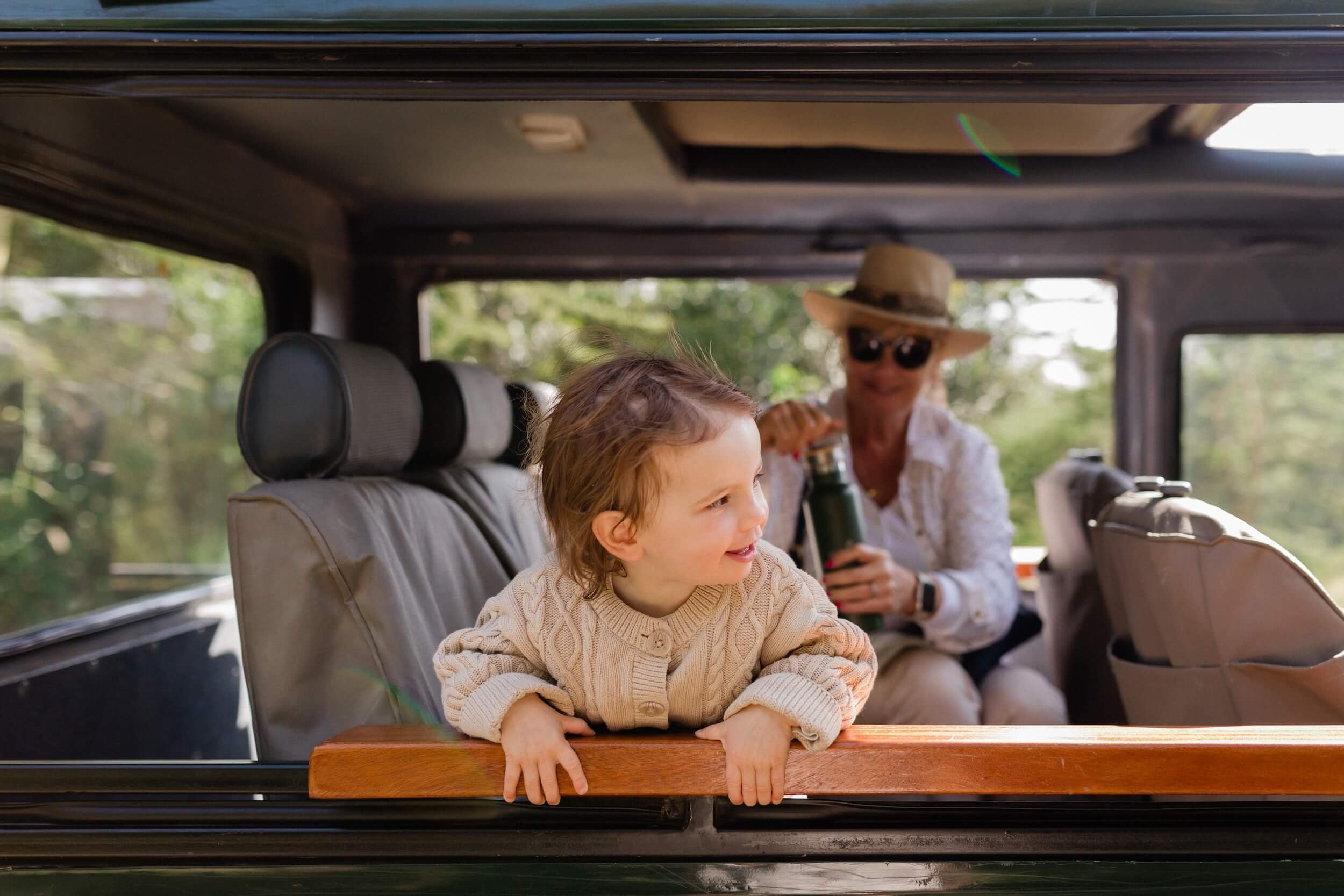
Runo (20months) on a game drive
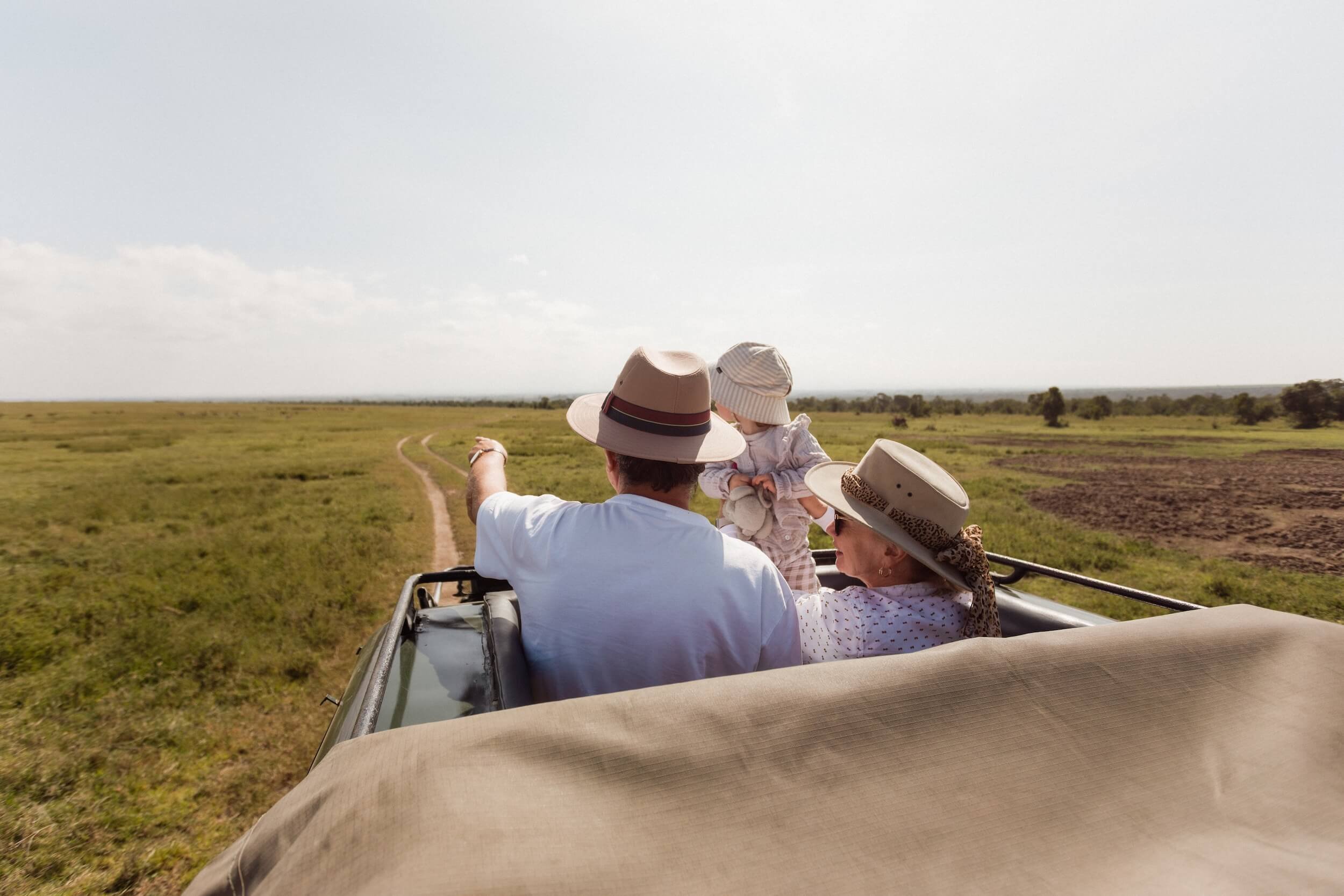
Spotting rhinos!
Best Safari Activities for Kids
Children experience a safari differently to adults — and often more vividly. The key is giving them ways to engage actively with what they're seeing.
Wildlife spotting games are a simple and surprisingly effective way to keep younger children focused and excited on game drives. Ask your guide to help set up a spotter's checklist before you head out — how many of the Big Five can the family find today? Who spots the first giraffe? Games like these give children a sense of agency and adventure, and they tend to produce a surprising level of concentration.
Nature walks offer a completely different pace from a game drive, and one that children often respond to with great curiosity. Walking focuses attention on the smaller details — tracks in the dust, insects, plants, bird calls — and opens up conversations about the ecosystem and gives them the chance to learn, touch and play. This is a great activity to do in camp with an askari or guide; we have several lovely walking trails around the property.
Learning about conservation is one of the most powerful things a child can take away from a safari at Ol Pejeta. The conservancy is home to Najin and Fatu, the world's last two northern white rhinos, and a visit to meet them — with an expert guide who can explain their story — tends to leave a deep impression on children and adults alike. Questions follow for days afterwards. That's exactly the point.
Campfire S’mores - chocolate biscuits and marsh mellows, what more can we say? The askaris love roasting marsh mellows with kids around the evening fire and showing them the stars.
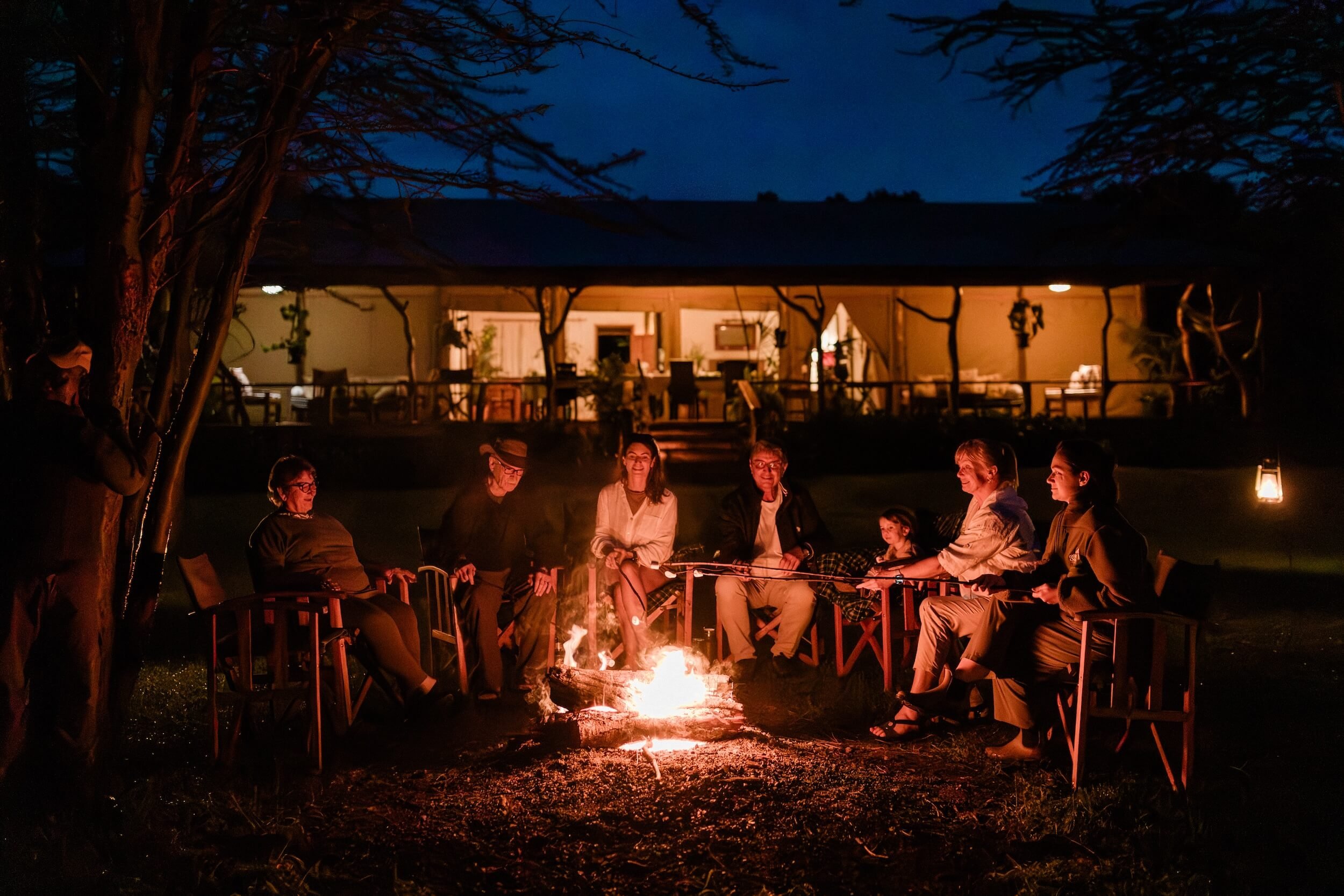
Roasting marshmallows around the fire at The Safari Cottages
Ideal Ages for a Family Safari
There is no single right age for a first safari, but there are some honest differences worth knowing about...
Toddlers and very young children can absolutely enjoy a safari experience — the sights, sounds, and general wonder of the bush are engaging at almost any age. The considerations are more practical though: nap schedules, short attention spans, and the need for flexibility. Private accommodation and a private guide make this far more manageable than it would be on a shared tour. If your family includes very young children, we'd simply suggest building extra downtime into each day and keeping drives relaxed in length.
Children aged six to twelve tend to thrive on safari. They're old enough to understand what they're seeing, young enough to be completely and unselfconsciously amazed by it, and at an age where the conservation story — the rhinos, the wildlife recovery projects, the ecosystem — genuinely captures their imagination. This is arguably the sweet spot for a first family safari.
Teenagers often arrive on safari with measured expectations and leave as genuine converts. Giving older children a camera, encouraging them to keep a wildlife journal, or asking the guide to talk them through tracking and navigation tends to unlock a level of engagement that surprises everyone. A safari that feels curated for adults can easily be shaped into something that feels genuinely exciting for a fifteen or sixteen-year-old — especially one who's accustomed to being the least interested person in the room.
A family with young teenagers on a game drive
Accommodation & Meal Considerations
One of the things that makes a family stay at The Safari Cottages particularly well-suited to parents is the degree of flexibility built into everyday life here.
Meals are prepared by your private chef, which means the menu adapts to your family rather than the other way around. Fussy eaters, dietary requirements, children who want plain pasta at 5pm — none of this is a problem. Your chef will talk through preferences on arrival and make sure every meal works for every member of the family. Breakfast can be a picnic in the bush or on the verandah. Lunch can be earlier, or later. Dinner can happen whenever the children are fed and the adults are ready, even if that means eating at different times and different meals entirely.
Schedules are entirely flexible. There are no set departure times, no shared dining rooms, and no need to coordinate with other guests. This matters more than it sounds when you're travelling with children. The freedom to adapt the day in real time — to extend a morning game drive, to cut a picnic short, to let a tired child sleep in — changes the entire experience of travelling as a family.
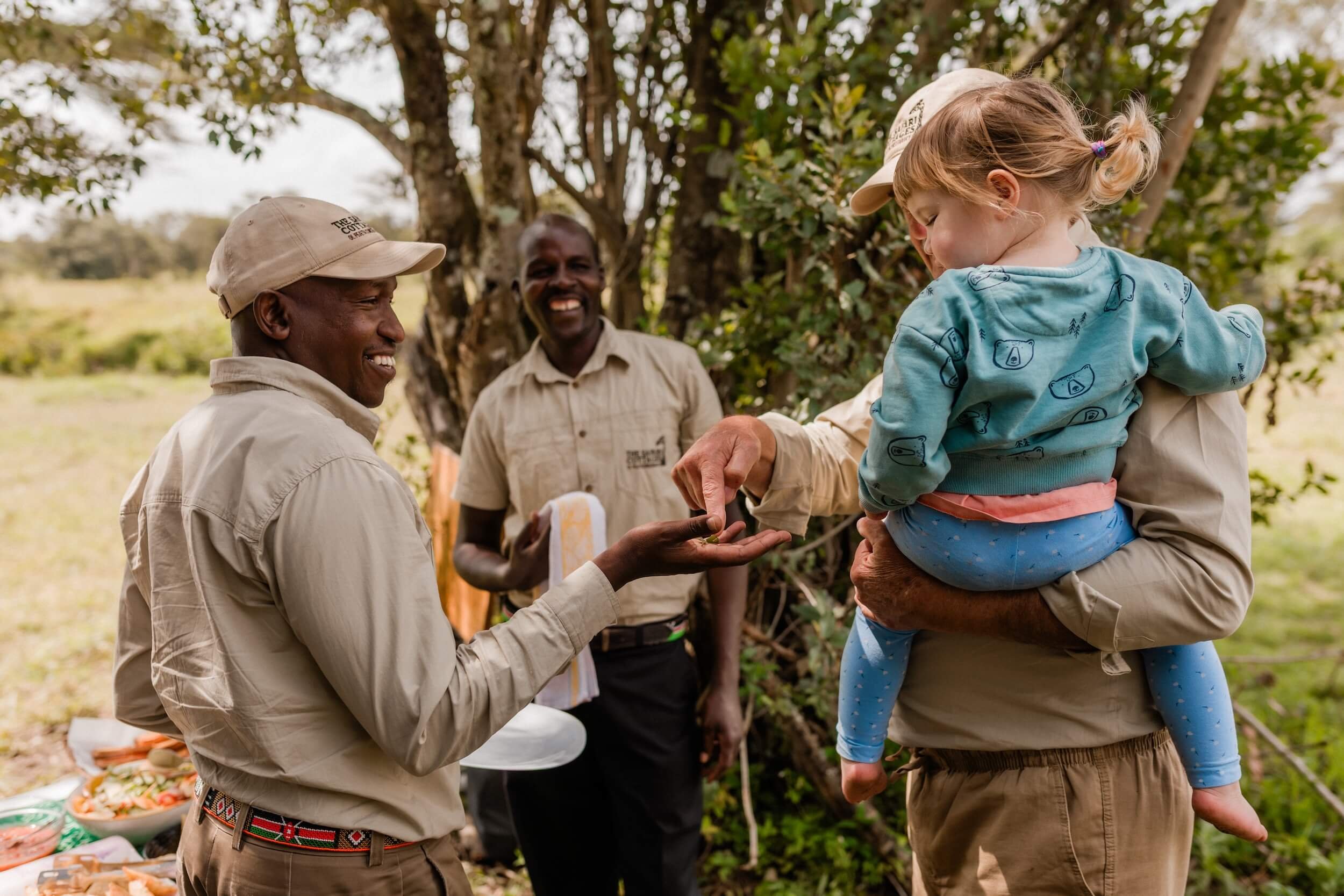
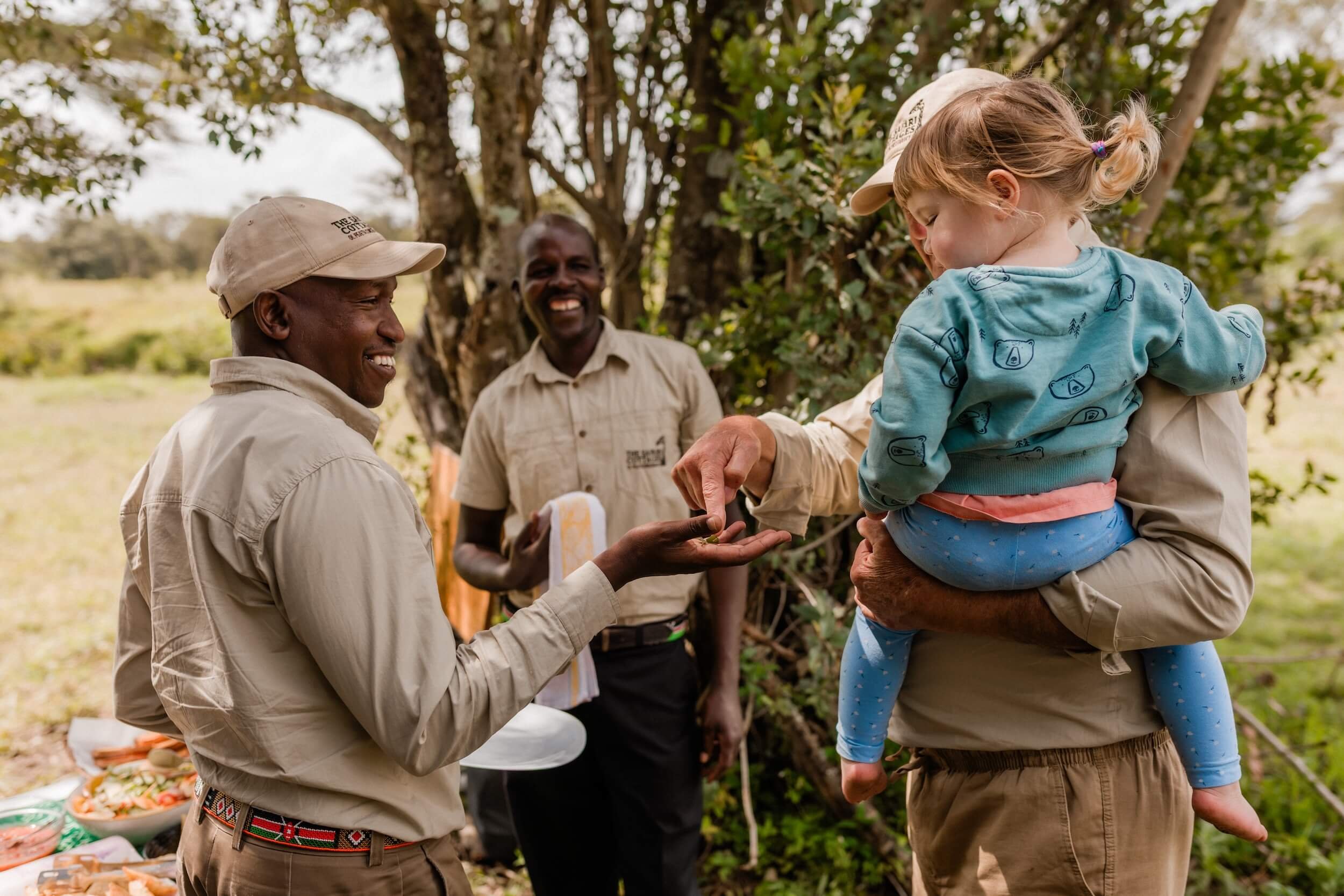
Addie (2yrs) enjoying brunch in the bush with The Safari Cottages team
Tips for a Stress-Free Family Safari
A few practical notes from years of welcoming families to Ol Pejeta:
Pack for the temperature range, not just the heat. Early morning game drives can be genuinely cold, even in the warmer months. Children feel the chill more quickly than adults, so pack a fleece or light jacket for every member of the family regardless of the time of year. Layers are your friend.
Bring binoculars for the children. This sounds small, but it transforms a game drive. Giving a child their own pair of binoculars — even an inexpensive set — makes them feel like an active participant rather than a passenger. Wildlife becomes something they're finding and focusing on themselves.
Let the days breathe. The temptation on a family holiday is to fill every hour. On safari, the opposite approach tends to produce the best results. A slow morning, a long lunch, an afternoon rest, then an evening drive — this rhythm suits children well, and it suits the wildlife too. The bush rewards patience, and children learn this faster than most adults expect.
Talk to your guide. Before each drive, spend five minutes with your guide letting them know the mood of the group, what the children are most interested in, and what the family's energy levels are like that day. A great guide will shape the entire experience around this — and your guide at The Safari Cottages will have the experience and the instinct to make it work beautifully.
A family safari on Ol Pejeta isn't a compromise on the adult experience. It's a different kind of experience entirely — one where wonder is shared, where questions multiply, and where the bush reveals itself through the eyes of people seeing it for the very first time.
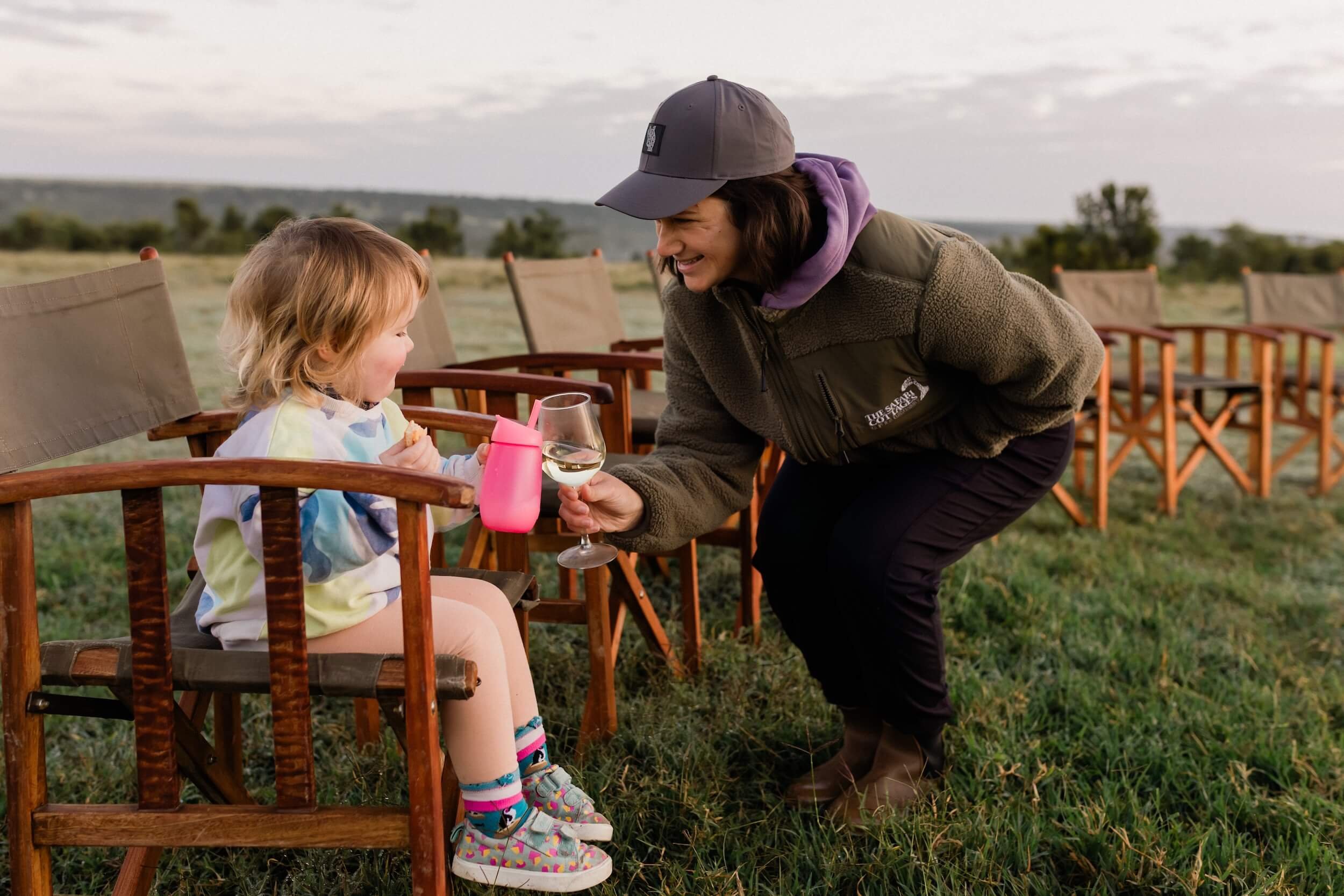
Sundowners with warm milk and a cookie
Family Safari with Kids: 5 Myths Busted (Why A Kenya Safari is Perfect for Children)
If you’re thinking of a Kenya family safari holiday but you’re nervous about traveling with children, especially young children, we’re here to bust a few myths and tell you why taking children on safari is actually a great idea!
If you're considering a family safari holiday in Kenya but hesitant about traveling with children — especially young children — you're not alone. The thought of traveling with your family to an unfamiliar continent can feel intimidating. But here's the truth: a family safari, even with young children, creates memories and experiences that will last a lifetime. Let's address the real concerns families have and why they're usually not the obstacles you think they are…


Myth 1: "Africa Is Too Dangerous for Children"
Reality: A lot of Kenya is Safe for Families
Yes, every destination has areas you should avoid. But when you discuss a family-friendly itinerary with your travel planner, you'll likely be surprised by how safe most of Kenya is for families with children of all ages.
Ol Pejeta Conservancy, where our cottages are located, is in the heart of Laikipia — one of Kenya's most stable, established wildlife regions. Private conservancies are actively managed for guest safety. Your accommodation is secure and your guides are trained and experienced with families. The roads to your private safari cottage at The Safari Cottages are established and well-maintained.
The truth: you're probably safer on a Kenya safari than you are driving through many city centres back home.
Myth 2: "Young Children Won't Remember It, So Why Bother?"
Reality: You Will Remember
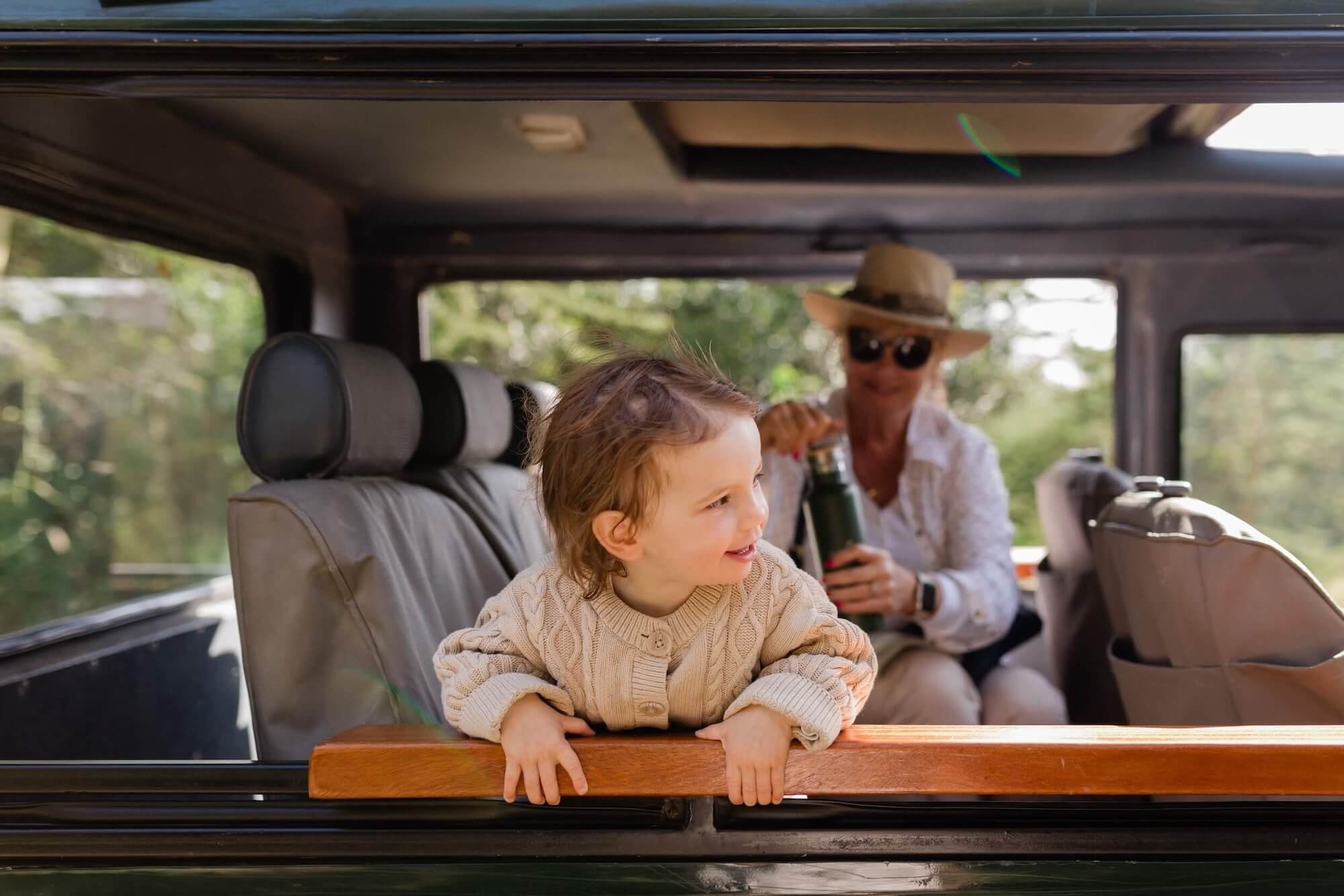
Your baby might not remember the lion roaring them to sleep, but you will. You'll remember the exact moment your toddler said "elefant" for the first time when they spotted their first elephant. You'll remember them cheering you with their bottle as you drove across the open plains. You'll remember the quiet moments of connection.
And when your child is 16 or 18, they'll see photos of themselves as a baby on a family safari in Kenya. They'll have those images to connect with — proof that their family was brave enough to do something extraordinary together. That's not a small thing.
Creating memories with your kids starts from day one. Safari photos of your baby in the African bush are the kind of memories that become family stories.
Looking for animals on an afternoon game drive
Myth 3: "I'll Feel Uncomfortable Breastfeeding in Africa"
Reality: Breastfeeding Is Completely Normal Here
Everywhere you look in Kenya, you'll see African women breastfeeding. It's the most natural, normal thing in the world here. There's no social awkwardness. There's no judgment. It's just motherhood — which is exactly what it should be.
If you're traveling with a bottle-fed baby, you'll find formula, nappies, wipes, and all the essentials in supermarkets throughout Kenya, including Nanyuki (which is just an hour’s drive from The Safari cottages).
Our safari cottages are also entirely private, so you have your own, quiet space. Nobody is watching or judging - you'll have all the privacy and comfort you need for feeding your baby.
Myth 4: "The Food Won't Be Suitable for Children"
Reality: Chefs Know How to Feed Kids and The Kids Get Stuck In
Babies are born and grow up across Africa every single day - Africans know exactly how to feed and care for children. It's not exotic or mysterious — it's just part of life.
Owner/Manager Sonja, has raised her own children in the African bush and welcomes her two young grandchildren each year too. She has years of experience cooking for families with young kids and has trained our chefs to do the same. If your child is a picky eater, let us know well in advance. Most lodges will accommodate your child's dietary requirements — you're not being difficult, you're being thoughtful. The more information we have about your children's needs, the better we can care for them.
Many families find that children actually expand their diet on safari: new foods, new experiences, time away from screens and processed options. It often works out better than expected.
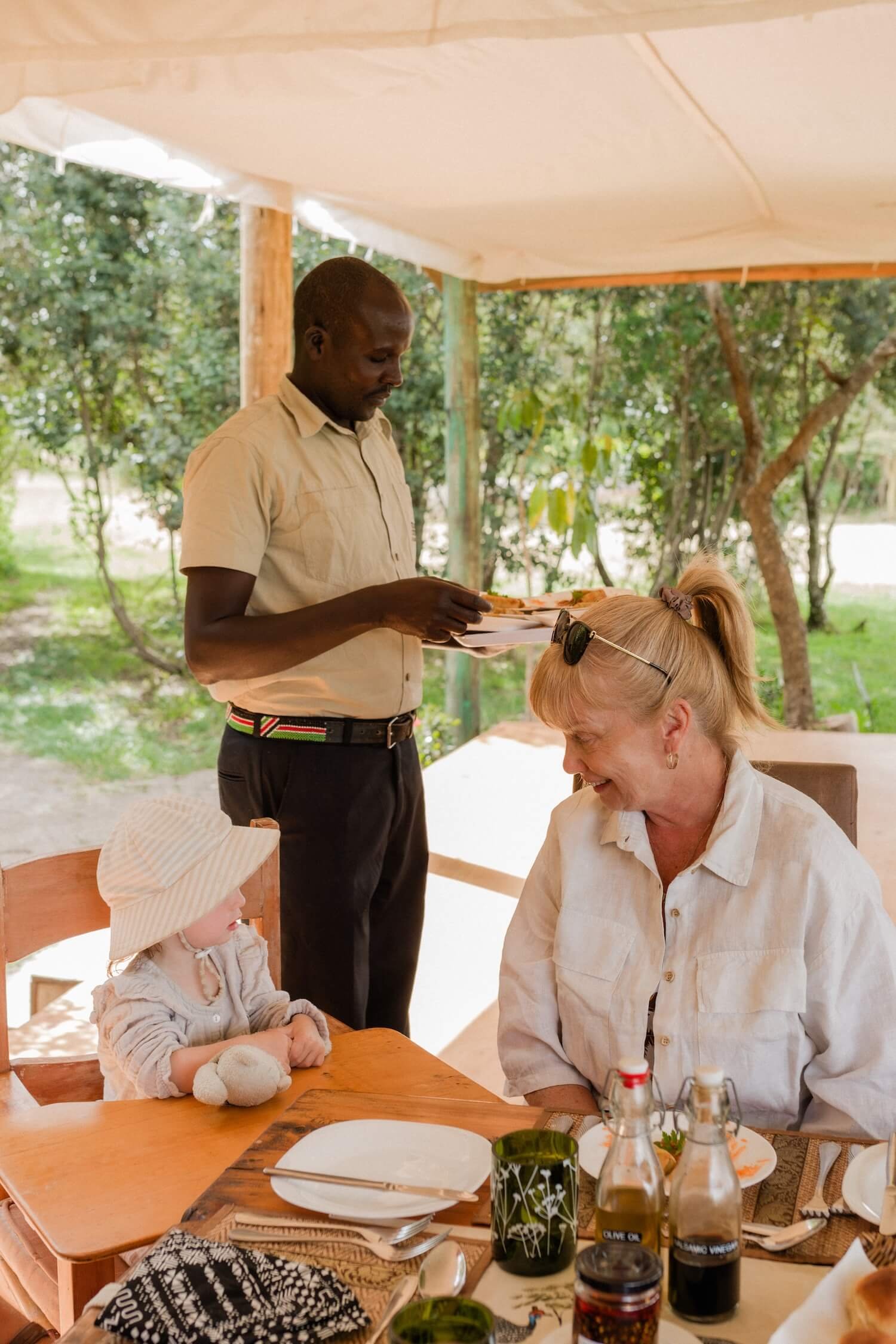
Family lunch at The Safari Cottages, Kenya
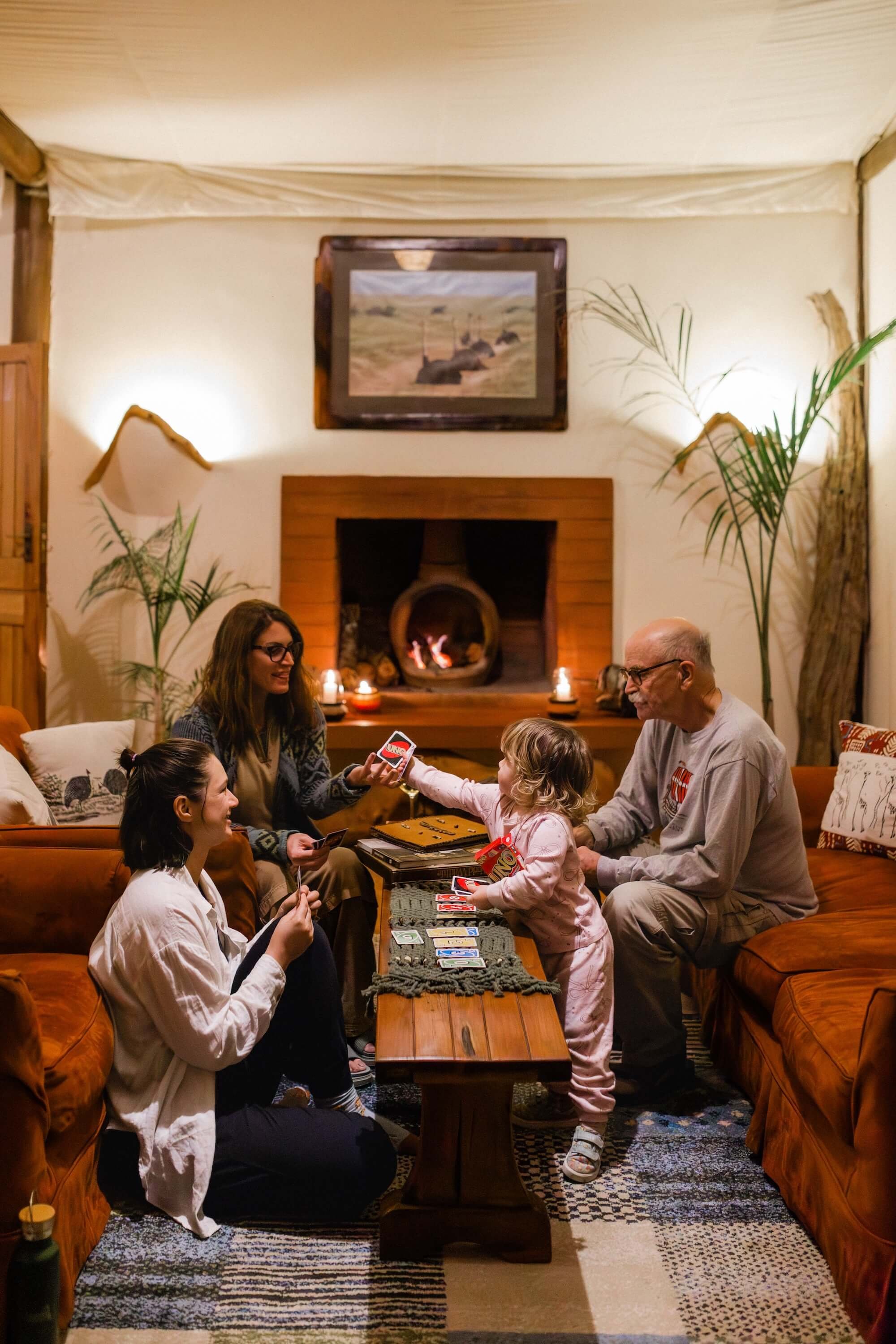
An evening in with games
Myth 5: "A Family Safari Will Be Prohibitively Expensive"
Reality: Family Pricing Makes It More Affordable Than You Think
Yes, safaris aren't budget travel. But when you book smart, they're often cheaper than you'd expect.
Look for accommodations that offer discounted rates or even free stays for children under 3 or under 12. Many lodges across Kenya have these policies specifically to encourage family bookings. The Safari Cottages offer family rates that make a multi-night stay really reasonable, especially in the green season (April, May - mid-June and November).
If you're heading to the Kenyan coast (before or after your safari), private villa stays can reduce costs when traveling with multiple children. You do your own cooking (or hire a chef for specific meals), which cuts accommodation costs significantly.
Calculate the full cost of a family holiday at home — flights, accommodation, meals, activities — and compare it to a safari package. You might be surprised at how competitive it actually is.
The Real Picture: Families Thrive on Safari
We've raised two children in the African bush. Our grandchildren visit Kenya every year. They love the freedom and space and connect with the wildlife and joyful staff. They spend time with our chefs in the kitchen. They help with daily tasks. They name all the animals on game drives.
A family safari isn't something you have to be brave to do. It's something your family will treasure.
Preparing Your Family for Safari
Practical steps before you travel:
Discuss wildlife safety with children ahead of time (calm, respectful observation from the vehicle)
Pack familiar comfort items (favorite stuffed animal, bedtime book, snacks they know)
Explain that guides are experienced with children and there to help and encourage them to ask questions
Let us know your children's ages, dietary needs, and any concerns in advance
Plan flexible schedules — game drives can be adjusted for rest times
“Our family of eight (including boys ages 8 and 12) stayed for three nights at these wonderful cottages. The accommodations were private and well appointed. The meals were superior, one day we gave the cook a standing ovation! Watching the elephants parade past at lunch was a highlight of our stay. There were plenty of place for our boys to explore safely during the day. Each evenings the guard, Peter, made a small bonfire for us and provided marshmallows and stories to entertain us. One evening he brought out a telescope and showed us the stars of the Southern Hemisphere! He is a real treasure.”
- December 2024 -
Ready to Book Your Family Safari?
If you're still uncertain about taking children on safari, we understand. But the answer to almost every family concern is: it works better than you think.
Our team has decades of experience with family bookings. We know what works. We know what questions to ask. We know how to structure your stay so everyone enjoys it — parents and children alike.
Get in touch with us to discuss your family safari. Tell us your children's ages, your concerns, your goals. We'll build an itinerary that works for your family and answer every question you have.

Experience the Ultimate 3-Day Safari at Ol Pejeta Conservancy
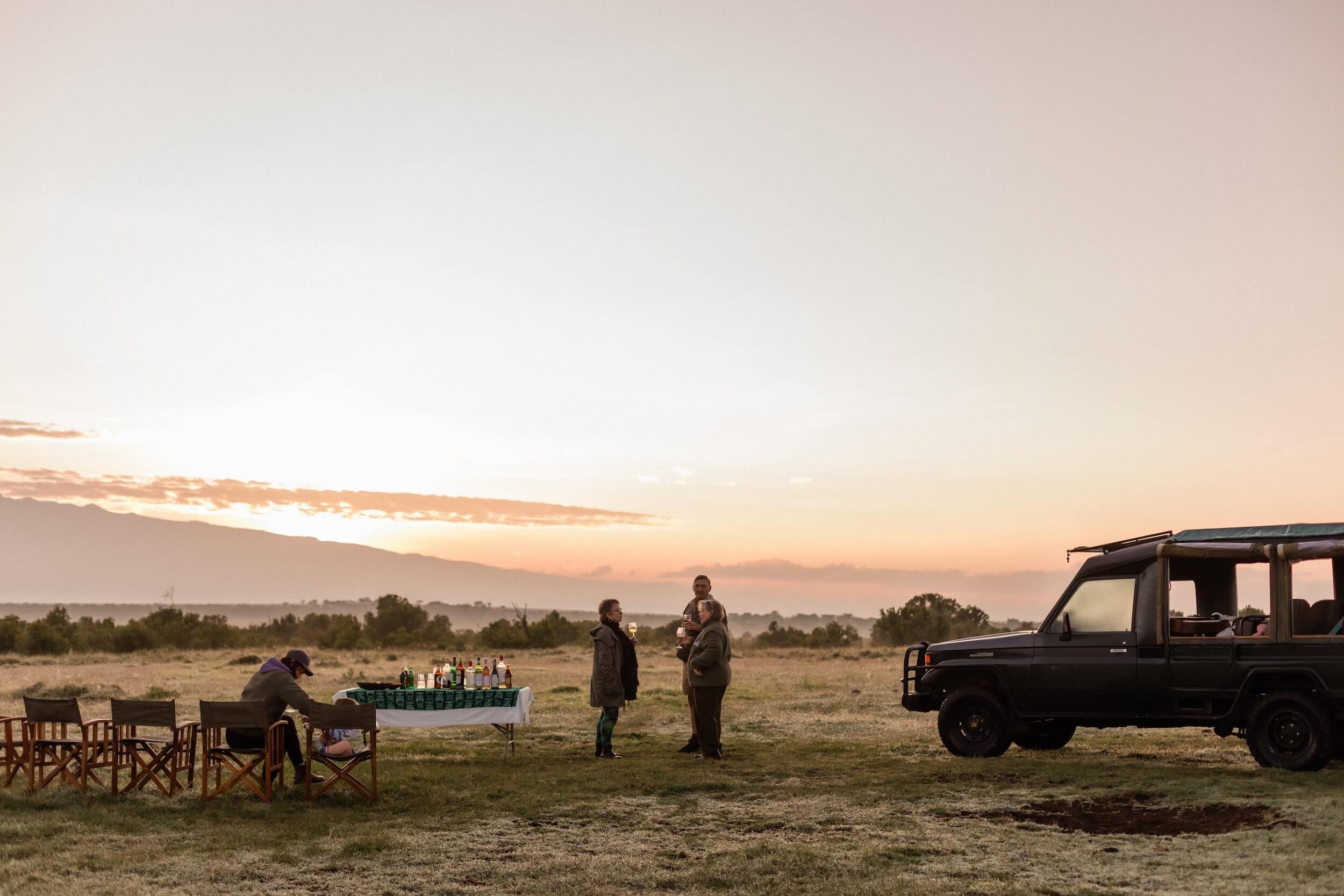
Here’s what you can get up to on a 3 day safari on Ol Pejeta when you stay with The Safari Cottages
Discover the magic of a 3-day safari at Ol Pejeta Conservancy, one of Kenya’s premier wildlife sanctuaries nestled between the foothills of Mount Kenya and the Aberdare Mountain Range. This exclusive safari offers an unforgettable adventure into the heart of Laikipia, where you can witness Africa’s iconic wildlife up close, including the Big Five, endangered species like Jackson’s hartebeest and reticulated giraffe and southern black rhino as well as meeting the critically endangered northern white rhino - the last two left in the world reside on Ol Pejeta.
A day on safari can look different for different people and their interests, and it can play out very differently depending on where in the continent you are. So, what can you expect from a day on safari in Ol Pejeta, with The Safari Cottages? Let’s get stuck in!
First off, there’s so much to do and to see here that we recommend a minimum 3 night stay; that’s two full days with the afternoon of your arrival and the morning of your departure adding up to three days. And here’s how we’d suggest you spend your time so you get the most out of your Kenya safari holiday with us.

You’ll have amazing views of Mt Kenya from all around Ol Pejeta
SUGGESTED ITINERARY FOR YOUR 3 DAY SAFARI IN OL PEJETA
DAY ONE
Your safari begins with a scenic drive or a flight from Nairobi to Ol Pejeta, a private conservancy renowned for its conservation efforts and diverse wildlife. As soon as you enter the gates you are on your first game drive, spotting elephants, lions, rhinos, and rare chimpanzees in their natural habitat. The conservancy’s commitment to wildlife protection ensures a rich and authentic safari experience. If you depart from Nairobi in the morning you’ll likely arrive at The Safari Cottages in time for lunch. When you arrive you’ll be met by our team and management will give you a short briefing explaining a little more about the property layout, safety and what you can get up to during your stay.
It’s pretty hot in the middle of the day so you'll have lunch on your verandah, served up by your chef and waiter, before relaxing and unpacking after your travels. We suggest heading out on your first game drive today around 4.30PM and your team can prepare a cup of tea and a snack for you before you go incase you’re feeling peckish. After a game drive and a sundowner (a drink and snacks enjoyed whilst watching the sun set) you can return to camp to an open fire and enjoy dinner on your verandah or under the stars before tucking in for a good night’s sleep.

Returning from your game drive to a roaring fire
DAY TWO
Today is your prime wildlife day! You’ll spend the day exploring Ol Pejeta’s vast landscapes on morning and afternoon game drives. Highlights include visiting the chimpanzee sanctuary and the rhino conservancy, where you can learn about ongoing efforts to protect these endangered species. Evening drives offer a chance to see nocturnal wildlife and enjoy stunning sunsets over the savannah

Lions hunting on a morning game drive
You’ll be gently woken around 6:00 AM with your preferred tea or coffee before heading out just before sunrise — one of the best times for predator activity. You’ll head off just before sunrise at 6.30AM in search of lions, leopards, cheetah, elephant, black and white rhino, giraffe and so much more! The conservancy abounds with an incredible density and variety of game so be sure you’ve packed an extra memory card for your camera - you’re going to need it. As the sun rises and you start to warm up you’ll tuck into a picnic breakfast and a cup of freshly brewed Kenyan coffee or tea.
You’ll meander back through the bush as your game drive continues and the heat of the day really starts to set in, then arrive at your safari cottage to a colourful lunch, a cool drink and a chance to rest.
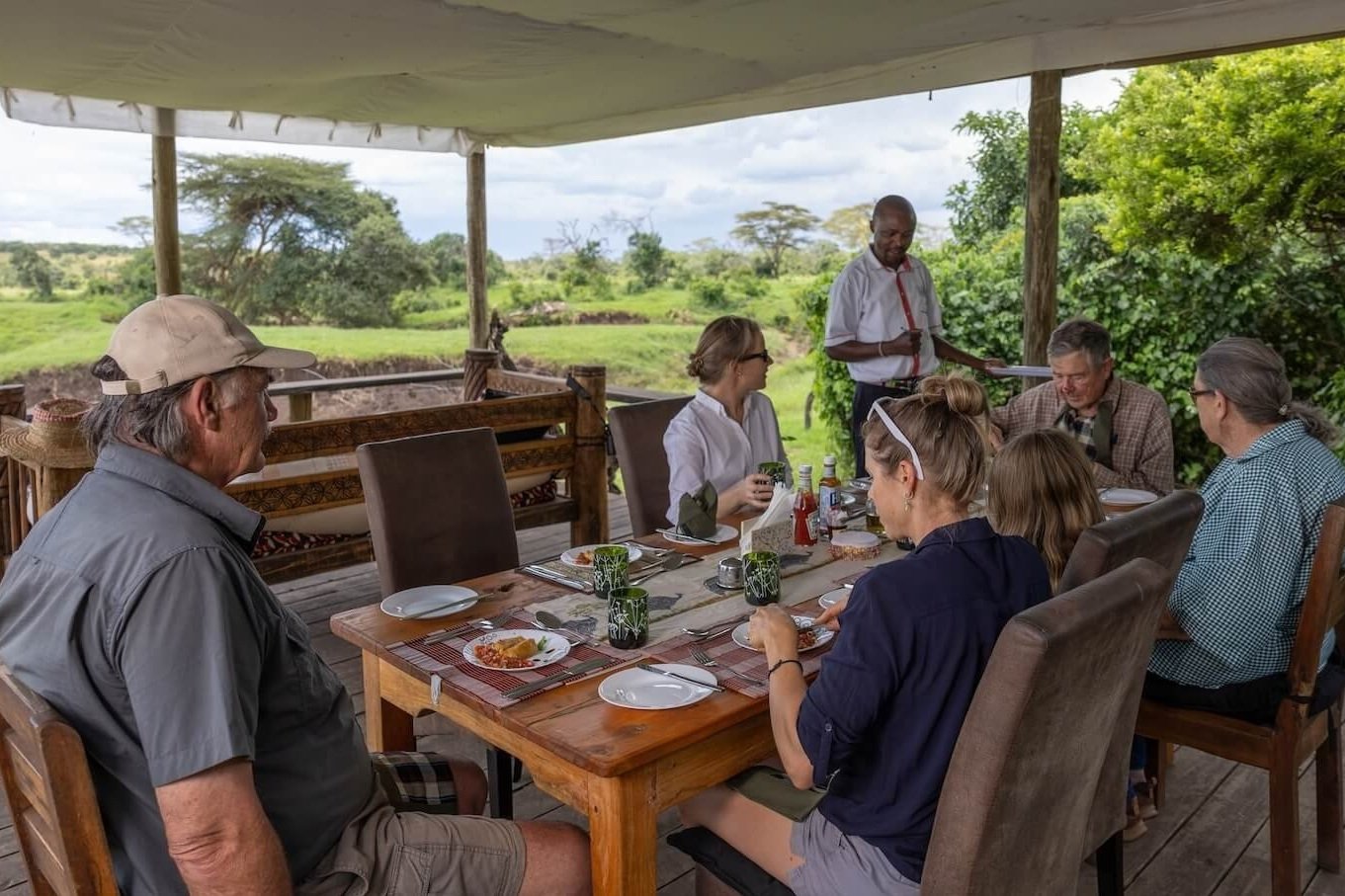
Tucking in to leisurely lunch on the riverside deck
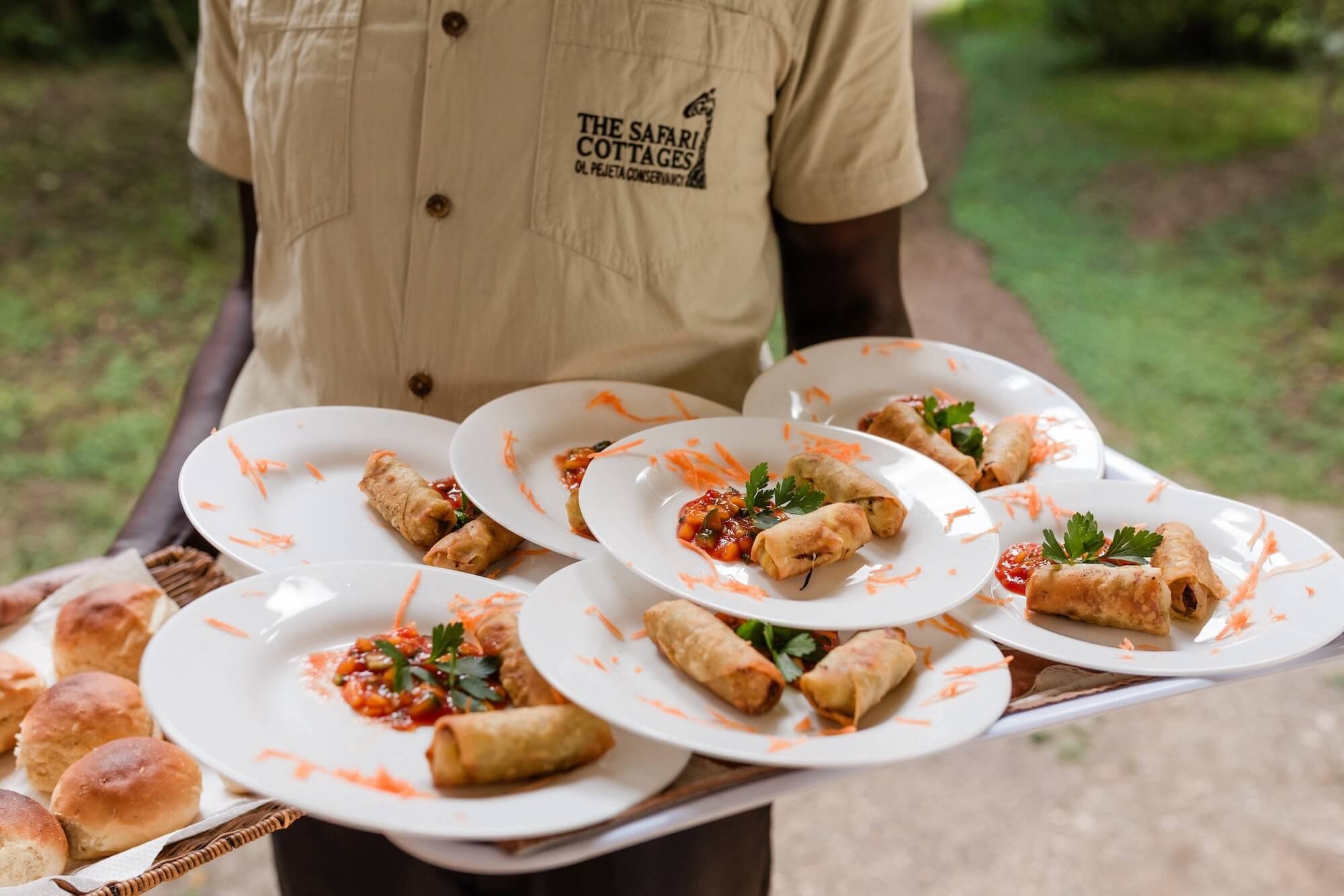
Spring rolls for starters
Midday at The Safari Cottages is a time to rest and recalibrate; animals are usually asleep in the shade of the trees at this time of day so we follow their lead and take the opportunity to relax too. If you’re not a napper then that’s okay too, here are some lovely ways to enjoy midday on the property…
Guided walk and birdwatching around the property: our guide will take you on a walk around the property pointing out birds, plants and tress of note. Elephants and giraffe often linger about the back of camp in the heat of the day so you might spot them on your walk too.
Yoga on the verandah: each safari cottage is provided with yoga mats to help you stretch out and feel great on your safari
Garden tours: our thriving garden is the source of a lot of our salads and fresh herbs and the chefs are very proud of their green fingers
Cooking lessons with your private chef: learn how to make some of our favourite Kenyan staples
Reading or simply soaking in the views: your verandah has lovely views across the river and plains and you never know what you might spot!
This relaxed downtime is one of the biggest advantages of a private safari experience.
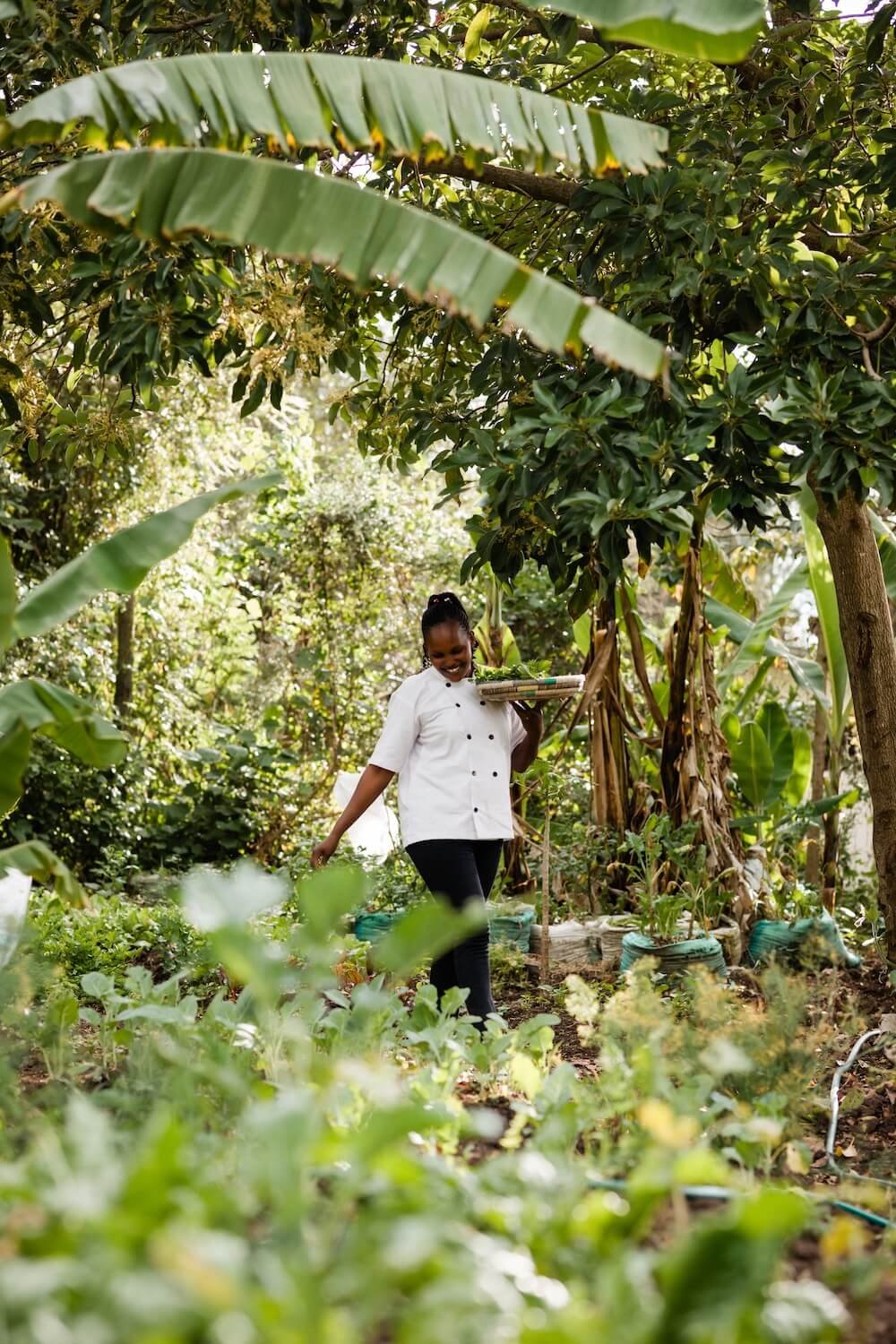
A tour of the garden with Chef Vicky
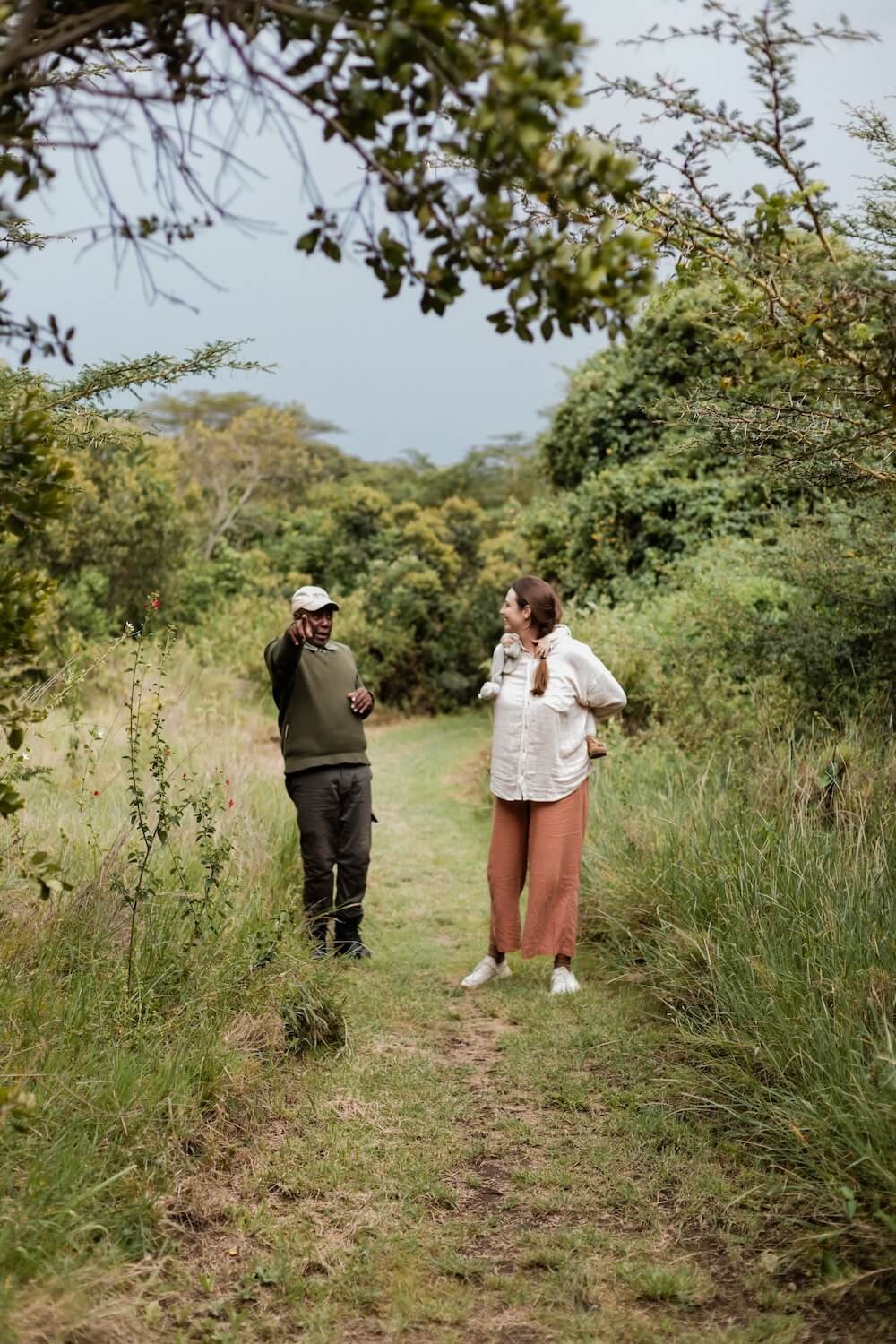
A guided bush walk with Peter
After an afternoon cup of tea you’ll head out again around 4.30PM to see what wonderful wildlife awaits you on the plains surrounding our little spot of heaven in the bush. The golden hour light makes this a favourite drive for photographers. After your sundowner you’ll head back “home” to a roaring fire under the stars and a drink before dinner. If you have a cloudless night consider asking the askaris to share their knowledge of the southern night skies — a memorable and often overlooked experience.
DAY THREE
A highlight unique to Ol Pejeta is the chance to visit Najin and Fatu, the world’s last two northern white rhinos and, this morning, you’ll head off after a light breakfast to meet them. Ol Pejeta’s passionate rhino caretakers will meet you and guide you to the spacious enclosure that Najin and Fatu, a mother and daughter due call their home. They will tell you all about how these gorgeous girls found their way to Kenya and the impressive project that Ol Pejeta and it’s partners have undertaken to bring Northern White rhinos back from the brink of extinction.
This heart-warming and educational conservation experience includes:
Guided visit to the northern white rhino enclosure with expert caretakers who will share Najin and Fatu’s story with you. They will also give you insight into the northern white rhino recovery project; a world-first IVF program
There is a small curio shop on site and an education centre, and if you’d like to make a donation to the Northern White Rhino program you can do that here too
Then, with a heart full, you’ll return back to your bush home for brunch and a chance to relax in the heat of the day or enjoy any of the on-property experiences that you may have missed out on the day before.
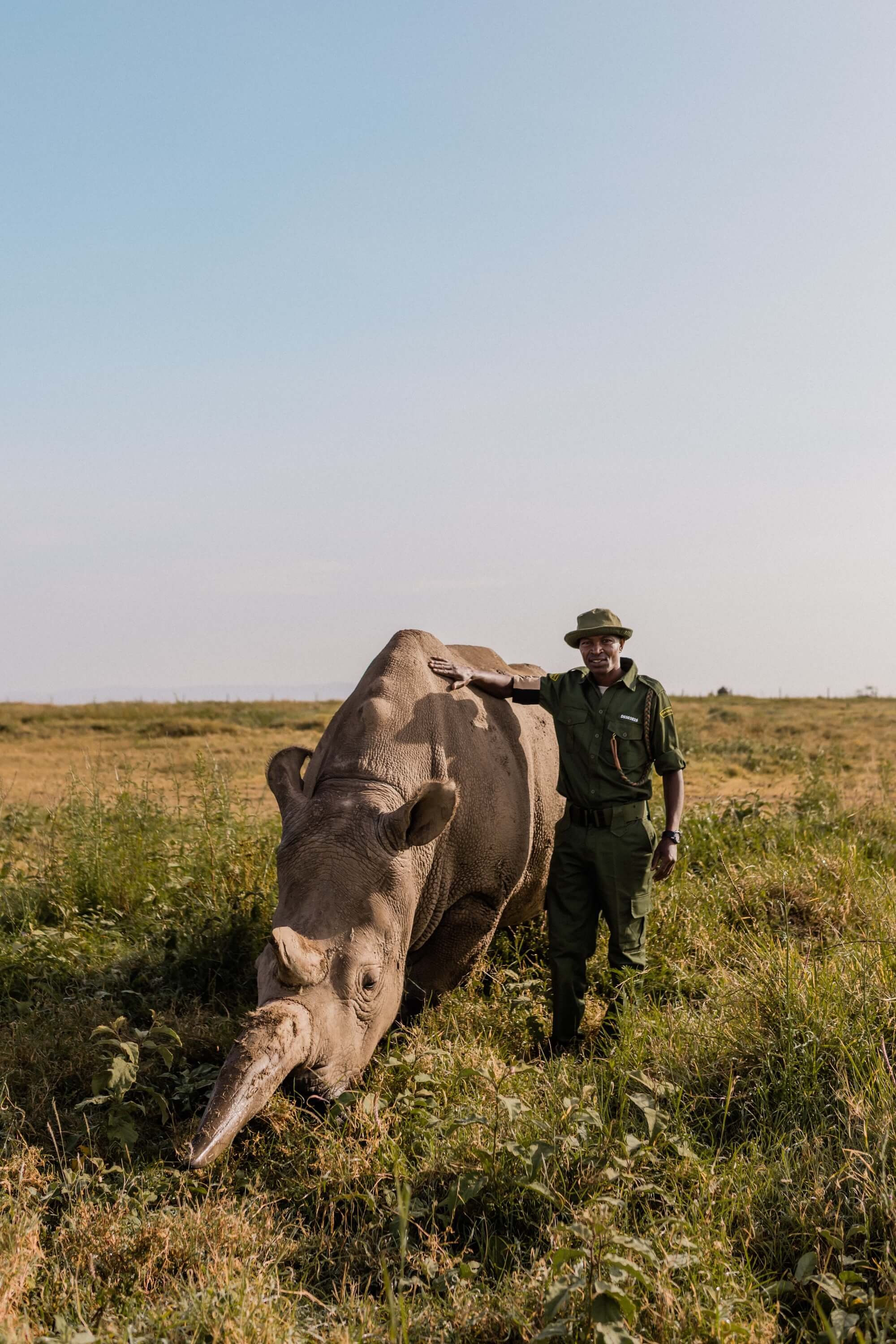
Najin with head caretaker Zachariah Mutai
Meeting the last two Northern White Rhinos in the world
This afternoon you’ll embark on your final evening game drive and sundowner, returning with a spotlight on a night drive in search of Kenya’s more secretive nocturnal species like leopard, aardvarks and white tailed mongoose. Enjoy dinner and a drink around the fire before tucking in for the night.

A big male cheetah posing for the shot on an afternoon game drive
DEPARTURE DAY
After breakfast today your guide will drive you to Nanyuki Airport to meet your flight to your next destination, or drop you off at the Ol Pejeta entrance gate to meet your road transfer back to Nairobi. Your three day safari with us will leave you full to bursting with enthusiasm for the wilderness, wildlife and people that call this corner of the world home and leave you inspired by the hard work and dedication of our conservation team. If you do choose to linger longer you can continue your safari on the conservancy or explore further afield with a day trip to the local town, Aberdares National Park or Ngare Ndare too.
Remember, you have a private guide and vehicle for the duration of your stay with us so this outline is just one idea. You can do as little or as much as you’d like.
ESTIMATED COSTS FOR THIS 3-DAY OL PEJETA SAFARI COTTAGES SAFARI
High Season 2026: (15 June - 31 Oct) - USD2,360 per person
Low Season 2026: (01 Nov - 15 Dec) - USD2,090 per person
High Season 2027: (01 Jan - 07 Jan & 15 June - 31 Oct) - USD2,470 per person
Low Season 2027: (7 Jan - 14 June & 01 Nov - 15 Dec) - USD2,185 per person
Notes on pricing:
Prices include accommodation, all meals, drinks and a private vehicle and guide. Transport too and from Ol Pejeta is not included.
The above prices are based on 2026 rates and subject to change for 2027
Children under 12 are half prices and under 3 are free
Please contact us with the number of people in your party and the ages of any children + your preferred travel dates for a personal and accurate quote
Want to linger a little longer? Lovely! Here’s our suggested itinerary for a 5-night stay, including prices.
BOOK YOUR SAFARI AT OL PEJETA SAFARI COTTAGES
Best Time to Visit Kenya for a Safari: A Month-by-Month Guide
When is the best time to visit Kenya for a safari? Our month-by-month guide covers wildlife, weather, costs and crowds for every season — written by people who live at Ol Pejeta Conservancy year-round.
You've decided Kenya is the destination. Now comes the question everyone asks: when's the best time to go?
The honest answer — and we say this as people who live here twelve months a year — is that Kenya is extraordinary in every season! The wildlife doesn't migrate away from Ol Pejeta. The landscape doesn't stop being spectacular when it rains. But different months absolutely do offer different experiences, and understanding what to expect from each one will help you choose the trip that's right for you.
This is our month-by-month guide to the best time to visit Kenya for a safari.
January to March: Dry, Hot and Excellent for Wildlife
January is a tale of two halves. The first two weeks carry over the festive season's higher prices and visitor numbers, but from mid-January the country quietens, rates drop to mid-season levels and the experience noticeably opens up. February and March are, in our view, some of the most underrated months on the Kenya safari calendar.
What to expect: Dry, warm conditions across most of the country. The grass is beginning to thin after the short rains, which makes wildlife easier to spot. Plains game — zebra, wildebeest, gazelle — give birth in February and March ahead of the April rains, which in turn drives a noticeable uptick in predator activity. Lions, cheetahs and leopards are well-fed and highly visible. Temperatures at Ol Pejeta sit comfortably in the mid-twenties during the day, dropping pleasantly in the evenings.
Wildlife highlight: February and March are among the best months for big cat sightings at Ol Pejeta, The Masai Mara, Samburu region and Amboseli and surrounds. The open plains and active predators make for some of the most compelling game drive experiences of the year.
Crowds and cost: Low to mid-season. Good availability, lower rates than peak, and private conservancies especially feel very spacious.
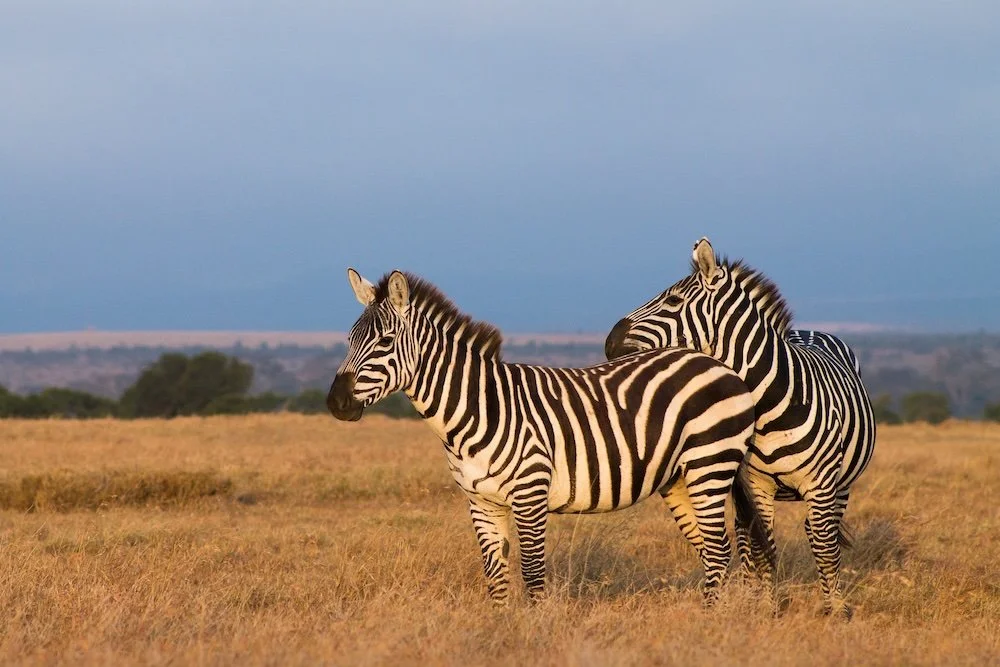
Golden light: March on Ol Pejeta
April to May: The Green Season — and Why It's Worth Reconsidering
April and May have a reputation in Kenya that we'd suggest you consider with an open mind. Historically known as "the long rains," they're still widely treated as a red flag, but global weather patterns are shifting, and this rule doesn't hold as firmly as it did ten years ago.
What to expect: Rains do arrive in April most years, typically as powerful afternoon showers rather than all-day downpours. The conservancy turns a vivid, deep green almost overnight. The plains become lush and photogenic in a way the dry season simply can't match. Drier conditions largely return by mid-May, and by the end of May many properties have reopened for the season. The practical reality is that a lot of camps close in April and May for maintenance, and some more remote locations struggle with road access. At Ol Pejeta, our all-weather roads run regardless of rainfall — game drives go out every morning and afternoon, whatever the forecast. We are open all year.
Wildlife highlight: Green season wildlife photography is extraordinary. Dramatic cloud formations, diffuse light, vivid backdrops and animals in peak condition after abundant water and vegetation. Hyena pups are commonly sighted in April. Birdlife is at its most active and diverse.
Crowds and cost: The lowest rates of the year. Some of our guests choose April and May precisely because they have the stunning wilderness almost entirely to themselves. If that kind of solitude is what you're looking for, this is the window.
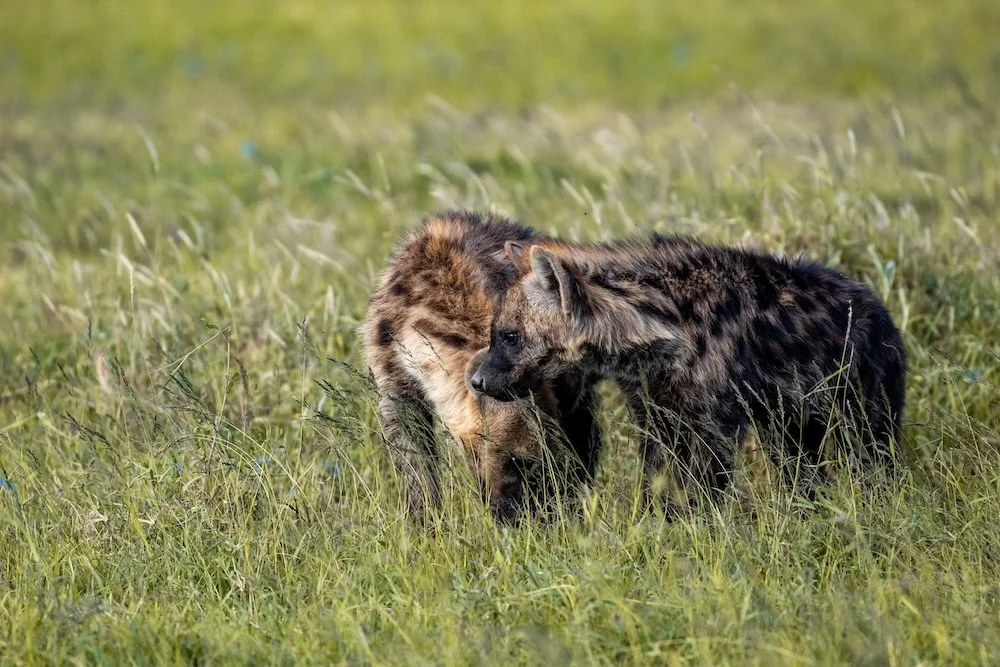
Hyena pups on Ol Pejeta

Kite surfing in Diani
June: Shoulder Season — the Best of Both Worlds
June is an incredibly rewarding month to travel to Kenya, and one of the most underbooked. Following the rains, the landscape is still lush and green but the skies are clearing and the grass is beginning to thin. At Ol Pejeta and around most of the country things are still pretty quiet, rates are still at or near low-season levels, and the dry season conditions that make wildlife viewing so reliable are already beginning to arrive.
What to expect: Comfortable temperatures, clearing skies and increasingly good game viewing as vegetation opens up. Predators are active. The Big Five are consistently present on Ol Pejeta year-round, and June offers them in ideal conditions — not yet the crowds of July and August, not the uncertainty of the rains.
Wildlife highlight: June is excellent for cheetah sightings. As the grass thins, these open-plains hunters become much easier to find and observe. Early June also sees the beginnings of the Great Migration's movement north toward Kenya from Tanzania's Serengeti. No major herd movement yet, but they are starting to trickle in.
A note on the coast: Beaches in northern Kenya — particularly around Watamu — can be affected by seaweed in early June. This is harmless but worth knowing if a beach extension is part of your plan.
Crowds and cost: Shoulder season. Excellent value and good availability before July's surge.
July to October: Peak Season — Kenya's Finest Safari Months
This is Kenya's most celebrated safari window, and the reputation is deserved. The dry season is in full effect, the grass is at its shortest, wildlife concentrates around permanent water sources and the sightings are at their most prolonged and reliable. July also marks the beginning of the Great Wildebeest Migration in the Masai Mara — one of the most spectacular wildlife events on earth — which draws significant numbers of visitors and photographers to Kenya's most famous reserve.
What to expect: Clear skies, warm days and cool nights. At Ol Pejeta, temperatures sit comfortably in the low-to-mid twenties during the day. The conservancy is at its most open, game drives are consistently productive, and the quality of the light — particularly in the late afternoon — is exceptional.
July and August represent peak season at most Kenya properties. Visitor numbers are at their highest and rates reflect that. September and October are, in our view, among the very best months to visit: the dry season conditions remain excellent, the intensity of high summer has eased, and the conservancy is noticeably quieter than it was in August.
Wildlife highlight: The dry season is the best time of year to see the Big Five reliably and repeatedly. Elephants gather in large family groups around river systems. Rhinos — both black and southern white — are consistently visible on the open plains of Ol Pejeta. Lion prides are active and predictable. And guided bush walks are at their most rewarding, with shorter grass giving a clearer view of the landscape on foot.
Crowds and cost: Peak season rates across the board. Advance booking is strongly recommended for July and August in particular.
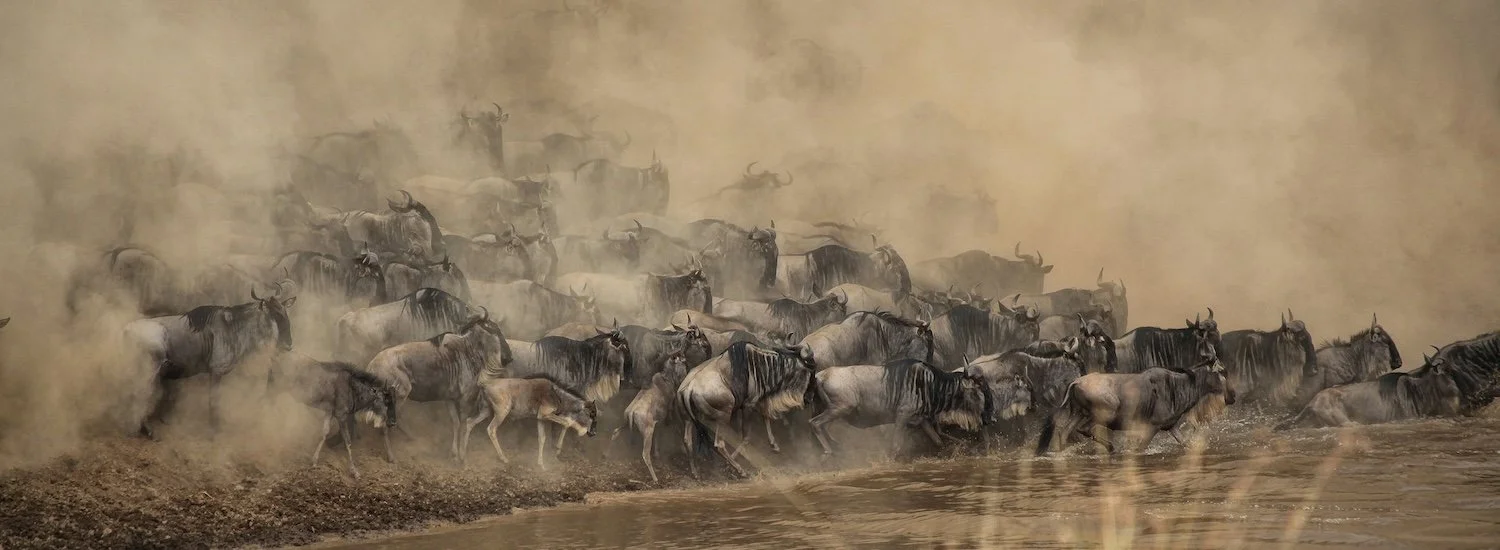
The famous Mara river crossings
November: Short Rains — Dramatic Light and Good Value
November marks the beginning of Kenya's short rains, which typically run through to mid-December. These are shorter and less intense than the long rains — usually concentrated in afternoon showers — and most properties remain fully open throughout.
What to expect: A greening landscape, dramatic skies and light that photographers reliably describe as extraordinary. Afternoon cloud formations build over the plains, and the combination of vivid green grass and dramatic weather makes for genuinely cinematic game drive conditions. Wildlife viewing remains strong throughout November — the resident species at Ol Pejeta are here year-round.
Tourist numbers begin to ease in November as the migration season in the Mara winds down, which means a quieter conservancy and rates that reflect it.
Wildlife highlight: November is excellent for birdwatching. Migratory species arrive in significant numbers from Europe and Asia, joining Ol Pejeta's resident population of over 300 species. If birdwatching is a priority, this is one of the best months.
Crowds and cost: Shoulder to low season. Good availability and value before the December surge.
December: Festive Season — Vibrant, Expensive, and Worth It
December splits neatly in two. Early December is much like November — the short rains are finishing, wildlife is thriving after the rains, and the conservancy is quieter than high season. From mid-December, the festive season begins in earnest. This is the busiest and most expensive time to visit Kenya, but it's also one of the most rewarding: the weather is largely clearing to sunny skies, wildlife is in excellent condition, and the energy of the season — particularly on the coast — is hard to match.
Wildlife highlight: December wildlife viewing is excellent, with the rains having brought the plains to life and predator activity running high. This is also when The Safari Cottages feels particularly special — fires lit in the evenings, Christmas on the verandah, stars over the conservancy.
Crowds and cost: High season rates from mid-December through early January. Book well in advance.

On safari with The Safari Cottages in Ol Pejeta
A Note on Rainfall and Changing Weather Patterns
One thing we'd ask you to take from this guide: Kenya's seasons are not as fixed as they once were. Global weather patterns are shifting, and the calendar rules that held firmly twenty years ago are now guidelines rather than guarantees. We have had dry Aprils and wet Julys. We've had years where the short rains didn't arrive until December.
Our honest advice: travel for the wildlife, not the weather. At Ol Pejeta, the animals are here every month of the year. The experience changes with the season, but it never disappoints.
-
The dry season from July to October offers the most reliable wildlife viewing, with thinning grass, concentrating animals and clear skies. January to March is a quieter, more affordable alternative with excellent conditions. June is an outstanding shoulder-season choice. But here at Ol Pejeta every month is rewarding and we are open all year.
-
April and May are the lowest-priced months at most Kenya properties, including The Safari Cottages. Though bear in mind that a lot of camps will be closed during this time so you may have less options. Rates drop significantly for those that remain open and wildlife areas are at their quietest. November and early December also offer good value with better weather than the long rains.
-
The Great Wildebeest Migration reaches Kenya's Masai Mara from approximately July through October, with the dramatic river crossings typically peaking in August and September. The migration is specific to the Masai Mara region and is not visible from Ol Pejeta in Laikipia.
-
Less so than the conventional wisdom suggests. Rains do arrive in April most years, but at Ol Pejeta our all-weather roads mean game drives run regardless of conditions. The green season offers extraordinary photography, much lower rates and a conservancy almost entirely to yourself. Many of our guests choose April specifically for the solitude.
-
Kenya sits on the equator, which means temperatures are broadly consistent year-round — warm days and cool evenings. Laikipia's altitude (around 1,700 metres) means The Safari Cottages is cooler than the coast, with most morning game drives requiring a fleece. The main variables are rainfall: concentrated in April–May and November–December, and the dryness of the landscape, which affects vegetation and wildlife visibility.
Planning your route around Kenya? Our guide to choosing the best Kenya safari itinerary covers the logistics of combining Ol Pejeta with other destinations.
Keep reading for more travel information to inspire your Kenya safari holiday

November is green season in Kenya and it is lushly green with afternoon rainfall and flowing rivers. It offers something rare: lush landscapes, solitude before the December holiday rush, and exceptional shoulder-season value.