

What to Expect on a Day Trip to the Aberdares: Cloud Forests, Waterfalls & High-Altitude Wildlife
The Aberdares are one of Kenya's most dramatic and underrated destinations — a high-altitude cloud forest completely different from the plains. A day trip offers you a chance to explore its pristine forest, spectacular waterfalls and wildlife found nowhere else in Kenya. It's the perfect complement to your Ol Pejeta safari, offering scenery, adventure, and a taste of Kenya's diverse ecosystems.
The Aberdare Range is one of Kenya's most dramatic mountain forests — a sprawling high-altitude wilderness where the landscape shifts from open plains to dense cloud forest within hours. While most visitors to Kenya head to the Masai Mara or the Rift Valley, the Aberdares remains one of the country's best-kept secrets. If you're staying at Ol Pejeta and looking for something completely different from a traditional game drive, a day trip to this fantastic part of the country offers scenery, wildlife and experiences you simply won't find elsewhere.
Your Aberdares Adventure Begins
Like all our day excursions, you'll start with an early breakfast at your safari cottage — steaming Kenyan coffee or tea, fresh fruit, a selection of baked goods and Sonja's famous homemade granola. After fueling up, your guide will collect you and you'll set out toward the Aberdare Range, driving through rural farmland and small villages toward the foothills of the range. This is where you'll get a real glimpse of life in the Kenyan highlands: terraced farms, working communities, children walking to school. It’s wonderful to watch the rhythm of rural Kenya unfolding around you.
As you climb in elevation, the landscape shifts. The savannah gives way to green hillsides, then to thick forest. The air becomes noticeably cooler. By the time you arrive at the forest gate in mid-morning, you're in a completely different ecosystem — misty, lush, alive with possibility.
The Aberdare Forest: Watch the Landscape Transform
The Aberdare Range is a place of extraordinary beauty and scale. Dense cloud forest covers the high peaks, creating a landscape that feels primordial and untouched. The air smells of earth and vegetation and light filters through the canopy in dramatic shafts. The forest is alive with sound: birds calling, leaves rustling, the distant sound of running water.
Your explorations begin the moment you pass through the gate.
The Aberdares are altitude between 2,000 and 3,000 meters — high enough that the vegetation is completely different from the dry plains of Laikipia. You're walking through indigenous forest full of giant heather, wild banana plants, and towering cedar and olive trees.
The temperature is cool in the mornings then warms up as the day breaks in ernest — bring layers. Though the forest canopy is dense enough that rain is a possibility even on otherwise clear days.
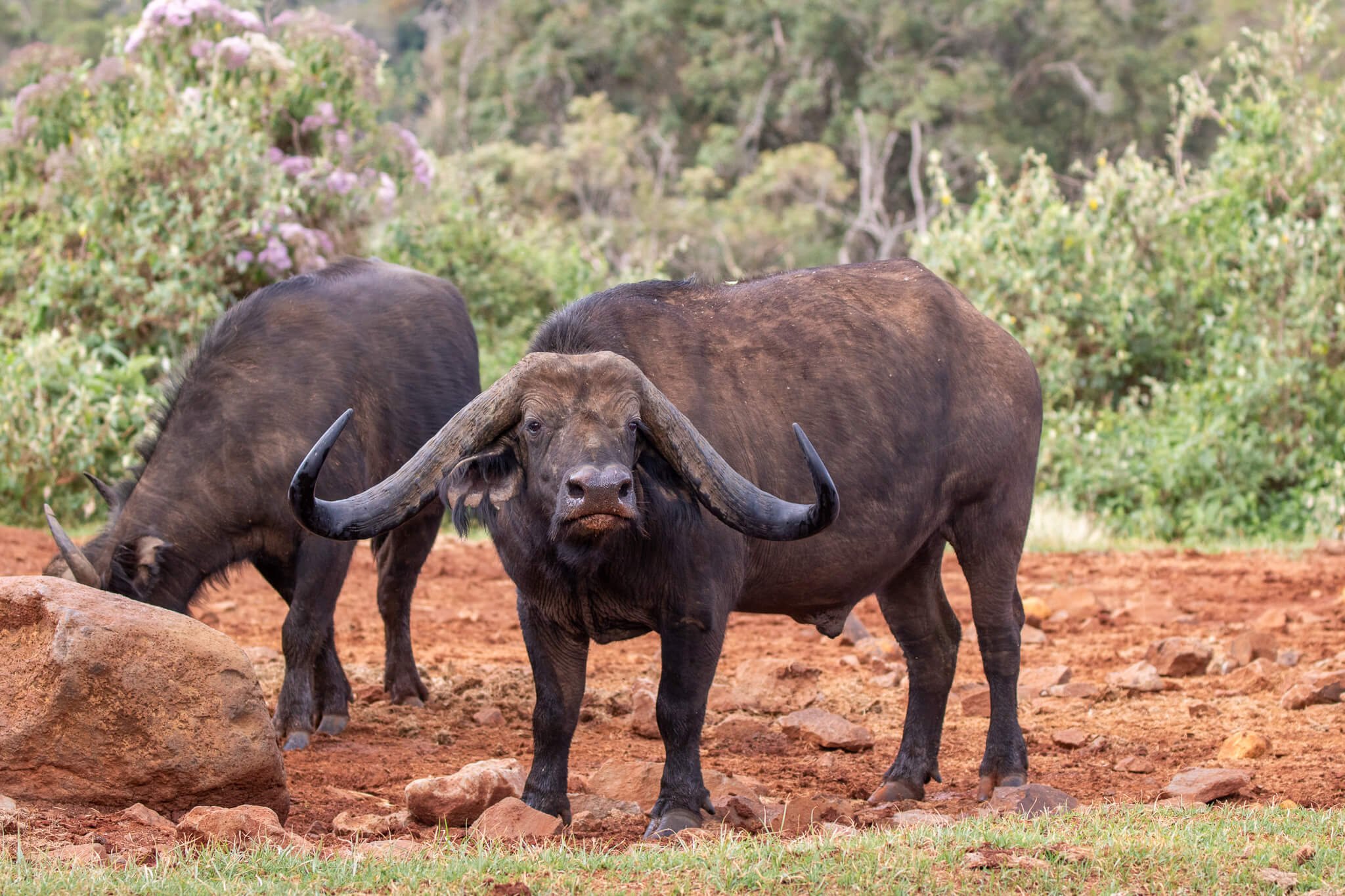
The Aberdares' Unique Wildlife
While the Aberdares are known more for scenery and birdlife than for big game, the mountain forest has its own wildlife story. The altitude and vegetation support species you won't find on the plains.
Leopards live in the Aberdares and occasionally leave tracks on the forest paths, though actual sightings are rare. Your guide will point out their pug marks in the mud.
Hyenas are present but nocturnal. You won't see them on a day trip, but they're part of the forest ecosystem and you’ll see evidence of them everywhere.
Forest buffalo — a smaller subspecies than plains buffalo — move through the Aberdares. They're shy and avoid humans, but evidence of them is everywhere: dung, tracks, heavily worn paths through the dense vegetation where herds regularly move.
Giant forest hogs are unique to this area. They are secretive but spotted often.
Bongo are rare to see but if you’re going to see one anywhere, it will be in the Aberdares. Keep your eyes up.
Bushbucks and other forest antelope often cross your path too.
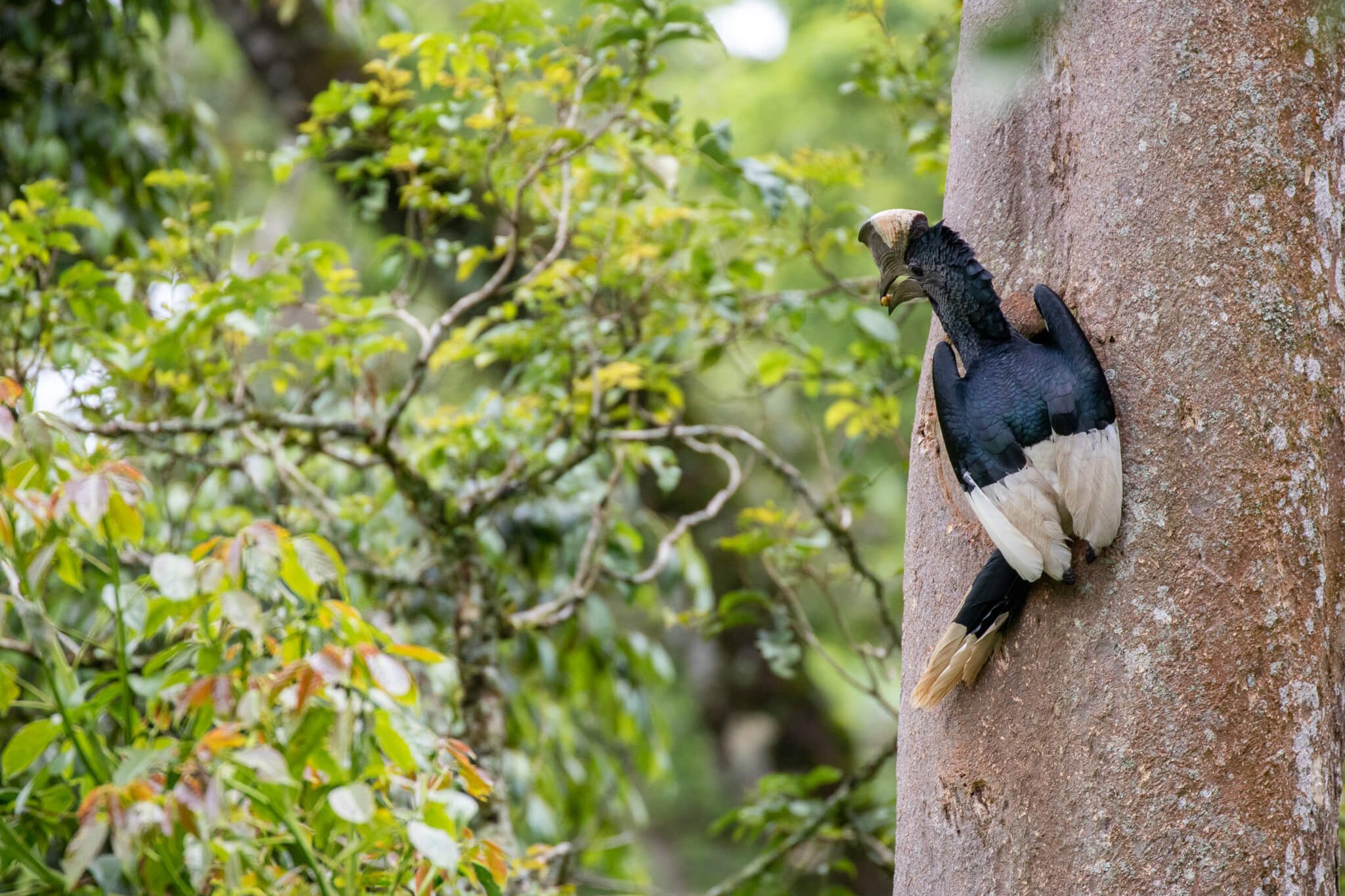
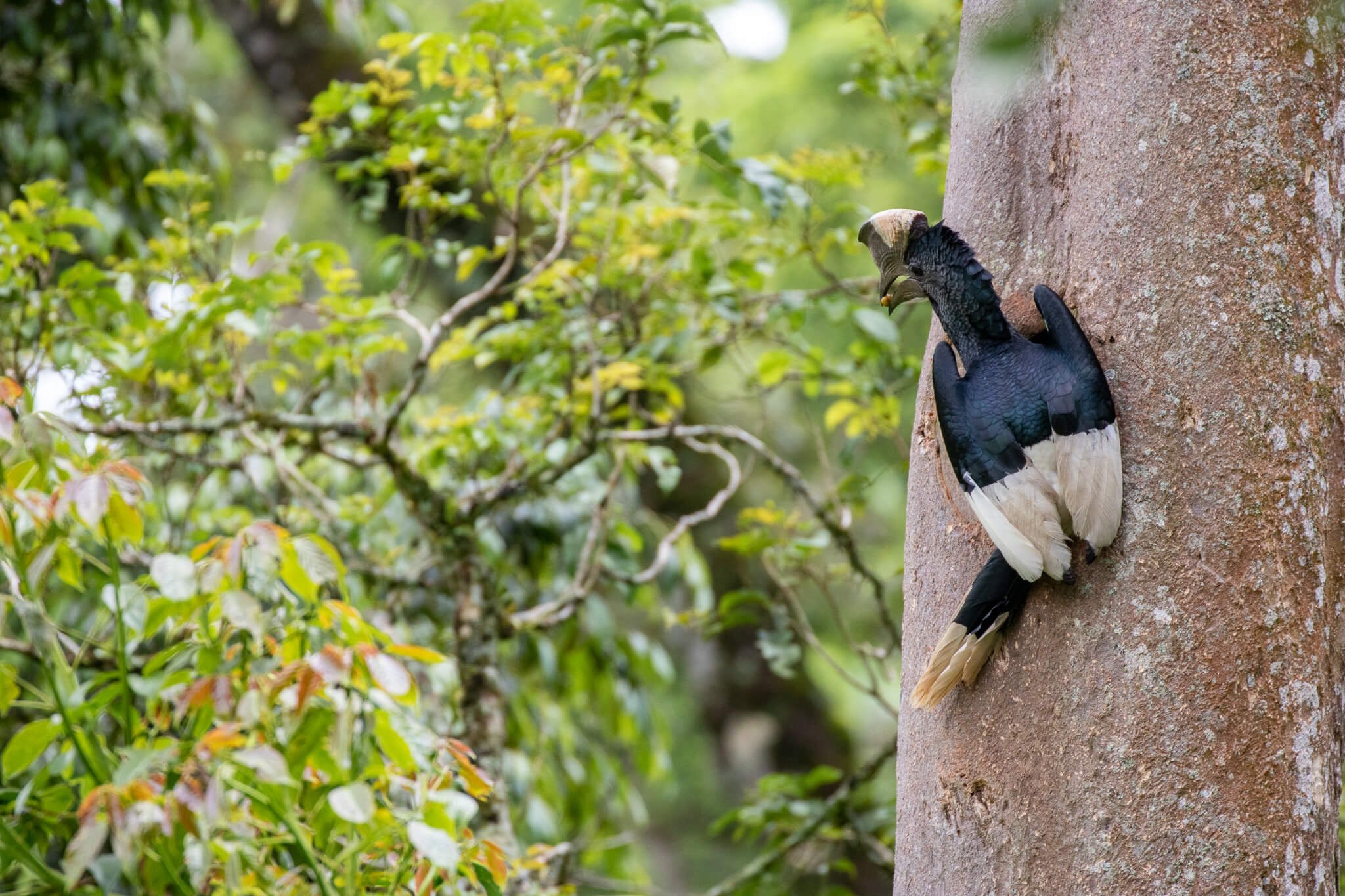
But the real wildlife spectacle is the birds. The Aberdares are a paradise for birdwatchers. At altitude, you'll see species found nowhere else in Kenya. Hurtlab's turaco, the Silvery-cheeked hornbill, the Malachite kingfisher on forest streams, and countless others. Your guide will listen for calls and point out birds high in the canopy. Even non-birders find the bird activity astonishing — the volume of sound, the variety, the constant movement through the trees.
The forest is alive with smaller wildlife too: monkeys (including the rare Colobus), squirrels, hyraxes, and an extraordinary diversity of insects. This is a rich, functioning ecosystem that feels completely different from the plains.
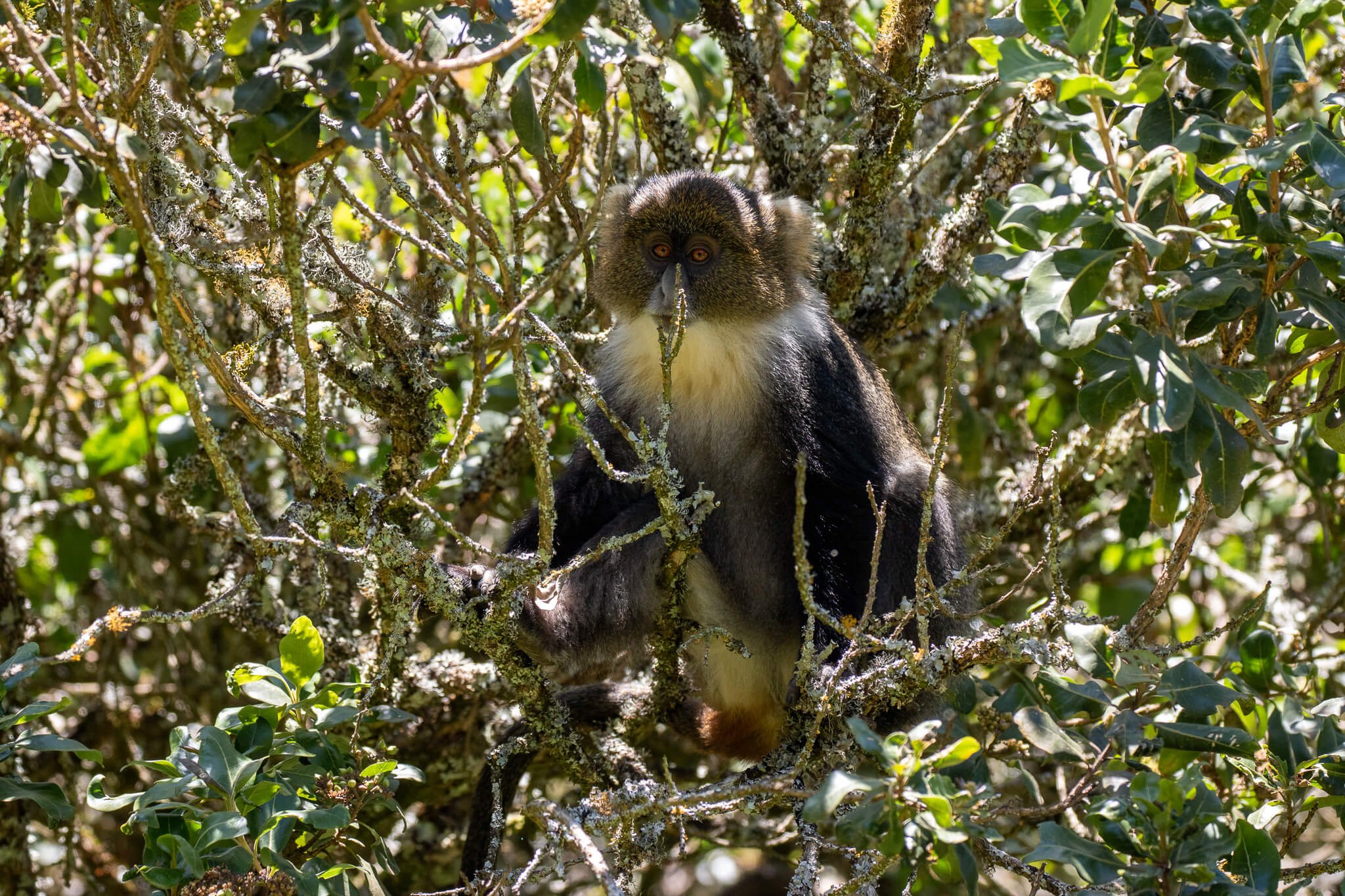
Colobus Monkey in the Aberdares
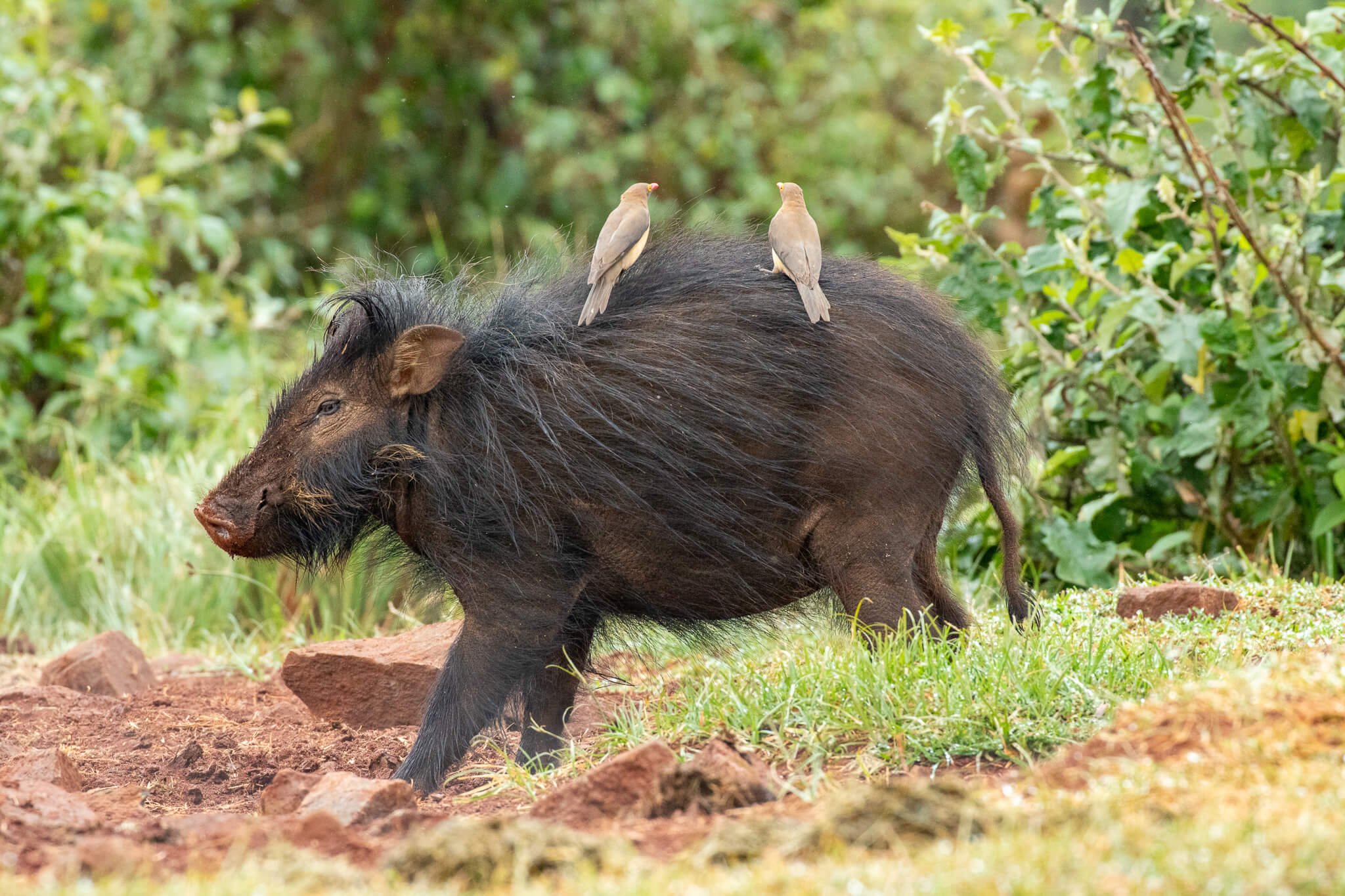
A young giant forest hog in the Aberdares
Waterfalls and Flora That Stops You in Your Tracks
The Aberdares are defined by water. Mountain streams cascade down the hillsides, fed by the high rainfall at altitude. If weather and time allows your day trip includes stopping in at the spectacular Karura Falls where you can choose to hike to the base (depending on the time of year) and soak up it’s magic as it crashes into the ground below. The sound is thunderous. The mist rises and cools you after the exertion of hiking. In the rainy season, the falls are particularly dramatic — crashing down with tremendous force. In drier months, they're more gentle but equally beautiful.
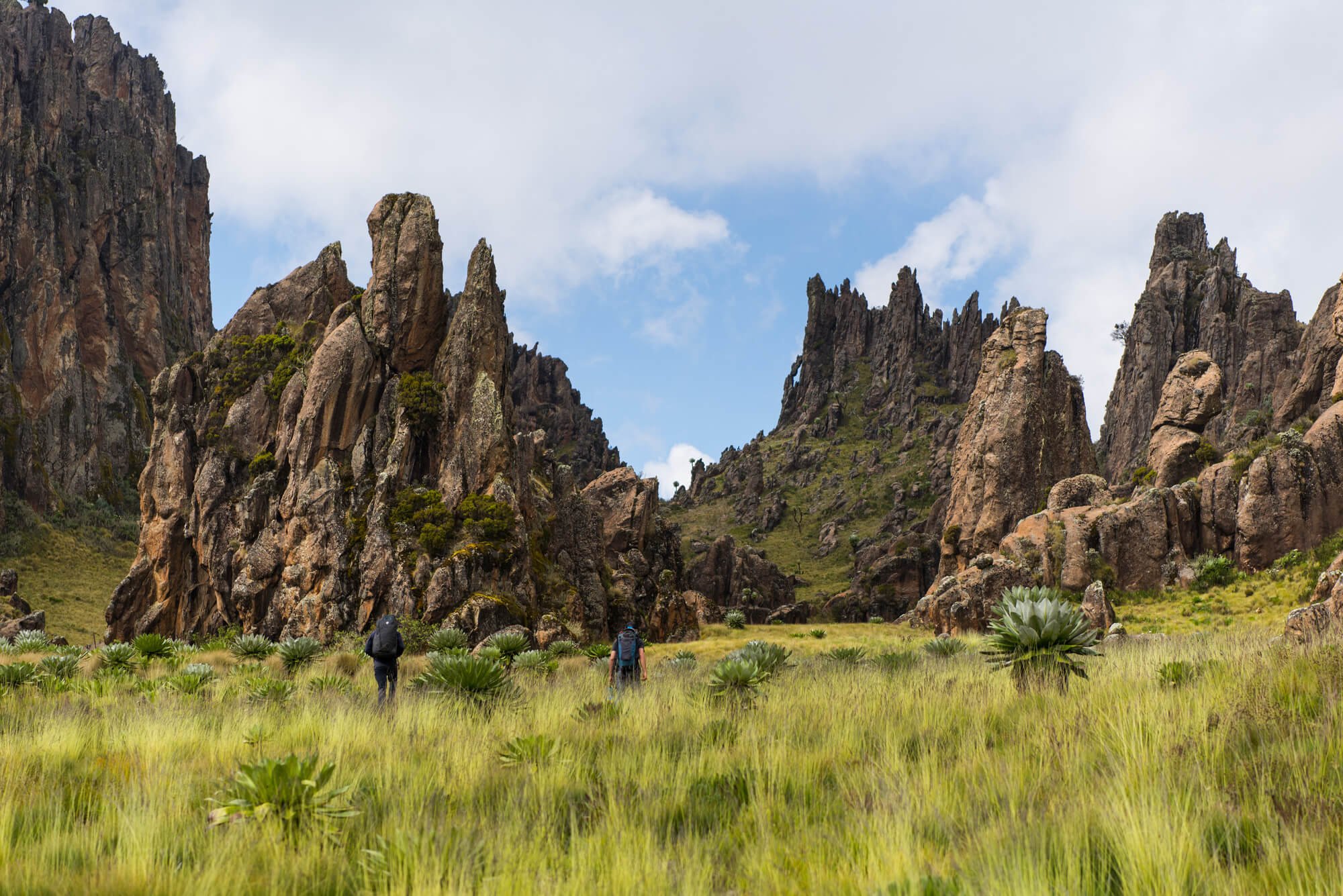
The vegetation of the Aberdares is unlike anywhere else at this latitude too. At altitude, the climate changes enough that plants found on the high mountains of central Africa thrive here. You'll see giant heathers — plants that can grow to 4 meters tall, creating a landscape that looks almost alien. Wild banana plants with their enormous leaves. Strange orchids growing on tree trunks. Moss covering rocks and branches so thickly that the entire forest seems to be wearing a green blanket. Prehistoric-looking tree ferns in shaded areas. Flowering plants you've never seen.
Photography here is exceptional if you love landscape, macro, or botanical images. The colors, textures, and drama of the forest provide endless subjects.

A Typical Aberdares Day Schedule
Early morning: Breakfast at your safari cottage, then depart toward the Aberdares (45 minutes to 1 hour drive depending on route and weather).
Mid-morning: Ascend through the forest with your vehicle, looking for forest elephants, bushbucks, bongos and more as you go. You’ll ascend to the foothills and explore the open moorland - keep an eye out for buffalo and predatory cats. Should time and weather allow you can hike down to the base of Karura Falls and take in this spectacular 273m waterfall from the bottom of it!
Late morning/midday: Settle in at a picnic spot to enjoy the view and tuck into a well deserved lunch.
Afternoon: Descend toward Ol Pejeta, stopping if wildlife is spotted or to simply absorb the changing light as you descend from cloud forest into open plains.
Evening: Arrive back at your cottage by late afternoon. Stop for a sundowner on the plains or head straight back if it’s getting dark to enjoy dinner under the stars.

A cosy evening in after a day of adventures in The Aberdares.
Ready to add an Aberdares day trip?
A day in the Aberdares is a complete change of pace from safari. It’s slower, denser and quieter in a lot of ways too. The focus here isn’t lions and rhinos, it’s unique species, birdlife and brilliant scenery.
If you want to experience the full diversity of Kenya's landscapes during your stay, an Aberdares day trip pairs perfectly with safari drives at Ol Pejeta. You'll leave with memories of both the wildlife of the conservancy and the dramatic beauty of Kenya's mountain forests.
Let us know you'd like to add an Aberdares day trip when you enquire about your stay, and we'll get you sorted!
MORE DAY TRIPS

MT KENYA DAY TRIP
This is what your day could look like exploring Africa’s second highest mountain.
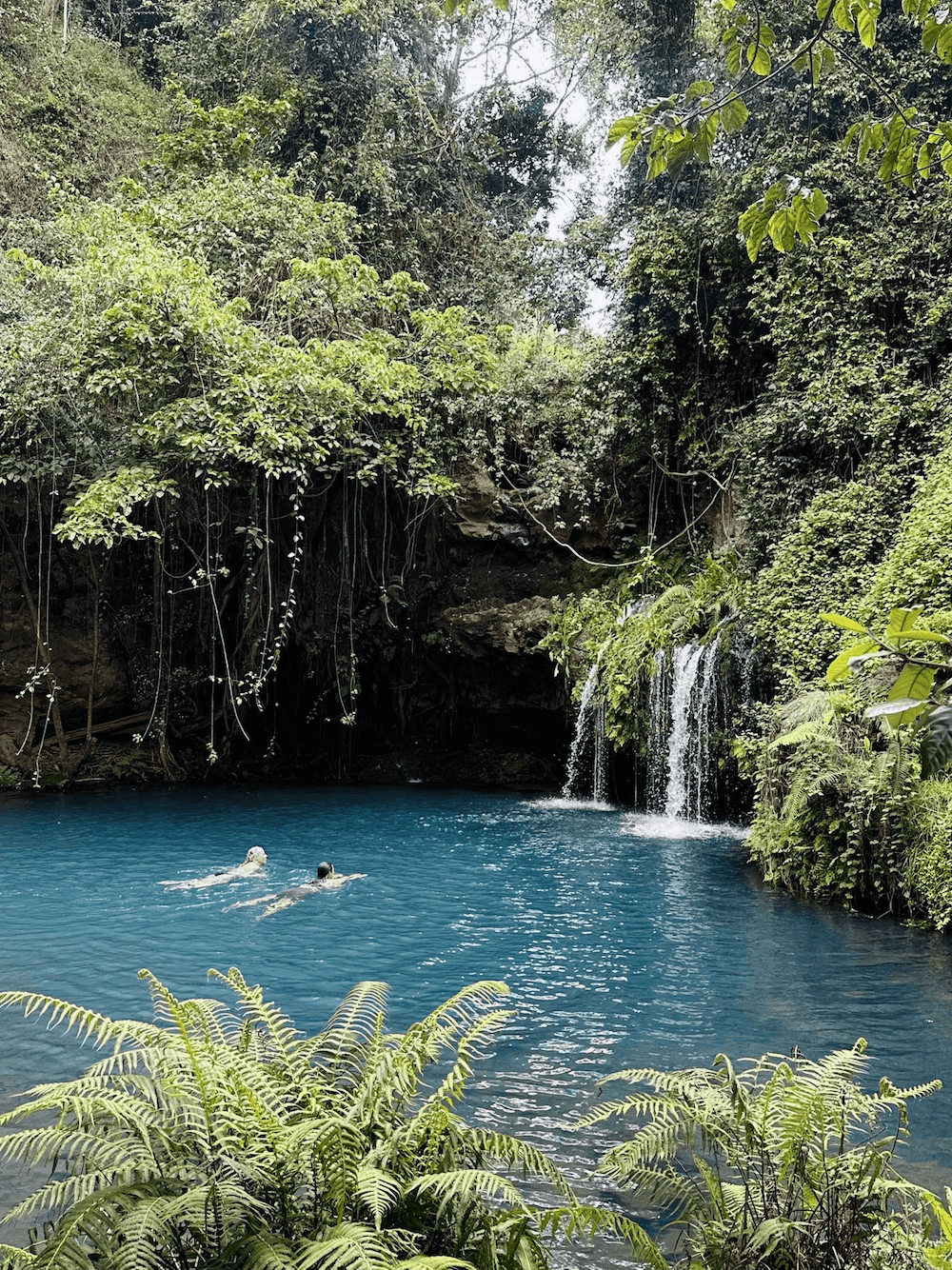
NGARE NDARE DAY TRIP
Hiking, birding and wild swimming in a community owned and run forest reserve.
More from The Ol Pejeta Safari Cottages blog…





Meet our Guides: Mike, Hezzie, James & Sam
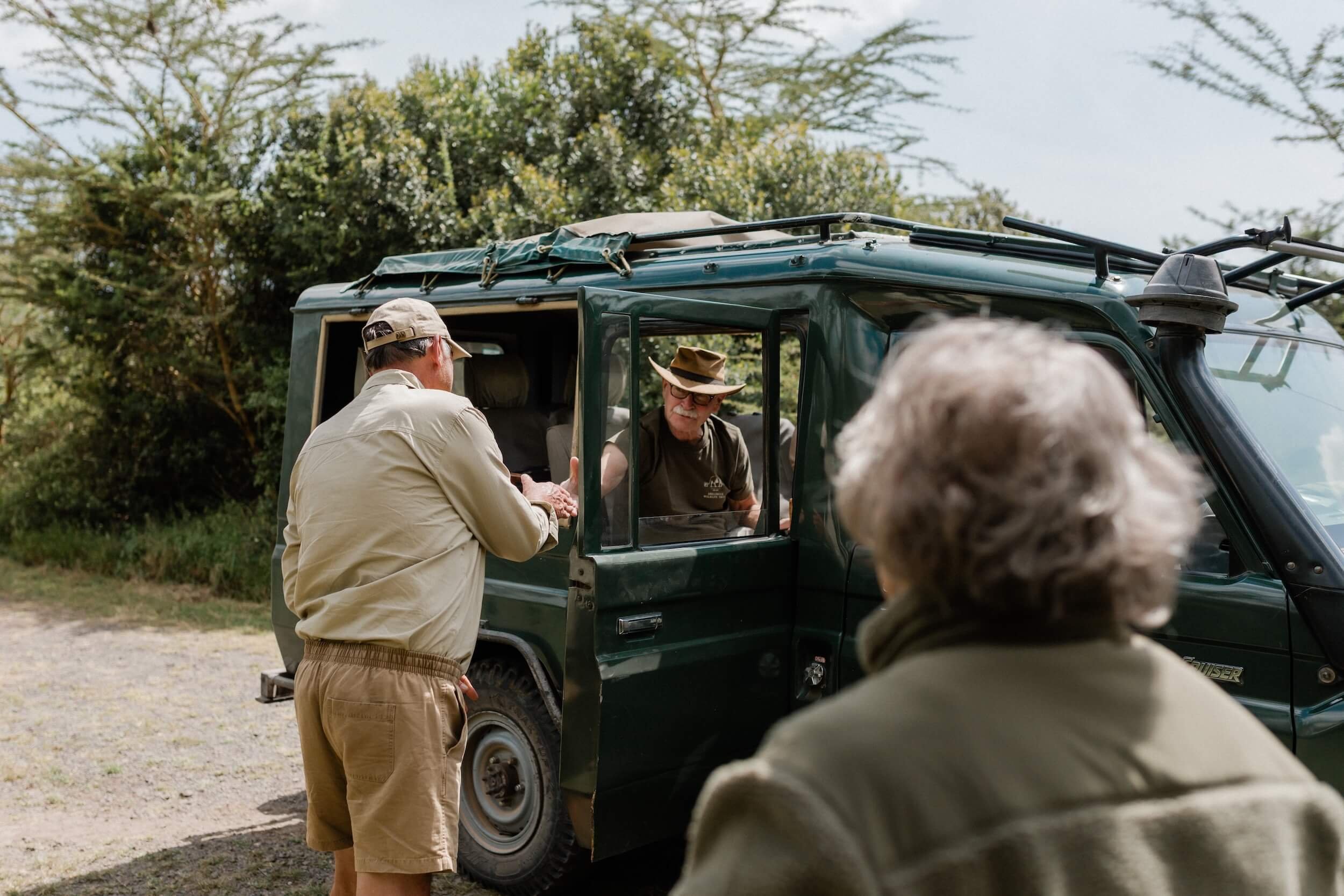
Meet Mike, Hezzie, James and Sam; Ol Pejeta Safari Cottages guiding team and learn more about how they discovered found their passion in sharing the wonders of the natural world with our guests.
We’re so proud to support an excellent team of guides who are passionate about the conservancy, the wildlife and preserving the ecosystem. They are a wealth of knowledge and love to share all they know with our guests so, today, we’re sitting down with them to hear more about their journey to becoming safari guides and what it is they love about working on Ol Pejeta.

MY JOURNEY TO BECOMING A SAFARI GUIDE: MICHAEL NDIRANGU (MIKE)
Laikipia native and Ol Pejeta Safari Cottages head guide, Mike, discovered his interest in guiding during his time working on Lewa Conservancy in 2002. His interactions with guests, full of questions about the natural world, inspired him to seek these answers for himself and he immersed himself in piles upon piles of books about Kenya’s flora and fauna, took part in studies whenever he could and enrolled in guide training and seminars with visiting local and international field experts.
Armed with years worth of knowledge and experience Mike decided to take control of his own destiny.
“In 2015, I decided to leave Lewa Conservancy and head out on my own as a free-lance guide. This was a difficult time for me as I had only ever worked at Lewa Conservancy and in 2017 I had to undergo a hip replacement due to arthritis. After the surgery and recuperation, I slowly made my way back into guiding, when I was offered a bit of work at the Ol Pejeta Safari Cottages, guiding guests.
I have since then never looked back and I have become not only a member of the team, but a member of the Ol Pejeta Safari Cottages family.”
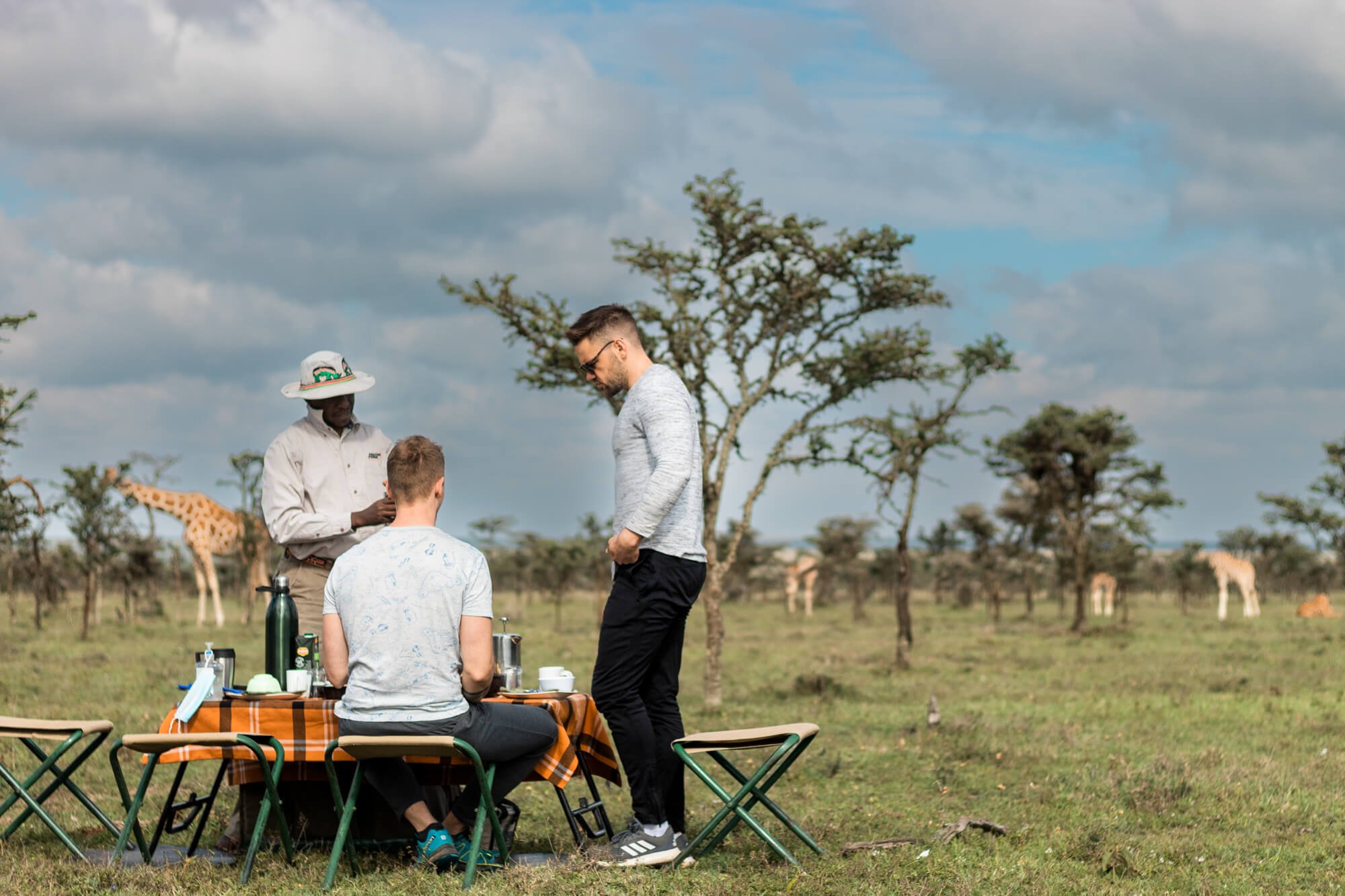
Mike hosting a picnic breakfast for Ol Pejeta Safari Cottages guests

MY JOURNEY TO BECOMING A SAFARI GUIDE: Hesbon Odhiambo Omomdi (HEZZIE)
After completing High School our beloved Hezzie had an opportunity to join Abercrombie & Kent, assisting with their mobile camps in Kenya. This experience gave him his first glimpse into Kenya’s safari industry, the chance to explore the countries’ stunning wilderness areas, to encounter wildlife and begin to learn more about their their habitats. Hezzie knew he had found his place in the world. The seed was sown!
“In 2009 I left Abercrombie and Kent to join Porini Rhino Camp, set in Ol Pejeta Conservancy, I was employed as a waiter in the camp, but my interest was in learning more about wildlife and the ecosystems in the conservancy. I spent my free time reading as many books as I could to learn and it was this that drove me to want to become a guide. I sat for KPSGA in 2026 and obtained my Silver Level Guides Certificate.
I had by then worked my way up from being a waiter to a driver guide for the company. I continued to guide and worked my way to becoming the Head Guide for Porini Rhino Camp in Ol Pejeta.
I decided to move in 2023 to join the Ol Pejeta Safari Cottages, to gain more skills and experience. I love what I do, but it is being able to share my knowledge and experiences with guests, that is the driving force behind me being a guide.”

Hezzie enjoying an Ol Pejeta sundowner

MY JOURNEY TO BECOMING A SAFARI GUIDE: JAMES WAMBUGU NGATIA
James’s knows Ol Pejeta better than any of us! His journey here started back in 2002, before it became a conservancy and was being operated as a cattle ranch. James was employed as a ranger and in 2004 the ranch fell under the management of Flora & Fauna International and was turned into a Rhino Conservancy. James retained his position as a ranger and had a pleasure of watching the incredible rise of the Ol Pejeta we know today.
“Being a ranger, I was fortunate to interact and work with many of the researchers and to provide them with protection, while at the same time gaining vast amounts of knowledge when out in the field. It was through this work with the researchers that I not only gained a respect for wildlife and their habitat, but it sparked a passion in me that I wanted to work at protecting wildlife but foremost of all to protect the most vulnerable and endangered species – the rhino!!!
In 2012 I became a guide as well as being an armed ranger with Ol Pejeta and loved my work in promoting tourism and the plight of the rhino. I enjoyed sharing all my knowledge with guests who visited the conservancy and speaking to school children about the issues of poaching and the effects it has on our national heritage. I worked with the Ol Pejeta Conservancy until 2022, when I left to join The Safari Cottages to share not only my knowledge but also the experiences of my life in the conservancy.”
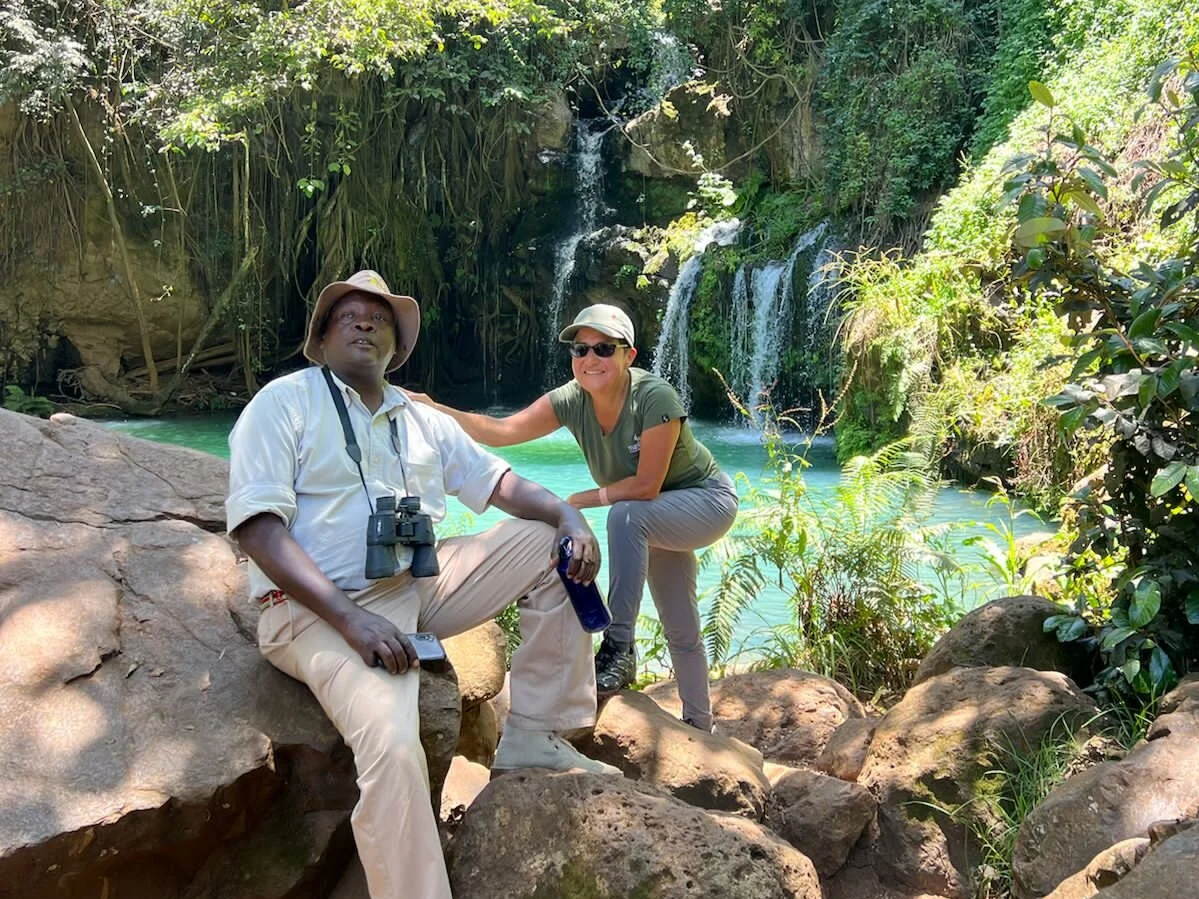
James guiding our guests out on a day trip to Ngare Ndare Forest

MY JOURNEY TO BECOMING A SAFARI GUIDE: SAMUEL KARIUKI
Sam joined our guiding team in the Summer of 2025 and has really come to life here, quickly showing himself to be a professional, highly knowledgable and much loved safari guide. From his home in Kenya’s lake district, Sam’s love of the natural world began at a young age and gave a him a clear vision of the future he would strive for. He graduated from college with a diploma in tour guiding and administration and went straight to work, guiding safaris in Northern Kenya.
“During high school my passion for nature and wildlife had greatly developed, and I joined the wildlife and environmental club. On completion of my secondary school, I joined college and attained a diploma in tour guiding and administration. I have been a proud driver guide, passionate about birds and animals, for over five years now.”

KEEP READING
More from the Ol Pejeta Safari Cottages blog

Introduction to Spinners & Weavers
Welcome to the Spinners and Weavers. A wonderful group of women supporting widowed and disadvantaged women the opportunity to learn new skills and to gain employment in Nanyuki town.
The first time we visited Spinners & Weavers, we weren't there as safari operators or tourists. We were there as neighbours. And that's the only way to understand what this place really is.
Nanyuki sits about 90 minutes from Ol Pejeta Safari Cottages — close enough that our team makes the drive almost every week. We pick up supplies, take staff to doctors and dentists, handle vehicle maintenance. Over two decades, we've watched Nanyuki transform from a single dirt road with a handful of shops into a thriving settlement full of local businesses and real community. It's home to us now.
We’ve come to love the people of Nanyuki and we’ve especially come to love a special place called The Spinners and Weavers.
What Spinners & Weavers Actually Does
Spinners & Weavers was founded by the Nanyuki Presbyterian Church in the 1970s. It exists for one fundamental reason: to give widowed and disadvantaged women a path out of hardship.
The numbers speak quietly but clearly. Over 280 women have moved through this program. They've learned skills. They've earned income. They've supported their families. And then — this is the part that matters — many of them have left to start their own businesses or support groups across the country. What started as a refuge became a launchpad.
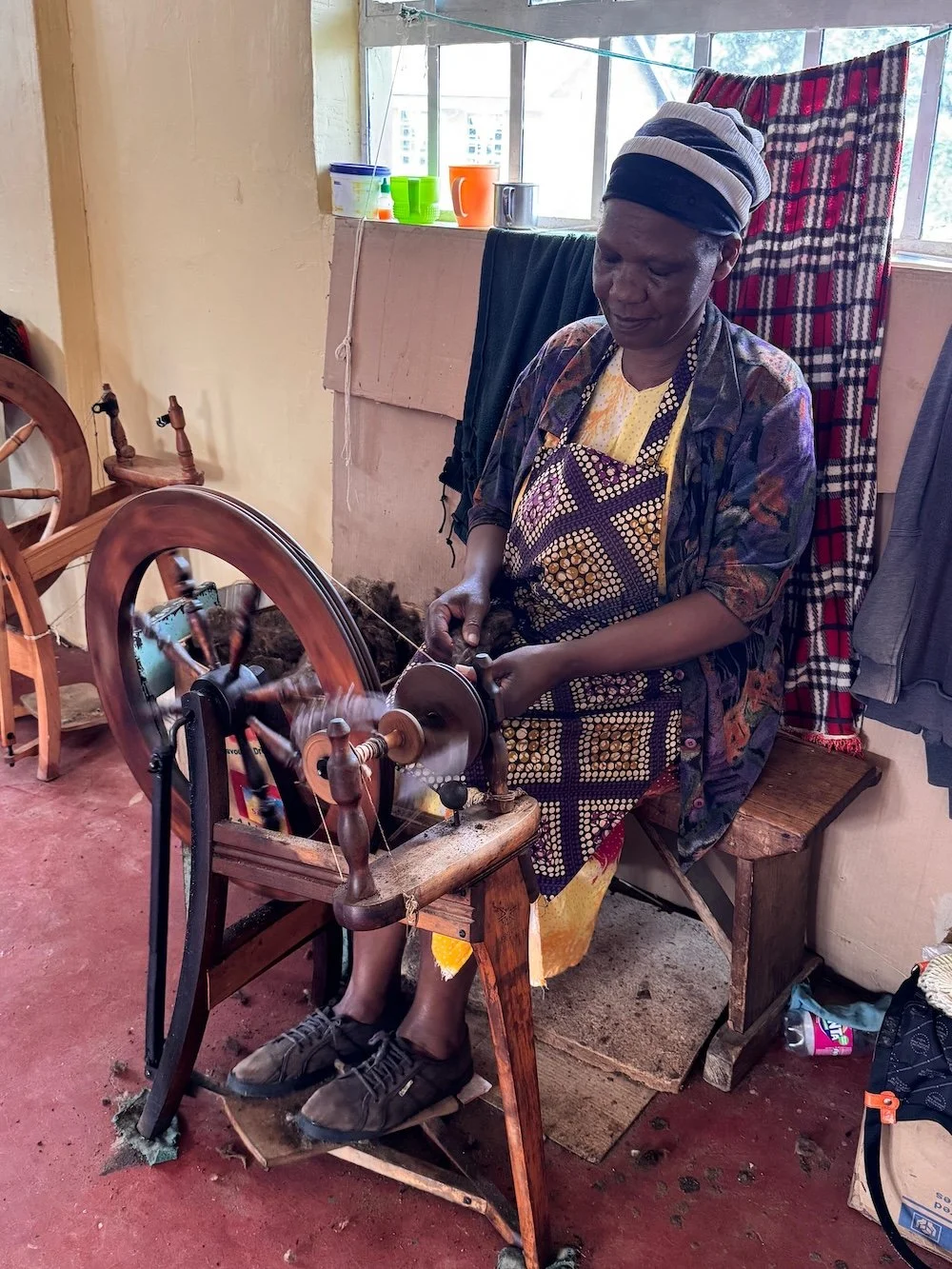
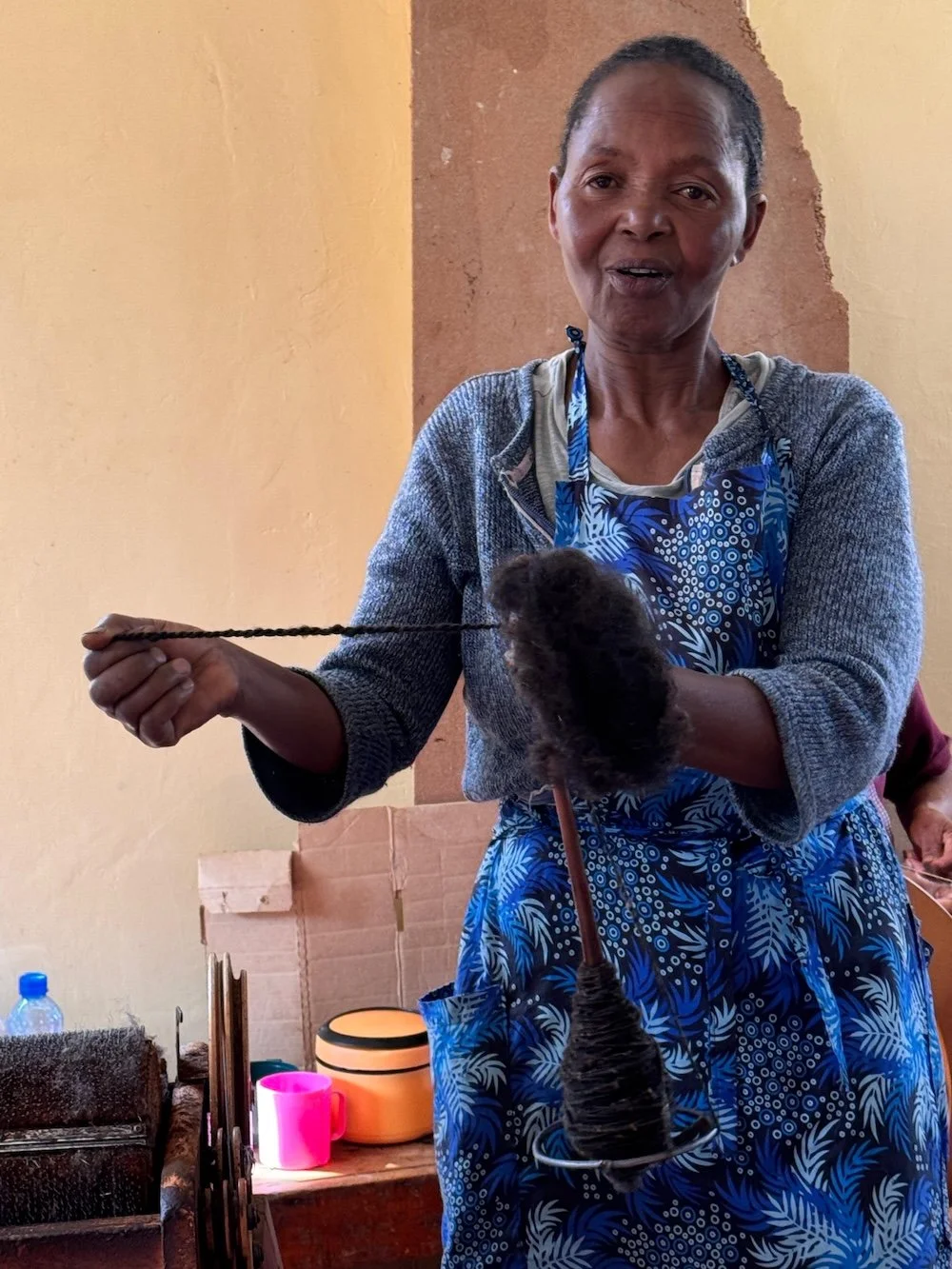
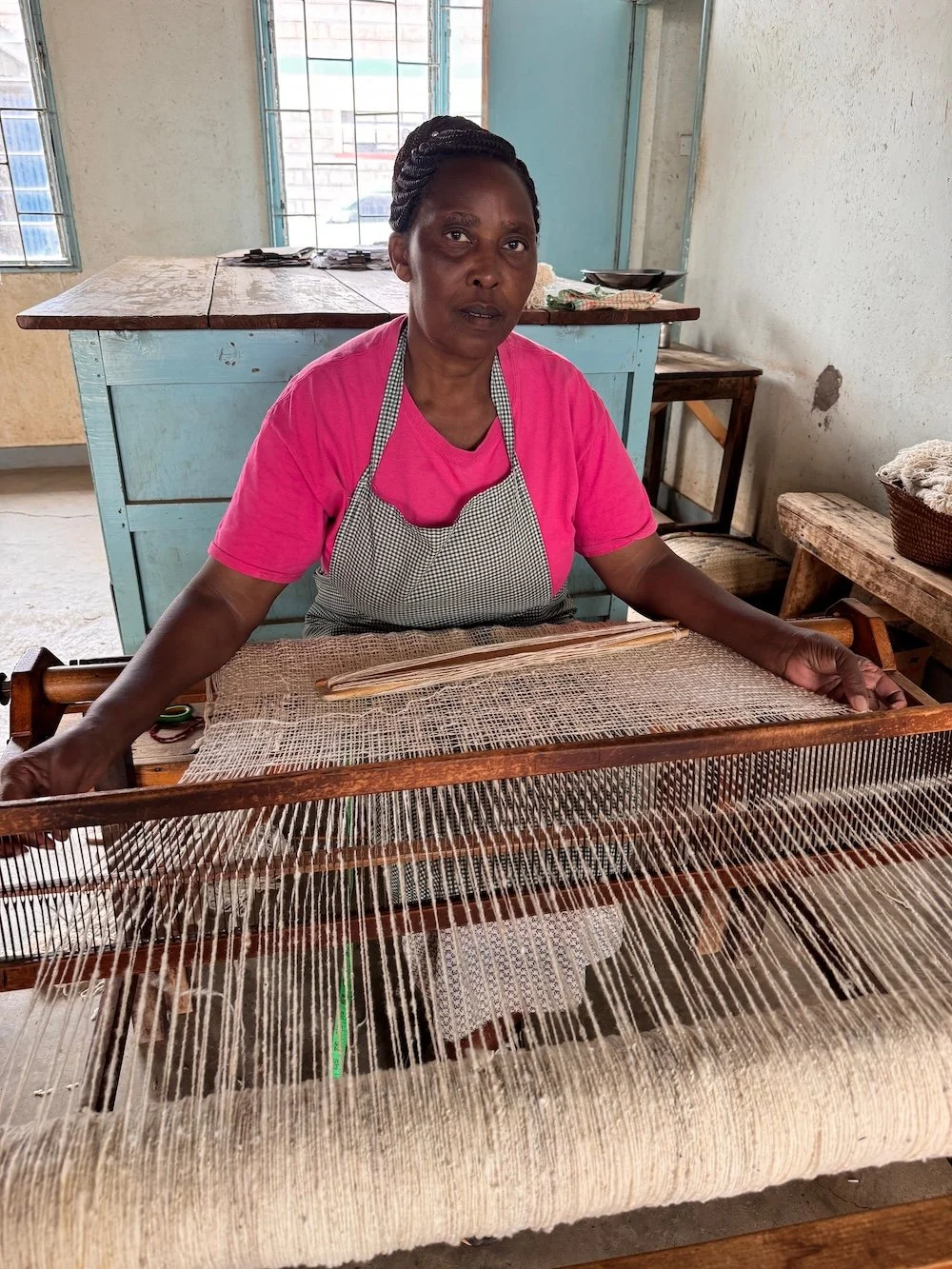
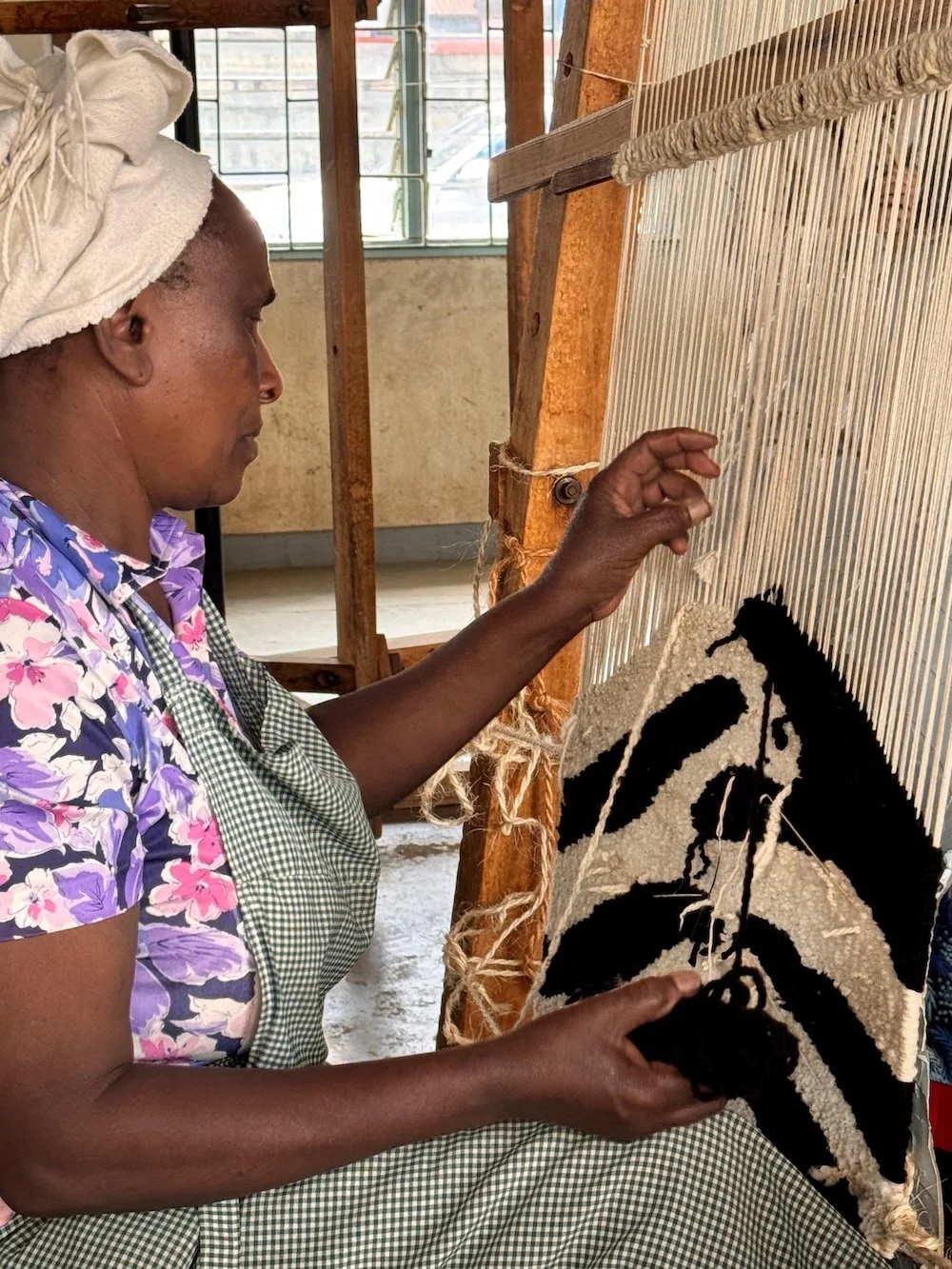
Today, the women of Spinners & Weavers spend their days doing what the name suggests: spinning and weaving. Using traditional methods, they create beautiful, hand-made wool rugs and textiles. The work is meditative and skilled. The products are distinctive. And every purchase directly supports the women making them.
Why We Bring Guests There
When people come to Ol Pejeta, they come for the wildlife. The leopards and lions, the black rhinos, the chimpanzees. And rightfully so — that's the magic of the conservancy. But if you stay longer than three nights, there's room for more. There's room to understand the human side of this landscape. To meet the women of Nanyuki, to see the community we're part of.
A morning visit to Spinners & Weavers does something you can't replicate on a game drive. You sit with the women. You watch them work. You learn their stories. You understand that conservation and community aren't separate things — they're woven together (pun intended).
You can buy a rug or make a donation. You can wander the local shops in Nanyuki town. You can explore the Mitumba market, where vendors sell second-hand clothing and goods in a bustling outdoor bazaar that's chaotic and alive and absolutely worth your time. But mostly, you realize that the best safaris aren't just about seeing wildlife. They're about seeing — and supporting — the people who live alongside it.
Visiting the Nanyuki Spinners & Weavers
You can learn about this wonderful group of women here - Nanyuki Spinners and Weavers.
If you’d like to support the Spinners and Weavers woman’s group on your next visit to Ol Pejeta Safari Cottages then let us know and we can arrange a morning out in Nanyuki town for you.
Keep Reading
More from the Ol Pejeta Safari Cottages blog
The History of Ol Pejeta
Read more about the history of Ol Pejeta and how it transformed from a large, successful cattle ranch to a model for wildlife conservation and the largest black rhino sanctuary in East Africa.
The history buffs among us might be curious to know a little more about how Ol Pejeta Conservancy came to be. To understand how far we’ve come we sat down with owner/manager Sonja Webb to unravel a little of the conservancy’s history.
RANCHING
During the colonial era, the Laikipia region was an extensive ranching area where wildlife had little to no value to land owners. Low rainfall meant crops couldn’t thrive here but cattle could, and so the landscape was speckled with ranches packed with cows.

In 1949 Ol Pejeta, then owned by the colourful Lord Delemere, was under the management of John and Jane Kenyon who spent the best part of fifteen years pouring their life and soul into it’s development and expansion. The most noteable growth was is the early years when John was joined by a school friend and business partner of Lord Delamere named Marcus Wickham Boynton. Over the course of a few years Marcus and John took the bull by the horns (pun intended) and successfully upscaled the farm from a “humble” 57,000 acre ranch into a sprawling 90,000 acre estate and widely successful beef production company.
Twenty years later and with a, now sizeable, feather in their cap John and Jane retired from their roles on Ol Pejeta in 1969 to run their own cattle ranch in the north.

Ol Pejeta’s Boran cows ander the plains alongside the wildlife (May 2025)
Following John and Jane’s departure the ranch changed hands a few times, falling under the ownership of a slew of colourful characters including Marcus Wickham Boynton, who was notorious for occasionally shooting cattle “he didn’t like the look of,” as well as the infamous international arms dealer Adnan Khashoggi. Over time cattle ranching became less and less profitable though. To make matters worse for the ranchers, increasingly, elephant populations that previously used the ranch as a transit area from the Northern expanses of the country to Mount Kenya and the Aberdares were forced to take up permanent residence on the property as fences started to go up all around country blocking off wildlife migratory routes. As a result, the ranch’s cattle fences were often destroyed and maintaining the fences became unsustainably expensive and time consuming.
Consequently, they gave in to the elephants; in the face of declining wildlife populations elsewhere and the increasing popularity of tourism in Kenya, talk of repurposing the ranch for wildlife conservation and tourism purposes began.

John and Jane Kenyon’s farmhouse on Ol Pejeta

Ol Pejeta House now stands in it’s place
STEPPING INTO WILDLIFE CONSERVATION
In 1988, a portion of the ranch; the Sweetwaters game reserve (24,000 acres) was opened by another of Ol Pejeta’s previous owners, Lonrho Africa. Primarily, Sweetwaters started as a sanctuary for the endangered black rhino, but animals of all shapes and sizes benefited from the new focus and wildlife populations (including the “Big Five”) have been steadily increasing since that time.

Image x Alison Dewar
In 2004 the ranch was purchased by Flora and Fauna International, a UK based conservation organization and the conservation area extended to encompass the entire ranch. “The Ol Pejeta Conservancy,” approximately 90,000 acres in extent was born. It is the largest black rhino sanctuary in East Africa, with the aim of generating profit from wildlife tourism and complementary activities (including cattle ranching which still happens on the conservancy) for reinvestment into community development in the local area.
And that’s that. Andy and Sonja made their home on Ol Pejeta in 2009, and you can read more about their journey to calling Ol Pejeta Safari Cottages their forever home via the link below.
More from the Ol Pejeta Safari Cottages blog…
The Last Two Northern White Rhinos: Najin, Fatu and Ol Pejeta's Mission to Save a Species
Najin and Fatu are the last two northern white rhinos on Earth — and they live at Ol Pejeta Conservancy in Kenya. Here's the story of how they came to be here, what's being done to save their species, and how you can visit them.
There are two northern white rhinos left on Earth. Their names are Najin and Fatu — a mother and daughter — and they live here, on Ol Pejeta Conservancy in Kenya, a short drive from the door of The Safari Cottages.
That first sentence is worth sitting with for a moment. The entire remaining population of a subspecies, in one place, on one conservancy in central Kenya and visiting them is so often a profoundly moving experience for our guests. If you're curious about how Najin and Fatu came to be at Ol Pejeta, what's being done to bring the northern white rhino back from the brink of extinction, and how you can visit them — this is everything you need to know.
How Did the Northern White Rhinos Come to Ol Pejeta?
On 20th December 2009, four of the world's remaining seven northern white rhinos were translocated to Ol Pejeta Conservancy from Dvůr Králové Zoo in the Czech Republic. Their names were Najin, Fatu, Suni and Sudan. After years of failed breeding attempts in captivity, conservationists hoped that returning the rhinos to a natural African environment might give them a better chance at reproduction.
It was a hopeful beginning. What followed was heartbreaking.
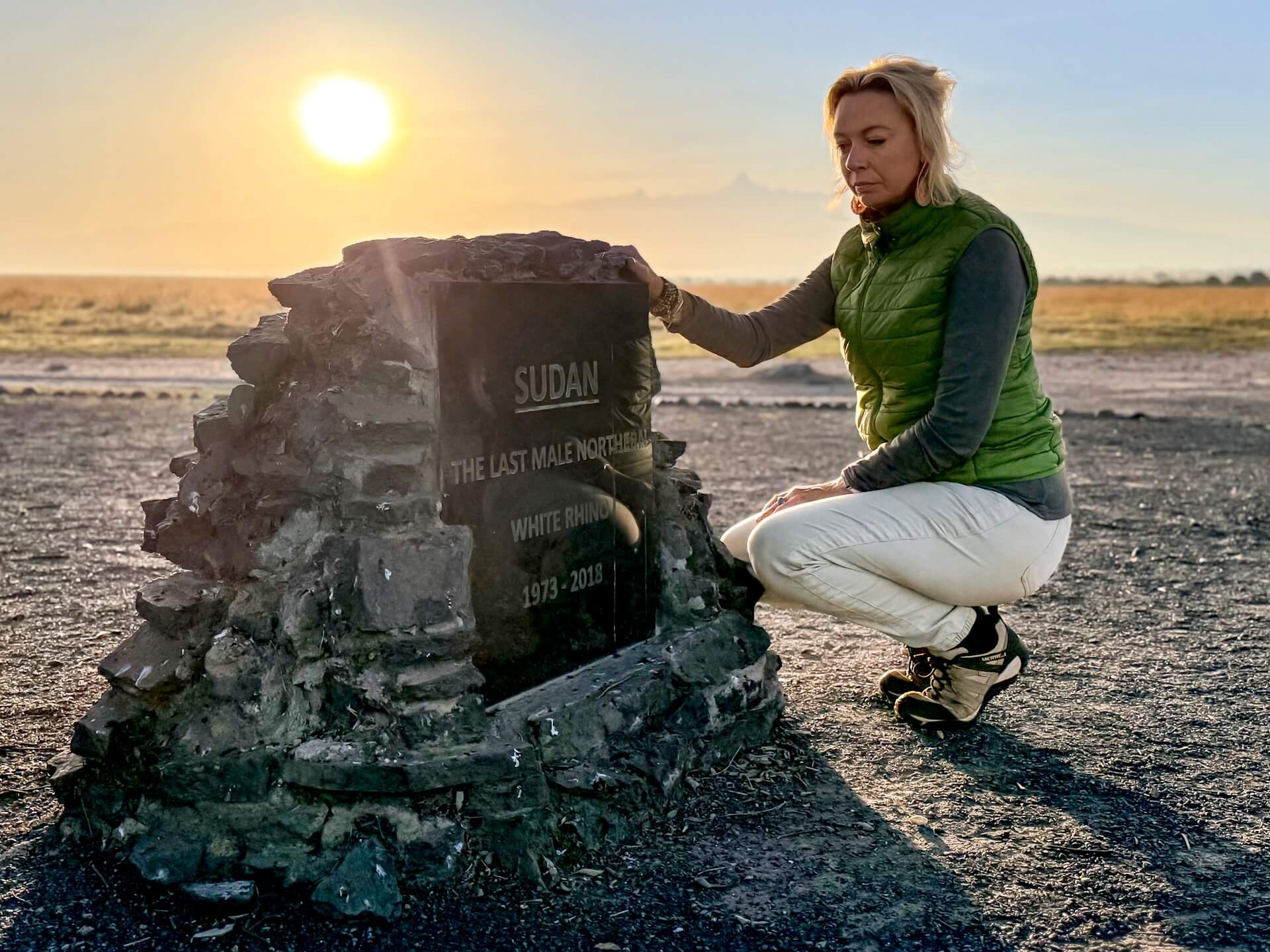
Natural reproduction failed repeatedly. Veterinary assessments revealed that both Najin and Fatu were unable to carry a pregnancy naturally. Sudan — the last remaining male northern white rhino on Earth — had a disappointingly low sperm count. In 2014, Suni died. In July 2015, the two remaining northern white rhinos in captivity passed away. And then, in March 2018, Sudan died of natural causes, leaving Najin and Fatu as the only two northern white rhinos anywhere in the world.
To many, it seemed like the end.

Najin & Fatu with their keepers. Image x Ami Vitale
Can the Northern White Rhino Be Saved? The BioRescue Project
Ol Pejeta chose not to accept extinction as the answer. In the years following Sudan's death, Ol Pejeta partnered with a consortium of international scientists on the BioRescue project — one of the most ambitious conservation science initiatives ever undertaken. The approach: use cryogenically preserved sperm from northern white rhino males who had already died, combine it with eggs collected from Fatu, and create viable embryos which could then be implanted into southern white rhino surrogates.
It had never been done before. IVF had never been successfully performed on any rhino species. The scientists began by testing the embryo transfer process using southern white rhinos — animals closely enough related to serve as surrogates, and numerous enough to allow for careful experimentation.
In 2023, the project made history. A southern white rhino surrogate successfully carried a rhino embryo — the first time an embryo transfer of this kind had ever worked in rhinos. The news made headlines around the world. It was, in every sense, a breakthrough. Tragically, the surrogate rhino died during her pregnancy from a bacterial infection — a cruel stroke of bad luck that had nothing to do with the procedure itself. But the scientific community took a breath and recognised what had actually happened: proof of concept. The method works.
The next step is to implant a northern white rhino embryo into a southern white surrogate, with the goal of welcoming the first northern white rhino calf born since Fatu herself in 2000. Najin and Fatu are not the end of their species. They may yet be the beginning of its return.

Fatu is preparing for the procedure to retrieve her eggs. Image x Ali Vitale
Where Are Najin and Fatu Now?
Najin and Fatu live within a 700-acre predator-free enclosure inside Ol Pejeta Conservancy, under 24-hour monitoring and care from a dedicated team of rangers and veterinary staff who have been with them for years. A selection of southern white rhinos — candidates being assessed for surrogacy — share their protected area.
Their daily lives are, by all accounts, peaceful. They graze. They sleep. They move at their own pace across their protected territory, watched over constantly by people who know them individually — their habits, their moods, their preferences. It is one of the most intensive and tender conservation programmes in the world, and it is happening quietly, every day, on this conservancy.

Najin & Fatu on Ol Pejeta Conservancy. Image x Ol Pejeta Conservancy
Can You Visit the Northern White Rhinos at Ol Pejeta?
Yes! And we think it's one of the most important things you can do on a visit to Kenya.
Visits to Najin and Fatu are available to all guests at Ol Pejeta Conservancy on pre-arranged tours. Visitors enter the northern white rhino enclosure accompanied by their keepers, who share the story of the BioRescue project, introduce you to the rhinos individually, and answer questions with the patience and knowledge of people who have dedicated their working lives to this cause.
Standing beside an animal that represents the entire remaining population of its subspecies is not something that leaves you quickly. Our guests who visit them almost always say the same thing: that they didn't expect to feel so much.
Guests staying at The Safari Cottages can arrange a northern white rhino visit as part of their stay. We're a short drive from the enclosure and we'll help coordinate everything — just let us know when you book.
Want to learn more before you visit? National Geographic's documentary The Last Rhinos: A New Hope covers the BioRescue project in extraordinary detail. We recommend it.
Frequently Asked Questions About the Northern White Rhinos
-
Two. Najin and Fatu, both female, both living at Ol Pejeta Conservancy in Kenya. There are no northern white rhinos in any other location on Earth.
-
Northern and southern white rhinos are two subspecies of white rhino. Southern white rhinos — of which there are around 20,000 — were brought back from the brink of extinction in the twentieth century and are now considered near-threatened. Northern white rhinos are functionally extinct in the wild, with only Najin and Fatu surviving. Though closely related, the two subspecies are genetically distinct.
-
Scientists working on the BioRescue project believe so. Using preserved genetic material from deceased northern white rhino males and eggs from Fatu, viable embryos have already been created. The next step is a successful embryo transfer into a southern white rhino surrogate. The 2023 proof-of-concept transfer — though ultimately unsuccessful due to a bacterial infection in the surrogate — demonstrated that the method itself is scientifically viable.
-
Only at Ol Pejeta Conservancy in Kenya. There is no other place on Earth where northern white rhinos can be seen. Visits are available to conservancy guests on pre-arranged tours.
-
Najin is the mother and the older of the two. Fatu, her daughter, was born in 2000 and is the younger rhino. It is Fatu's eggs that are being used in the BioRescue embryo programme, as Najin's hind legs make the egg collection procedure inadvisable for her.
Visit Najin and Fatu at Ol Pejeta
A stay at The Safari Cottages puts you minutes from the most important conservation story in the world. We would love to take you to meet them.
Photographs from PAST GUESTS visits to The Northern White Rhinos

Image x Kayla Neilson

Image x Yoga For The Wild

Image x Yoga For The Wild

Image x Yoga For The Wild
KEEP READING
More from the Ol Pejeta Safari Cottages blog
Kenya Yoga Safari Retreat: Yoga for the Wild at Ol Pejeta Conservancy
A chat with Yoga for the Wild founders Kat Macleod and Laura Messer on what it is that has them returning to The Safari Cottages every year to lead their Kenya yoga retreat raising funds and awareness for wildlife conservation.
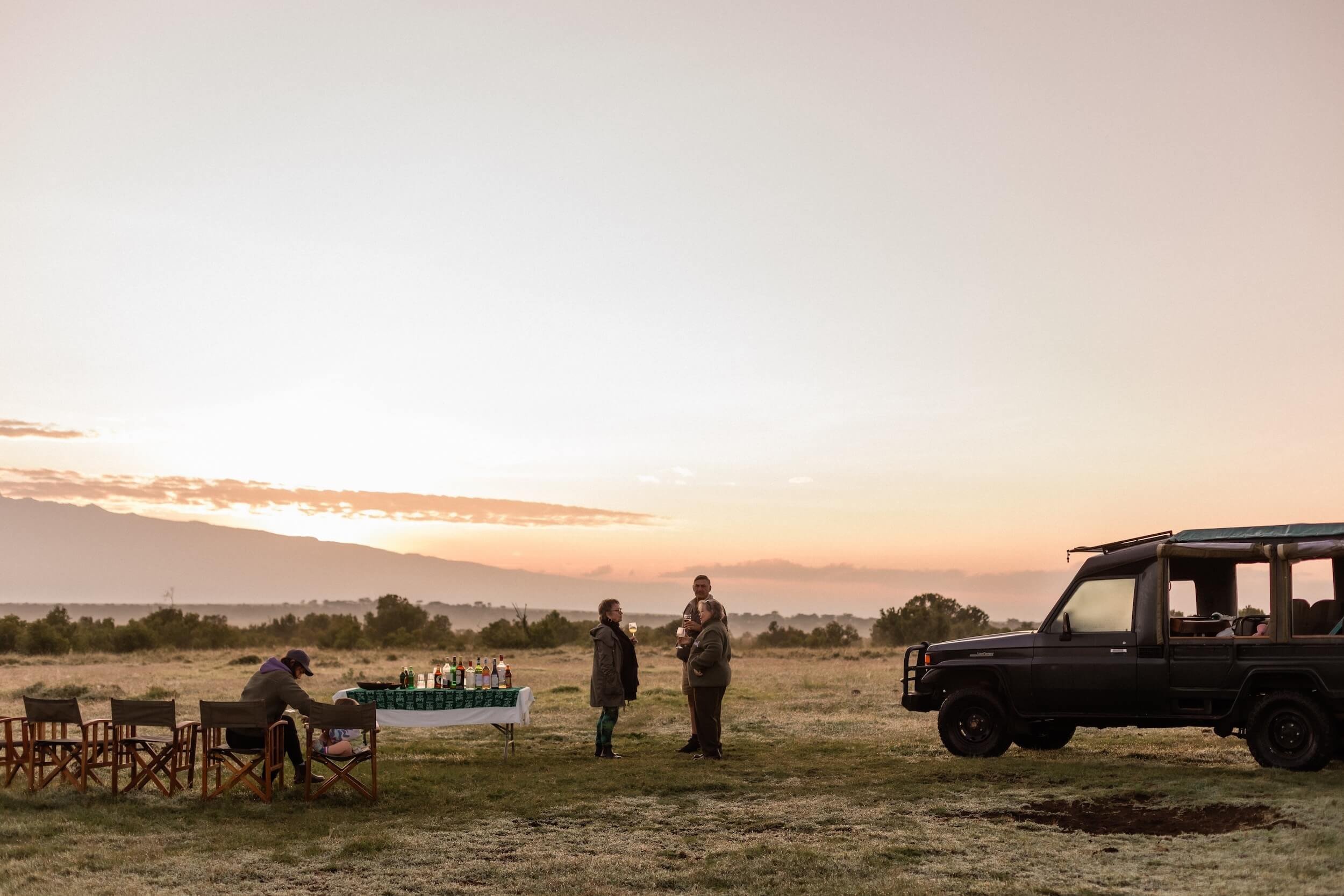
There is something about practising yoga in the African bush that is unlike any studio, any retreat centre, any wellness destination on earth. The air is different. The silence is different. And when an elephant moves through the treeline during your morning practice, or a lion roars from somewhere close in the dark, the feeling of being entirely present — which yoga is always reaching for — arrives without effort.
It's this quality of place that has made The Safari Cottages one of Kenya's most sought-after venues for yoga safari retreats. We've welcomed retreat groups to Ol Pejeta Conservancy since 2017, and among them, one has returned again and again — Yoga for the Wild, founded by Laura Messer and Kat MacLeod, whose annual Kenya yoga retreat has become one of the most distinctive conservation-focused wellness experiences in Africa.
This is their story.
What is Yoga for the Wild?
Yoga for the Wild is a conservation-led yoga retreat organisation that takes groups of like-minded travellers to some of the world's most extraordinary wild places, combining daily yoga with immersive wildlife experiences and direct fundraising for the conservation projects they visit.
Laura and Kat first came to The Safari Cottages on Ol Pejeta Conservancy in 2021, leading their first Kenya yoga safari retreat. Since then they have run six retreats with us, and they continue to return annually. To date, their work has raised over $17,000 directly for Ol Pejeta Conservancy, with a further $21,000 in positive conservation impact generated through their in-person retreats.
Their model is simple and compelling: go where the wildlife needs you, share the magic of wild places with as many people as possible, and send guests home changed — and committed to protecting what they've seen.

How Laura and Kat Found Each Other, and Found Ol Pejeta
Laura and Kat's partnership began when Kat planned Laura's anniversary safari to Kenya. They discovered a shared passion for yoga and wildlife conservation and stayed in touch. When Covid collapsed tourism in Kenya and funding for Ol Pejeta became critical, they joined forces — running online yoga classes and fundraising events to support the conservancy through that difficult period. When borders reopened, they brought their first group to Ol Pejeta. It was the beginning of something that has grown every year since.
Why They Keep Coming Back: Laura on The Safari Cottages
Laura, as you prepared to return for another retreat here, what keeps you coming back?
"There are quite a few reasons I continue to return to Ol Pejeta Safari Cottages. Each time I visit feels like the first time — there are always new sightings and experiences. Even so, it is the wonderful people at The Cottages that keep me wanting to return time after time. It's very much a family atmosphere and everyone is there to help and make sure you're having the time of your life. They also value and prioritise the environment with a high set of standards and ethos to protect and care for our planet.
The guides are the best. They are so knowledgeable about every inch of the land. They are accommodating and I always feel safe with them.
It is just the most beautiful place. Mount Kenya's backdrop provides a picturesque view to the flat plateau of Laikipia. Even when it's not totally green, the landscape is still a stunning contrast — but when it has rained and the greenery is vibrant and lush, it is absolutely breathtaking. The cottages are surrounded with views in every direction and the potential for wild visitors is always thrilling.
I feel more alive here than anywhere else on Earth. I feel close to the natural world, surrounded by good people, and it really gives me hope."


What a Yoga Safari Retreat at Ol Pejeta Actually Feels Like: Kat's Story
Kat, what are some of your favourite moments during your stays with us?
"I'm not a morning person at all — but that changes when I'm at The Safari Cottages. I really love being up before sunrise and taking a cup of coffee down to the deck to practise yoga with our group at first light. There's something so magical about the breaking of dawn here that really cracks you open, in the best way. The light, the texture of the air, the birdsong. It's so easy to be a morning person here.
But really every moment is so filled with wonder. I adore being out in the bush. I grew up in the bush and spend as much time as I can here trying to share this wild place with my own kids. So of course this environment is really the secret sauce to my inner peace — there is no better feeling in the world than sitting quietly in the vehicle whilst elephants rumble around you, or watching giraffe saunter across the plains whilst you have breakfast under an acacia tree, or the incredible sensation of your bones rattling when a lion roars from only a few feet away."

The Vision: A Global Community Built Around Conservation
What is the vision for Yoga for the Wild going forward?
"We return to Ol Pejeta every year to lead our annual Kenya yoga retreat. The Safari Cottages feels like home to us and Ol Pejeta continues to be such an incredible force for good that we are very passionate about rallying behind their efforts to make the world a better place. We've recently expanded to additional locations in Zimbabwe and the Maldives and have plans for even more adventures on the horizon — but we will always return to Ol Pejeta, as it really represents the need for protecting our planet and all beings who call it home.
The story of the iconic northern white rhinos at Ol Pejeta has a huge impact on all who visit and a way of changing people for the better by prioritising the planet.
The heartbeat of our operation is to go where the wildlife needs us and to share the magic of the world's wildest places with as many people as we can. Not only does this empower them with the understanding of why it's so important that we continue to fight for the protection of endangered and critically endangered animals and their environments — it also creates a global community of people making a difference."


Why Ol Pejeta is One of Africa's Best Yoga Retreat Venues
For guests considering a wellness safari in Kenya, Ol Pejeta Conservancy offers something that purpose-built retreat centres cannot: genuine wilderness. The conservancy covers 90,000 hectares of protected land in Kenya's Laikipia region, home to the Big Five, over 300 bird species, and the last two northern white rhinos on Earth.
At The Safari Cottages, yoga retreat groups have the property exclusively to themselves — no other guests, no shared spaces. Morning sessions take place on the open deck as the sun rises over the conservancy. Game drives, bush picnics and night drives are woven into the programme alongside daily practice. Meals are prepared by a private chef and tailored entirely to the group.
It is, as Kat describes it, the secret sauce. A yoga safari retreat at Ol Pejeta doesn't just rest the body. It reminds you why the natural world is worth protecting — and sends you home knowing what you've contributed to keeping it that way.

Interested in Hosting a Yoga or Wellness Retreat at The Safari Cottages?
The Safari Cottages regularly welcomes yoga retreat groups, wellness retreat leaders and conservation-focused travel companies to Ol Pejeta. Our exclusive-use setup — private property, private guide, private chef — makes it one of the most flexible and intimate group retreat venues in Kenya.
If you're a retreat leader looking for a Kenya safari yoga retreat venue unlike any other, we'd love to hear from you.
KEEP READING
More from the Ol Pejeta Safari Cottages blog
A dream come true: building and running our safari camp in Kenya
An interview with the owners offering a sneak peak into what it’s like living our dream of owning and managing our very own safari camp in Kenya!
From the outside, a stay at The Safari Cottages is all wildlife on your doorstep, roaring fires ready for your arrival, chilled wine on the African plains, big smiles and big hearts. What you don’t really get to see or understand is the vision, the hard work and the dedication that comes with living your dream every day and sharing it with the world. So today we thought we’d share an interview with Ol Pejeta Safari Cottages owners, Andy and Sonja Webb to hear more about how they came to be here and what it’s really like living their dream every day in the African bush.
WHERE IT ALL BEGAN
Andy and Sonja met in Bulawayo, Zimbabwe in their teens, and married young, before moving to Lake Kariba to grow their family and begin their journey in the safari industry. Over the next eighteen years Andy became one of Southern Africa’s most celebrated guides and the two of them built and ran life-changing mobile safaris in Zimbabwe; Sonja seamlessly handling the catering, marketing and business admin whilst Andy expertly hosted and guided life-changing bush experiences for their guests.

In 2003 they moved to Kenya’s Masai Mara and built, from the ground up, four incredibly successful Kenya safari camps that still hold rank in the country’s top safari properties. Finally in 2017, after forty years of guiding, hosting, building and operating safari camps and mobile operations in Zimbabwe and Kenya Andy and Sonja found their forever home on the Ol Pejeta Conservancy. It was here that they took all these years of experience and passion and expertise to create a bush experience that offers their guests everything that really matters without the fuss, without the hefty price tags and without the pretence. It was here that they redefined “luxury,” because the real luxury on safari, they know, lies in incredible value for money, in privacy and exclusivity, in feeling like you belong completely.

Andy, what was it about this location that appealed to you? And what were your top priorities in terms of minimising ecological impact during the construction?
“We found our location along the Ngobit River; this was originally a cattle station for Ol Pejeta Ranching Ltd and previously very barren. It had been completely overutilized by humans and livestock and the old wooden ranch managers house, built in the 50’s, still stood here but was totally unliveable. So our first thought was that it just made sense to build in an area where the soil had already been turned (utilised) rather than destroying virgin bush.
I think about our impact pretty much every day and protecting the existing, fragile eco system was a top priority for me during the build so I was careful to work around as many trees as possible and we upcycled the wood from the old house (stunning, aged cedar, purchased from Ol Pejeta) to make a lot of our furniture. To further protect both existing and new trees (primarily from from elephants - we love them but they can be very destructive) we ran a single strand electric fence around the property and wrapped some of the neighbouring acacias in chicken wire. The trees thanked us for it; today there is a beautiful grove of Yellow Bark Acacias in front of the cottages that not only look wonderful but support a multitude of insect and bird eco systems.”

Sonja, when it came down to curating and refining the guest experience what was your vision for the food, décor and staffing? What has most influenced your style and vision?
“Growing up on a farm in Zimbabwe, and being from an Afrikaans/Dutch descent, I have always had a passion for cooking and creating delicious dishes, pickles, and jams. This also stems from spending many happy hours in the kitchen with my Gran, Aunts and Mum who taught me to believe in the magic of a good, healthy, home cooked meal and gave me the foundational skills to create these types of dishes, with a little twist added by my amazing chefs.
I have always loved arts and crafts, so décor was a natural part of the learning process too. I did a year-long study in interior design, which I absolutely loved and this continues to fufill an artistic niche in my life. This love only grew as I designed and decorated a handful of camps in Zimbabwe and Kenya. I am a “bush bunny” at heart so when it came to setting up The Safari Cottages, my daughter Kathrine and I (we share a similar aesthetic) pulled together a vision board full of rich, warm colours and textures that were inspired by nature; I wanted people to walk in and feel like they have arrived home.

We worked closely with the staff during the design phase; hiring their artisan family members and purchasing hand-made goods from their communities whenever we could. The staff are a massive part of what we do and are the ambassadors for The Safari Cottages, so it was important that they love the space as much as I do.”


BEHIND THE SCENES: DAY TO DAY RUNNING OUR DREAM KENYA SAFARI CAMP
The days start nice and early, as radio chatter merges with birdsong and the askaris are preparing for morning calls. Andy and Sonja love to sit on the veranda with a cup of coffee and listen to Africa wake up as the sun rises, watching the day unfold before them. Then, when guests are well on their way for their morning game drive, they’re in the office, answering emails and checking in with their team for the day. They will often have guests who linger for breakfast in camp instead of heading out at first light, so they will usually pop down to say hello and make sure they have all they need or if they have any questions or concerns that can be addressed. Then the day really kicks off; restocking kitchen supplies, managing guest movements, vehicle and property maintenance, business management, preparing rooms and welcome packages for arrivals and allocating vehicles for transfers, supply runs and activities.

They will often host bush brunches in the late morning too, so after a quick bite to eat they’ll load up vehicles with staff, equipment and food then head to the river to set everything up ready for the guests’ arrival. If they aren’t out and about at midday then lunch is usually delivered to the office, and they admit they’re lucky enough to eat incredibly well thanks to their team of chefs! They’ll then check in with any guests they have yet to chat with at teatime, before they head off on their afternoon activity and finish up any final tasks and checks for the day.
In the evenings, if things are quiet, they try to make time to enjoy a sundowner together or to talk a walk around the property with the dogs (and the cat!) before the guests return. This is a great opportunity to assess the perimeter and grounds, and to spend some quality time enjoying their bush home and their years of hard work, love and care.

Sonja, what do you find the toughest part of managing the behind the scenes and what is the most rewarding part of it all?
“I would say that the toughest part behind the scenes would be making sure that everything from the cottages, menus, orders, and staff are all operating smoothly. I just love it when the “Floating Duck Syndrome” is well in place; things look to be operating with smooth, calm efficiency on the surface but we’re paddling like crazy out of sight!
I find the most rewarding part of all of this is being able to share my home in the African wilderness and love for nature with amazing guests and having them leaving wanting more!”
Andy, what is your favourite part of each working day?
“Sunset, easily. After a busy day in the office, welcoming new arrivals and bidding farewell to departures, chatting with guests over lunch down on the river deck we will often pack a cold beer or gin and tonic and enjoy a sundowner on the plains behind the cottages.”

“Like all other business, running The Safari Cottages is no mean feat and comes with it’s fair share of challenges, set backs and frustrations. But in the moments of quiet we so often look to one another and think, "aren’t we lucky to wake up each morning in a place that we love and spend our days pouring our hearts into watching our dream come true!" - Andy & Sonja
A safari proposal: Rachel & Pete
Rachel & Pete got engaged during their stay with us; here’s their romantic story.
It was May 2023 and Rachel and Pete joined us for their second visit on a Yoga For The Wild Kenya Yoga Retreat. Ahead of their trip we received the most exciting message; the type we just love to read. Pete was planning to propose to Rachel on their safari and could we help him set it all up? Our team couldn’t have said yes fast enough!
Ol Pejeta’s golden light, the sweetness in the wind, the titillating melody of birds and the quiet moment a family of elephants wanders past you makes Ol Pejeta easily one of the most romantic Kenya holiday destinations we can think of. It’s no wonder so may choose to spend their honeymoons with us and return for wedding anniversaries years down the line.
THE BIG DAY
On the day of Pete’s proposal the group was out on an afternoon game drive whilst our guides were secretly searching for an idyllic backdrop for the proposal. As luck would have it, they found a cheetah lounging around on the plains just down the road from the spot our team had so carefully selected (this particular cheetah had set up camp here and they had seen him almost every day on their trip). Everyone paused for photographs but Mike, key proposal organiser, hurried everyone along as subtly as he could. As you might expect there was a lot of confusion around why they were being rushed to get to a sundowner. But, it became clear very quickly, because they made it to their just spot in time for sunset and one of the group pulled out a camera to photograph the couple in the golden light when Pete dropped to one knee and the group let out a collective gasp!

The wildlife on the game drive to their proposal spot was excellent!
Rachel was completely taken off guard and, upon popping the question got promptly told to “F** off.” Ahhh, romance. We still laugh with Rachel to this day about her reaction to Pete’s declaration of love on their Kenya safari holiday.
She said, “it was a genuine surprise- you only have to look at my face in the picture! I don’t think I even heard him ask me the actual question, I just saw him get down on one knee in this just incredible location and my heart just filled with genuine delight. We were both buzzing for weeks, and it was so glorious to be able to share such a special moment with everyone (including all of zebra, buffalo and giraffe!).”

Rachel was shocked!
Rachel and Pete celebrated with bubbles and a little dance party with our staff that night at dinner. Pete says, “everyone at OPSC were amazing. I had been talking to Kat prior to even setting foot back in Kenya so she was well prepared for what was going to happen and that I wanted to do it at one of the sundowners. This is where all the behind-the-scenes planning took place as when I said “today?” to Kat I could tell Mike, and the rest of the team were on the lookout for something special as we headed out for the sundowner’s drive.


Sundowners are such a special time of the day regardless but the team bringing a bottle of fizz and being fully involved made me so much more at ease and can honestly say relieved a lot of the nerves I may have had. We had a lovely private meal at our cabin one night and all the camp staff were amazing even more so at the camp group dinner where we were treated to a special celebration song and dance by the staff then as our always cherished walk back to our cabin with Peter!”
They were married in the UK in 2024 and our daughter Kat attended the wedding which was a day of incredible love and, as we might expect from these two, so much fun! Rachel and Pete were so moved by their visit to the Northern White Rhinos during their trip that, in place of wedding gifts, they asked for donations to Ol Pejeta’ Northern White Rhino Recovery Program and raised an incredible £220!
Asante sana Rachel and Pete for sharing your love with us and for your infectious joy and unwavering support of our wildlife. We look forward to seeing you again soon.

Rachel & Pete celebrating their engagement with their group
FINAL WORDS FROM RACHEL & PETE
“When I say going to The Safari Cottages feels like being at home I am not exaggerating, everyone in the team is so special and makes it feel like a home away from home (especially Andy and Sonja), a truly loving and welcoming place!” - Pete
“Not only did we feel supported and celebrated, we felt genuinely loved. The team pulled out all of the stops, and everyone seemed truly elated to be part of it. From the cheers and fizz on sundowners, to the hugs from the rest of the team when we got back AND the celebration singing around the dinner table, they couldn’t have made it more special if they tried.” - Rachel
November is green season in Kenya and it is lushly green with afternoon rainfall and flowing rivers. It offers something rare: lush landscapes, solitude before the December holiday rush, and exceptional shoulder-season value.