


Sonja's Kitchen: Traditional Kenyan Beef and Bean Stew
A traditional Kenyan beef stew is made up of really simple ingredients, is super saucy and easy to whip together. Here’s our take on this camp favourite.
There’s beef stew and then there’s Kenyan beef stew which sits entirely in a league of it’s own, and we’re confident we’ve absolutely mastered it! This is a fan favourite dish for us all at The Safari Cottages; guests and staff alike, and served up with warm rice or ugali, Sonja’s Flakey Chapatis and some local vegetables dishes you’ve got yourself a simple, hearty, homey dish that’ll have you licking your chops and going back for seconds and thirds.
Sourcing your beef
Wherever possible aim for grass-fed organic beef. We source our beef directly from Ol Pejeta where the cattle roam freely on the conservancy and the meat is noticeably excellent; the higher quality the source, the better the result. This recipe also suggest using diced beef because this is the most common presentation but any cut will do; we particularly love using osso bocco (beef shin) or oxtail; the meat really falls off the bone beautifully.
MAKE IT SAUCY
Despite the focus on meat, Kenyan beef stew is actually all about the sauce so measure your beef with your heart in this recipe! This is because, traditionally, beef was very valuable and hard to come by and, for a lot of communities it still is, so if we’re really going to be true to the roots of this stew the use of beef should be really minimal and used mainly to provide flavour to the sauce which is soaked up with ugali to fill bellies. In fact the original version of this recipes calls for just 50g of beef! But these days, reasonably priced, good quality beef is more accessible for a lot of us so you can make your stew as meaty as you’d like.
Here’s our much-loved Kenyan beef and bean stew recipe, right from Sonja’s cookbook, Footprints in The Butter.
KENYAN BEEF & BEAN STEW
Serves 4
4 cups of red kidney beans or other beans (tinned or dried beans that have been soaked overnight)
50g-1kg diced beef (depending on how meaty you want your stew)
2 onions
3 carrots
4 tablespoons of your preferred cooking oil
2 tablespoons of flour
6 cups of water or beef stock
salt and pepper to taste
1. Slice the onions, heat the oil and fry, adding the diced beef until it’s all brown.
2. Chop the carrots.
3. Remove the onion and the meat from the frying pan. Keep the oil on a low heat and add the flour, stirring continuously until brown.
4. Pour in the water, stirring continuously as you bring to the boil. Add salt, pepper, onions, beef, carrots and beans.
5. Reduce heat, cover tightly and simmer for about an hour until beef is tender.
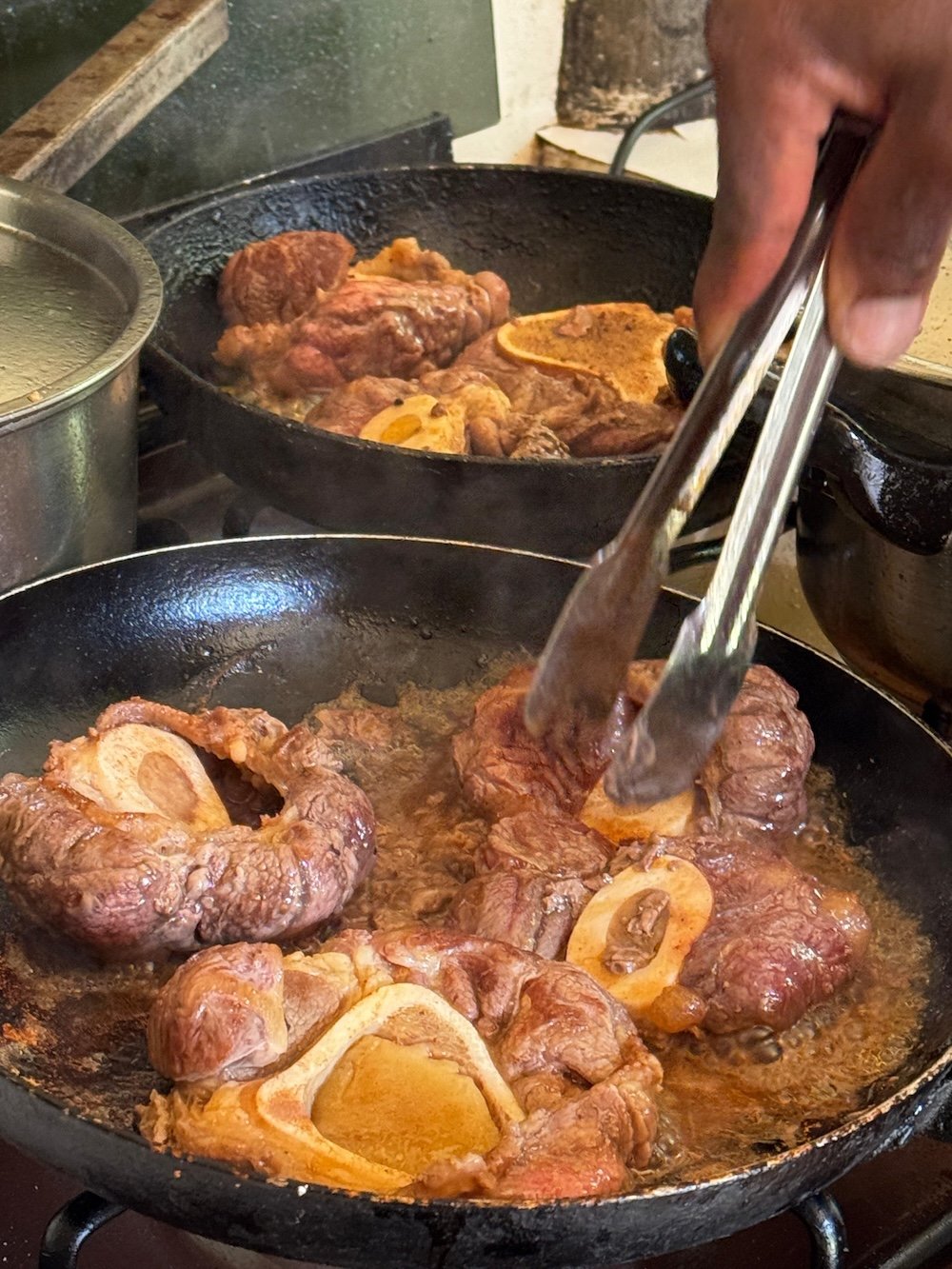
Browning the beef shin

Combining beef with veg and beans

Adding the liquid
Let us know how your Kenyan beef and bean stew turned out! You can purchase Sonja’s recipe book Footprints in The Butter here for more of our favourite camp recipes.
KEEP READING
More from the Ol Pejeta Safari Cottages blog







Sonja's Kitchen: Flakey Kenyan Chapati Recipe
Our classic and much loved Kenyan Chapati recipe fresh from Sonja’s cookbook; Footprints in the Butter
The chapati is a much loved staple of Kenya cuisine and unlike an Indian chapati it is flakey and served alongside curries, stews or with eggs at breakfast time. If you’re sat at home after your safari and craving a little bit of Kenya, cooking up a pile of delicious chapatis and enjoying them along side a plate of githeri or a beef stew is a great way to feel transported right back to Africa! Here’s our much-loved chapati recipe, right from my camp cookbook, Footprints in The Butter.
FLAKEY KENYAN CHAPATI RECIPE
Serves 8
3½ cups plain white or wholemeal wheat flour
½ tsp salt
1 tbsp margarine, butter or ghee
1⅓ cups warm water
½ cup vegetable oil or shortening
1. Sift flour and salt together, if using shortening rub in with finger tips.
2. Make a well in the centre, pour in half the water and the oil. Mix with a wooden spoon, gradually adding the remainder of the water until a firm but soft dough forms. Continue kneading with your hands.
3. Divide the dough into 8 balls. Roll out each ball on a circular chapati board or on a lightly floured pastry board.
4. Coat the surface of each circle of dough generously with margarine. Roll up the circle lightly with your fingers into a sausage, then coil the sausage into a wheel, thus trapping the air inside. Then, with a rolling pin, roll out each wheel into a circle less than ⅛inch thick.
5. Smear a chapati pan or 23cm non stick frying pan with oil. Using low heat, brown the chapatis on both sides until golden brown. If you press the chapati lightly with a folded tea towel whilst cooking, the air bubbles will quickly rise.
6. Keep warm until served.
Guests mastering our Kenyan chapati recipe WITH OUR CHEFS on a recent group safari with Yoga By Candace


Let us know how your chapatis turned out! You can purchase Sonja’s recipe book Footprints in The Butter here for more of our favourite camp recipes.
KEEP READING
More from the Ol Pejeta Safari Cottages blog

November is green season in Kenya and it is lushly green with afternoon rainfall and flowing rivers. It offers something rare: lush landscapes, solitude before the December holiday rush, and exceptional shoulder-season value.