
Safari Photography Tips for your visit to Ol Pejeta Safari Cottages - from a professional photographer
We wanted to share some helpful photography tips for your next visit to Ol Pejeta but, whilst our team certainly can take a decent picture or two, we thought it would be best to get the low-down from a much-loved regular guest to The Safari Cottages and, ideally, an international, award-winning wildlife photographer to boot. Enter, Margot.
Margot Raggett MBE is a wildlife photographer and the founder of the wildly successful Remembering Wildlife conservation book project, which has raised over £1.26 million for endangered species protection worldwide. Through her photography, books and public talks, she hopes to inspire people to connect with wildlife and support conservation. We’re so thrilled she’s taken some time out of her busy schedule to share her best wildlife photography tips for your Ol Pejeta safari.
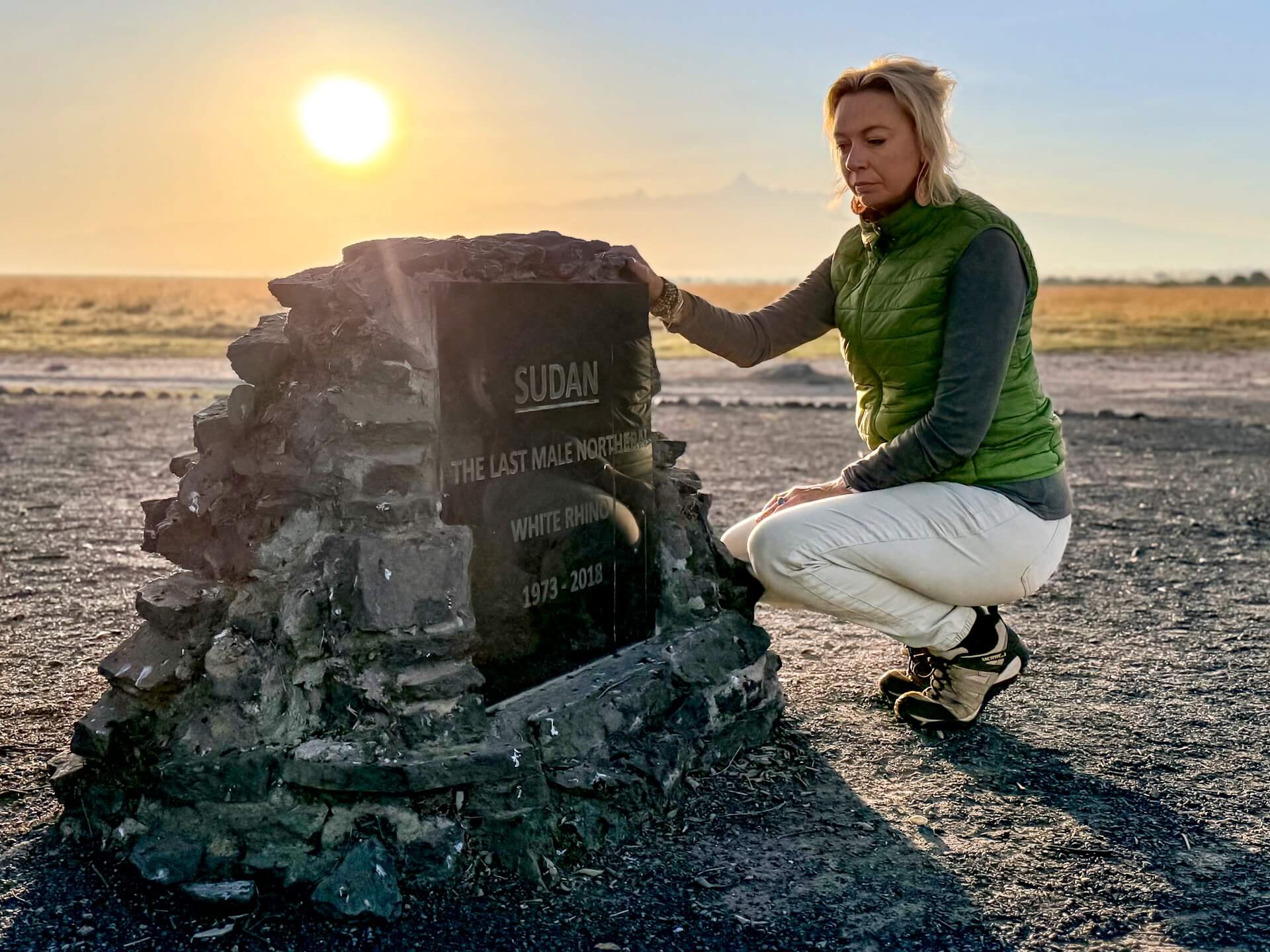
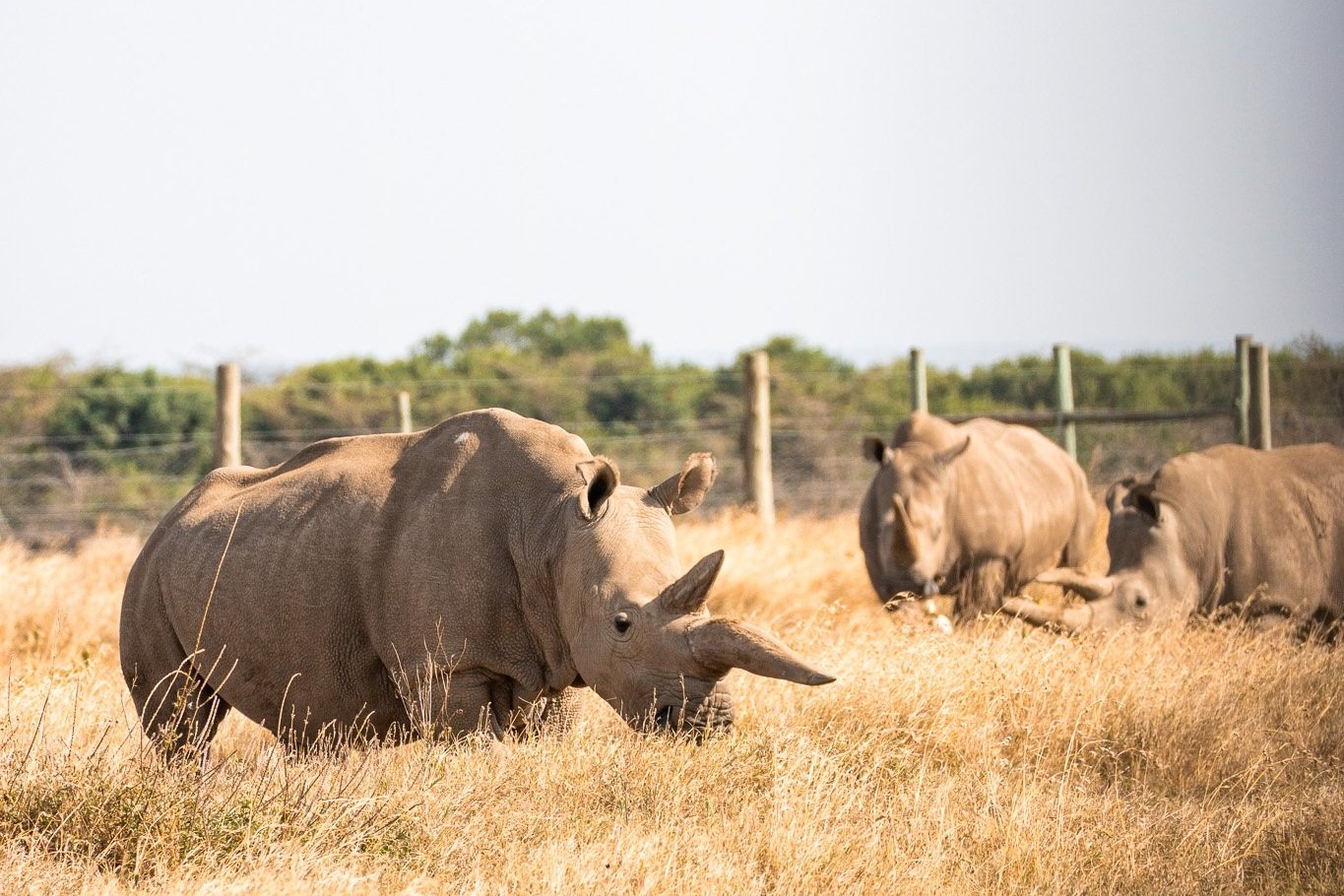
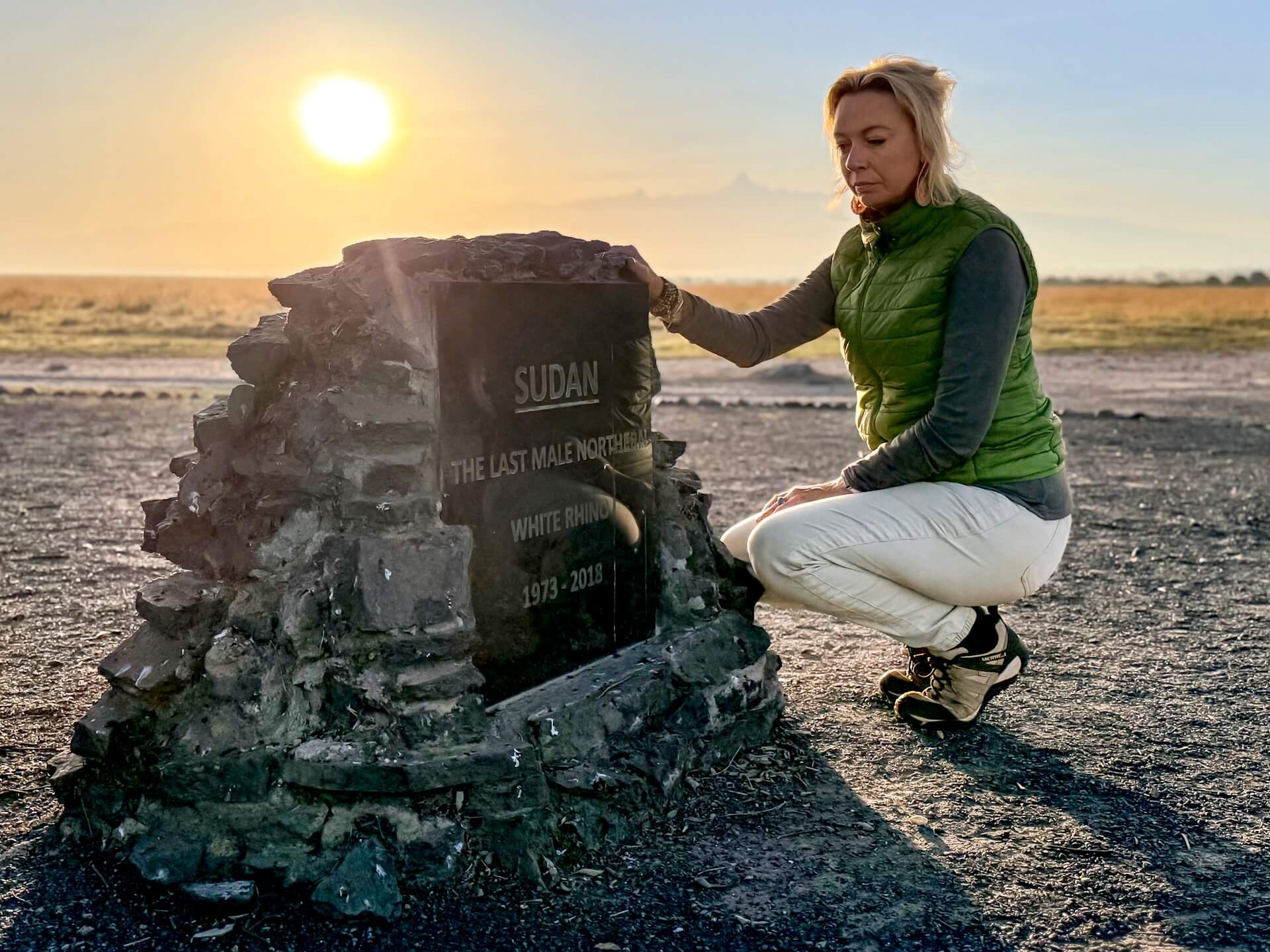
Conservationist and professional wildlife photographer Margot Raggett pays homage to Sudan, the last male Northern White Rhino who passed away from old age on Ol Pejeta in 2018
Best camera and equipment for a safari
Phones vs DSLRs? What lenses should you bring?
The most important piece of advice I can give anyone going on safari is actually not about cameras at all — it’s to remember to look up. Some of the most magical moments you will ever experience happen very quickly and if you spend the entire time buried in menus and settings, you can miss them. Your memories matter more than your photographs.
DSLRs: I would never recommend someone buying complicated camera equipment just before their first safari if they don’t really understand how to use it. Safari is not the place to be learning a new camera system from scratch — it can quickly become stressful rather than enjoyable.
Phones: Phones can take surprisingly good images these days, but they have one big limitation: reach. If you rely only on a phone, you often feel tempted to get too close to wildlife, which is neither safe nor respectful. Animals should never have to adjust their behaviour because of us.
As a professional photographer I use a long zoom lens (around 400mm), a 70–200mm lens and a shorter lens for wider scenes. However, for a typical safari guest I’d suggest something much simpler: A camera with a zoom lens in the region of 100–400mm (or 100–500mm) is ideal. It allows you to photograph animals from a safe and comfortable distance and gives you huge flexibility — elephants nearby and a leopard in a tree can both be captured with the same lens.
In short: you don’t need the most expensive camera — you need a camera you’re comfortable using.
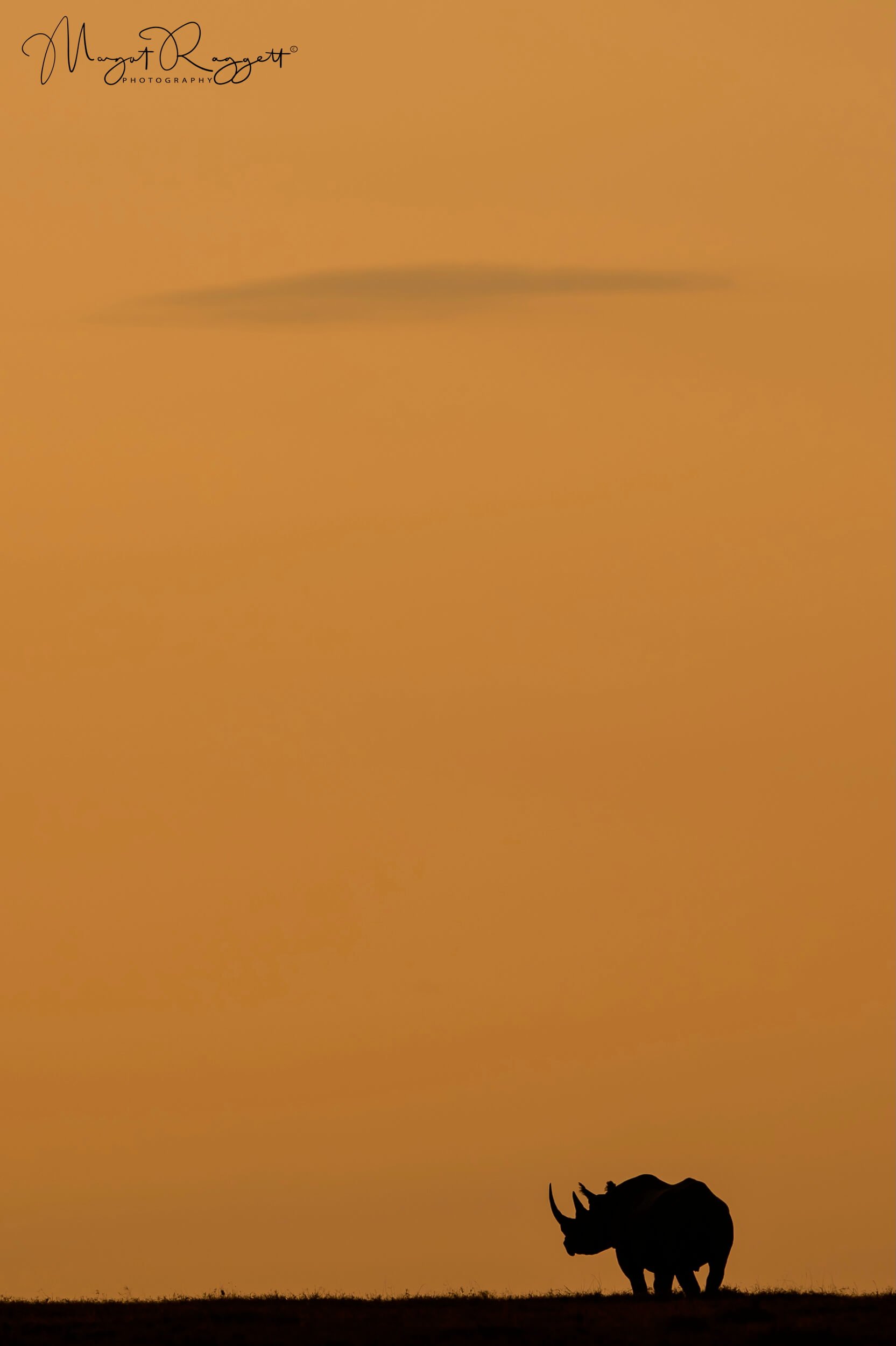
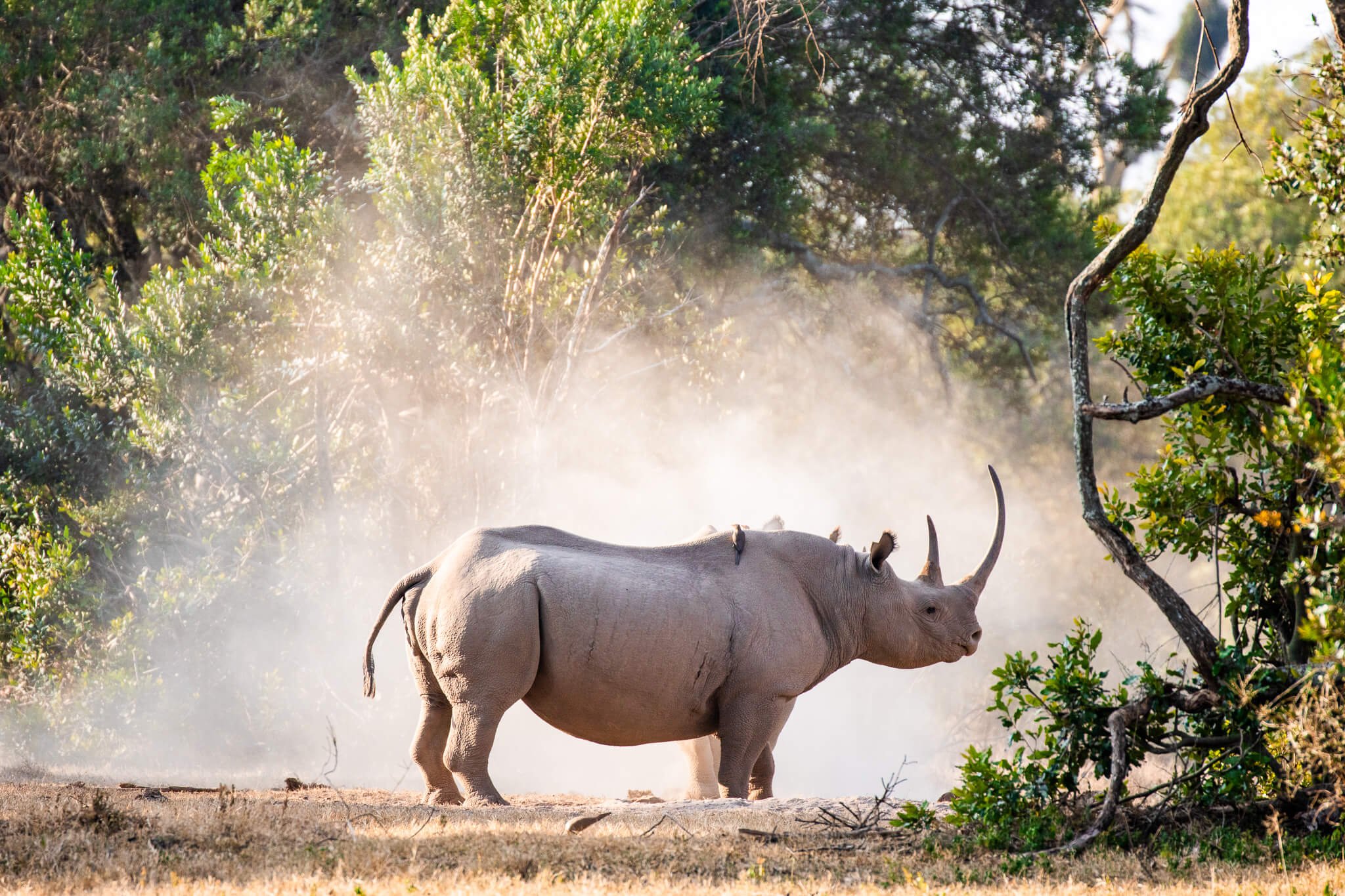
Rhino at Sunset on Ol Pejeta x Margot Raggett
Best times of day for photographs
Golden hour, midday light, cloudy and rainy days: photographers chase light more than animals.
The classic safari photography times are just after sunrise and just before sunset — the “golden hours.” The low sun creates warm tones, long shadows and beautiful atmosphere, and it’s also when animals tend to be most active. If you can face the early alarm clock on safari, it is absolutely worth it.
However, I always tell people not to ignore the middle of the day. While the light is harsher, some of my favourite images have been taken then because behaviour matters more than lighting. A dramatic interaction, a hunt, or playful cubs will always beat perfect light. Modern cameras and editing also allow us to work with much brighter conditions than in the past.
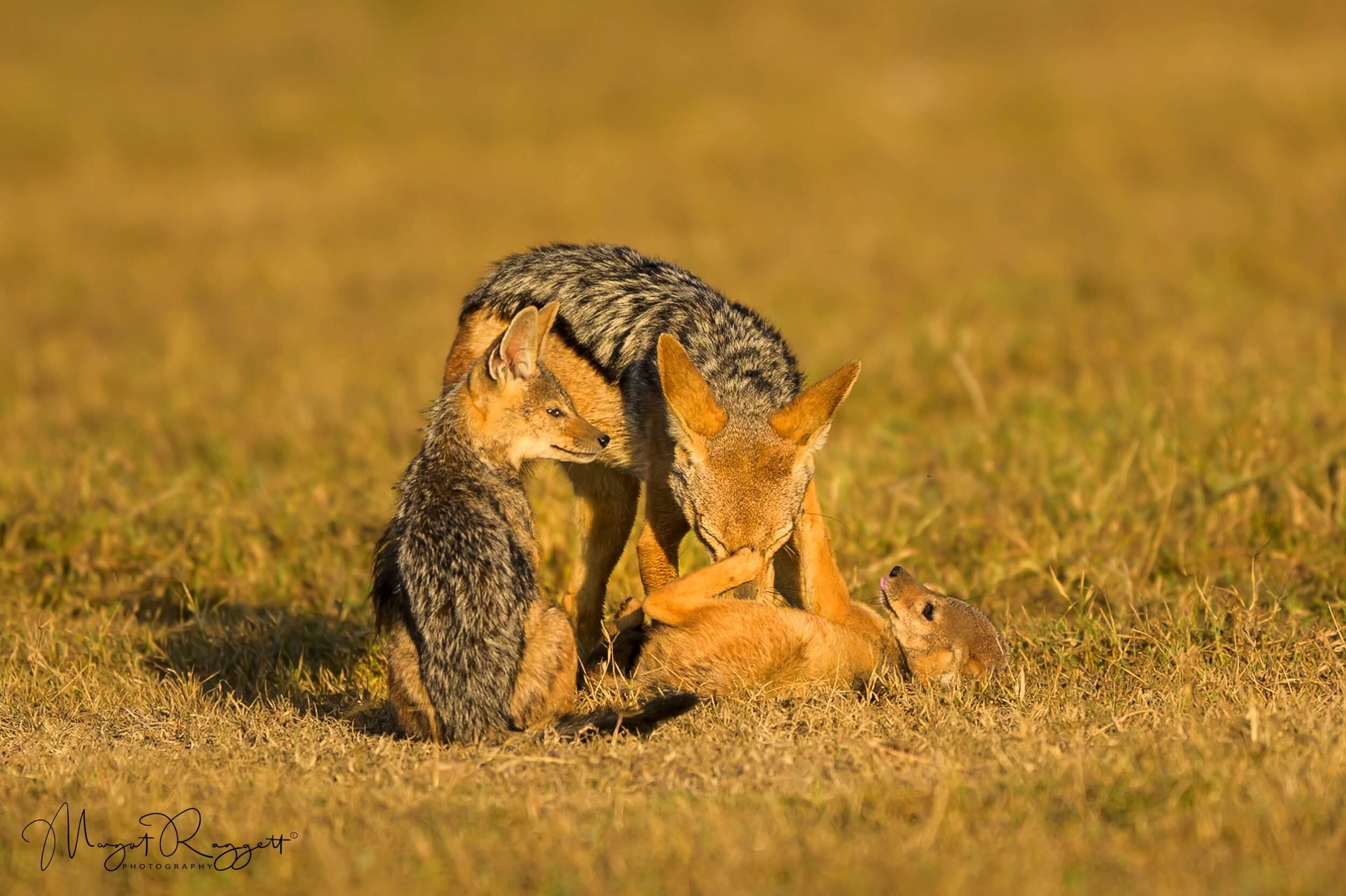
Playful jackal pups in the midday sun x Margot Raggett
No sunshine? No problem.
Cloudy days can actually be wonderful — the clouds act like a giant softbox, giving even light and lovely detail in fur and skin.
Rain is even better; I personally love photographing animals in rain or storms. The atmosphere, droplets, dark skies and mood can produce very powerful images — just make sure your camera is protected. A simple rain sleeve or even a plastic cover in your bag can save your equipment.
Composition, framing and patience
Photography is really about seeing, not equipment.
One simple starting point is the “rule of thirds.” Imagine your frame divided into a grid of three horizontal and three vertical lines. Placing the animal slightly off-centre — particularly allowing space in front of where it is looking or moving — usually creates a more pleasing image than putting it dead centre.
But rules are only guides. If you think the image works, it works.
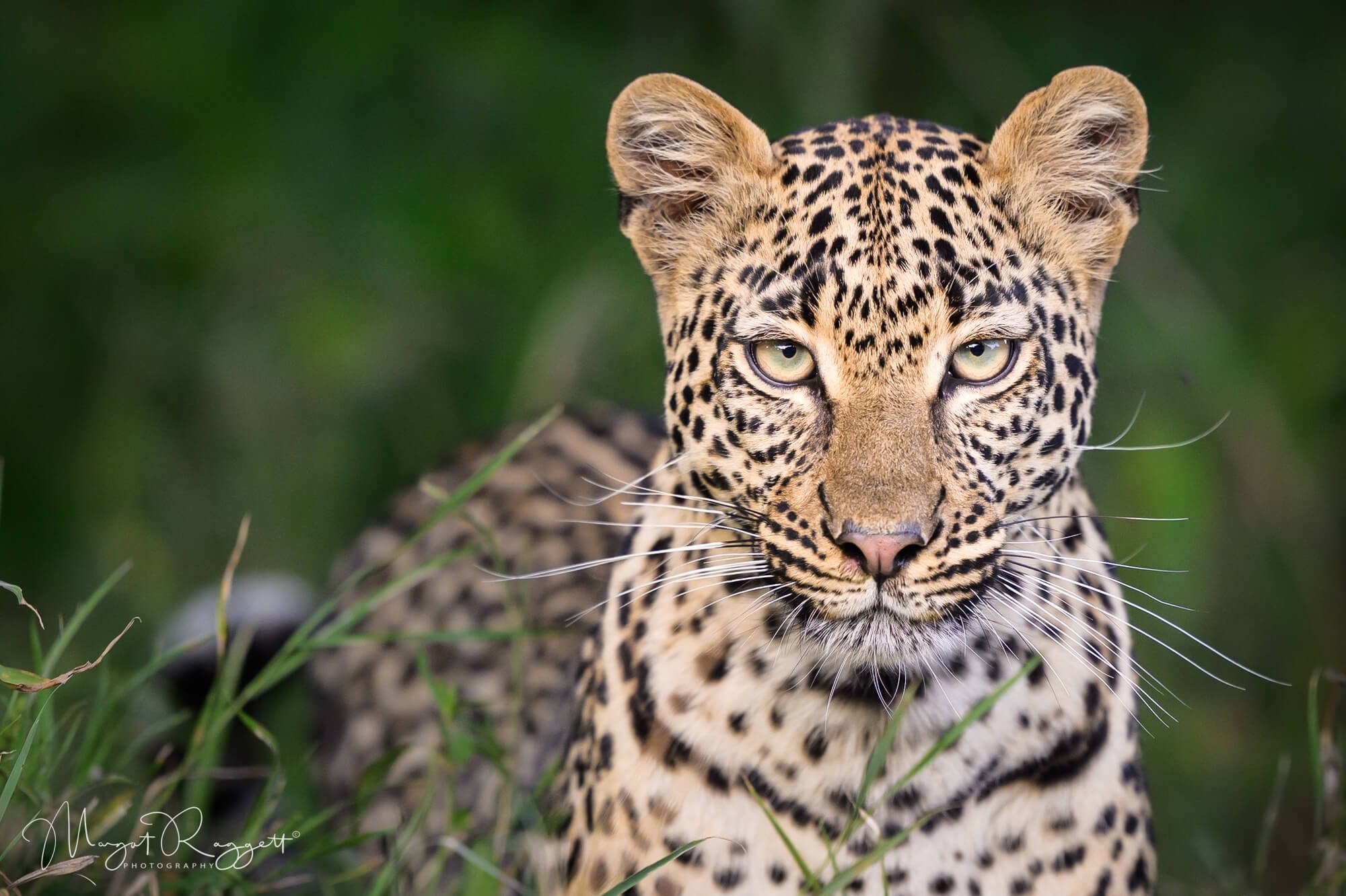
A leopard photographed on Ol Pejeta by Margot Raggett using the rule of thirds
Patience Pays.
More important than composition is patience. Many people arrive at an animal sighting, take a few pictures, and leave. The best photographs often happen over time. Animals relax, behaviour unfolds, interactions develop and the story appears.
Spend time with your subject. Watch before you shoot.
And of course, the Remembering Wildlife books are a wonderful source of inspiration — they show just how many different creative approaches to wildlife photography there can be.
Ethical wildlife photography
This is the most important subject of all - a good wildlife photograph should never come at the expense of the animal. If your presence changes the animal’s behaviour, you are too close.
Never try to attract an animal’s attention by making noises, clapping, whistling or throwing objects.
Never ask a guide to reposition a vehicle in a way that blocks an animal’s path or stresses it.
The welfare of the animal must always override the photograph. This is another reason long lenses are so useful — they allow you to observe and photograph from a respectful distance. Your guide is your partner in this. Communicate with them. Good guides understand positioning, light and animal comfort zones, and they want you to get great photographs without disturbing wildlife.
A truly successful safari photograph is one taken responsibly.

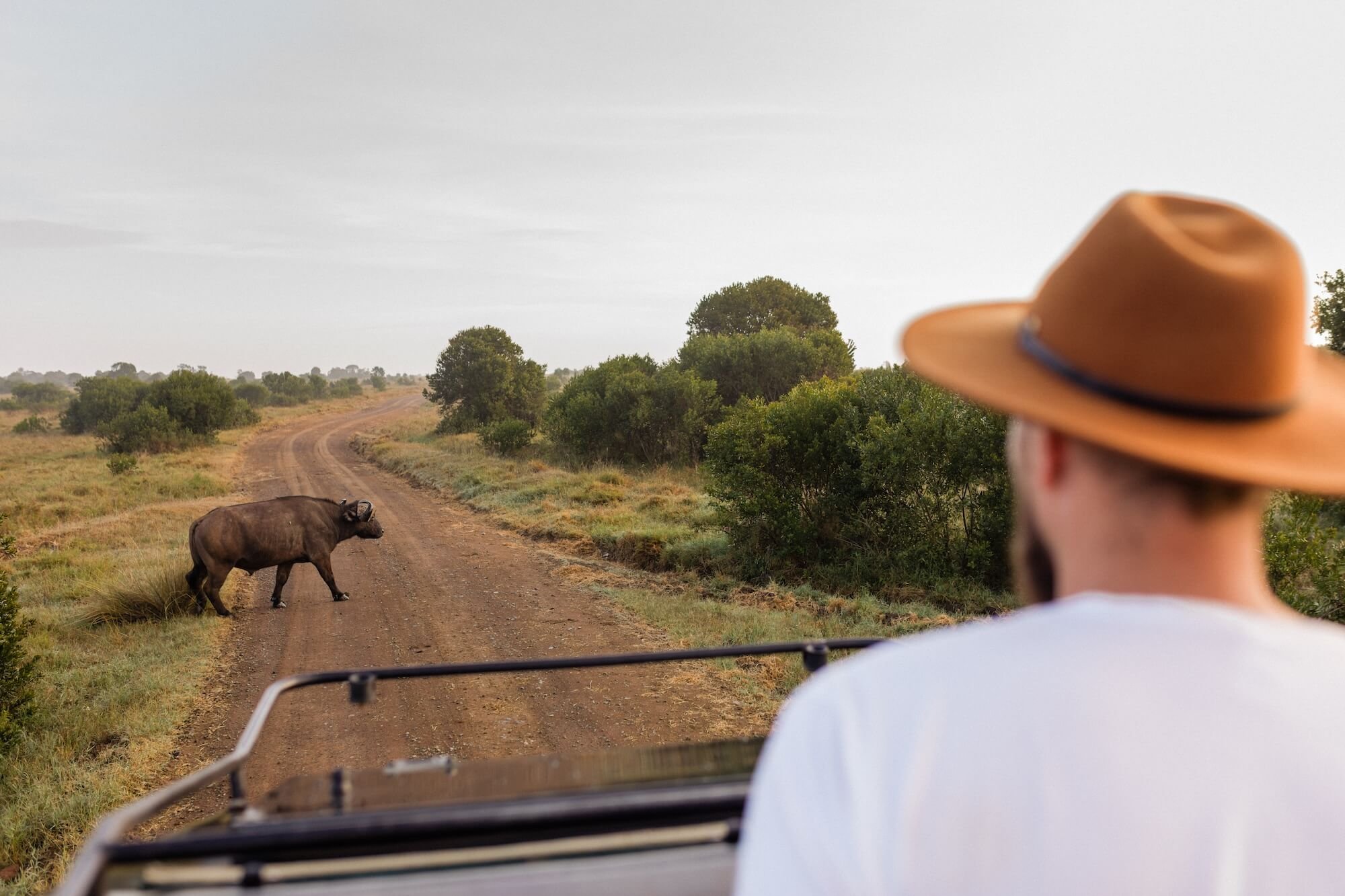
Ol Pejeta Safari Cottages guides observing wildlife from a respectful distance on a game drive
Tips for non-photographers (phone users & simple cameras)
If you’re not a photographer, my advice is very simple: don’t feel pressure to be one.
Sometimes people become so focused on getting the “perfect” image that they forget to experience what is in front of them. Seeing wild animals in their natural environment is rare and extraordinary — allow yourself to just watch.
That said, phones are wonderful for memories. I actually use my iPhone a lot on safari for short video clips and personal moments — the sounds of birds at dawn, elephants walking past camp, or the atmosphere around a sighting. These often become my most treasured memories.
A few simple tips:
Keep your phone steady (rest it on the vehicle if possible)
Tap to focus on the animal
Slightly reduce exposure if the sky is bright
Take short videos as well as photos
And most importantly: enjoy it.
You don’t need a portfolio — you need memories.
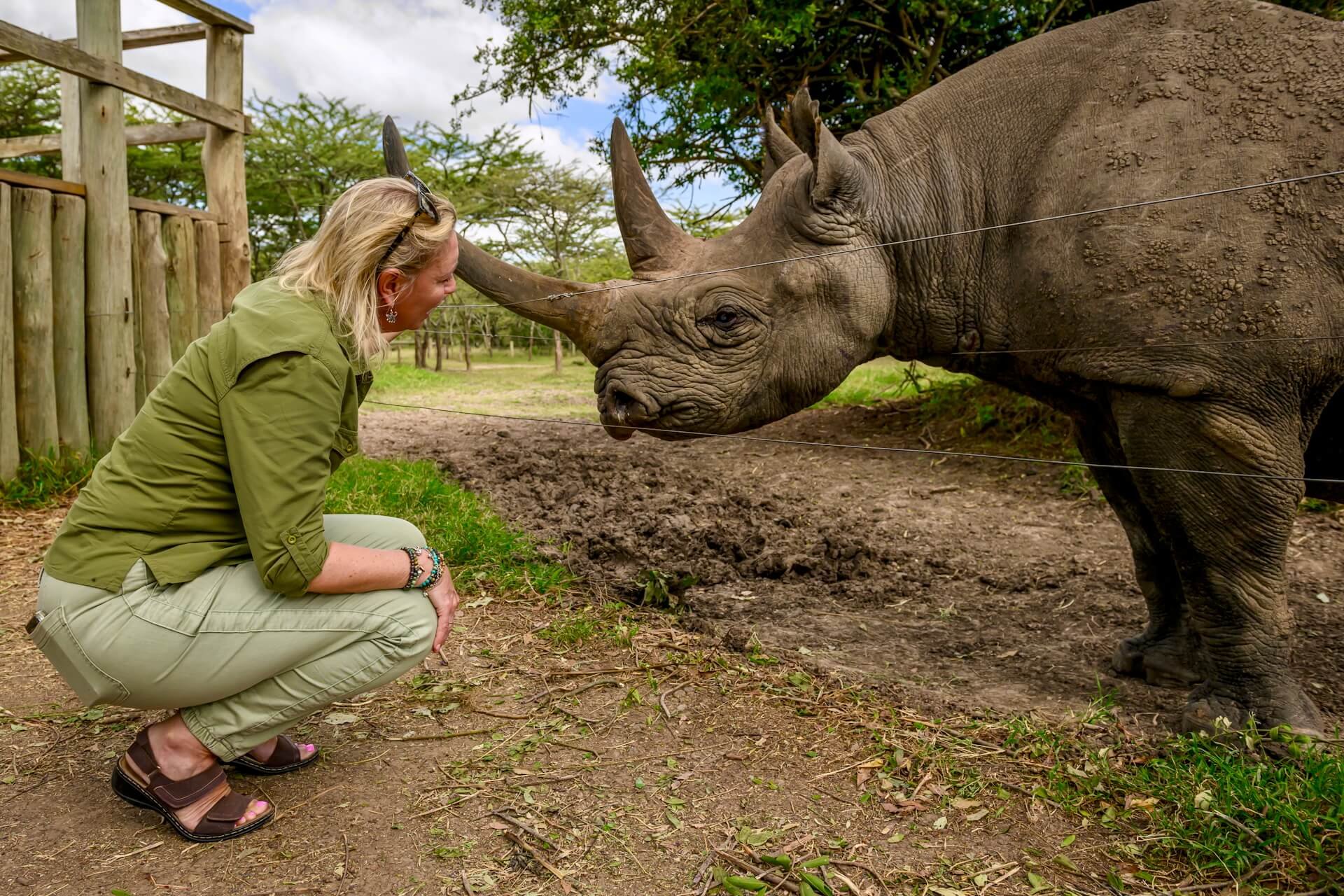
Making memories; Margot visits Baraka during her visit to Ol Pejeta Conservancy
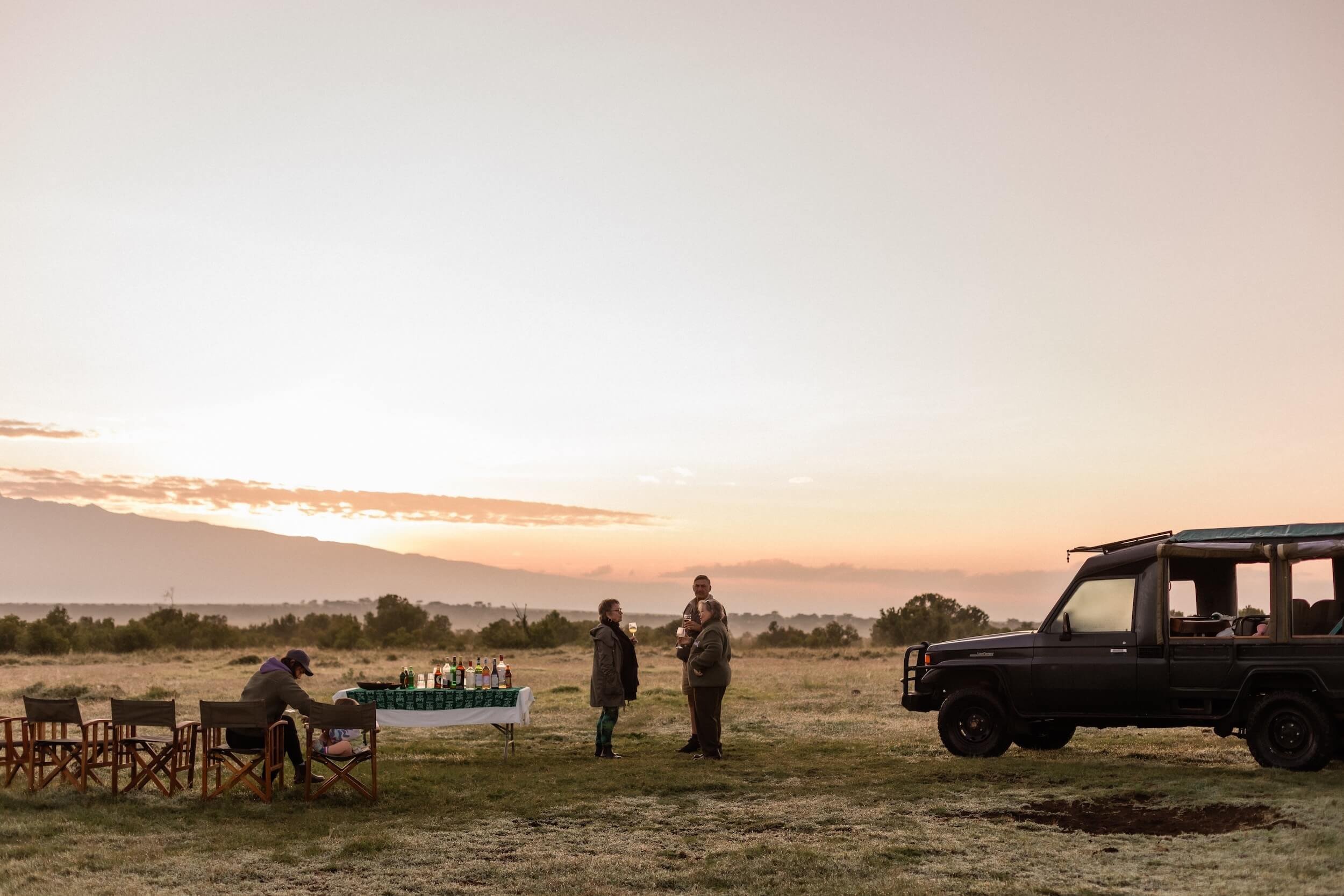
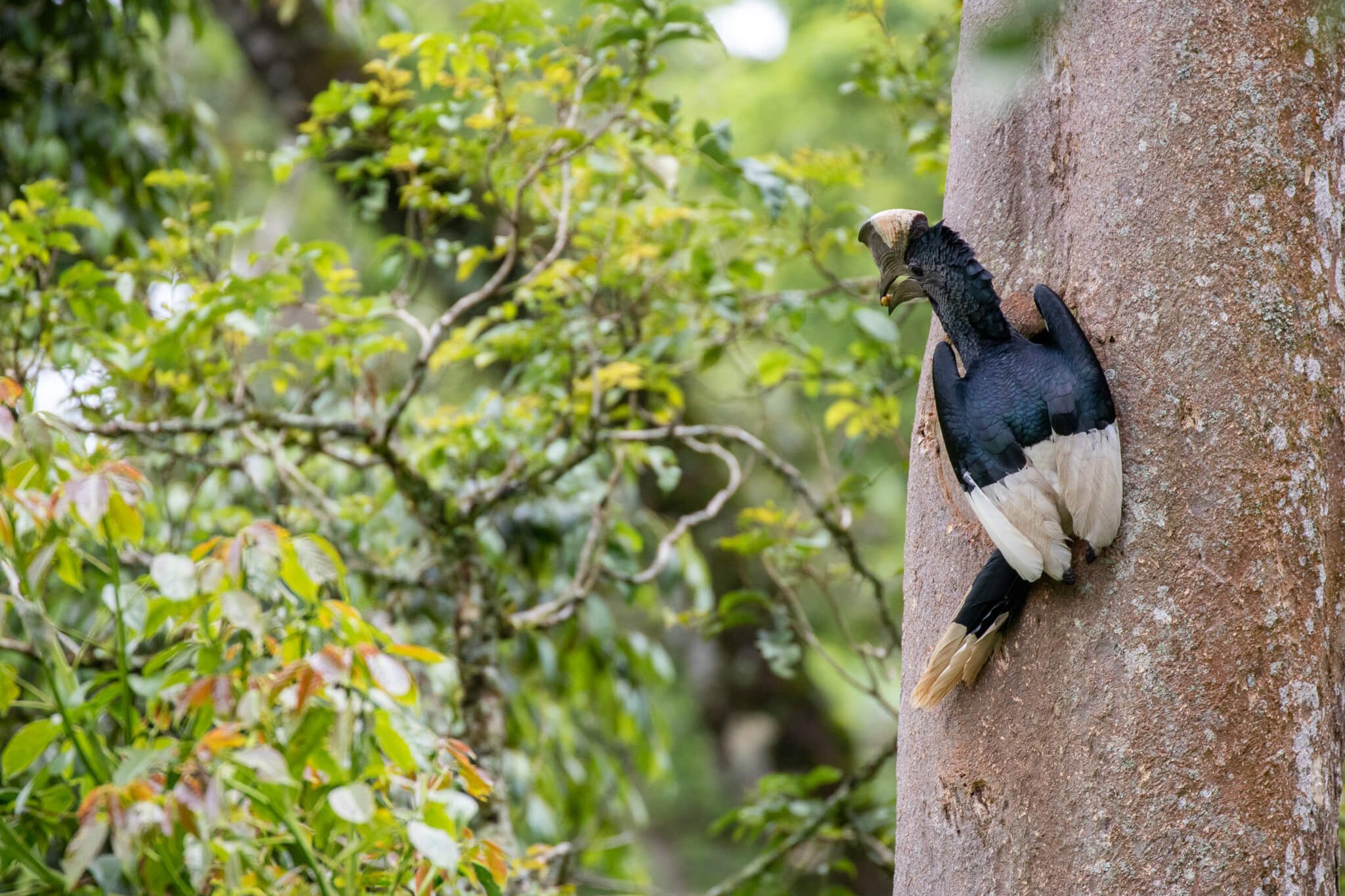





The best Kenya holiday combines safari and beach. After wildlife viewing at Ol Pejeta with The Safari Cottages, decompress on white sand—this is how 64% of Kenya travellers now book. Here's how to do it and our recommendations.