
National Park vs. Private Conservancy. Why it Matters for Your Safari.
When people start planning a Kenya safari, they quickly encounter a choice that isn't always well explained: national park or private conservancy? The distinction sounds administrative but, in practice, this choice shapes almost everything about your experience — what you can do, when you can do it, how many other people are around you, and what your visit contributes to the landscape you're travelling to see.
We live and work inside a private conservancy. Ol Pejeta is one of Kenya's most significant — 90,000 hectares of protected wilderness in the Laikipia region, managed as a not-for-profit conservation organisation. So it’s important to note that we're not neutral on this question, but we'll try to be honest about what each option offers, because the right choice genuinely depends on what kind of safari you're looking for.
What Is a National Park, and What Is a Private Conservancy?
Kenya's national parks — Amboseli, Tsavo, Lake Nakuru, Meru and others — are government-managed protected areas administered by the Kenya Wildlife Service. They are open to anyone who pays the entry fee, the roads are fixed and signposted, and the rules are standardised across the country.
Private conservancies are a different model entirely. They are protected areas managed by private landowners, community groups, or conservation trusts — often in partnership with safari operators. Ol Pejeta is a registered not-for-profit whose conservation work is funded directly by tourism revenue. The Masai Mara ecosystem's famous conservancies — Mara North, Naboisho, Olare Motorogi — operate on land leased from local Maasai communities, with lease fees going directly to those communities regardless of whether their land is being grazed.
The management model matters because it determines everything from visitor numbers, to what activities are permitted, to where the money goes.
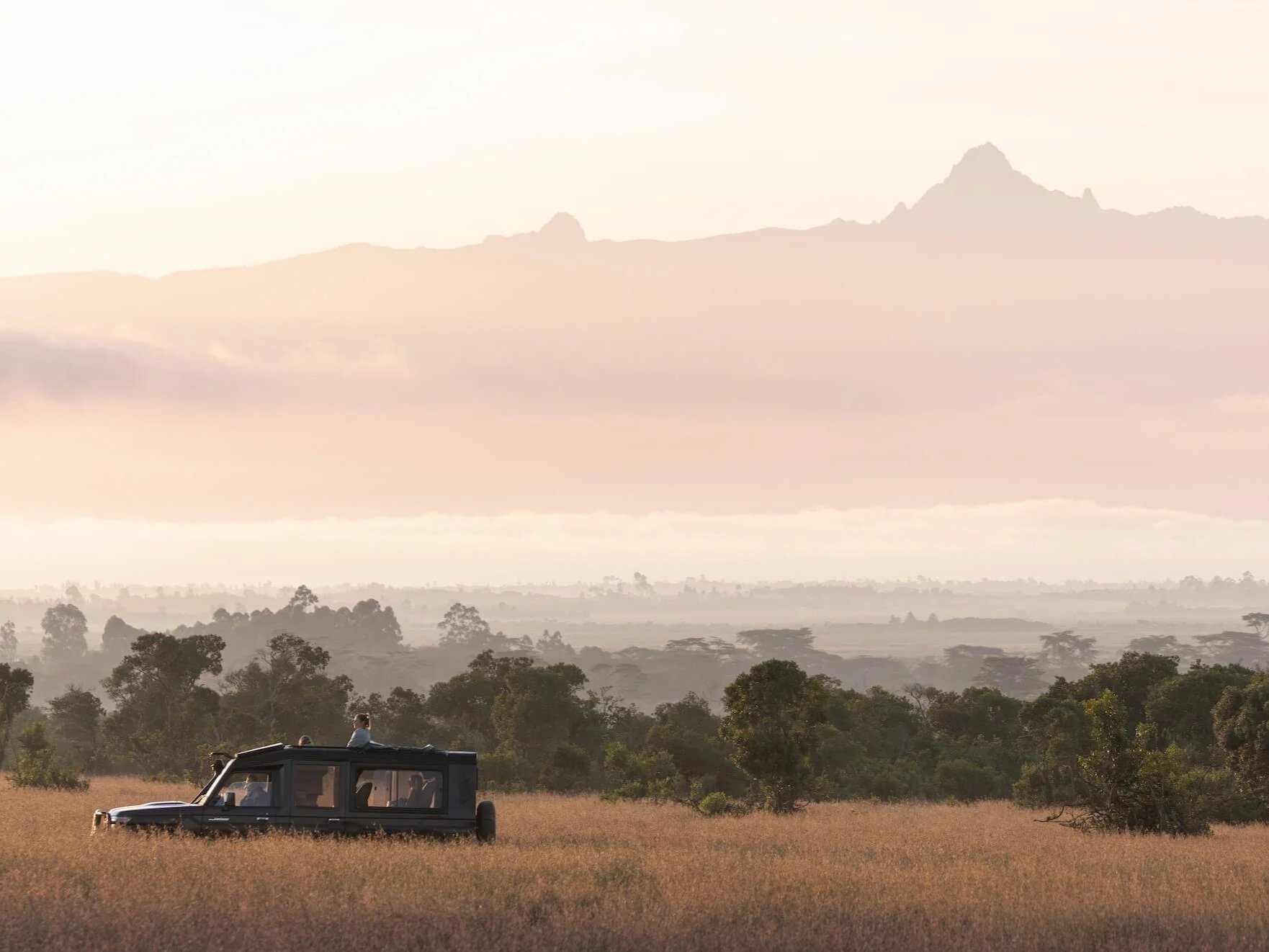
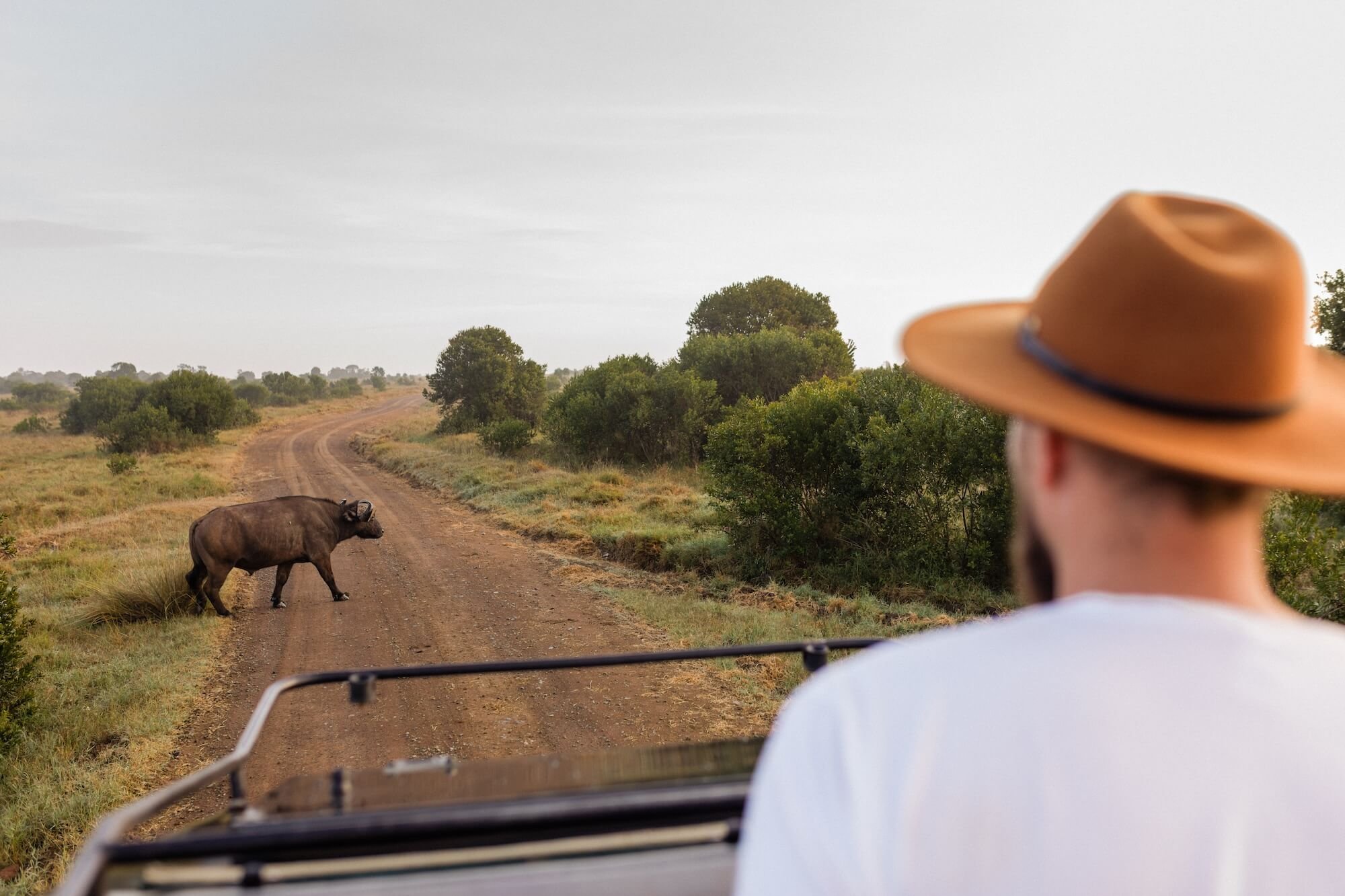
Game driving on Ol Pejeta - Mt Kenya in the background
The Four Practical Differences That Affect Your Safari
1. Night drives — permitted in conservancies, prohibited in national parks
Game drives within national park and reserve boundaries are restricted to set hours (normally 06:30 until 18:30) meaning no night drives are allowed at all.
This is one of the most significant practical differences, and one that first-time visitors often don't know about until they've already booked. The bush after dark is a completely different world. Leopards become more active, spotted hyena clans move across the plains doing what hyenas do when they think nobody is watching. Civets, genets, aardvarks, porcupines and bush babies emerge from wherever they've spent the heat of the day. If a night drive is an important experience for you, this is worth bearing in mind.
At Ol Pejeta, night drives are included in every fully inclusive stay. We go out after dinner, usually with a spotlight and a guide who knows exactly where to look. No two are the same.
2. Bush walks — permitted in conservancies, prohibited in most parks
Most of Kenya's national parks do not allow bush walks, this is only possible in private conservancies.
There is a specific quality to being on foot in the African bush that no vehicle can replicate. The scale shifts. You become aware of things — the smell of the soil after rain, the sound of your own breathing, the sudden realisation that the distance between you and the wildlife is no longer measured in metres of steel. And you can see more of the little magics of the wild world, that are so often missed on a game drive. Bush walks at Ol Pejeta are led by our experienced guides, accompanied by an armed ranger. They are included in fully inclusive stays.
3. Off-road driving — permitted in most conservancies, prohibited in parks
Private conservancies offer off-road game drives, night safaris, and guided walks — these activities are usually not permitted in national parks.
In a national park, your vehicle stays on the road. When a leopard is resting in a gully 40 metres off the track, you view it from the track. In a conservancy, if the terrain allows and the guide judges it appropriate, you can often get a little closer. This matters more than it might sound. Some of the most extraordinary sightings happen in places no road reaches.

A guided bush walk on Ol Pejeta Conservancy
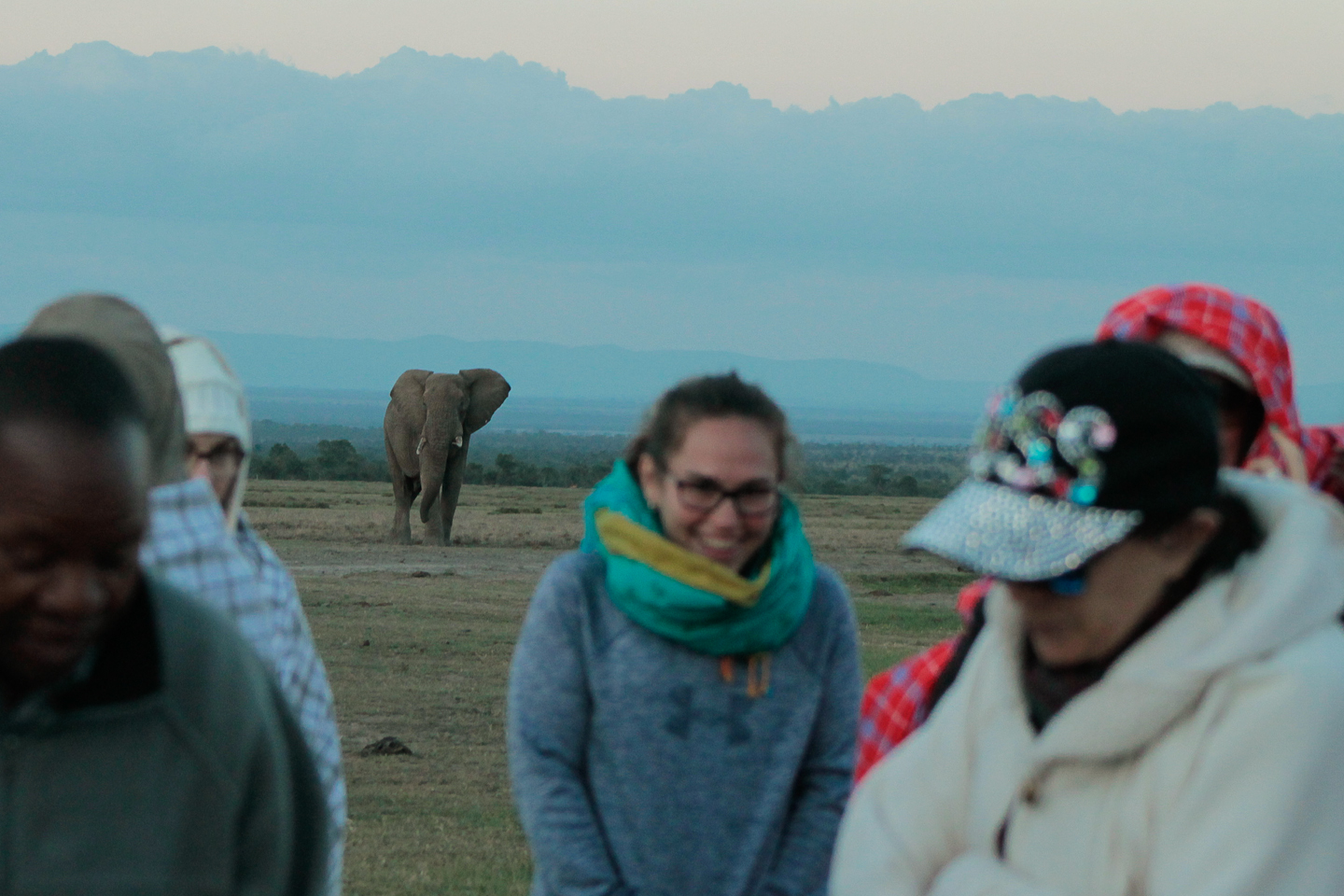
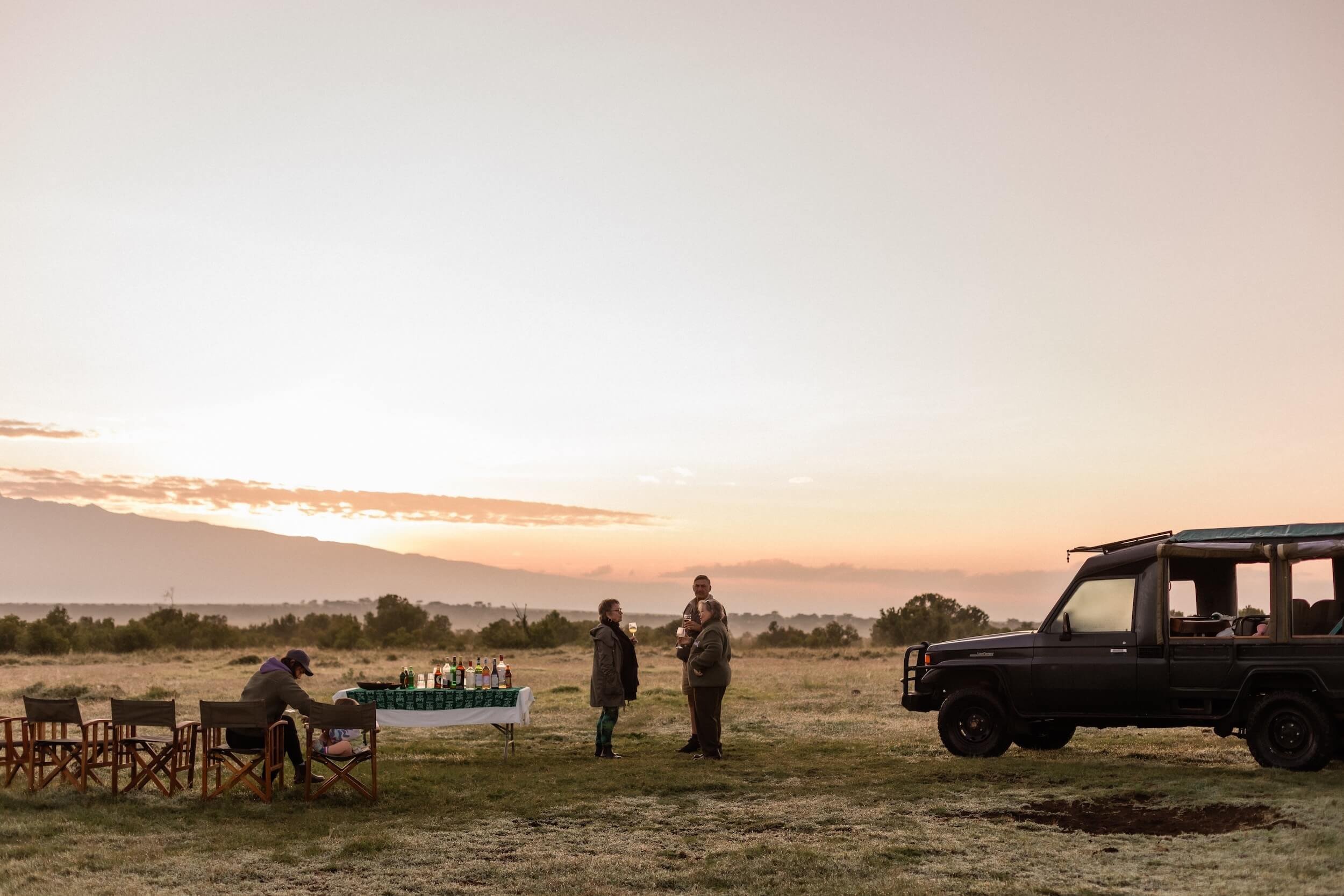
An elephant visits our guests during an evening sundowner
4. Vehicle numbers and crowds — controlled in conservancies, unrestricted in parks
This is perhaps the most visible difference for anyone who has experienced both. In Kenya's most popular national parks and reserves during peak season, a significant predator sighting can attract dozens of vehicles. The Masai Mara Reserve in July and August is one of the greatest wildlife spectacles on earth — and one of the most congested safari experiences available.
Conservancies limit visitor numbers, meaning fewer crowds at wildlife sightings and more intimate game drives.
At Ol Pejeta, vehicle numbers on the conservancy are strictly controlled and areas are tightly managed. There are mornings — even in peak season — when you will be the only vehicle at a sighting. Not because the wildlife is scarce, but because the system is designed to keep it that way.
What National Parks Do Better
That said, national parks do offer things that conservancies cannot always match.
Famous views or experiences. The Masai Mara Reserve is the only place in Kenya where you can witness the Great Migration in its full, staggering scale — hundreds of thousands of wildebeest and zebra crossing the Mara River between July and October. That spectacle happens inside the reserve boundaries, not the conservancies around it. If seeing the migration crossing is the primary goal of your trip, you need to be in or near the Mara Reserve.
Affordability. National parks charge park fees but these are still generally more affordable than most private conservancy fees. These conservancy fees, on top of accommodation rates, can add significantly to the overall cost of a stay. For first-time visitors on a tighter budget, a well-chosen national park camp might be a better option.
A uniqueness of their own. And some of Kenya's parks (for example, Amboseli with Kilimanjaro on the horizon, Nakuru with its lake views) have a unique quality that is simply their own, and not replicated elsewhere.
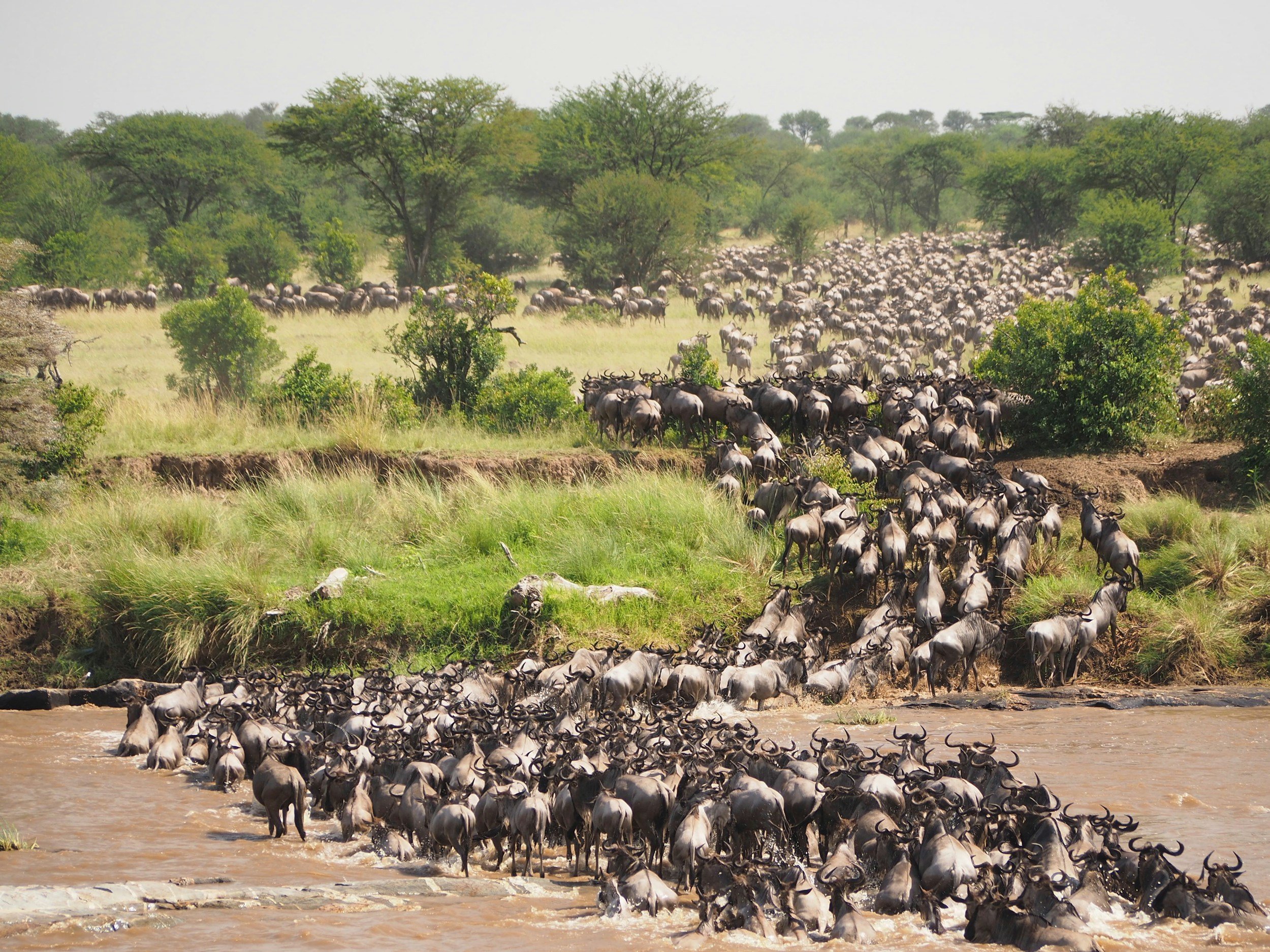
A river crossing during the great migration in Kenya’s Masai Mara reserve
What Makes Ol Pejeta Specifically Different
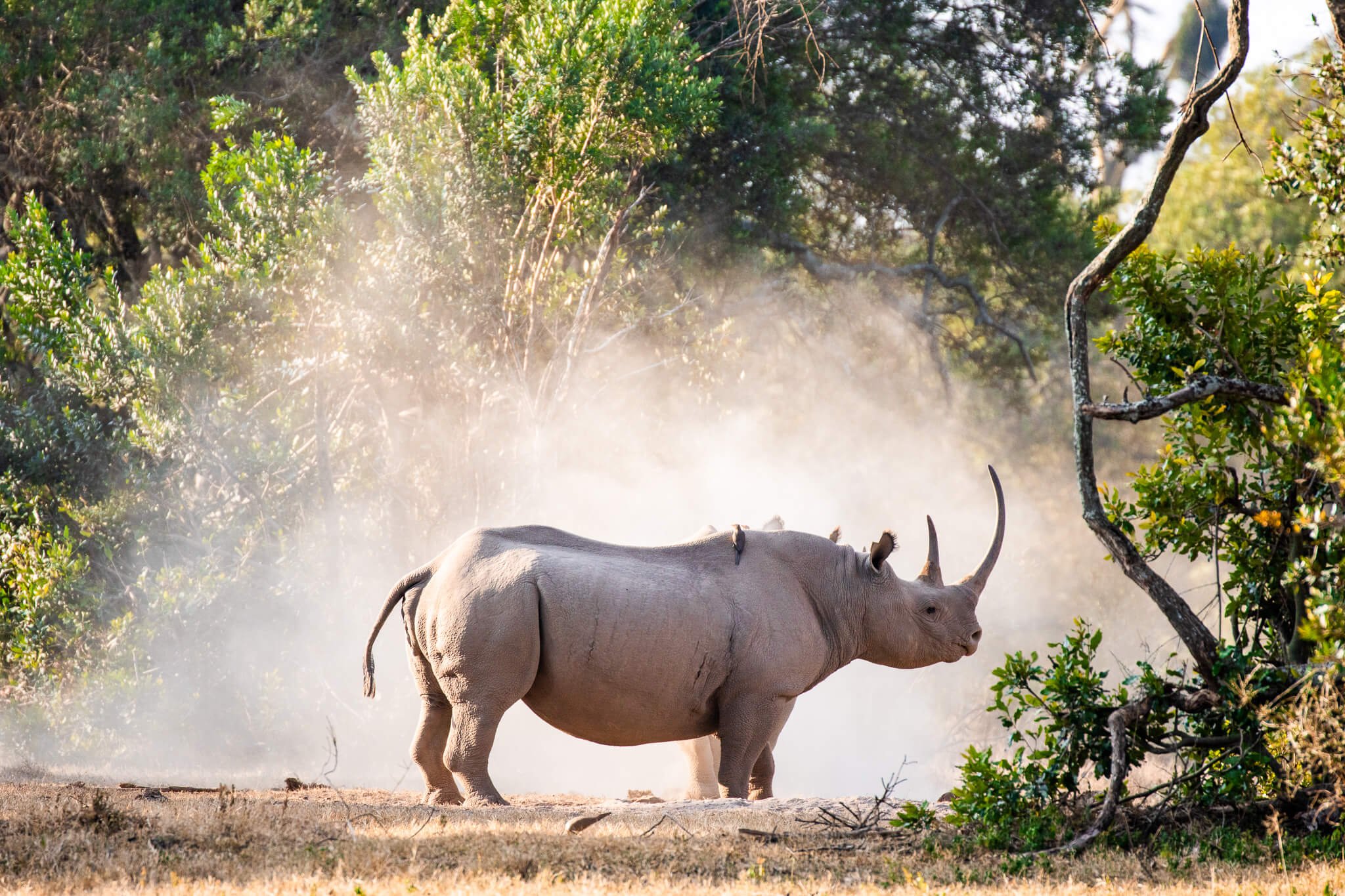
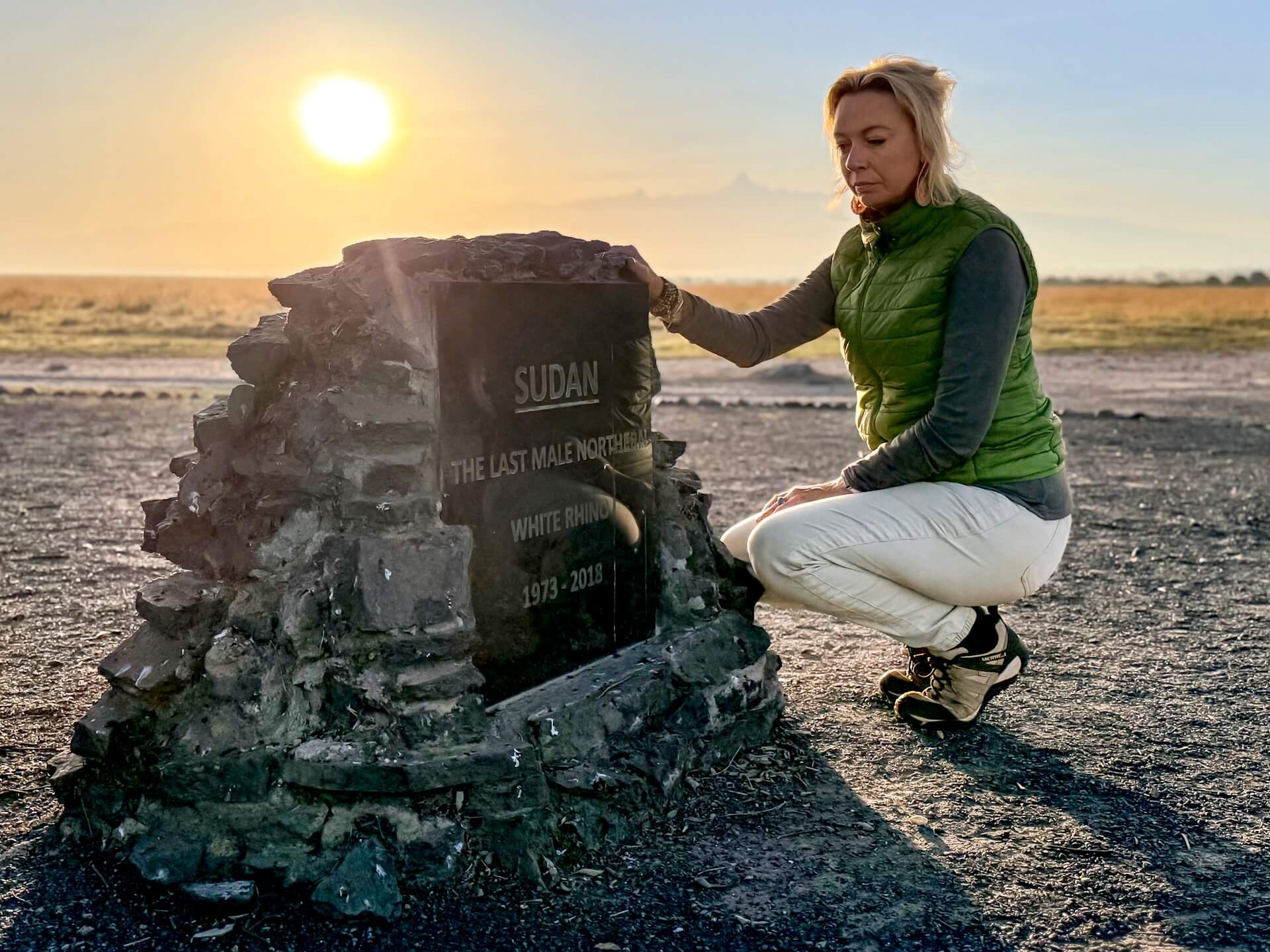
Ol Pejeta is not a typical conservancy in one important respect: its conservation mission goes significantly beyond wildlife tourism. It is home to the world's largest black rhino sanctuary in East Africa, 171 individuals — and to Najin and Fatu, the last two northern white rhinos on Earth. It runs the Sweetwaters Chimpanzee Sanctuary, which houses orphaned and rescued chimpanzees from across the continent. It manages 90,000 hectares as a not-for-profit, with every conservancy fee reinvested into ranger salaries, veterinary care, anti-poaching operations and community programmes.
Staying here means your conservancy fees go directly to this work. That isn't something every conservancy can say with the same transparency, and it's something we're very proud of.
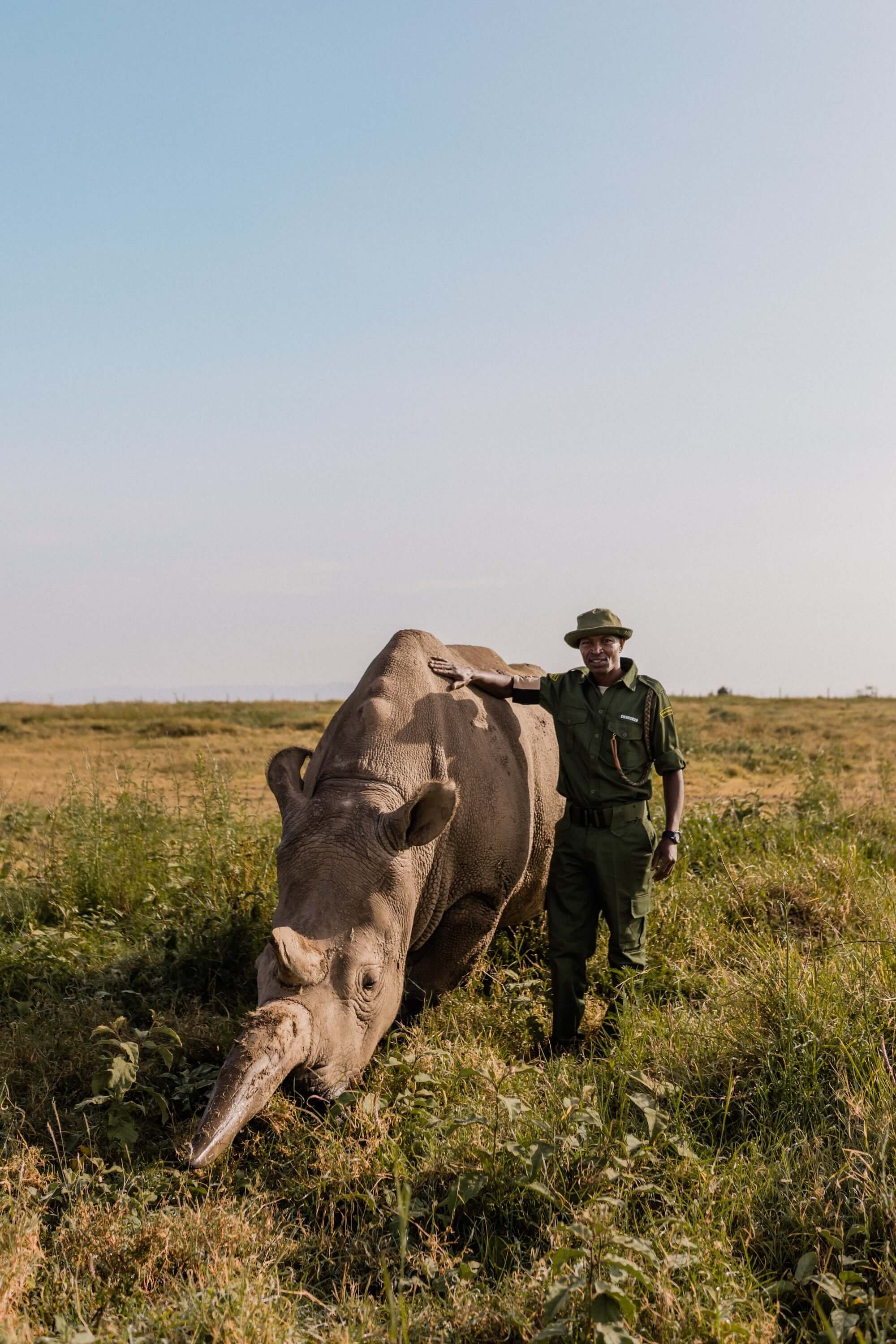
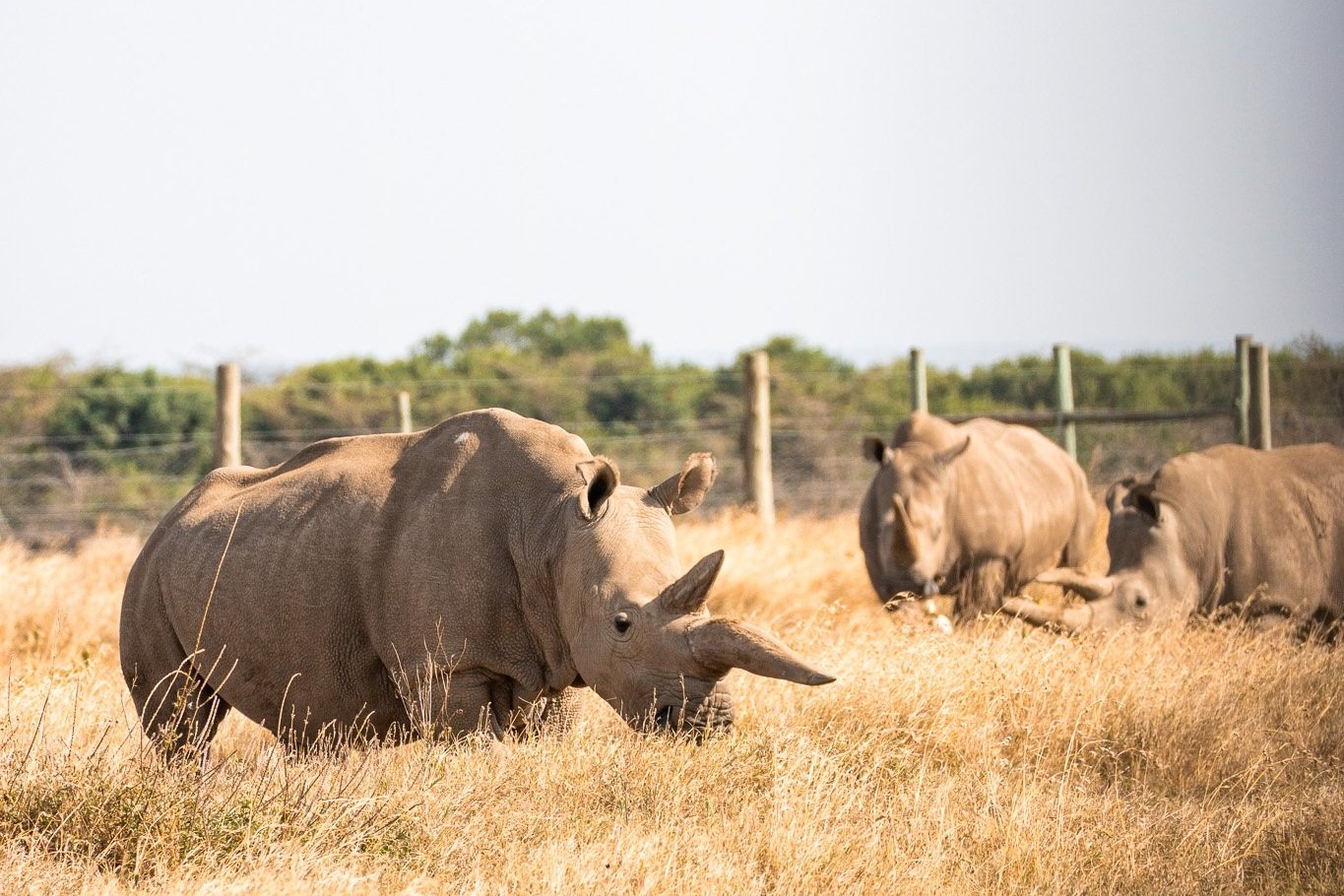
Najin - one of the last remaining Northern White Rhinos with head caretaker Zacharia Mutai
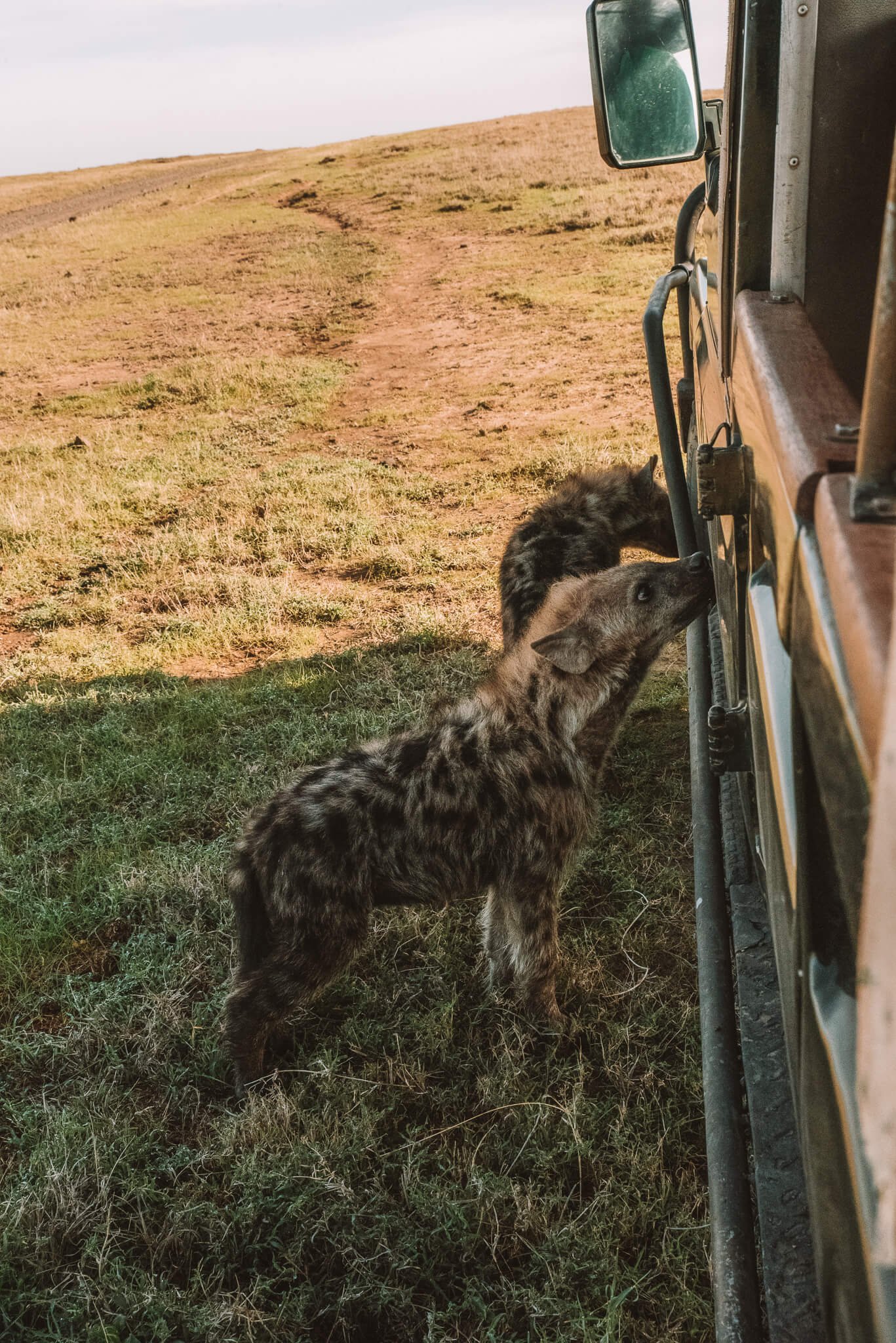
Curious hyena pups on a game drive on Ol Pejeta
Do You Have to Choose?
Not necessarily. Many Kenya itineraries combine time in a national park or reserve — typically the Masai Mara or Amboseli — with time in a conservancy like Ol Pejeta. Travellers often spend two or three days in a national park to see the wildlife spectacles or famous views, alongside a few days in a private conservancy for a quieter experience, night drives, and walking safaris.
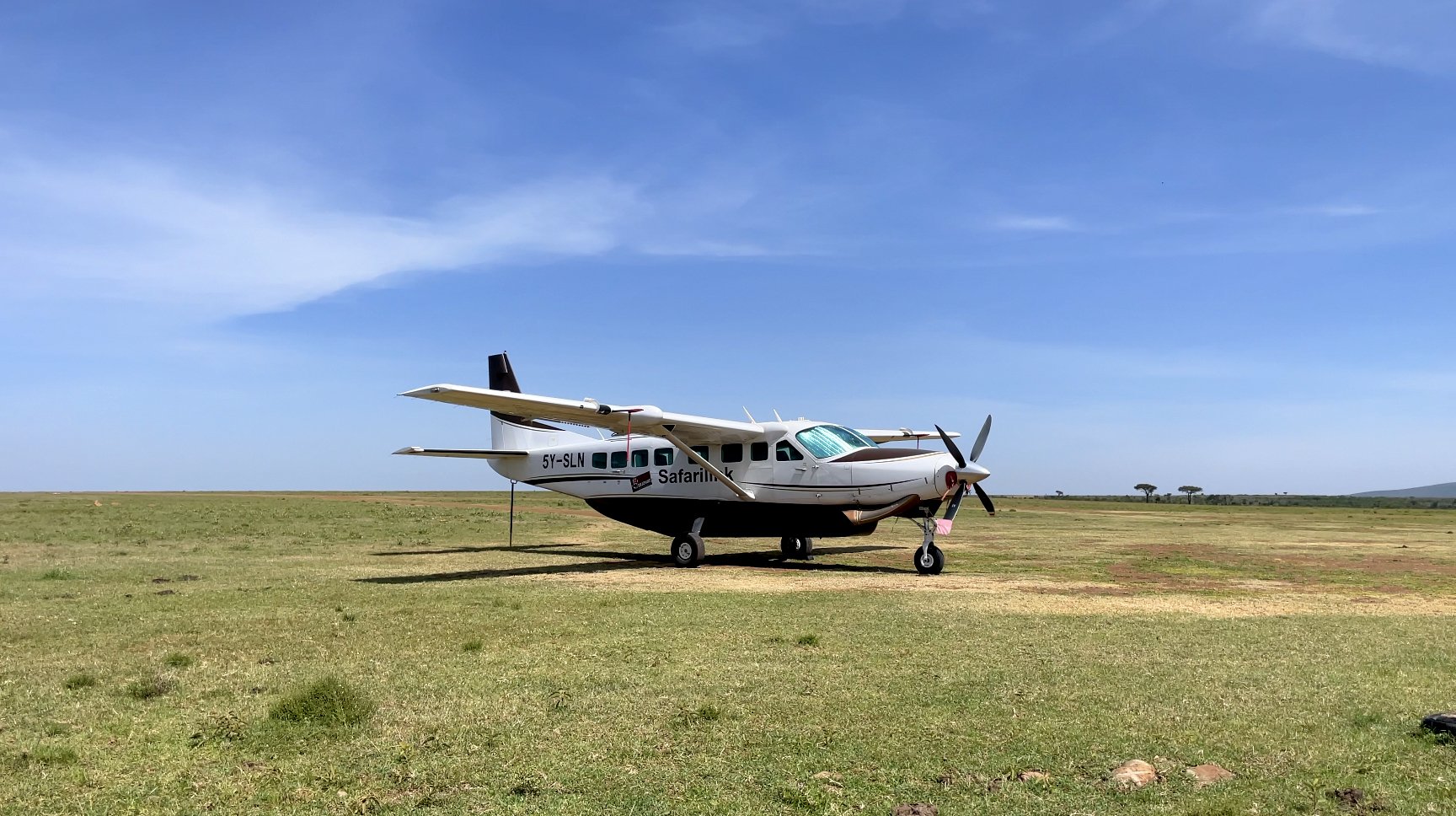
If you're planning a longer Kenya trip, this combination gives you the best of both: the scale and spectacle of the parks, and the intimacy and flexibility of a conservancy stay. Ol Pejeta sits about four hours from Nairobi by road and 30 minutes by light aircraft — easy to include as part of a multi-destination itinerary (most of guests fly on to the Masai Mara from here) or equally satisfying as a standalone destination.
The Honest Summary
A national park safari gives you access to Kenya's most famous landscapes, wildlife spectacles and, in some cases, its most extraordinary single experiences. It is more accessible, often more affordable, and doesn't require the same level of planning.
A private conservancy safari gives you something different: control over your schedule, activities that don't exist in the parks, fewer vehicles, and the genuine sense that your visit is contributing directly to the land you're travelling to see. For guests who have done a park safari and felt the friction of crowds and fixed schedules, the shift to a conservancy tends to feel irreversible.
We're biased, naturally. But we also know that the guests who come to Ol Pejeta and then head to a park afterwards tend to notice the difference immediately — and not always in the park's favour.
Curious about what a stay at The Safari Cottages actually includes? Here’s a standard 3-night itinerary with prices.
Or if you're still planning your Kenya itinerary, our guide to getting here and our month-by-month seasonal guides are a good place to start.





The best Kenya holiday combines safari and beach. After wildlife viewing at Ol Pejeta with The Safari Cottages, decompress on white sand—this is how 64% of Kenya travellers now book. Here's how to do it and our recommendations.