
Family Safari in Kenya: Visiting Ol Pejeta with Kids
The idea of a family safari often comes with a quiet hesitation. Will the children cope with early mornings? Is it safe? Will teenagers be bored, or toddlers overwhelmed? These are the kinds of questions and concerns we hear all the time — and they're completely understandable.
The truth is that a well-planned family safari isn't just possible. It's one of the most remarkable things you can do together. Watching your child see an elephant for the first time, or hearing them whisper as a lion walks past the vehicle, creates the kind of shared memory that stays with a family for a lifetime.
Ol Pejeta Conservancy, in the heart of Kenya's Laikipia region, is one of the most family-friendly safari destinations in East Africa. Here's everything you need to know before you book.
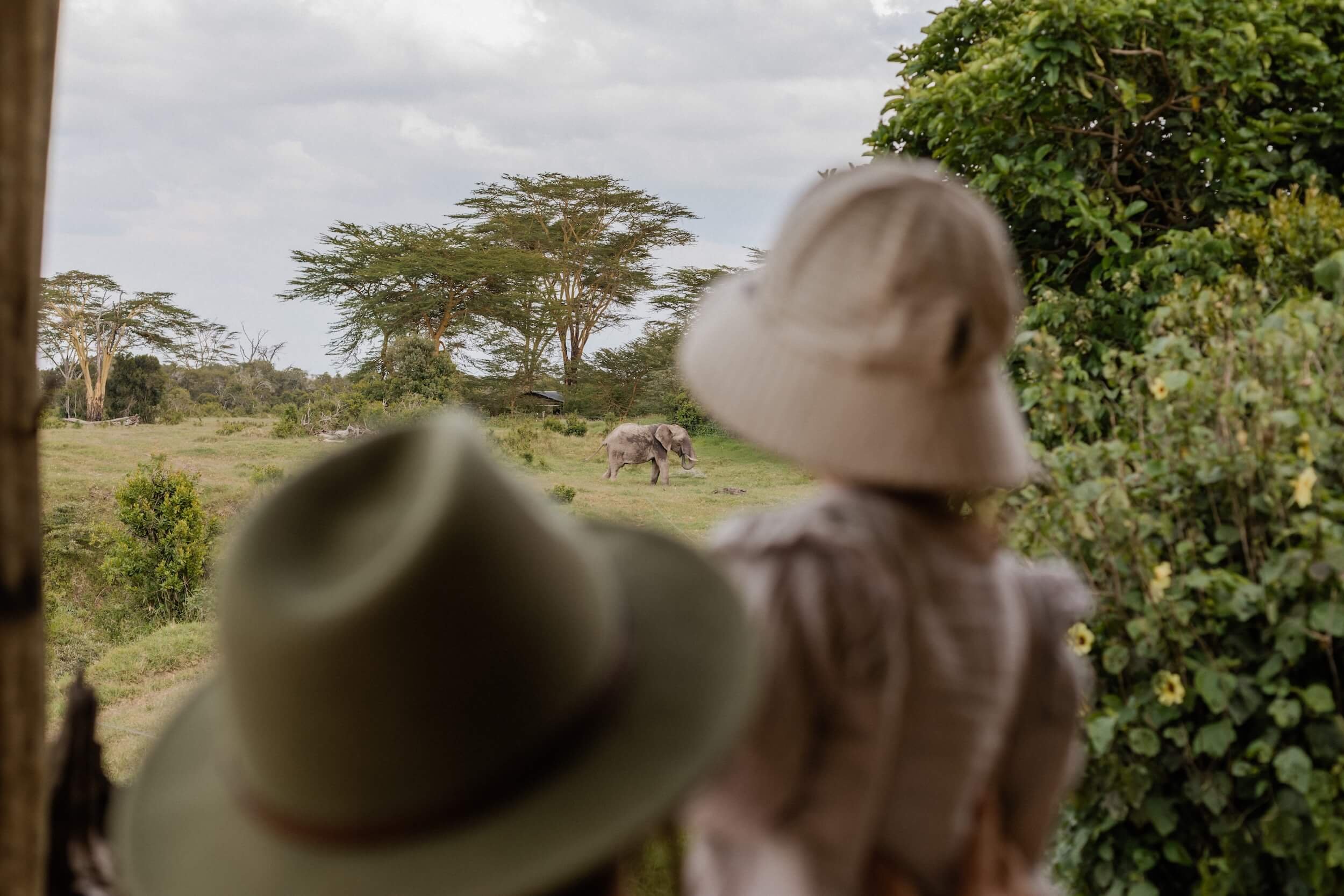
A guest at The Safari Cottages watches an elephant with her daughter over lunchtime
Is Ol Pejeta Suitable for Families?
The short answer is yes — we welcome families of all ages to The Safari Cottages year-round and, in many ways, Ol Pejeta is better suited to families than Kenya's busier national parks.
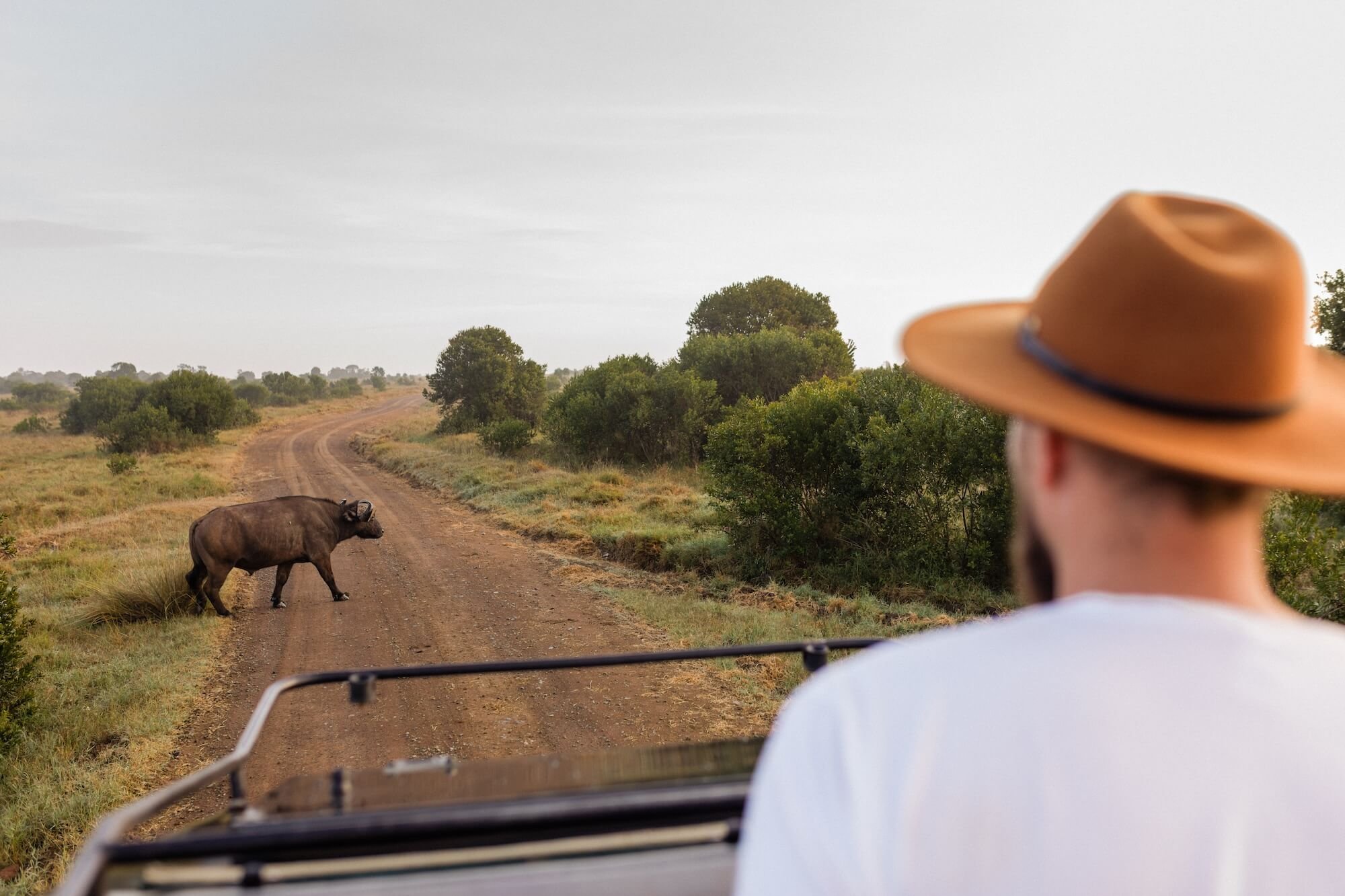
Safety comes first. Ol Pejeta is a fenced conservancy with strict wildlife protocols and highly experienced guides driving within strict speed limits on open terrain. Game drives take place in enclosed vehicles, and your guide will always brief you and your family before heading out. Children are safe, well-supervised, and — in our experience — far braver than their parents expect.
Shorter game drives are entirely possible. Unlike fixed itinerary tours, a private safari at The Safari Cottages means your schedule is yours. If younger children need to return home after two hours, that's exactly what happens. There's no pressure to stay out until everyone is exhausted. You go when you're ready, and you come back when you've had enough.
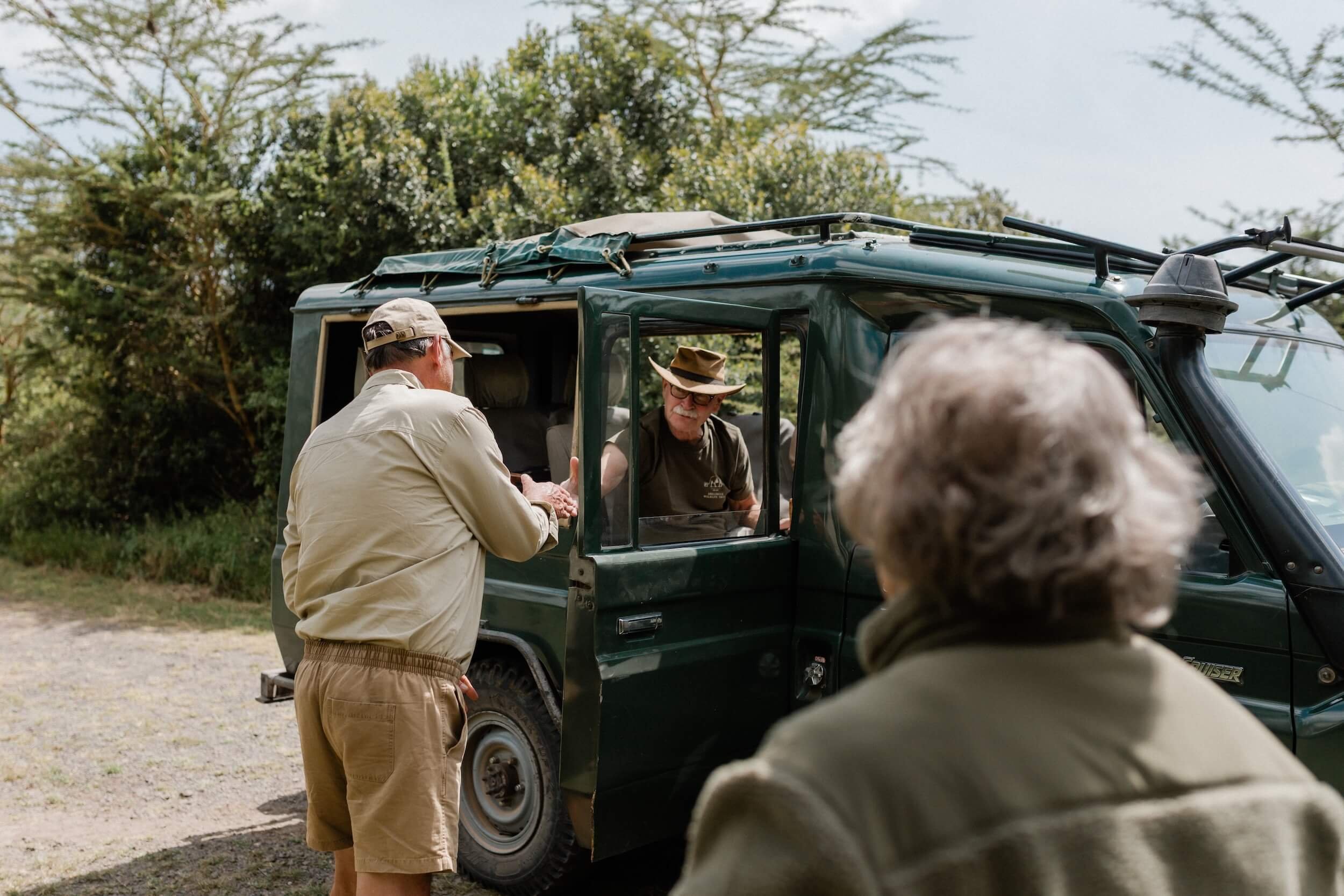
Private guiding makes all the difference. Shared game drives can be frustrating with children — especially if little ones need a snack, a wriggle, or a bathroom stop. With a private guide and vehicle dedicated entirely to your family, the pace, the route, and the conversation are all shaped around you. Your guide can adapt their storytelling to suit a six-year-old just as easily as a sixteen-year-old.
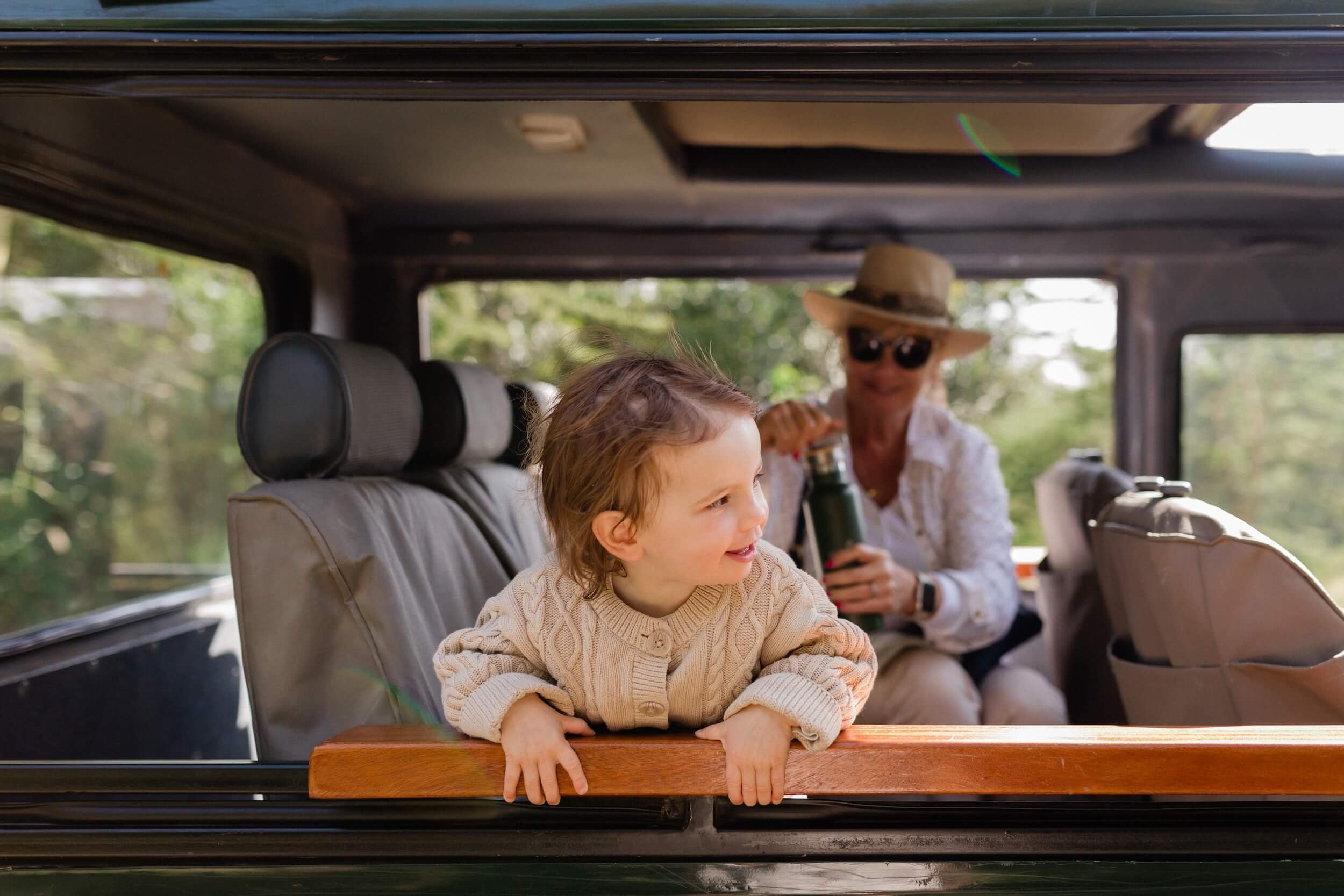
Runo (20months) on a game drive
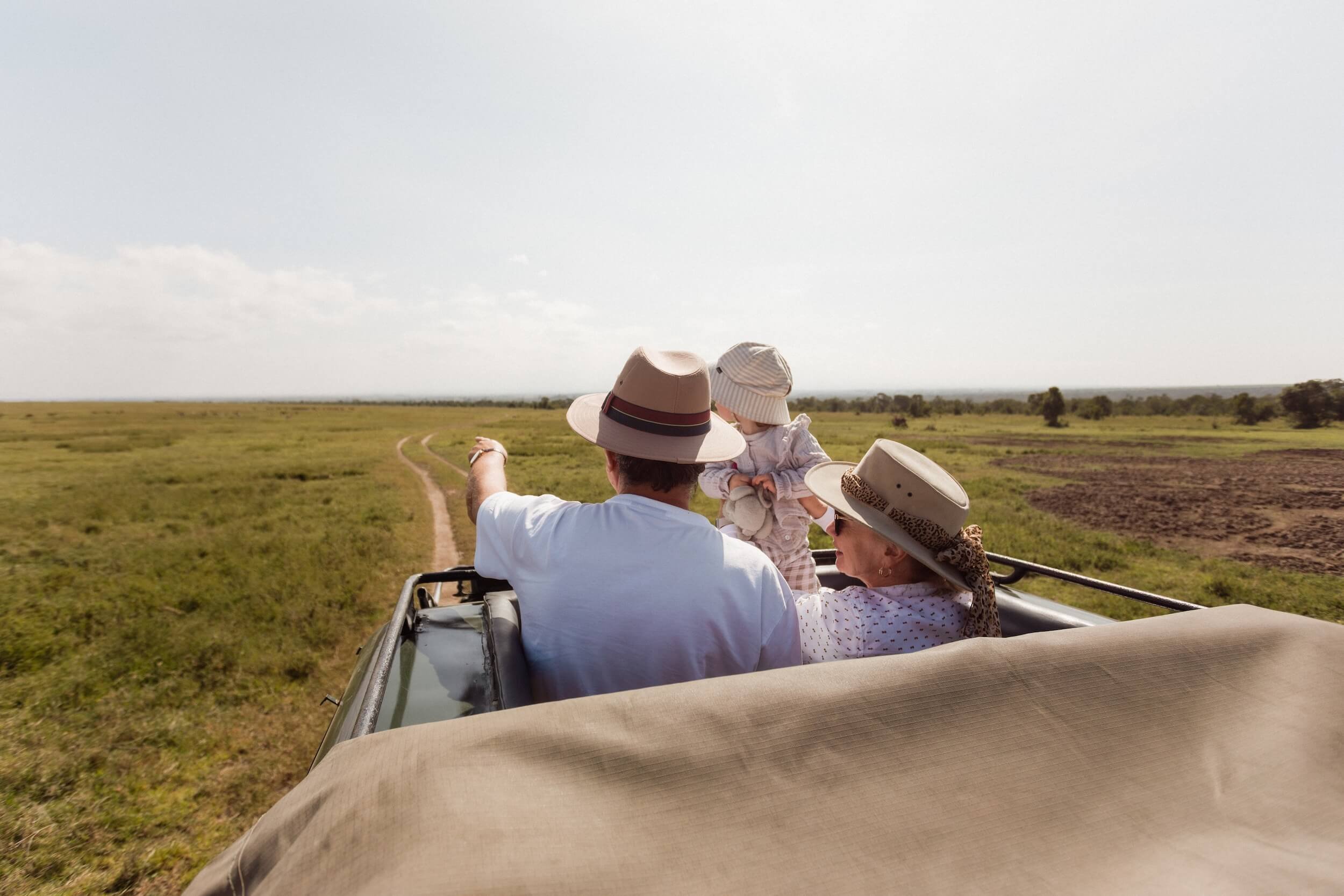
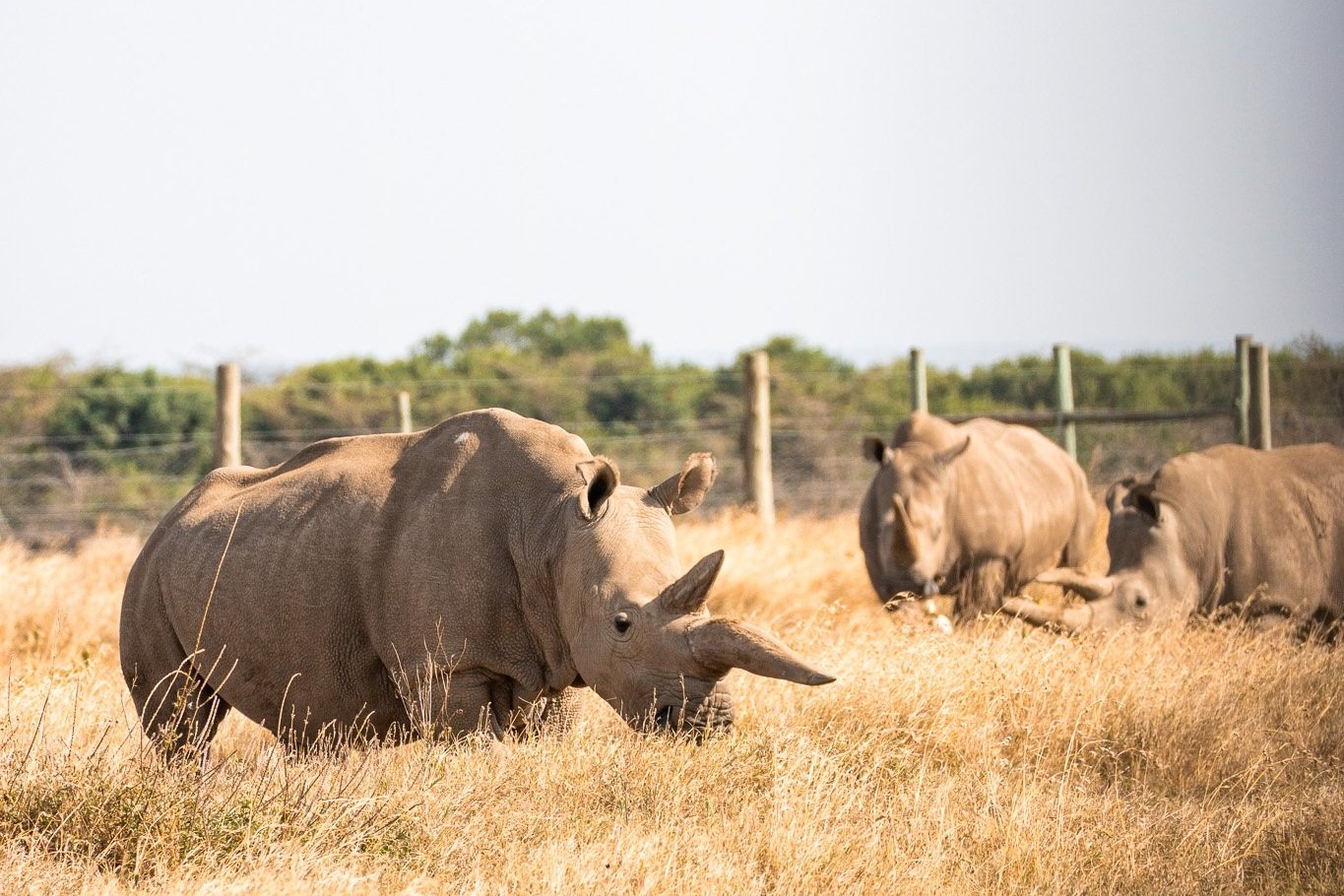
Spotting rhinos!
Best Safari Activities for Kids
Children experience a safari differently to adults — and often more vividly. The key is giving them ways to engage actively with what they're seeing.
Wildlife spotting games are a simple and surprisingly effective way to keep younger children focused and excited on game drives. Ask your guide to help set up a spotter's checklist before you head out — how many of the Big Five can the family find today? Who spots the first giraffe? Games like these give children a sense of agency and adventure, and they tend to produce a surprising level of concentration.
Nature walks offer a completely different pace from a game drive, and one that children often respond to with great curiosity. Walking focuses attention on the smaller details — tracks in the dust, insects, plants, bird calls — and opens up conversations about the ecosystem and gives them the chance to learn, touch and play. This is a great activity to do in camp with an askari or guide; we have several lovely walking trails around the property.
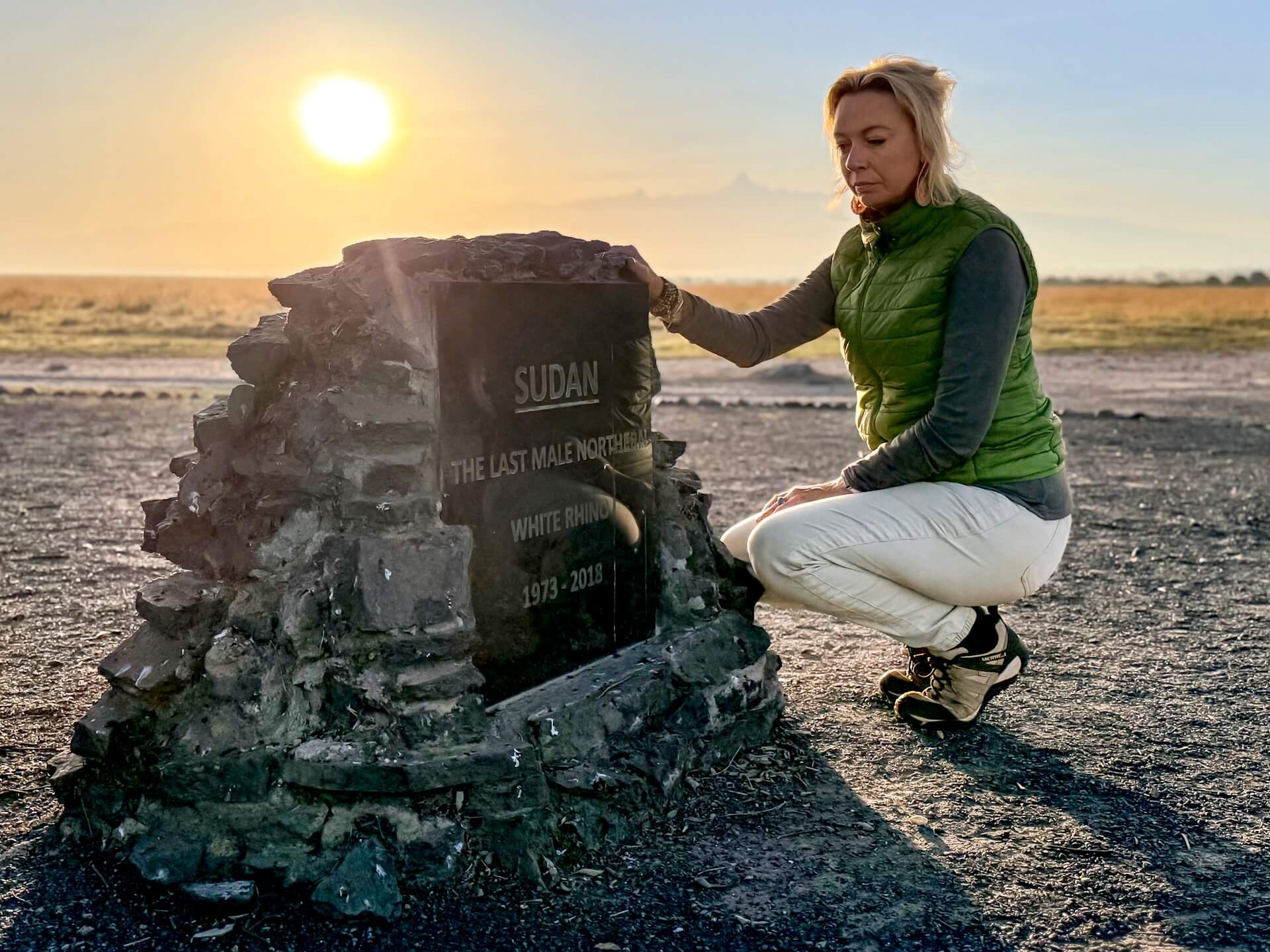
Learning about conservation is one of the most powerful things a child can take away from a safari at Ol Pejeta. The conservancy is home to Najin and Fatu, the world's last two northern white rhinos, and a visit to meet them — with an expert guide who can explain their story — tends to leave a deep impression on children and adults alike. Questions follow for days afterwards. That's exactly the point.
Campfire S’mores - chocolate biscuits and marsh mellows, what more can we say? The askaris love roasting marsh mellows with kids around the evening fire and showing them the stars.
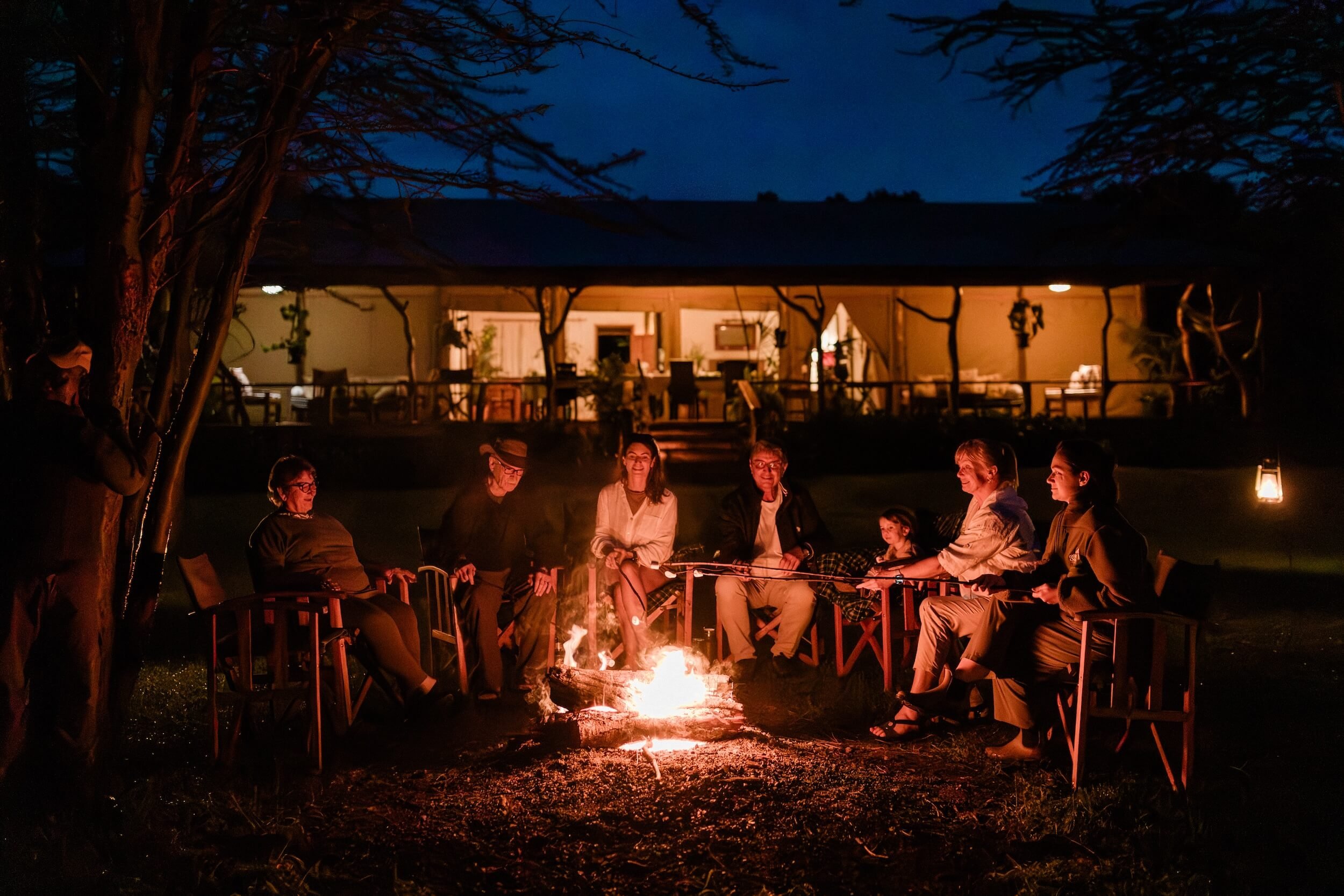
Roasting marshmallows around the fire at The Safari Cottages
Ideal Ages for a Family Safari
There is no single right age for a first safari, but there are some honest differences worth knowing about...
Toddlers and very young children can absolutely enjoy a safari experience — the sights, sounds, and general wonder of the bush are engaging at almost any age. The considerations are more practical though: nap schedules, short attention spans, and the need for flexibility. Private accommodation and a private guide make this far more manageable than it would be on a shared tour. If your family includes very young children, we'd simply suggest building extra downtime into each day and keeping drives relaxed in length.
Children aged six to twelve tend to thrive on safari. They're old enough to understand what they're seeing, young enough to be completely and unselfconsciously amazed by it, and at an age where the conservation story — the rhinos, the wildlife recovery projects, the ecosystem — genuinely captures their imagination. This is arguably the sweet spot for a first family safari.
Teenagers often arrive on safari with measured expectations and leave as genuine converts. Giving older children a camera, encouraging them to keep a wildlife journal, or asking the guide to talk them through tracking and navigation tends to unlock a level of engagement that surprises everyone. A safari that feels curated for adults can easily be shaped into something that feels genuinely exciting for a fifteen or sixteen-year-old — especially one who's accustomed to being the least interested person in the room.

A family with young teenagers on a game drive
Accommodation & Meal Considerations
One of the things that makes a family stay at The Safari Cottages particularly well-suited to parents is the degree of flexibility built into everyday life here.
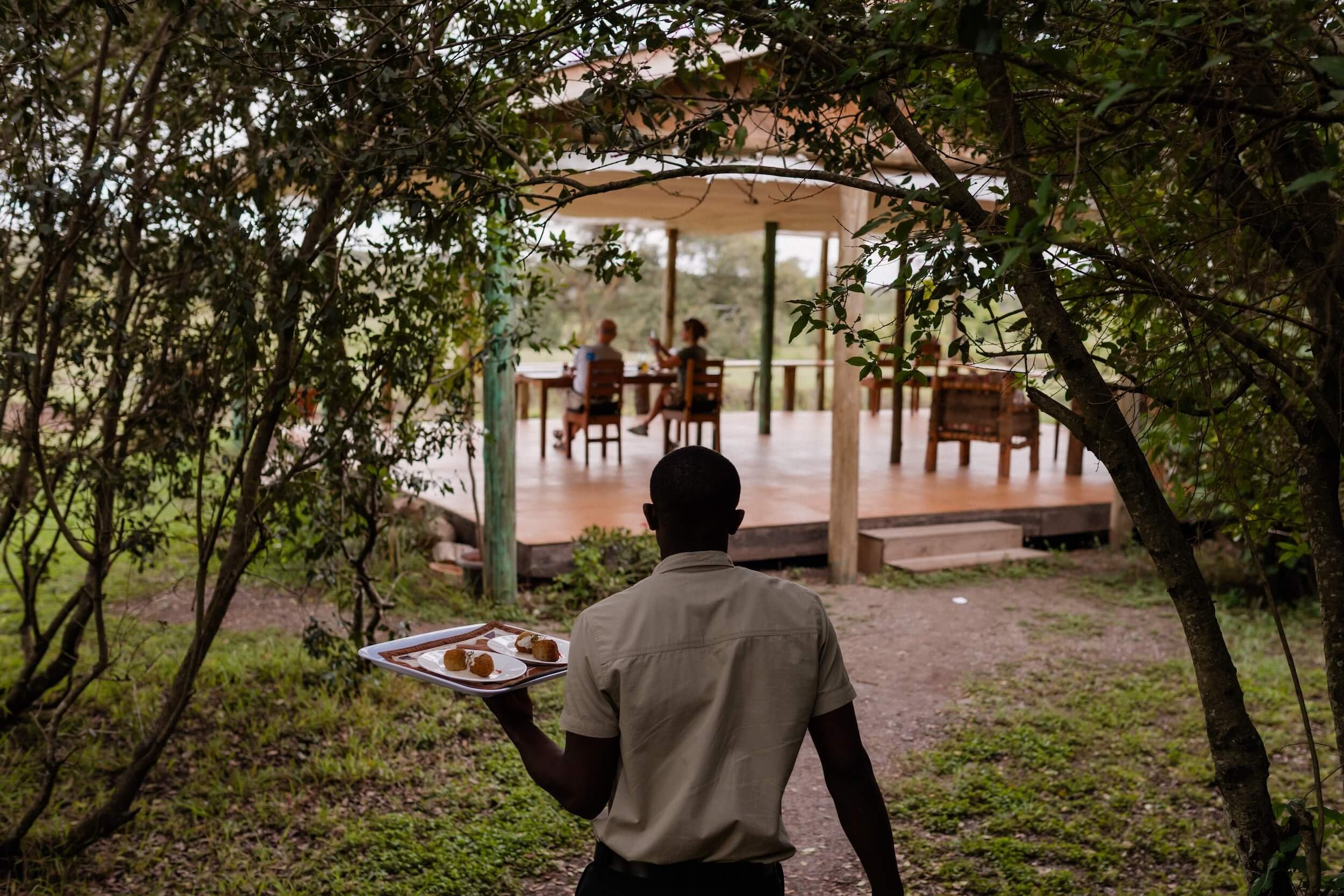
Meals are prepared by your private chef, which means the menu adapts to your family rather than the other way around. Fussy eaters, dietary requirements, children who want plain pasta at 5pm — none of this is a problem. Your chef will talk through preferences on arrival and make sure every meal works for every member of the family. Breakfast can be a picnic in the bush or on the verandah. Lunch can be earlier, or later. Dinner can happen whenever the children are fed and the adults are ready, even if that means eating at different times and different meals entirely.
Schedules are entirely flexible. There are no set departure times, no shared dining rooms, and no need to coordinate with other guests. This matters more than it sounds when you're travelling with children. The freedom to adapt the day in real time — to extend a morning game drive, to cut a picnic short, to let a tired child sleep in — changes the entire experience of travelling as a family.
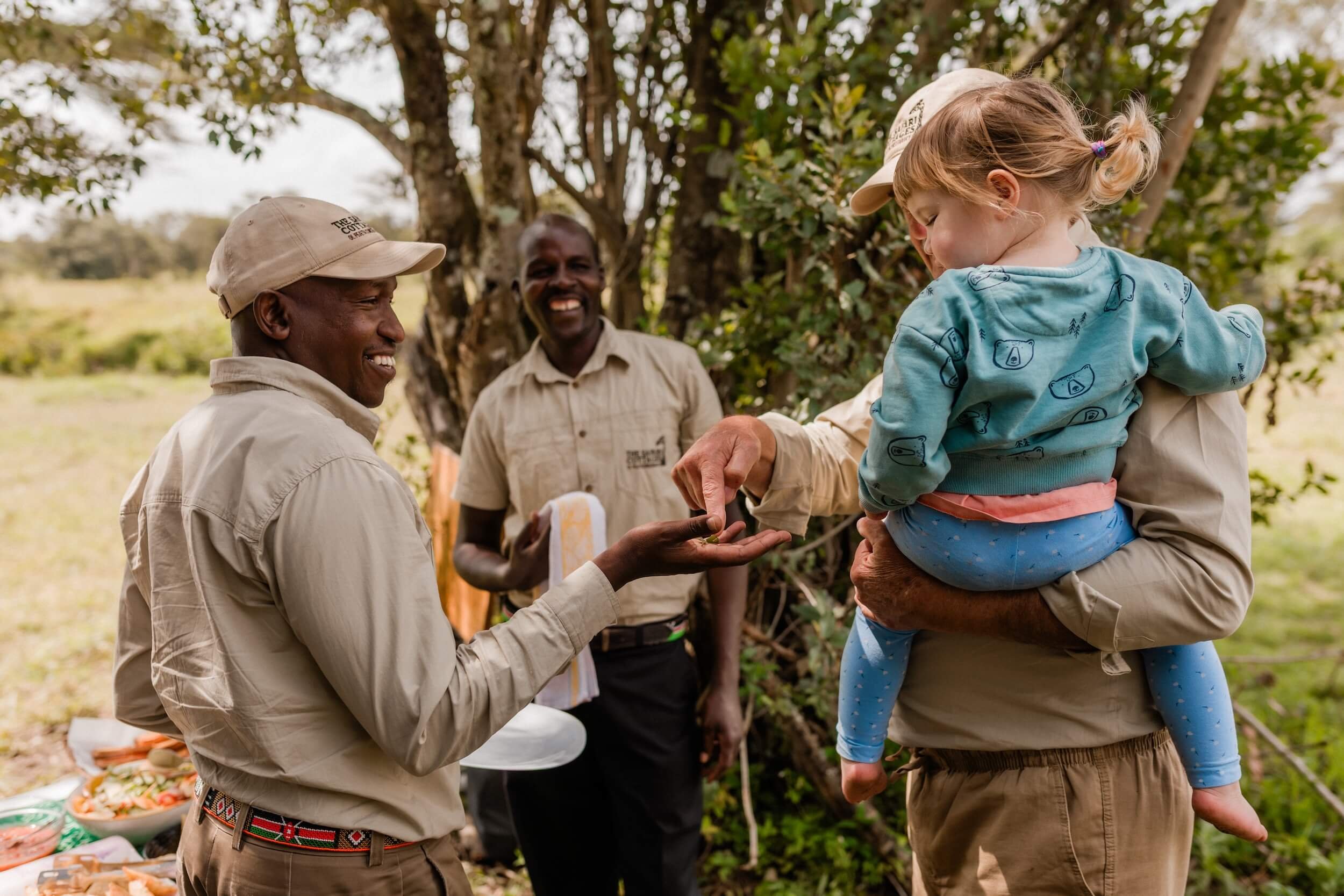
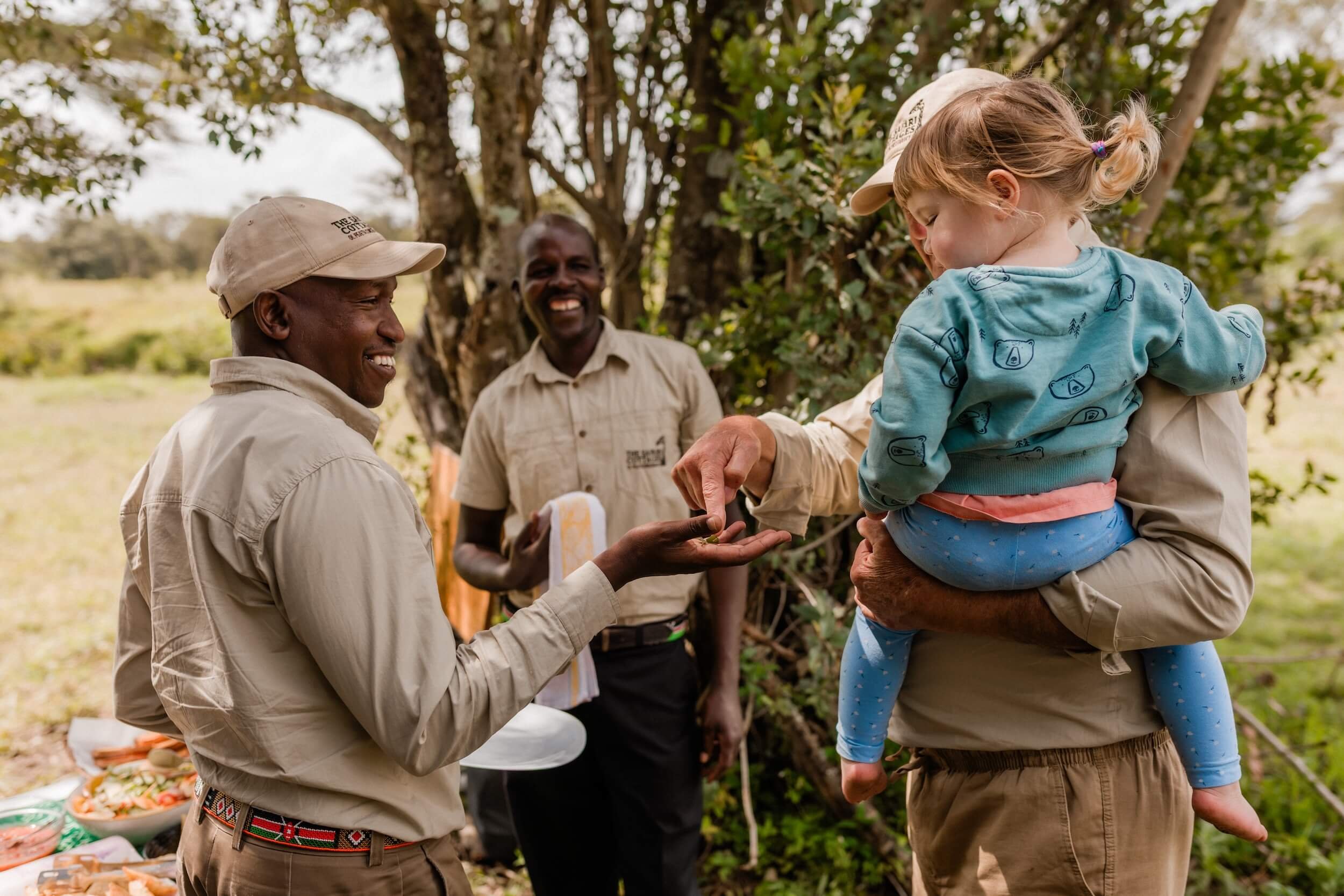
Addie (2yrs) enjoying brunch in the bush with The Safari Cottages team
Tips for a Stress-Free Family Safari
A few practical notes from years of welcoming families to Ol Pejeta:
Pack for the temperature range, not just the heat. Early morning game drives can be genuinely cold, even in the warmer months. Children feel the chill more quickly than adults, so pack a fleece or light jacket for every member of the family regardless of the time of year. Layers are your friend.
Bring binoculars for the children. This sounds small, but it transforms a game drive. Giving a child their own pair of binoculars — even an inexpensive set — makes them feel like an active participant rather than a passenger. Wildlife becomes something they're finding and focusing on themselves.
Let the days breathe. The temptation on a family holiday is to fill every hour. On safari, the opposite approach tends to produce the best results. A slow morning, a long lunch, an afternoon rest, then an evening drive — this rhythm suits children well, and it suits the wildlife too. The bush rewards patience, and children learn this faster than most adults expect.
Talk to your guide. Before each drive, spend five minutes with your guide letting them know the mood of the group, what the children are most interested in, and what the family's energy levels are like that day. A great guide will shape the entire experience around this — and your guide at The Safari Cottages will have the experience and the instinct to make it work beautifully.
A family safari on Ol Pejeta isn't a compromise on the adult experience. It's a different kind of experience entirely — one where wonder is shared, where questions multiply, and where the bush reveals itself through the eyes of people seeing it for the very first time.
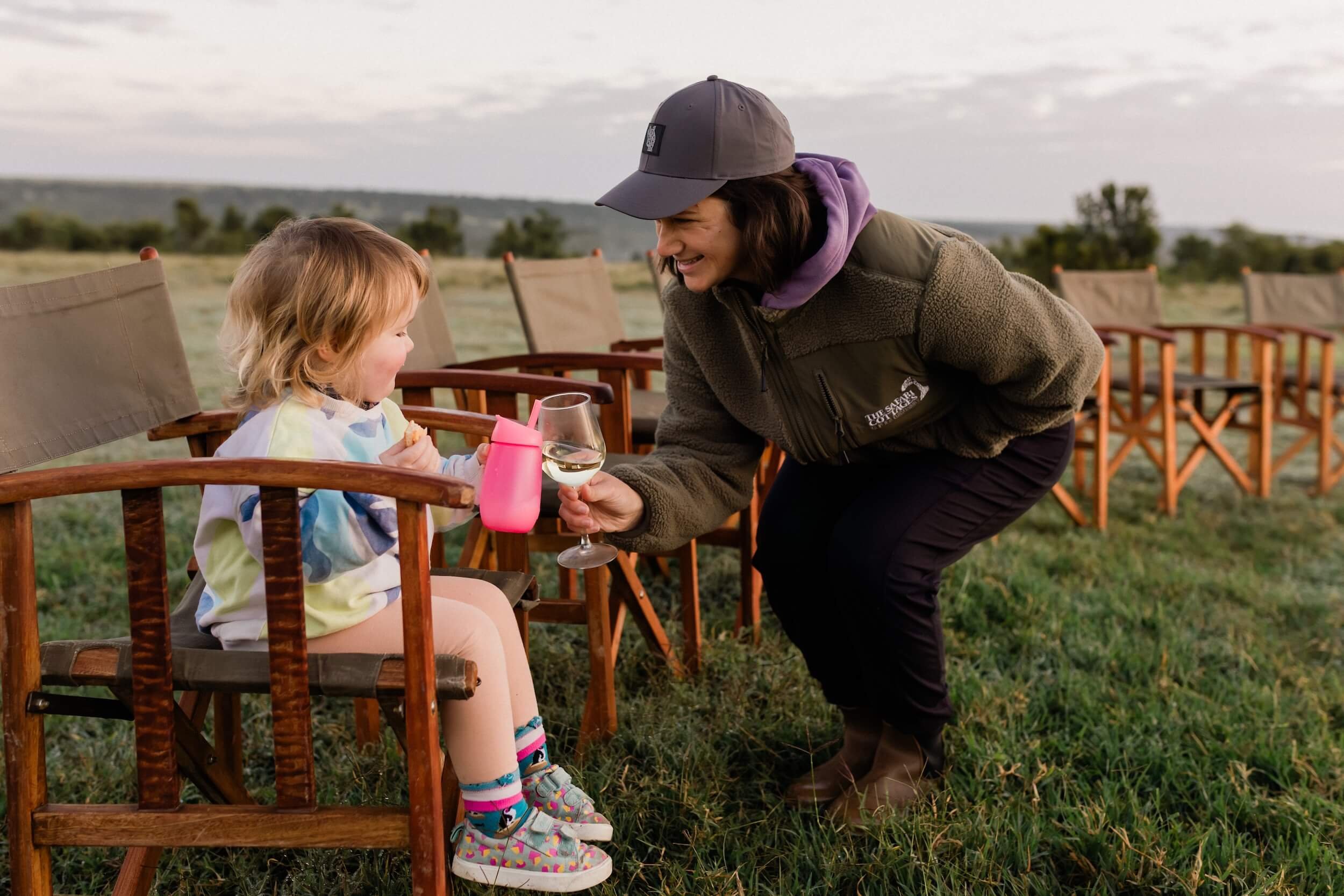
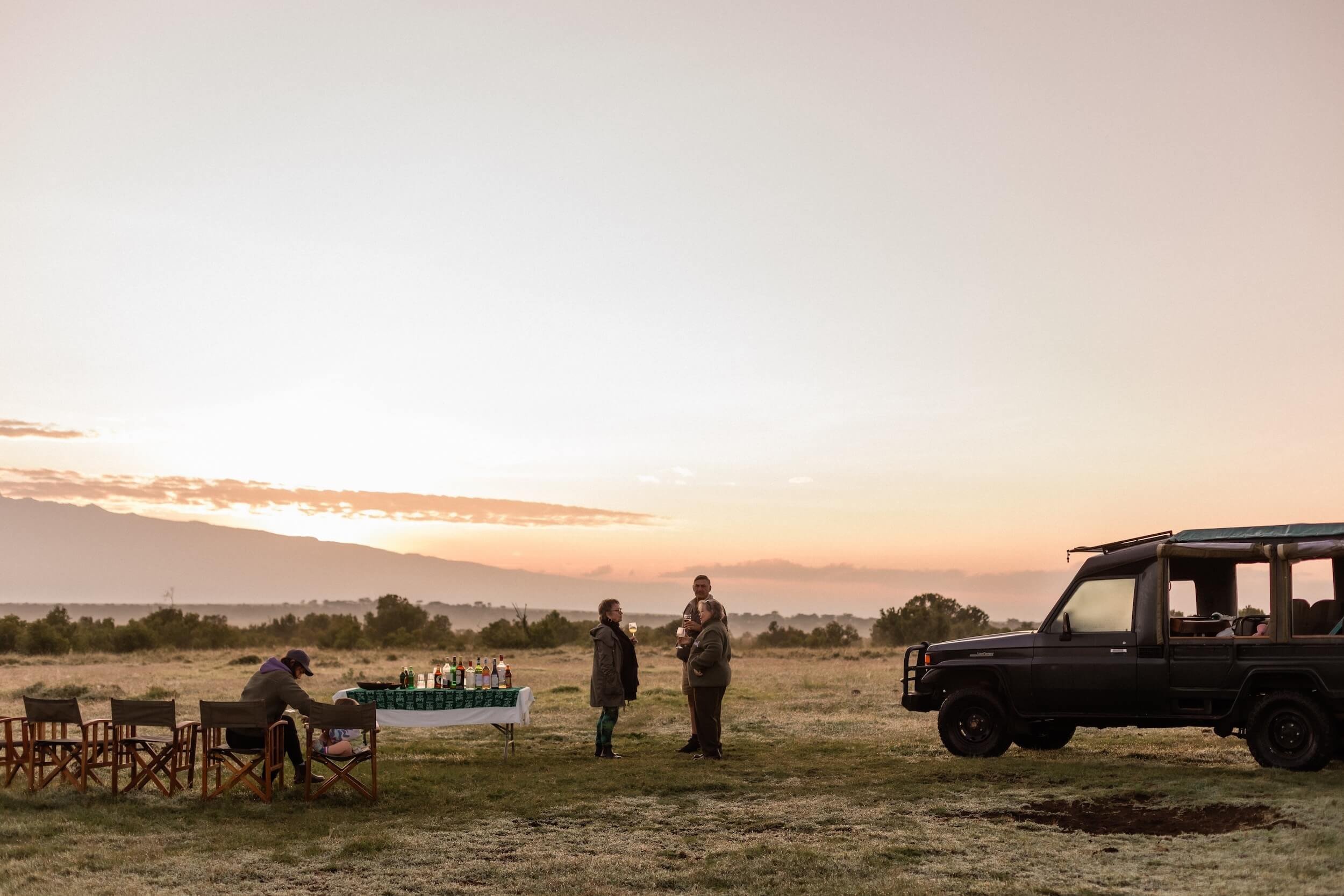
Sundowners with warm milk and a cookie
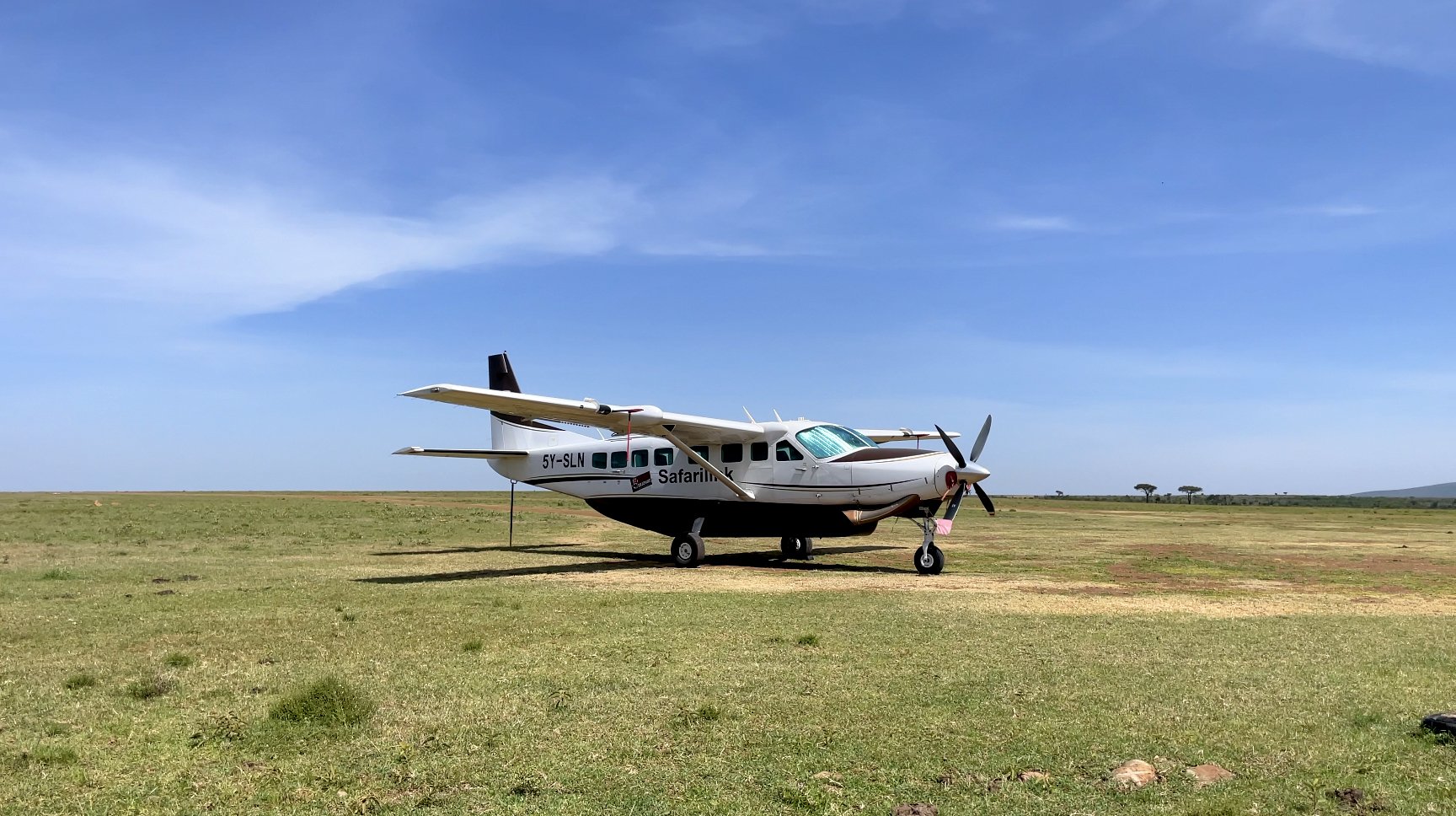





The best Kenya holiday combines safari and beach. After wildlife viewing at Ol Pejeta with The Safari Cottages, decompress on white sand—this is how 64% of Kenya travellers now book. Here's how to do it and our recommendations.