
Should you Fly or Drive to Ol Pejeta? Here’s what you need to know.
Getting to Ol Pejeta from Nairobi is straightforward, but you have a real choice to make: fly or drive. Both work. Both have their merits. The decision is entirely a personal one. It depends on your comfort level, your schedule, and whether you'd rather start your safari in the air or on the road.
Here's the breakdown.
The Two Options
Option 1: Fly directly to Kamok Airstrip (approx 60 minutes total) A small plane from Nairobi lands on our private airstrip, right on the conservancy. You step off the plane and drive straight into the bush.
Option 2: Drive from Nairobi to Nanyuki (5 hours) then transfer to Ol Pejeta (1.5 hours) A vehicle picks you up from your Nairobi hotel after breakfast, you drive through Kenya's highlands, and you arrive at Ol Pejeta by lunchtime.
Both get you here, but they're different experiences — and different costs.
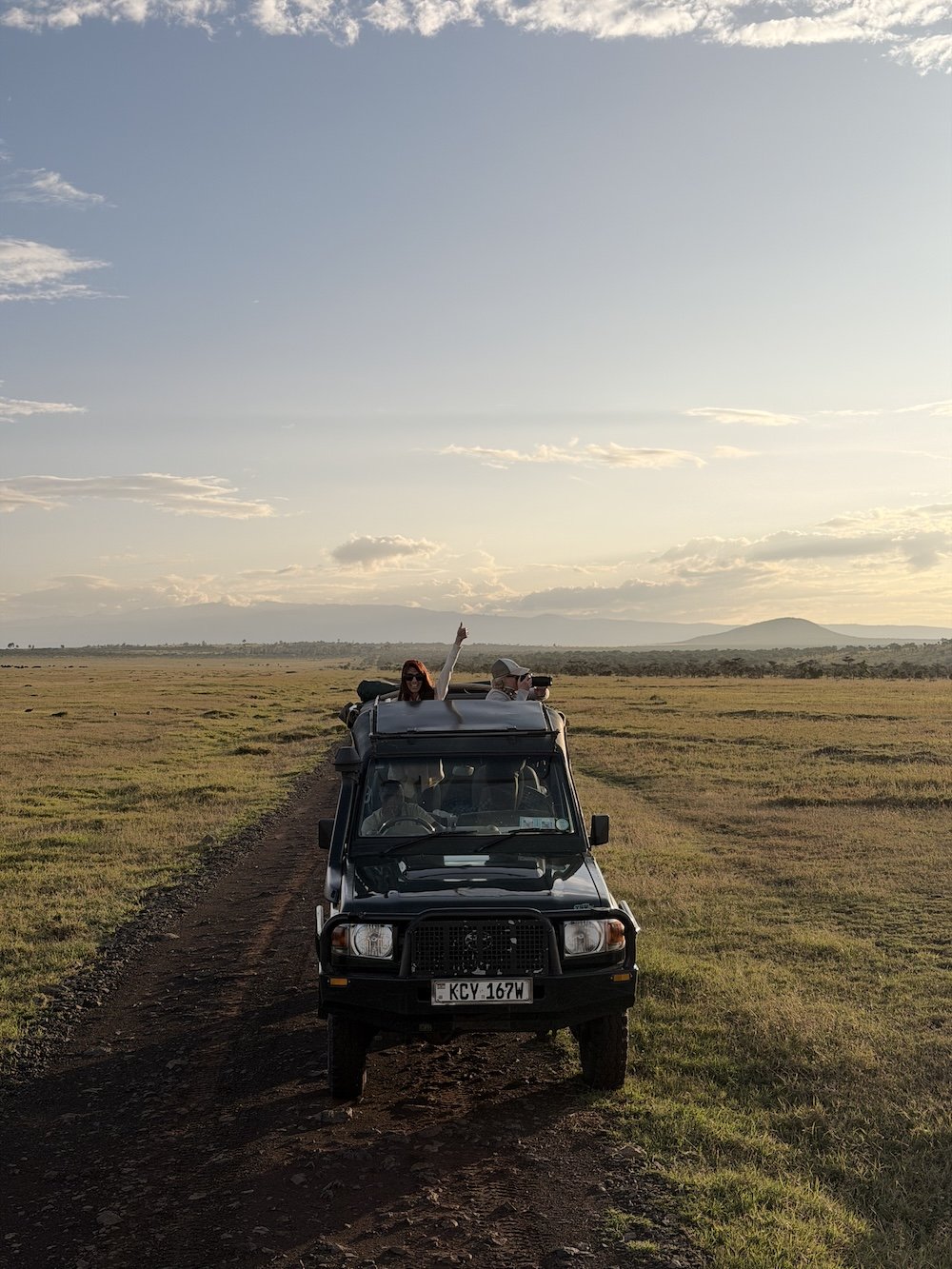
Arriving by air: the transfer to camp from Kamok Airstrip (image x Yoga For The Wild)
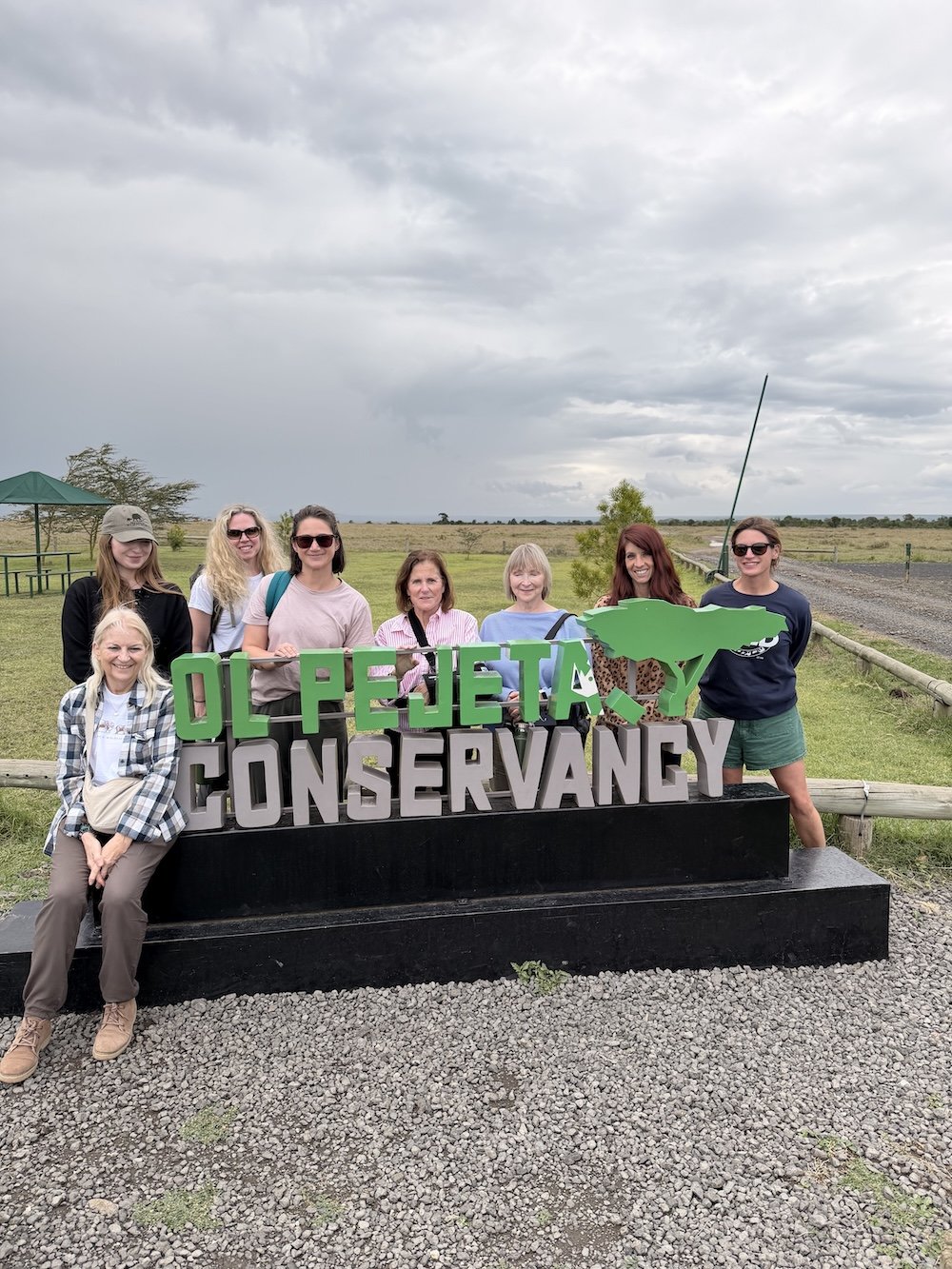
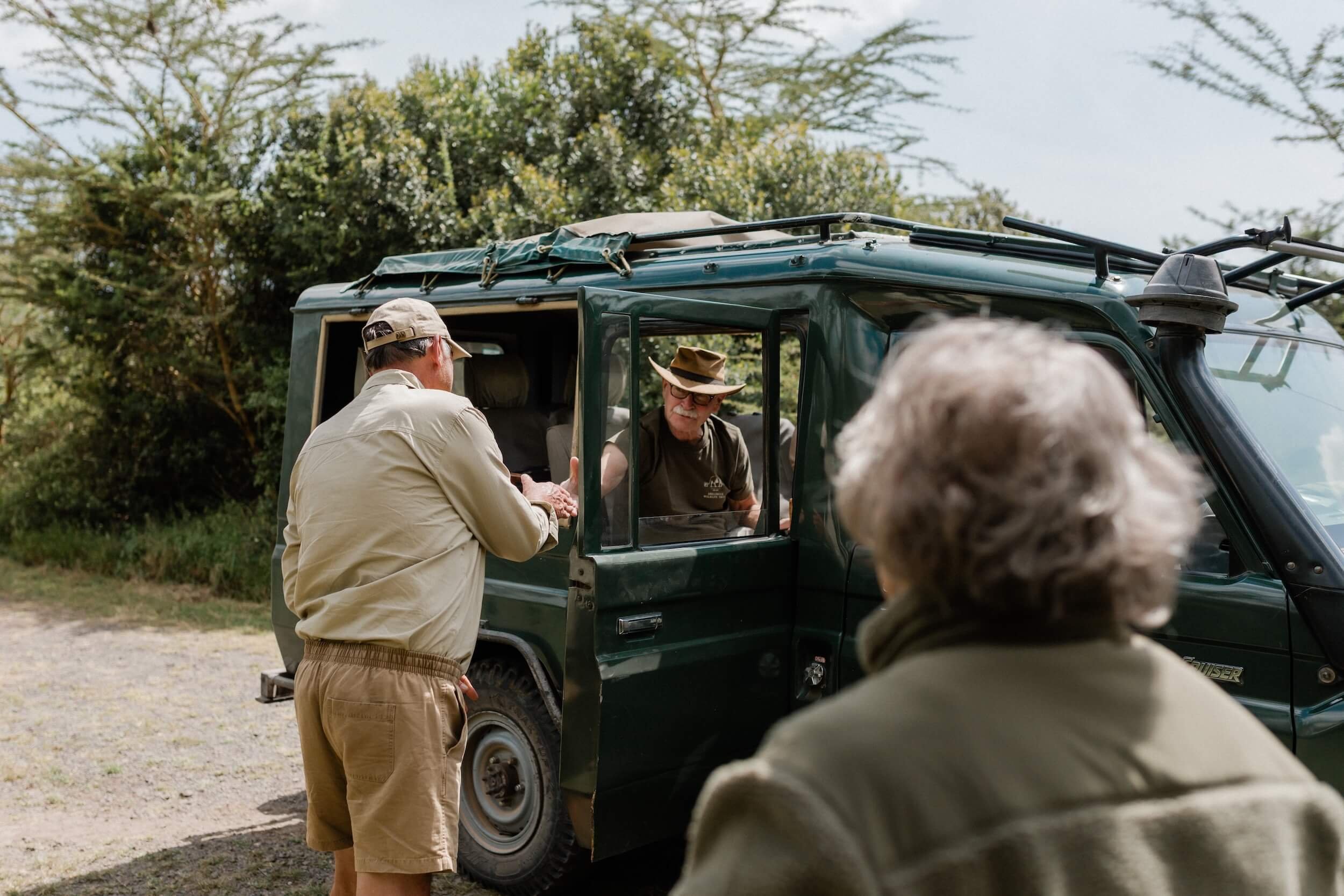
Arriving by road: checking in at Rongai Gate (image x Yoga For The Wild)
Flying to Kamok Airstrip: The Direct Route
What actually happens:
You fly from Nairobi's Wilson Airport (a domestic terminal, not the main international airport) on a small aircraft — usually a Cessna or similar — with Air Kenya or Safarilink. The flight takes about 60 minutes door-to-door depending on stops.
The plane lands at Kamok Airstrip, which sits on Ol Pejeta Conservancy itself. This is a dirt airstrip (not tarmac), but it's well-maintained and safe. When you land, a vehicle from Ol Pejeta Safari Cottages is waiting. You drive straight into the bush — no town, no transfers, no extra driving.
You’re game driving from the moment your plane touches down.
The cost:
Safarilink (and Air Kenya operates similar pricing) charges $220 one-way and $382 round-trip per person for flights between Nairobi and Nanyuki. These are the standard published fares.
For two people, round-trip flights = approximately $764.
Compare this to:
Driving ($250–$300 per vehicle one-way = $500–$600 total for two people round-trip)
Plus your time (5 hours of driving each way = 10 hours total)
Flying is more expensive than driving for two people, but you save 10 hours of road time. Whether that premium is worth it depends on how you value your time and how much you want to maximize game drive hours on your first day.
The advantages:
The experience. Flying to Kamok and driving through the conservancy to your safari cottage is really special. You see the landscape from the air, then move through it on the ground. Your safari begins immediately — you're not recovering from a long drive.
Important weather caveat:
Kamok Airstrip is a dry-weather airstrip. During heavy rain (usually seen in April/May, November), the runway can become waterlogged. If weather is questionable, the airline will divert to Nanyuki Airstrip instead. They'll let us know, and we'll pick you up from there without issue — no extra cost, no drama.
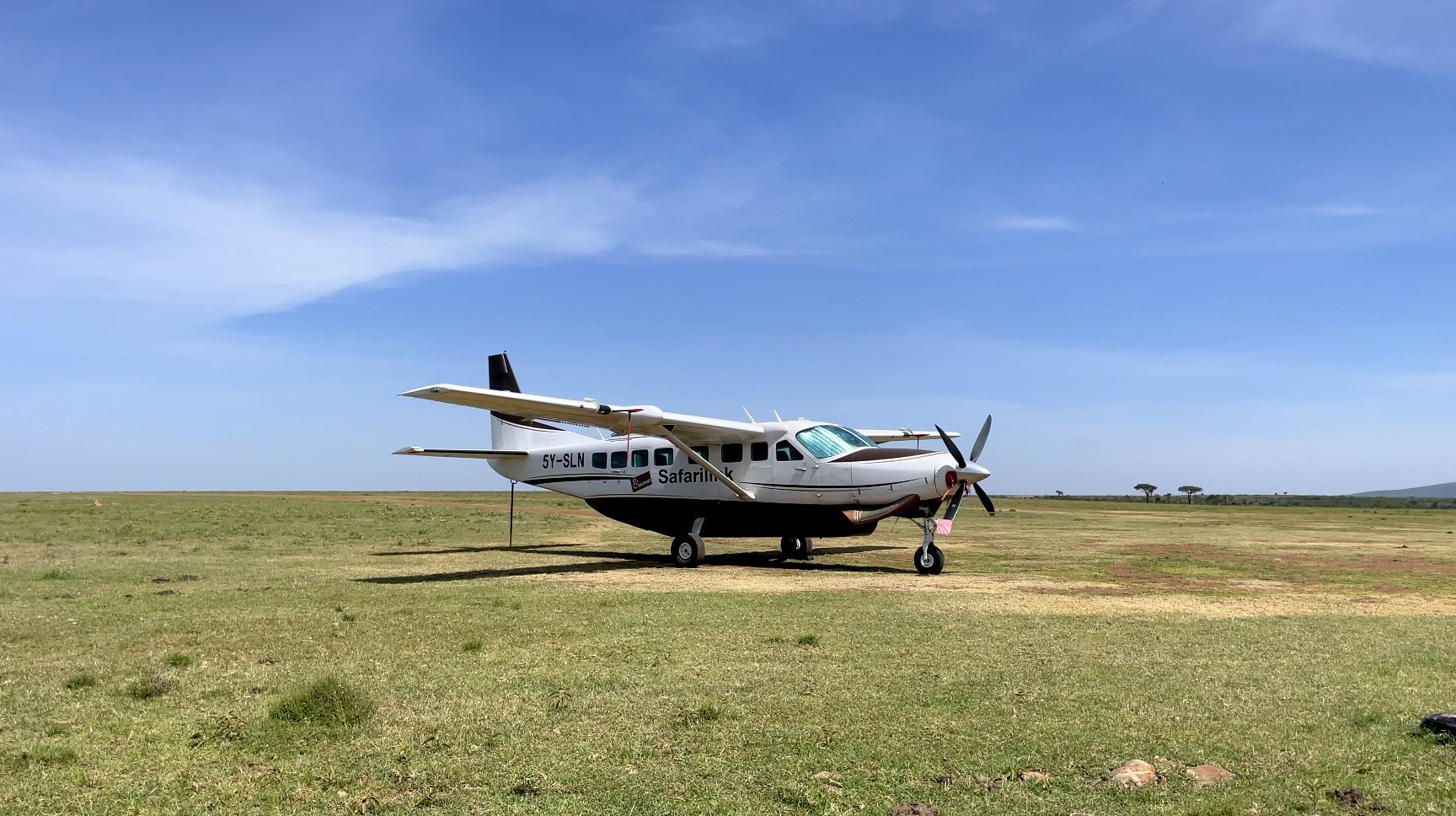
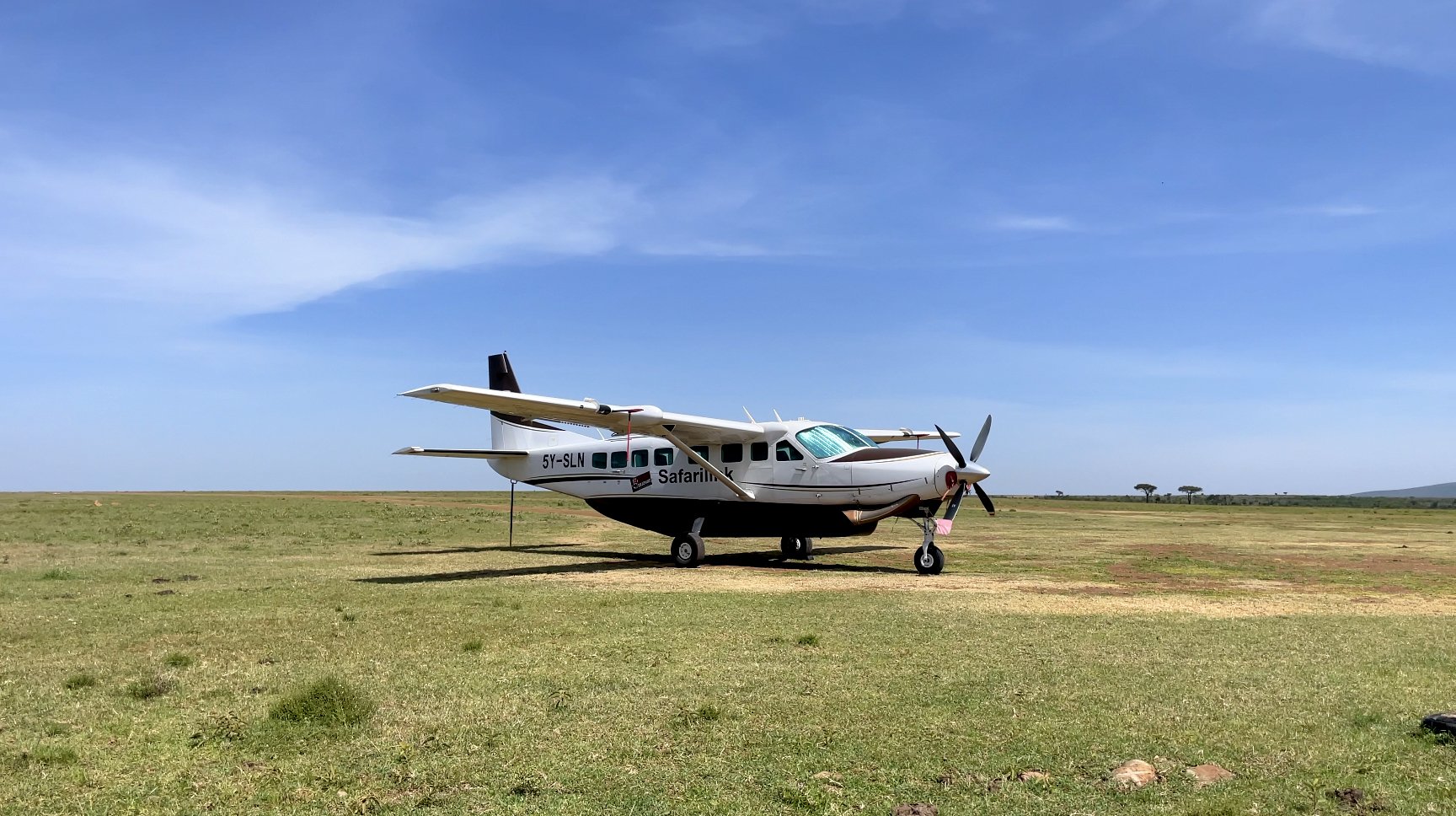
Landing in the bush with Safarilink from Nairobi
Driving from Nairobi: The Scenic Route
What actually happens:
A vehicle picks you up from your Nairobi hotel (we can help you with this or you can arrange your own transport). You drive north through Kenya's highlands on good, well-maintained roads. The drive is scenic — you pass through towns, climb through cloud forest, and gradually ascend onto the Laikipia plateau.
Total driving time: approximately 4-5 hours depending on traffic and stops. If you leave before 8AM most guests arrive at Ol Pejeta between 12–2 PM.
The cost:
A vehicle that fits 4 passengers costs approximately $250–$300 per way, which works out to $60–$75 per person one-way if you're sharing. For two people, that's roughly $120–$150 per person round-trip.
This is significantly cheaper than flying.
**If you're solo traveling, you're paying the full vehicle cost ($250–$300 one-way), which makes the math closer to flying, but remember to factor inthe cost of a taxi from your hotel to Nairobi Wilson airport too.
The advantages:
Cost. If you're budget-conscious or traveling with a group, driving is cheaper. You also have the flexibility to leave Nairobi at whatever time works for you — no flight schedules, no early morning airport departures. PLUS you won’t have the strict 15kgs baggage restriction that airline transport has.
The experience:
You see Kenya. The drive from Nairobi to Nanyuki is genuinely beautiful. Many guests enjoy this as the opening act of their safari: ease into the experience by watching the landscape change as you travel north.
The disadvantage:
It's a long day. You wake up in Nairobi, spend 5+ hours in a vehicle, and arrive tired. Most guests rest on their first afternoon or are in bed early. If you’re delayed for any reason, you may not get on a drive until late afternoon or evening — and by then, the best light is passing. You may not arrive in time for a drive at all.
You also lose safari time overall. A full day of travel means you effectively lose a day of your safari if you only have 3–5 nights.
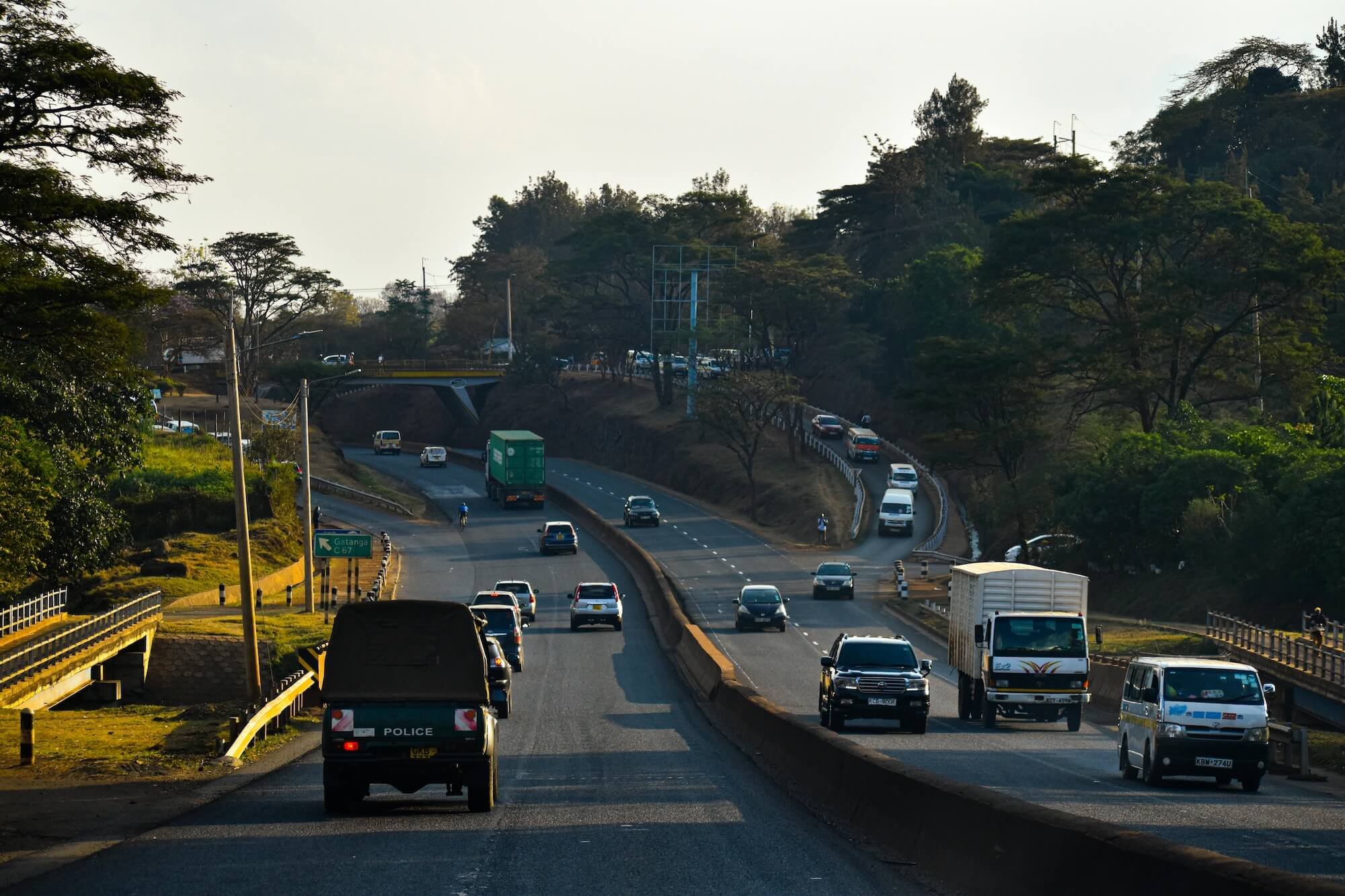
The road from Nairobi - Nanyuki
When to Fly vs When to Drive
Fly to Kamok if:
You only have 3 nights (time is your most valuable resource)
You want to maximize game drive hours on your first day (catch a morning flight out of Nairobi)
You're flying during dry season (June–October, December–January)
You value the experience of arriving by plane and driving through the conservancy
Your budget allows it
Drive from Nairobi if:
You’re travelling slowly and have time for it - 5+ nights
You're budget-conscious and want to minimize costs
You're carrying a lot of baggage
You want to see the landscape and take a more leisurely pace
Honest assessment:
If you're staying 5+ nights, driving makes sense. The cost savings outweigh the time loss. If you're only here for 3 nights, flying to Kamok is worth the premium — you get more safari time and a better arrival experience.
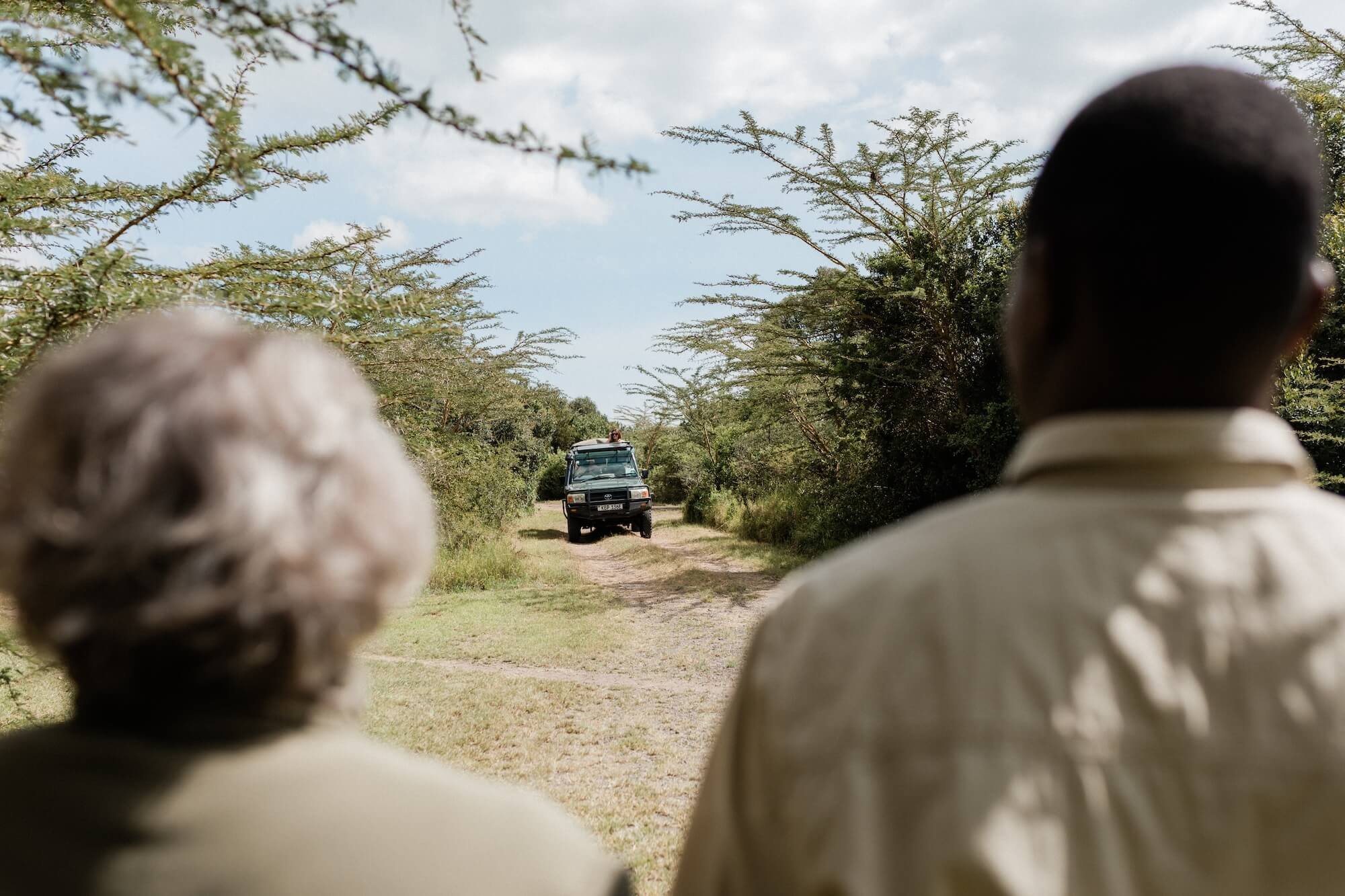
Arriving at The Safari Cottages
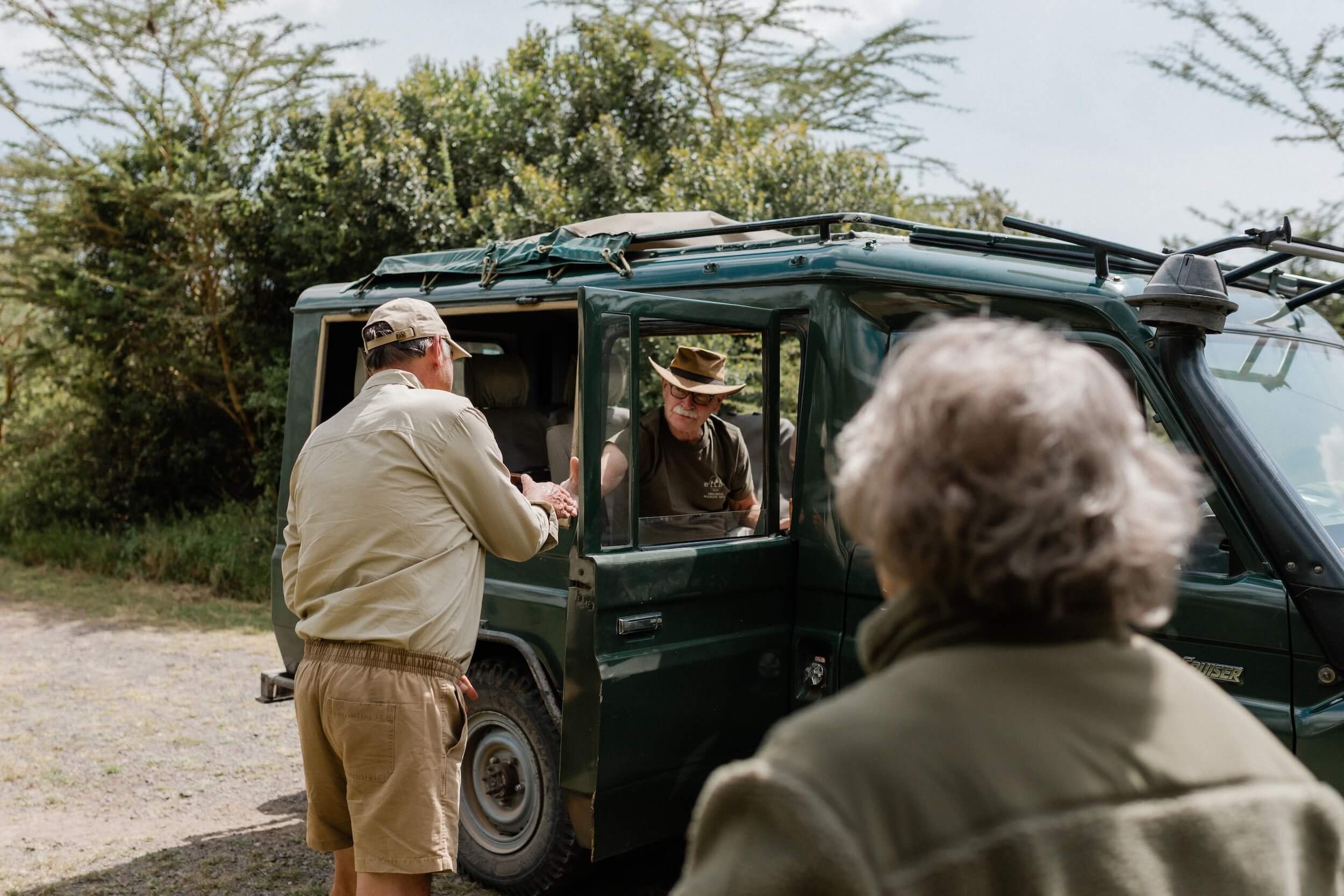
Arriving at The Safari Cottages
The Flying Details You Need to Know
Airlines: Air Kenya and Safarilink both operate multiple daily flights from Nairobi's Wilson Airport to Kamok Airstrip and Nanyuki Airstrip. Book direct with them or via your travel agent.
Luggage: Small aircrafts have weight and baggage limits. Expect to pack lighter than a commercial flight — local flights in Kenya allow passengers 15kgs per person in soft sided bags only (no hard shell cases).
The bus route thing: It’s important to note that these aren't private flights - they operate like a bus service. You might land at one or two other airstrips on the way to Kamok (picking up or dropping off other passengers). The route changes daily depending on passenger schedules. This doesn't affect you — it just means the flight might take 90 minutes instead of 60 depending on stops. It's normal.
Arrival time: If you book a morning flight (usually 8/10AM AM departure from Wilson), you'll genrally arrive at Kamok by late morning. This gives you time for lunch and an afternoon game drive. This is our recommendation.
What the airstrip actually looks like: Kamok is a dirt runway maintained by the conservancy. It's safe and professional. You won't feel unsafe landing on it — bush airstrips are designed for this. The landing is smooth. When you step out of the plane, you're in the middle of the conservancy, surrounded by acacia trees and plains. It's a really special introduction to your safari.
The Driving Details You Need to Know
The route: Nairobi → Nanyuki → Ol Pejeta. The road is well-maintained tarmac most of the way. You pass through towns, farms, and beautiful highland scenery.
The driver: You can arrange your own driver or have your travel agent arrange one for you. If you’re booking directly with us we can also arrange this for you.
Stops along the way: Most guests like to drive straight through, but if you’d like to stop enroute there are curio shops and restaurants on the way to stretch your legs.
Arrival: You'll arrive at Ol Pejeta mid-afternoon. If you book a morning departure, you can often fit in a late-afternoon game drive. You’ll likely be exhausted from all the travel and in bed early tonight, but you would have packed a lot in to day one!
What to pack: The drive is comfortable but long. Bring water, snacks, a book, or entertainment. The scenery is interesting enough that many guests enjoy just watching the landscape.
Our Recommendation
Our take: We always recommend flying to Kamok if the weather is stable and your budget allows. The experience of arriving by plane and being driven through the conservancy directly on arrival makes for a wonderful and easy start to your trip.
But if you're budget-conscious, traveling with a group, or staying 5+ nights, driving is completely sensible. The landscape is beautiful. The drive is comfortable. The cost savings are not modest.
There's no wrong choice. Just different trade-offs.

MORE FROM THE SAFARI COTTAGES BLOG
Keep Reading…
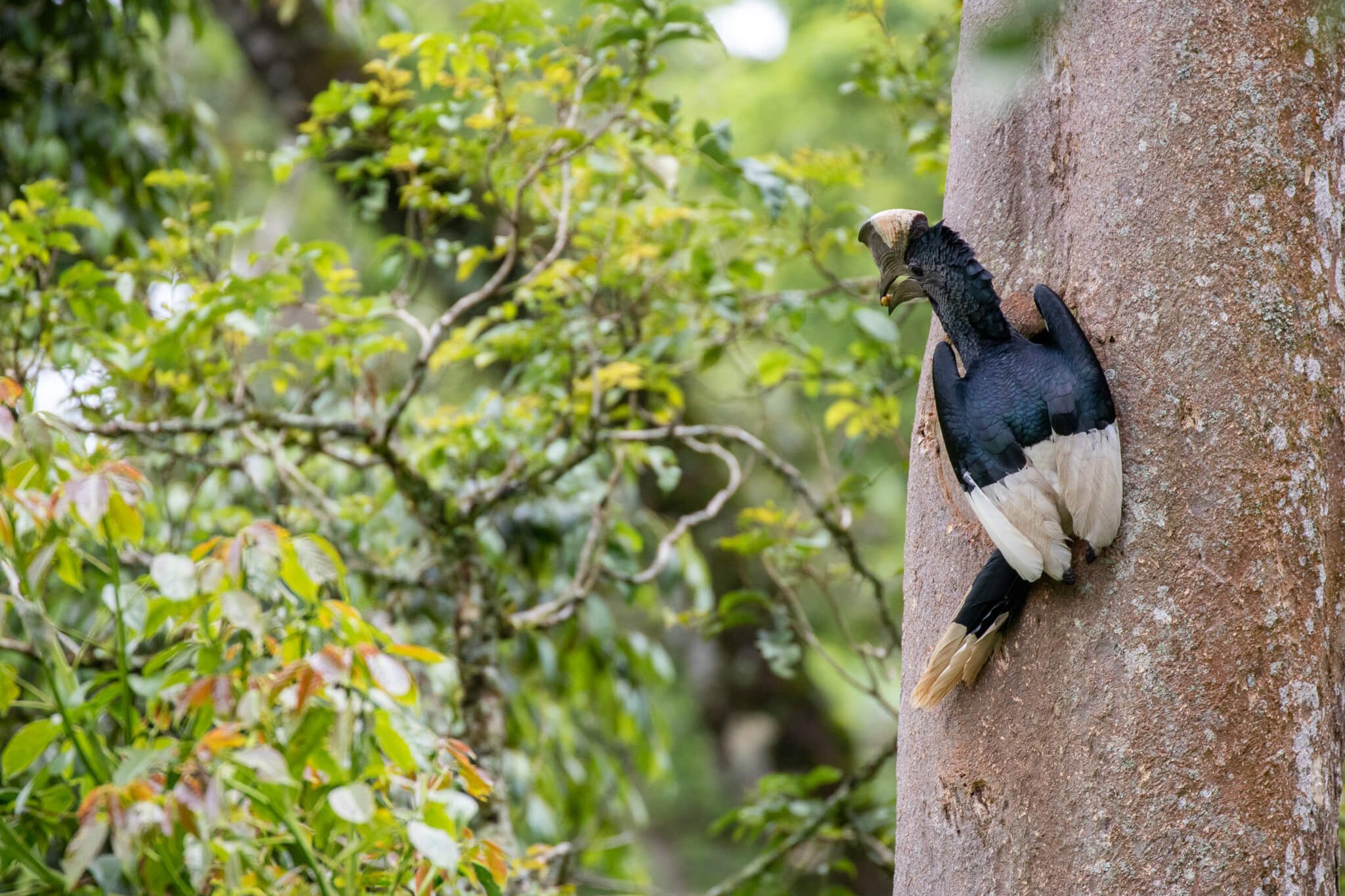
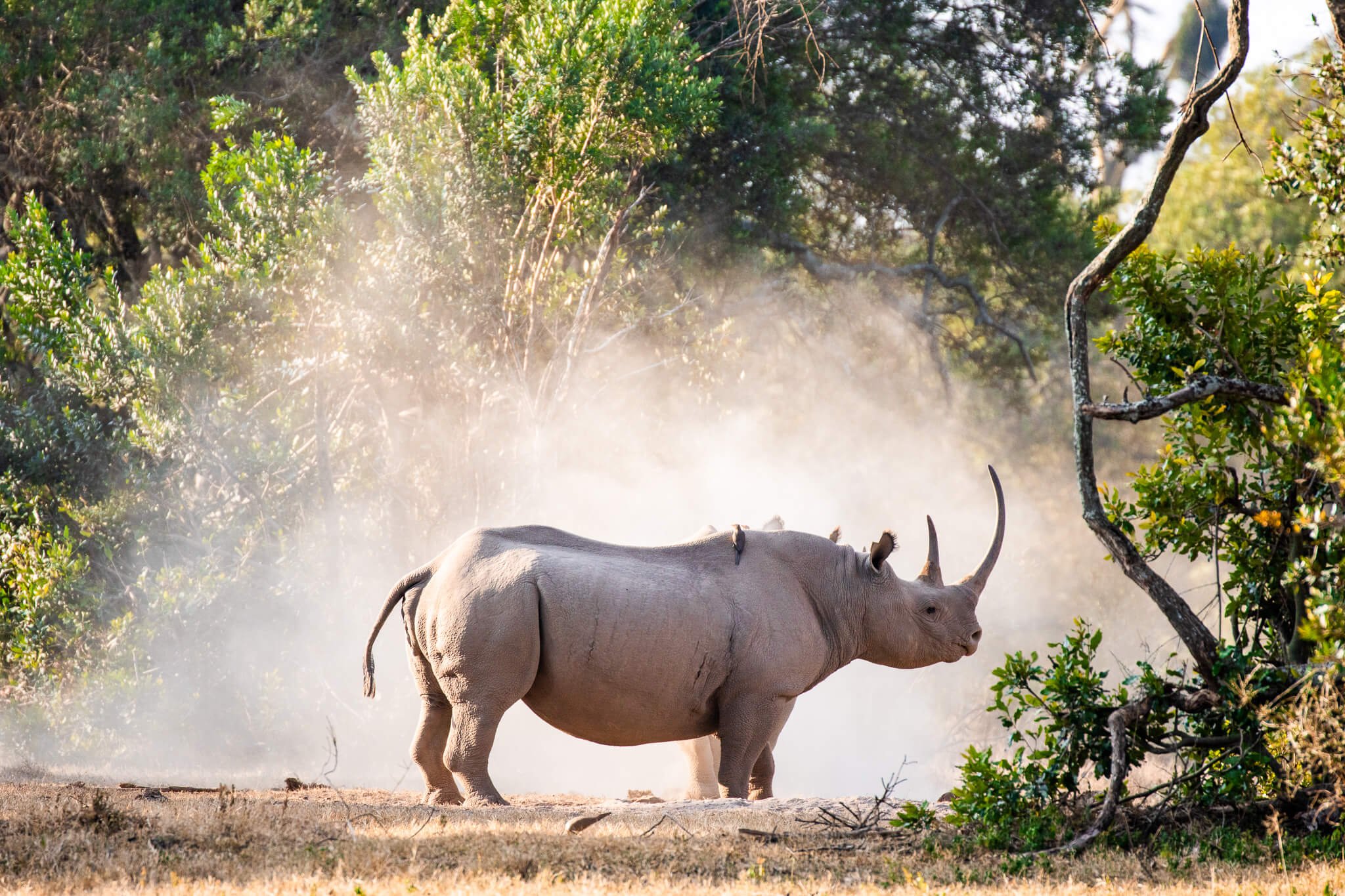





November is green season in Kenya and it is lushly green with afternoon rainfall and flowing rivers. It offers something rare: lush landscapes, solitude before the December holiday rush, and exceptional shoulder-season value.