


Kenya Yoga Safari Retreat: Yoga for the Wild at Ol Pejeta Conservancy
A chat with Yoga for the Wild founders Kat Macleod and Laura Messer on what it is that has them returning to The Safari Cottages every year to lead their Kenya yoga retreat raising funds and awareness for wildlife conservation.
There is something about practising yoga in the African bush that is unlike any studio, any retreat centre, any wellness destination on earth. The air is different. The silence is different. And when an elephant moves through the treeline during your morning practice, or a lion roars from somewhere close in the dark, the feeling of being entirely present — which yoga is always reaching for — arrives without effort.
It's this quality of place that has made The Safari Cottages one of Kenya's most sought-after venues for yoga safari retreats. We've welcomed retreat groups to Ol Pejeta Conservancy since 2017, and among them, one has returned again and again — Yoga for the Wild, founded by Laura Messer and Kat MacLeod, whose annual Kenya yoga retreat has become one of the most distinctive conservation-focused wellness experiences in Africa.
This is their story.
What is Yoga for the Wild?
Yoga for the Wild is a conservation-led yoga retreat organisation that takes groups of like-minded travellers to some of the world's most extraordinary wild places, combining daily yoga with immersive wildlife experiences and direct fundraising for the conservation projects they visit.
Laura and Kat first came to The Safari Cottages on Ol Pejeta Conservancy in 2021, leading their first Kenya yoga safari retreat. Since then they have run six retreats with us, and they continue to return annually. To date, their work has raised over $17,000 directly for Ol Pejeta Conservancy, with a further $21,000 in positive conservation impact generated through their in-person retreats.
Their model is simple and compelling: go where the wildlife needs you, share the magic of wild places with as many people as possible, and send guests home changed — and committed to protecting what they've seen.

How Laura and Kat Found Each Other, and Found Ol Pejeta
Laura and Kat's partnership began when Kat planned Laura's anniversary safari to Kenya. They discovered a shared passion for yoga and wildlife conservation and stayed in touch. When Covid collapsed tourism in Kenya and funding for Ol Pejeta became critical, they joined forces — running online yoga classes and fundraising events to support the conservancy through that difficult period. When borders reopened, they brought their first group to Ol Pejeta. It was the beginning of something that has grown every year since.
Why They Keep Coming Back: Laura on The Safari Cottages
Laura, as you prepared to return for another retreat here, what keeps you coming back?
"There are quite a few reasons I continue to return to Ol Pejeta Safari Cottages. Each time I visit feels like the first time — there are always new sightings and experiences. Even so, it is the wonderful people at The Cottages that keep me wanting to return time after time. It's very much a family atmosphere and everyone is there to help and make sure you're having the time of your life. They also value and prioritise the environment with a high set of standards and ethos to protect and care for our planet.
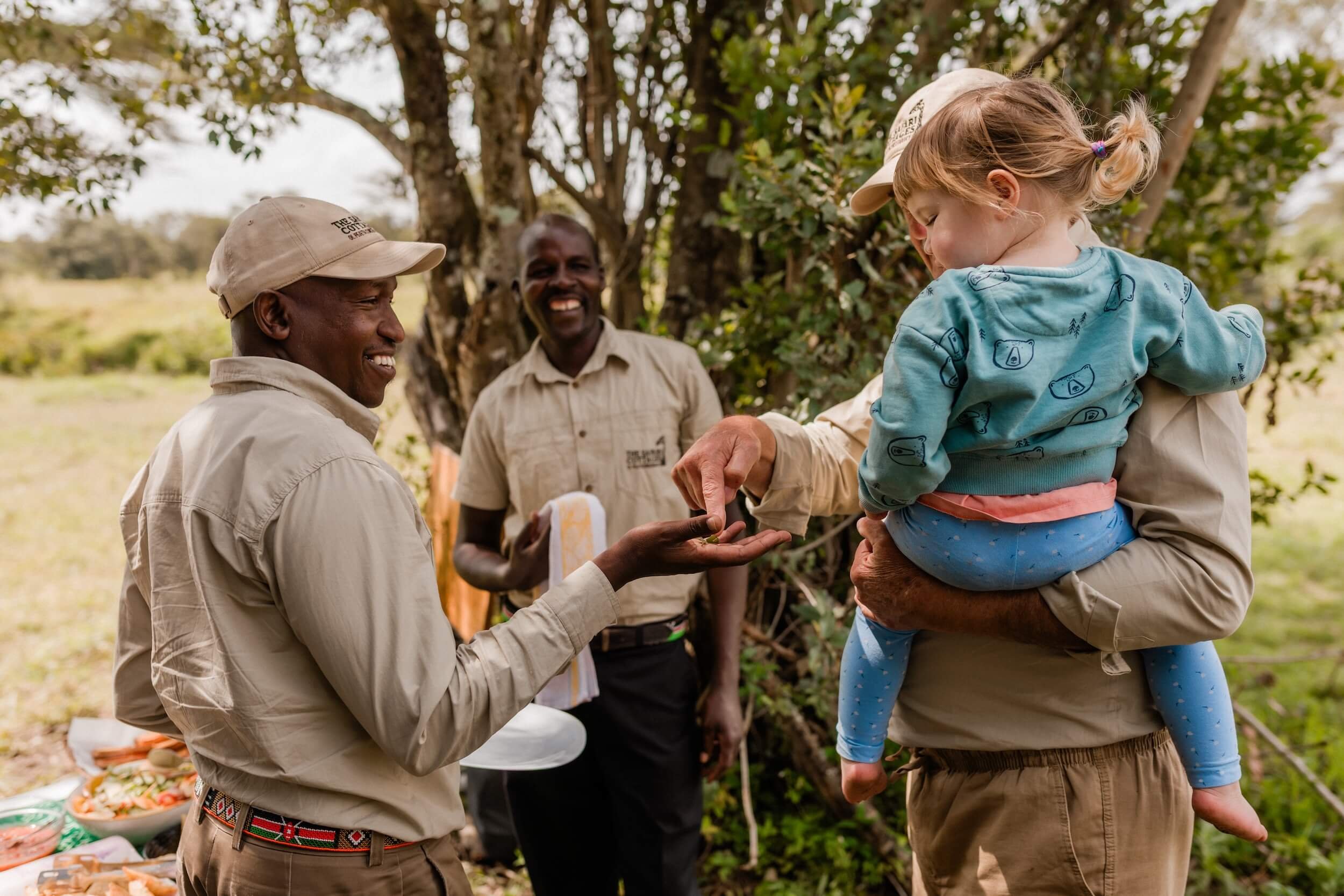
The guides are the best. They are so knowledgeable about every inch of the land. They are accommodating and I always feel safe with them.
It is just the most beautiful place. Mount Kenya's backdrop provides a picturesque view to the flat plateau of Laikipia. Even when it's not totally green, the landscape is still a stunning contrast — but when it has rained and the greenery is vibrant and lush, it is absolutely breathtaking. The cottages are surrounded with views in every direction and the potential for wild visitors is always thrilling.
I feel more alive here than anywhere else on Earth. I feel close to the natural world, surrounded by good people, and it really gives me hope."


What a Yoga Safari Retreat at Ol Pejeta Actually Feels Like: Kat's Story
Kat, what are some of your favourite moments during your stays with us?
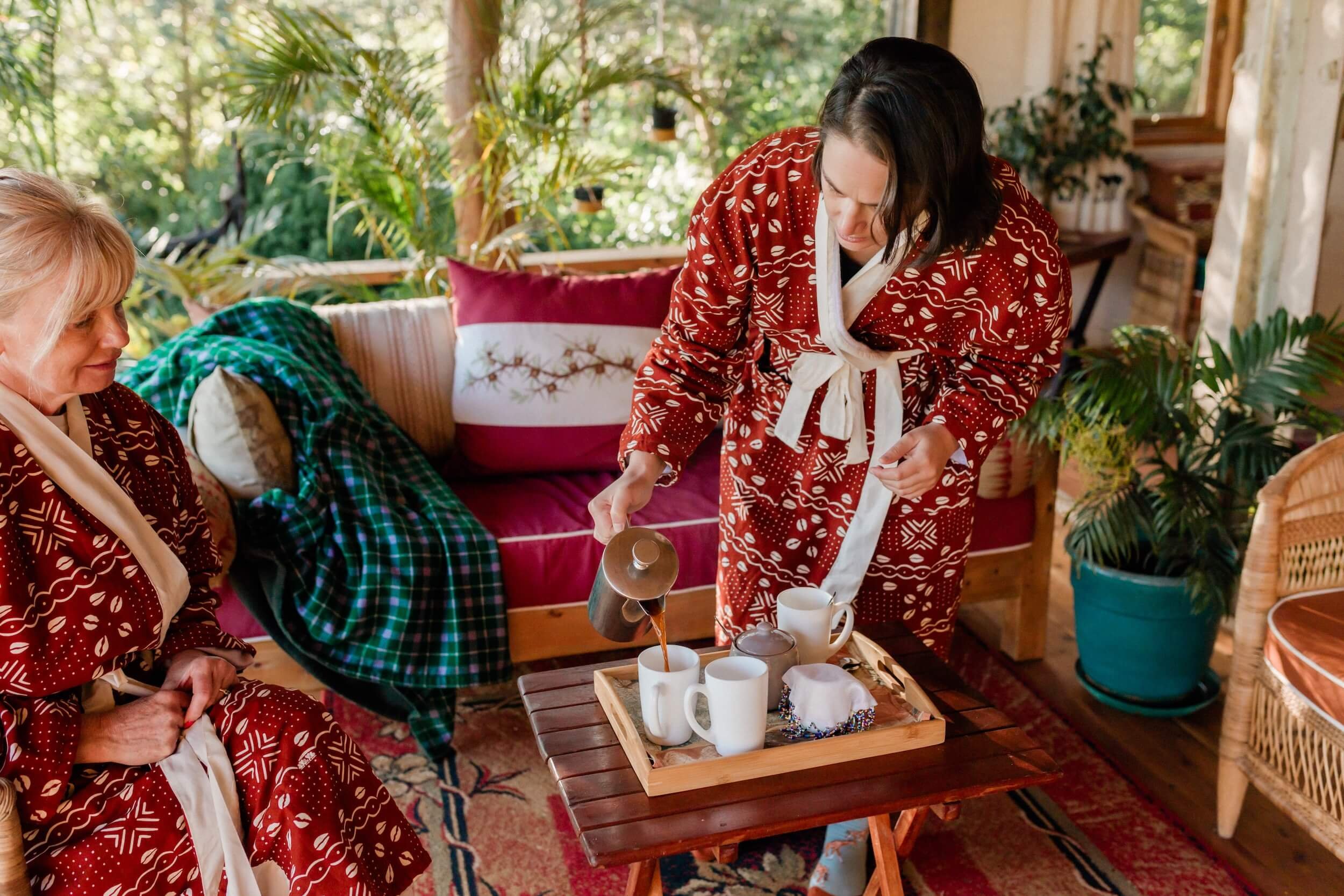
"I'm not a morning person at all — but that changes when I'm at The Safari Cottages. I really love being up before sunrise and taking a cup of coffee down to the deck to practise yoga with our group at first light. There's something so magical about the breaking of dawn here that really cracks you open, in the best way. The light, the texture of the air, the birdsong. It's so easy to be a morning person here.
But really every moment is so filled with wonder. I adore being out in the bush. I grew up in the bush and spend as much time as I can here trying to share this wild place with my own kids. So of course this environment is really the secret sauce to my inner peace — there is no better feeling in the world than sitting quietly in the vehicle whilst elephants rumble around you, or watching giraffe saunter across the plains whilst you have breakfast under an acacia tree, or the incredible sensation of your bones rattling when a lion roars from only a few feet away."

The Vision: A Global Community Built Around Conservation
What is the vision for Yoga for the Wild going forward?
"We return to Ol Pejeta every year to lead our annual Kenya yoga retreat. The Safari Cottages feels like home to us and Ol Pejeta continues to be such an incredible force for good that we are very passionate about rallying behind their efforts to make the world a better place. We've recently expanded to additional locations in Zimbabwe and the Maldives and have plans for even more adventures on the horizon — but we will always return to Ol Pejeta, as it really represents the need for protecting our planet and all beings who call it home.
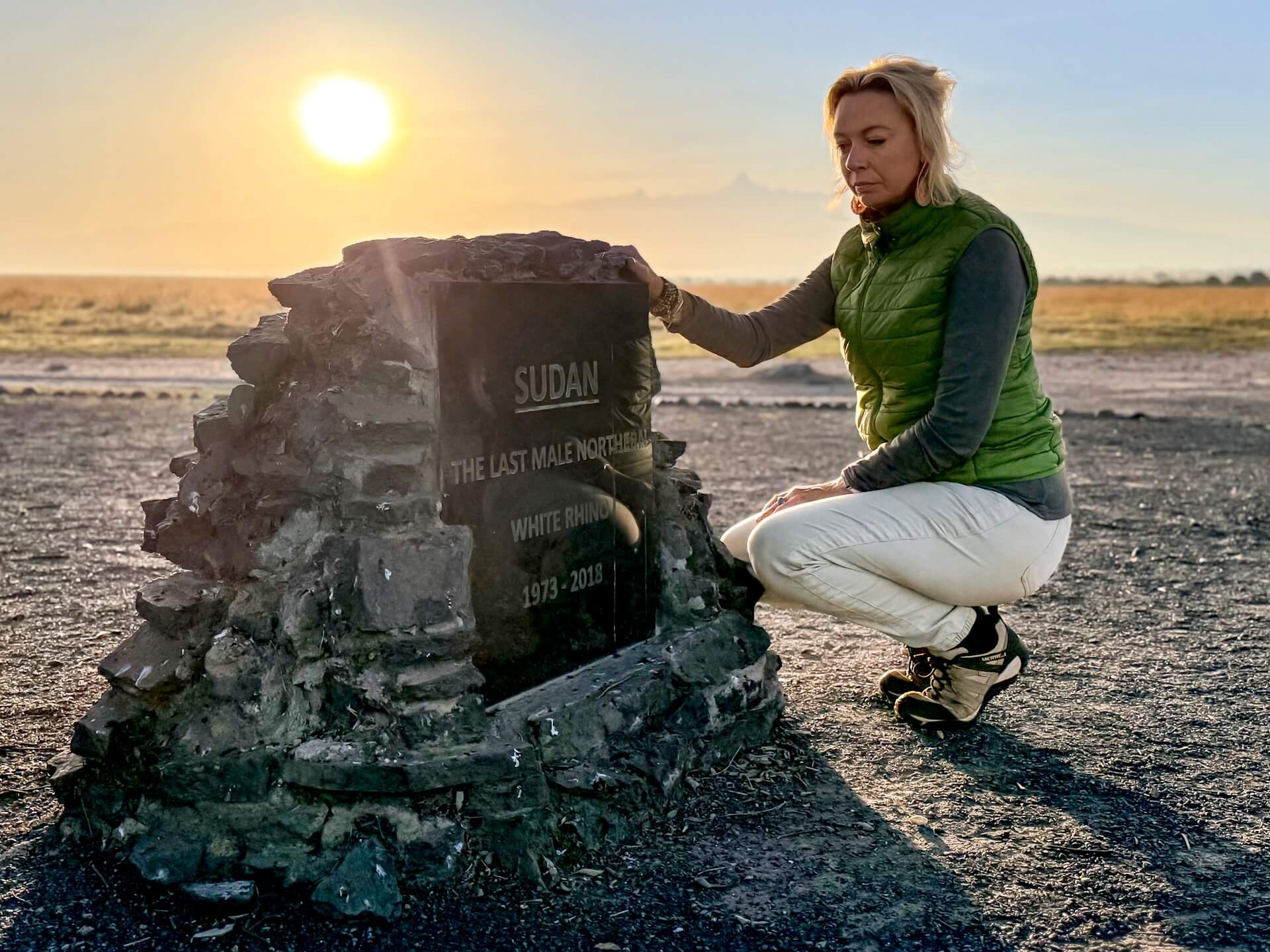
The story of the iconic northern white rhinos at Ol Pejeta has a huge impact on all who visit and a way of changing people for the better by prioritising the planet.
The heartbeat of our operation is to go where the wildlife needs us and to share the magic of the world's wildest places with as many people as we can. Not only does this empower them with the understanding of why it's so important that we continue to fight for the protection of endangered and critically endangered animals and their environments — it also creates a global community of people making a difference."


Why Ol Pejeta is One of Africa's Best Yoga Retreat Venues
For guests considering a wellness safari in Kenya, Ol Pejeta Conservancy offers something that purpose-built retreat centres cannot: genuine wilderness. The conservancy covers 90,000 hectares of protected land in Kenya's Laikipia region, home to the Big Five, over 300 bird species, and the last two northern white rhinos on Earth.
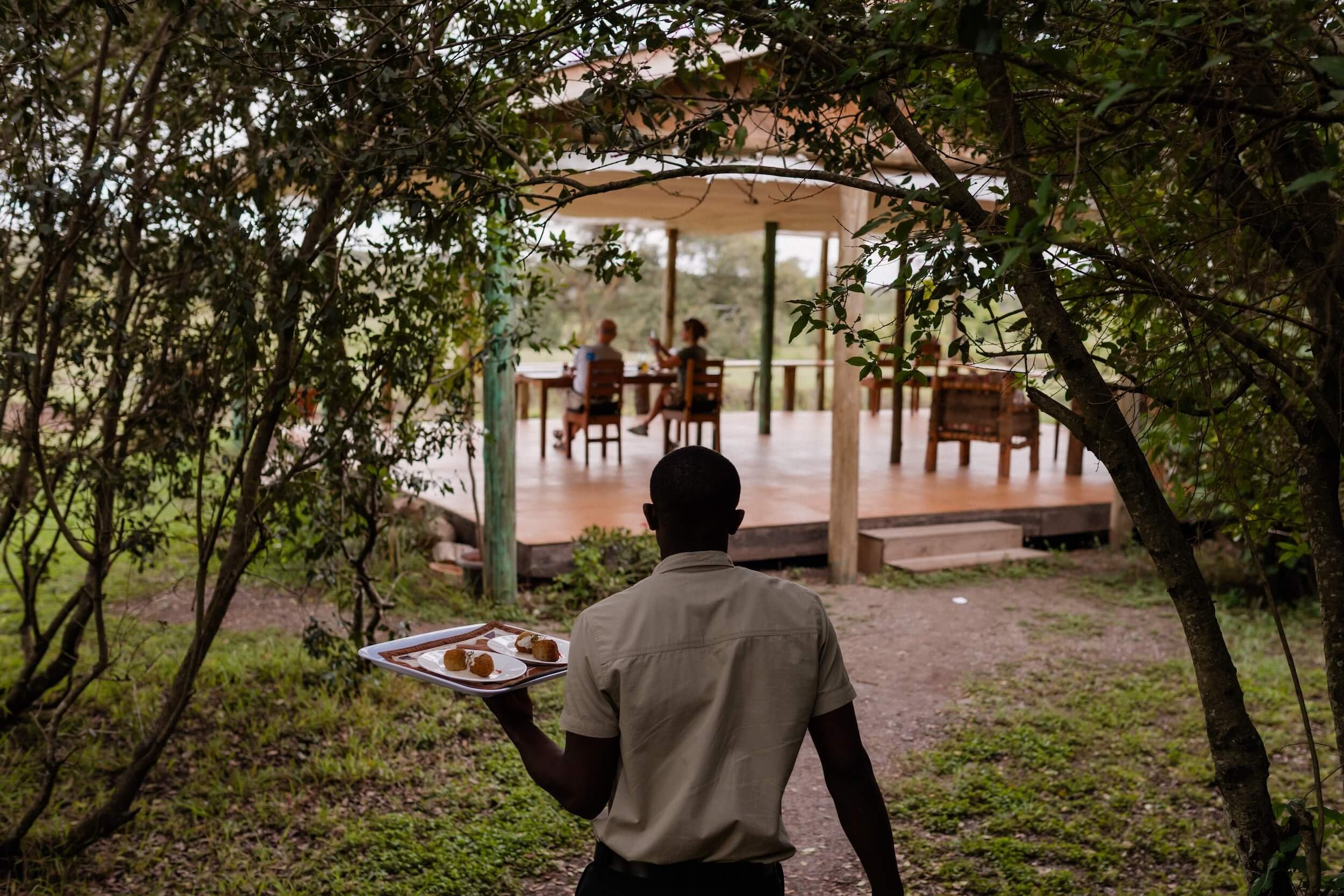
At The Safari Cottages, yoga retreat groups have the property exclusively to themselves — no other guests, no shared spaces. Morning sessions take place on the open deck as the sun rises over the conservancy. Game drives, bush picnics and night drives are woven into the programme alongside daily practice. Meals are prepared by a private chef and tailored entirely to the group.
It is, as Kat describes it, the secret sauce. A yoga safari retreat at Ol Pejeta doesn't just rest the body. It reminds you why the natural world is worth protecting — and sends you home knowing what you've contributed to keeping it that way.

Interested in Hosting a Yoga or Wellness Retreat at The Safari Cottages?
The Safari Cottages regularly welcomes yoga retreat groups, wellness retreat leaders and conservation-focused travel companies to Ol Pejeta. Our exclusive-use setup — private property, private guide, private chef — makes it one of the most flexible and intimate group retreat venues in Kenya.
If you're a retreat leader looking for a Kenya safari yoga retreat venue unlike any other, we'd love to hear from you.
KEEP READING
More from the Ol Pejeta Safari Cottages blog




5 reasons to travel to Kenya in September
If you’re considering booking your safari to Kenya in September then here are five reason why this is your best idea yet!
September is considered “high season” in Kenya but, if you’re crowd-averse, don’t let that deter you from your visit. This is a wonderful time of year and there is a reason that so many choose to travel in high season months. If you’re considering a Kenya safari holiday in September then here are five reasons why it’s your best idea yet!

1) It’s great for couples and adult travellers
For so much of the world, schools reopen in September after the Summer break and so families are no longer traveling. That means better availability and more options to choose from when it comes to finding lodging that suits you. It also means there is less competition for seats on airlines. At The Safari Cottages our one-bedroom safari cottages are absolutely ideal for couples looking for privacy and exclusivity; they come with a private chef and a dedicated, expert guide and vehicle. What a pleasure!
2) You can leave your umbrella at home
Whilst we can never say never, September is usually a very dry time of year; you may be treated to the occasional afternoon shower, if you’re lucky. That means there’s a very low risk of being rained in and not able to go out and enjoy the bush and, if you’re visiting the coast, you can expect predictably clear skies and warm weather for your days lounging on the beach.
3) Excellent game viewing
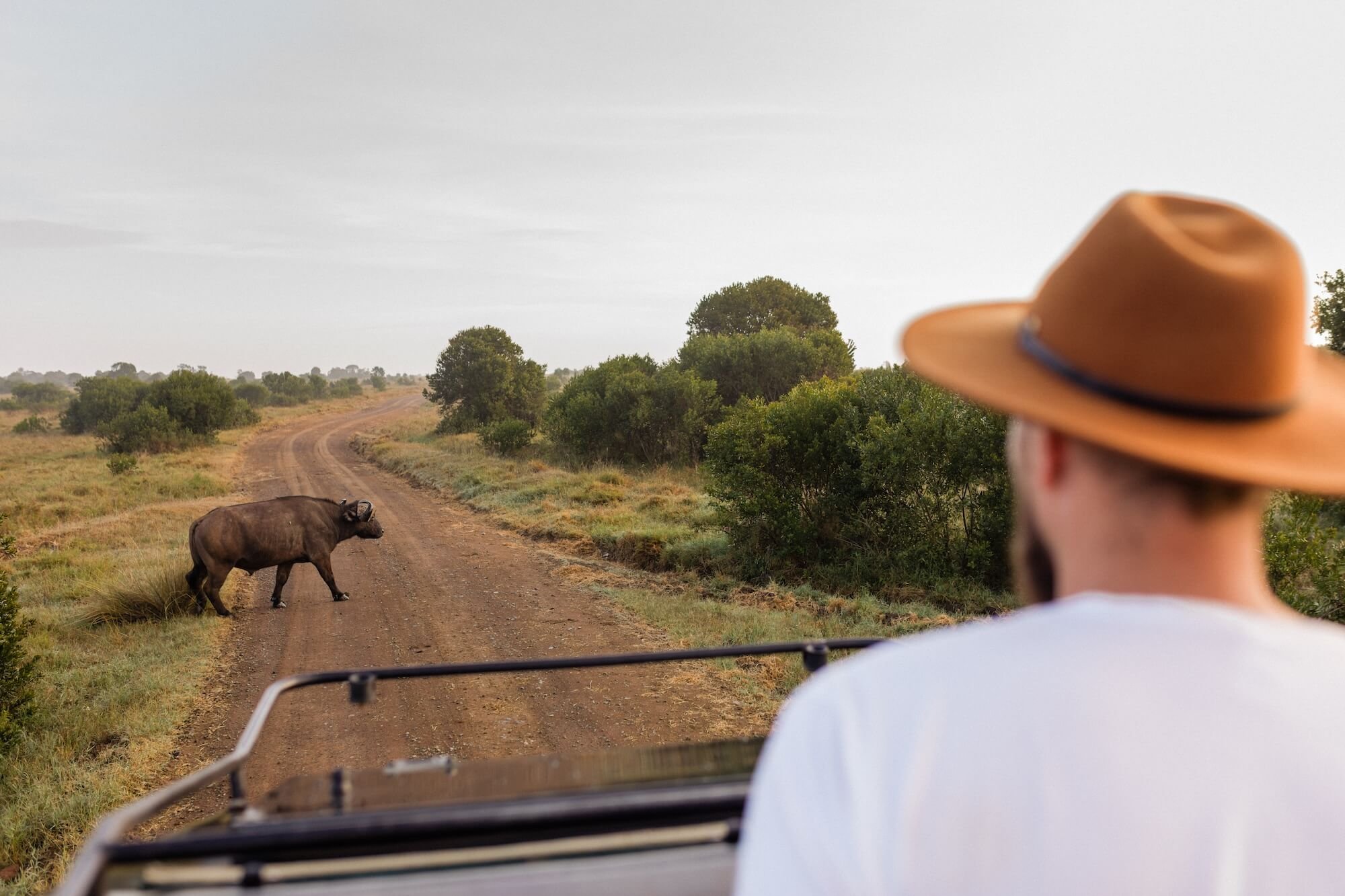
The drier weather means shorter grass so it’s easier to spot lions lounging out on the plains and track cheetahs as they race across the grassland on a hunt. The lack of rainfall also means that water sources are more concentrated so predicting when and where you can see wildlife at popular waterholes is more accurate. At The Safari Cottages we’re watching elephants, giraffe, rhino, buffalo and more frolicking in the river and resting in the near by shady trees every time we sit down for a meal.


4) The great migration
Many people choose to travel to Kenya between July - October to witness the great migration of wildebeest and zebra from the Serengeti into the Masai Mara. And for good reason; it’s a site to behold! We’d recommend starting your safari in Laikipia then flying down to the Masai Mara on a direct flight - this way you’ll get to see more of the country and enjoy the quiet of the highlands where you can settle in to your safari before you head the busy Masai Mara to witness one of the seven natural wonders of the world.
5) The start of whale shark season
With more predictable, excellent weather conditions across East Africa this is a great time for the classic “bush and beach” safari itinerary. Not only are the waters clear and beautiful but it’s the start of the whale shark season in East Africa and if seeing these incredible gentle giants is on your bucket list then you have a strong chance of being able to tick that one off!
BOOK YOUR SEPTEMBER SAFARI TO KENYA
Wildlife is abundant year-round in Ol Pejeta but there is something really wonderful about September; the lions are thriving and baby animals are popping up at every turn. We also tend to conduct our safari activities primarily in the wilderness area of the conservancy at this time, which has restricted access and means that game viewing isn’t as the mercy of big crowds of vehicles, as it is in the country’s national parks and reserves. It’s such a treat to have such privacy on your safari despite traveling during one of the busiest months of the year!
KEEP READING
More from the Ol Pejeta Safari Cottages blog


A dream come true: building and running our safari camp in Kenya
An interview with the owners offering a sneak peak into what it’s like living our dream of owning and managing our very own safari camp in Kenya!
From the outside, a stay at The Safari Cottages is all wildlife on your doorstep, roaring fires ready for your arrival, chilled wine on the African plains, big smiles and big hearts. What you don’t really get to see or understand is the vision, the hard work and the dedication that comes with living your dream every day and sharing it with the world. So today we thought we’d share an interview with Ol Pejeta Safari Cottages owners, Andy and Sonja Webb to hear more about how they came to be here and what it’s really like living their dream every day in the African bush.
WHERE IT ALL BEGAN
Andy and Sonja met in Bulawayo, Zimbabwe in their teens, and married young, before moving to Lake Kariba to grow their family and begin their journey in the safari industry. Over the next eighteen years Andy became one of Southern Africa’s most celebrated guides and the two of them built and ran life-changing mobile safaris in Zimbabwe; Sonja seamlessly handling the catering, marketing and business admin whilst Andy expertly hosted and guided life-changing bush experiences for their guests.

In 2003 they moved to Kenya’s Masai Mara and built, from the ground up, four incredibly successful Kenya safari camps that still hold rank in the country’s top safari properties. Finally in 2017, after forty years of guiding, hosting, building and operating safari camps and mobile operations in Zimbabwe and Kenya Andy and Sonja found their forever home on the Ol Pejeta Conservancy. It was here that they took all these years of experience and passion and expertise to create a bush experience that offers their guests everything that really matters without the fuss, without the hefty price tags and without the pretence. It was here that they redefined “luxury,” because the real luxury on safari, they know, lies in incredible value for money, in privacy and exclusivity, in feeling like you belong completely.

Andy, what was it about this location that appealed to you? And what were your top priorities in terms of minimising ecological impact during the construction?
“We found our location along the Ngobit River; this was originally a cattle station for Ol Pejeta Ranching Ltd and previously very barren. It had been completely overutilized by humans and livestock and the old wooden ranch managers house, built in the 50’s, still stood here but was totally unliveable. So our first thought was that it just made sense to build in an area where the soil had already been turned (utilised) rather than destroying virgin bush.
I think about our impact pretty much every day and protecting the existing, fragile eco system was a top priority for me during the build so I was careful to work around as many trees as possible and we upcycled the wood from the old house (stunning, aged cedar, purchased from Ol Pejeta) to make a lot of our furniture. To further protect both existing and new trees (primarily from from elephants - we love them but they can be very destructive) we ran a single strand electric fence around the property and wrapped some of the neighbouring acacias in chicken wire. The trees thanked us for it; today there is a beautiful grove of Yellow Bark Acacias in front of the cottages that not only look wonderful but support a multitude of insect and bird eco systems.”

Sonja, when it came down to curating and refining the guest experience what was your vision for the food, décor and staffing? What has most influenced your style and vision?
“Growing up on a farm in Zimbabwe, and being from an Afrikaans/Dutch descent, I have always had a passion for cooking and creating delicious dishes, pickles, and jams. This also stems from spending many happy hours in the kitchen with my Gran, Aunts and Mum who taught me to believe in the magic of a good, healthy, home cooked meal and gave me the foundational skills to create these types of dishes, with a little twist added by my amazing chefs.
I have always loved arts and crafts, so décor was a natural part of the learning process too. I did a year-long study in interior design, which I absolutely loved and this continues to fufill an artistic niche in my life. This love only grew as I designed and decorated a handful of camps in Zimbabwe and Kenya. I am a “bush bunny” at heart so when it came to setting up The Safari Cottages, my daughter Kathrine and I (we share a similar aesthetic) pulled together a vision board full of rich, warm colours and textures that were inspired by nature; I wanted people to walk in and feel like they have arrived home.

We worked closely with the staff during the design phase; hiring their artisan family members and purchasing hand-made goods from their communities whenever we could. The staff are a massive part of what we do and are the ambassadors for The Safari Cottages, so it was important that they love the space as much as I do.”


BEHIND THE SCENES: DAY TO DAY RUNNING OUR DREAM KENYA SAFARI CAMP
The days start nice and early, as radio chatter merges with birdsong and the askaris are preparing for morning calls. Andy and Sonja love to sit on the veranda with a cup of coffee and listen to Africa wake up as the sun rises, watching the day unfold before them. Then, when guests are well on their way for their morning game drive, they’re in the office, answering emails and checking in with their team for the day. They will often have guests who linger for breakfast in camp instead of heading out at first light, so they will usually pop down to say hello and make sure they have all they need or if they have any questions or concerns that can be addressed. Then the day really kicks off; restocking kitchen supplies, managing guest movements, vehicle and property maintenance, business management, preparing rooms and welcome packages for arrivals and allocating vehicles for transfers, supply runs and activities.

They will often host bush brunches in the late morning too, so after a quick bite to eat they’ll load up vehicles with staff, equipment and food then head to the river to set everything up ready for the guests’ arrival. If they aren’t out and about at midday then lunch is usually delivered to the office, and they admit they’re lucky enough to eat incredibly well thanks to their team of chefs! They’ll then check in with any guests they have yet to chat with at teatime, before they head off on their afternoon activity and finish up any final tasks and checks for the day.
In the evenings, if things are quiet, they try to make time to enjoy a sundowner together or to talk a walk around the property with the dogs (and the cat!) before the guests return. This is a great opportunity to assess the perimeter and grounds, and to spend some quality time enjoying their bush home and their years of hard work, love and care.

Sonja, what do you find the toughest part of managing the behind the scenes and what is the most rewarding part of it all?
“I would say that the toughest part behind the scenes would be making sure that everything from the cottages, menus, orders, and staff are all operating smoothly. I just love it when the “Floating Duck Syndrome” is well in place; things look to be operating with smooth, calm efficiency on the surface but we’re paddling like crazy out of sight!
I find the most rewarding part of all of this is being able to share my home in the African wilderness and love for nature with amazing guests and having them leaving wanting more!”
Andy, what is your favourite part of each working day?
“Sunset, easily. After a busy day in the office, welcoming new arrivals and bidding farewell to departures, chatting with guests over lunch down on the river deck we will often pack a cold beer or gin and tonic and enjoy a sundowner on the plains behind the cottages.”

“Like all other business, running The Safari Cottages is no mean feat and comes with it’s fair share of challenges, set backs and frustrations. But in the moments of quiet we so often look to one another and think, "aren’t we lucky to wake up each morning in a place that we love and spend our days pouring our hearts into watching our dream come true!" - Andy & Sonja
What to expect on a day trip to Ngare Ndare
Explore more of Kenya’s hidden gems on a day trip to Ngare Ndare forest: wander along the Ngare Ndare canopy walkway and take a dip in the crystal clear falls.
Ngare Ndare Forest is a bit of a hidden gem. This is a community owned and run trust tucked away in the foothills of Mt Kenya that forms part of the wildlife corridor between the northern wilderness of Laikipia and Mt Kenya. Whilst this is not necessarily a safari experience you’ll likely spot bushbuck, warthogs and elephants on your day trip to Ngare Ndare as they pass through this corridor and the best place to spot them is from the forest’s suspended canopy walkway.
Your day out at Ngare Ndare
You’ll be woken early with a fresh, steaming cup of Kenyan coffee or tea delivered to your Safari Cottage and a delicious breakfast of hot food, baked goods and fresh fruit with Sonja’s famous homemade granola to get you going for the day. After a hearty breakfast you’ll head out on your adventure, looking out for wildlife on the way out of the conservancy. Your journey continues through nearby Nanyuki town and the surrounding farmland and villages, giving you an insightful glimpse into life in rural Kenya, before you arrive at Ngare Ndare in the mid-morning.
Ngare Ndare Waterfalls
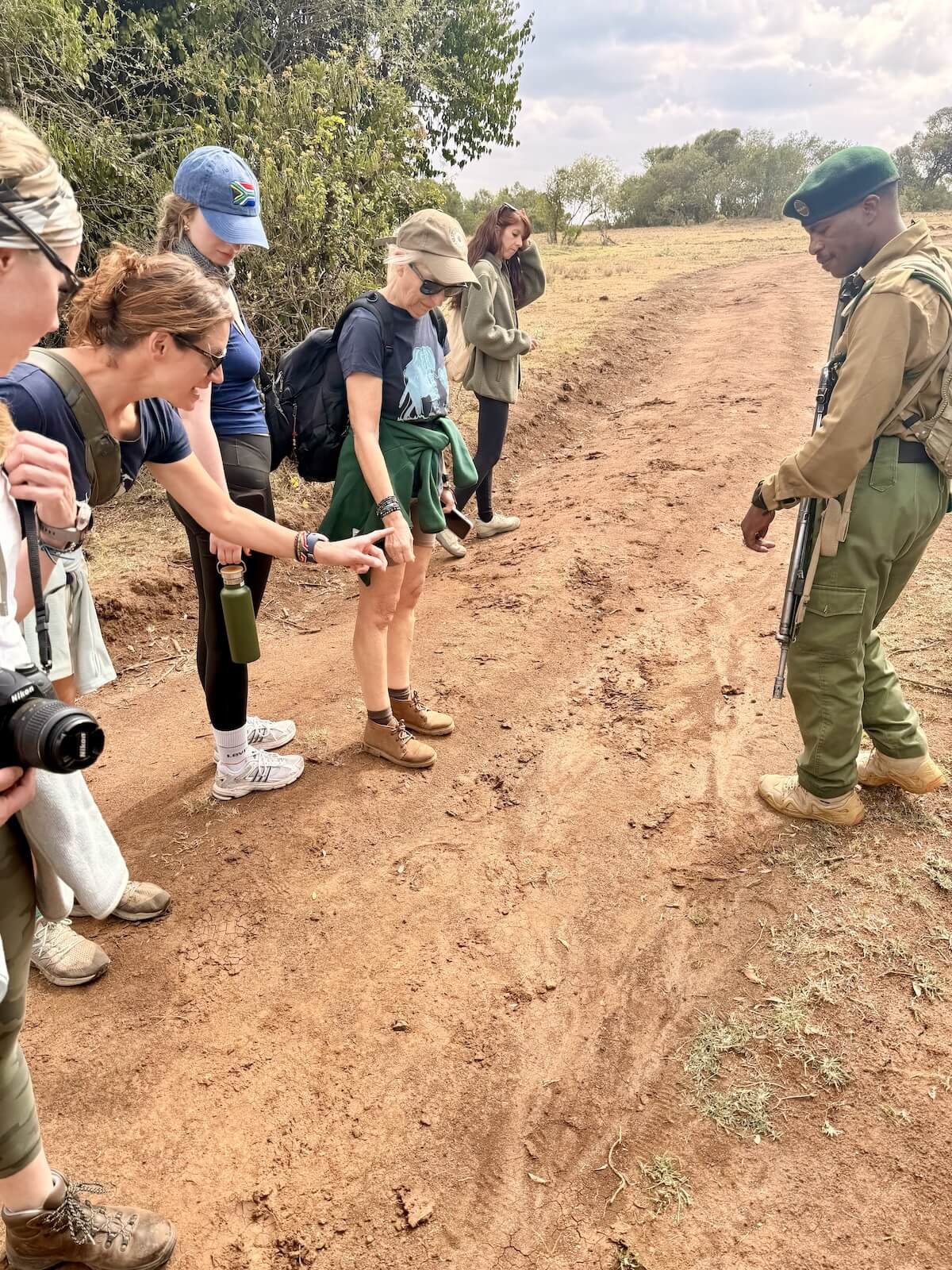
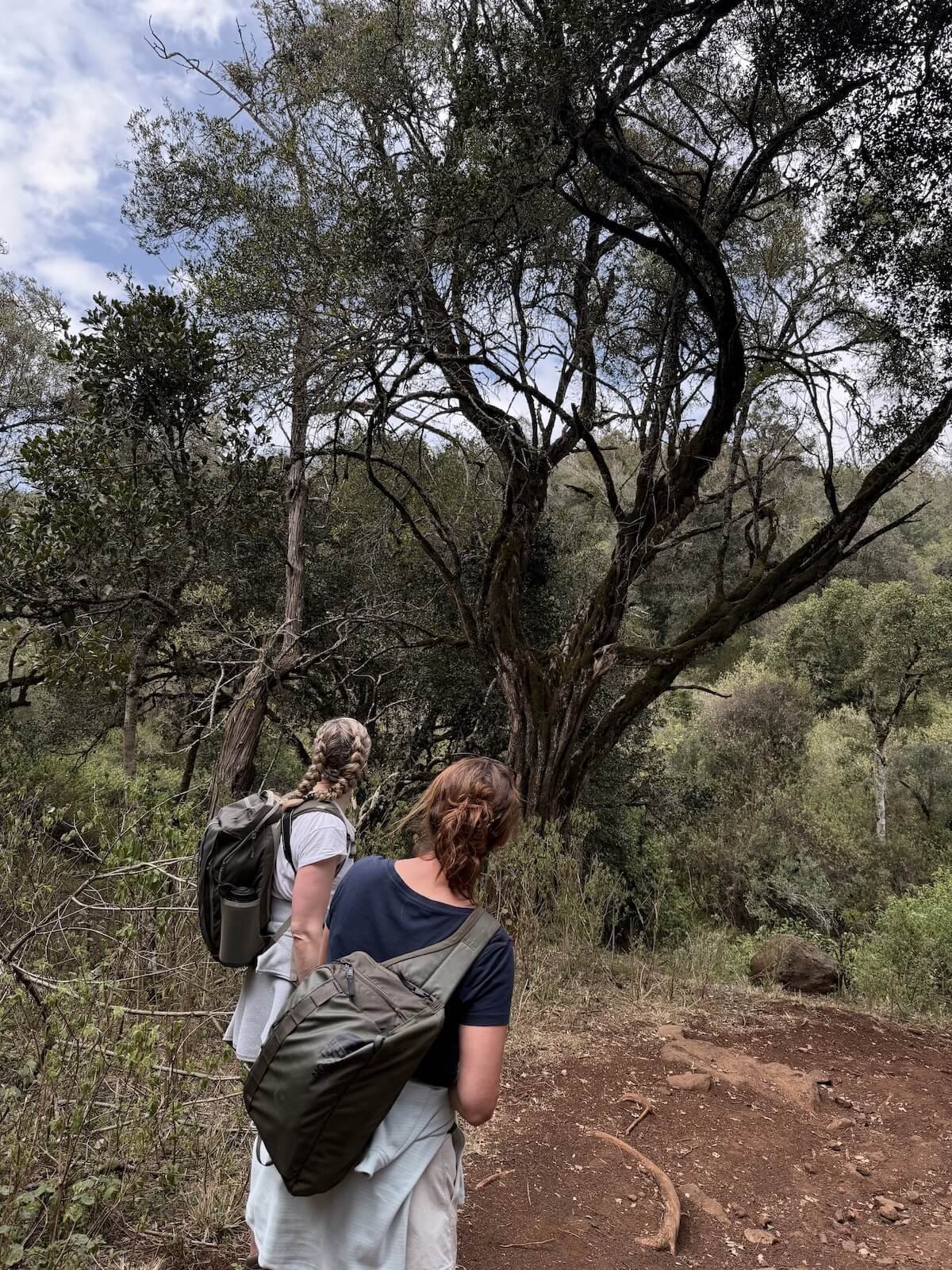
You’ll be met by a local ranger and begin the 45-90 minute hike up to the falls stopping enroute to learn about the trees, flowers and footprints you’ll find along the way. This forest is also filled with incredible birdlife including Hurtlabs turaco, the Narina trogon and paradise flycatcher. You’re at altitude so remember to stop frequently to catch your breath and take a full bottle of drinking water. You’ll clamber down to the river for the final part of the hike; following the waterways to find Ngare Ndare’s crown jewel - an enchanting waterfall that descends into an azure blue swimming hole (if you’re traveling in the rainy season though be aware it may be a little browner than you might expect). It’s chilly but if you can brave the cold a refreshing dip might be just what the doctor ordered on a hot day!
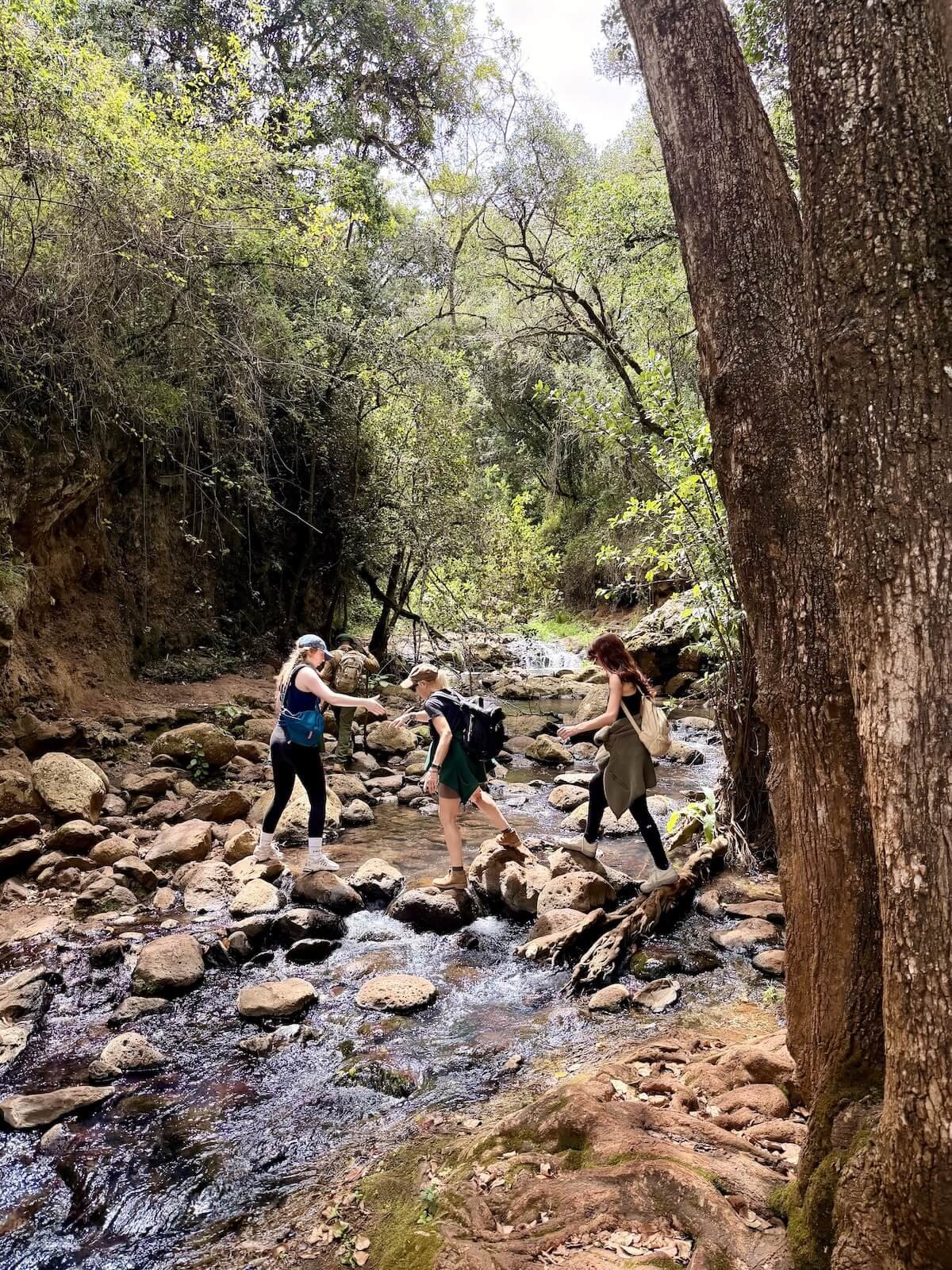
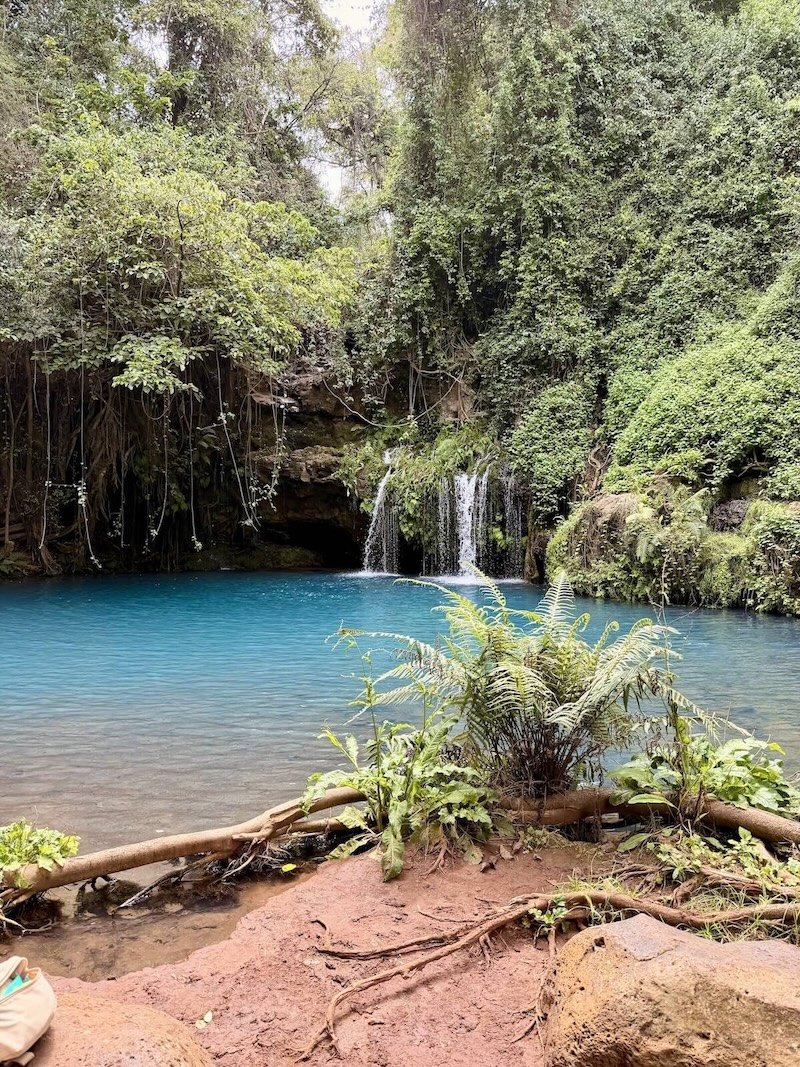
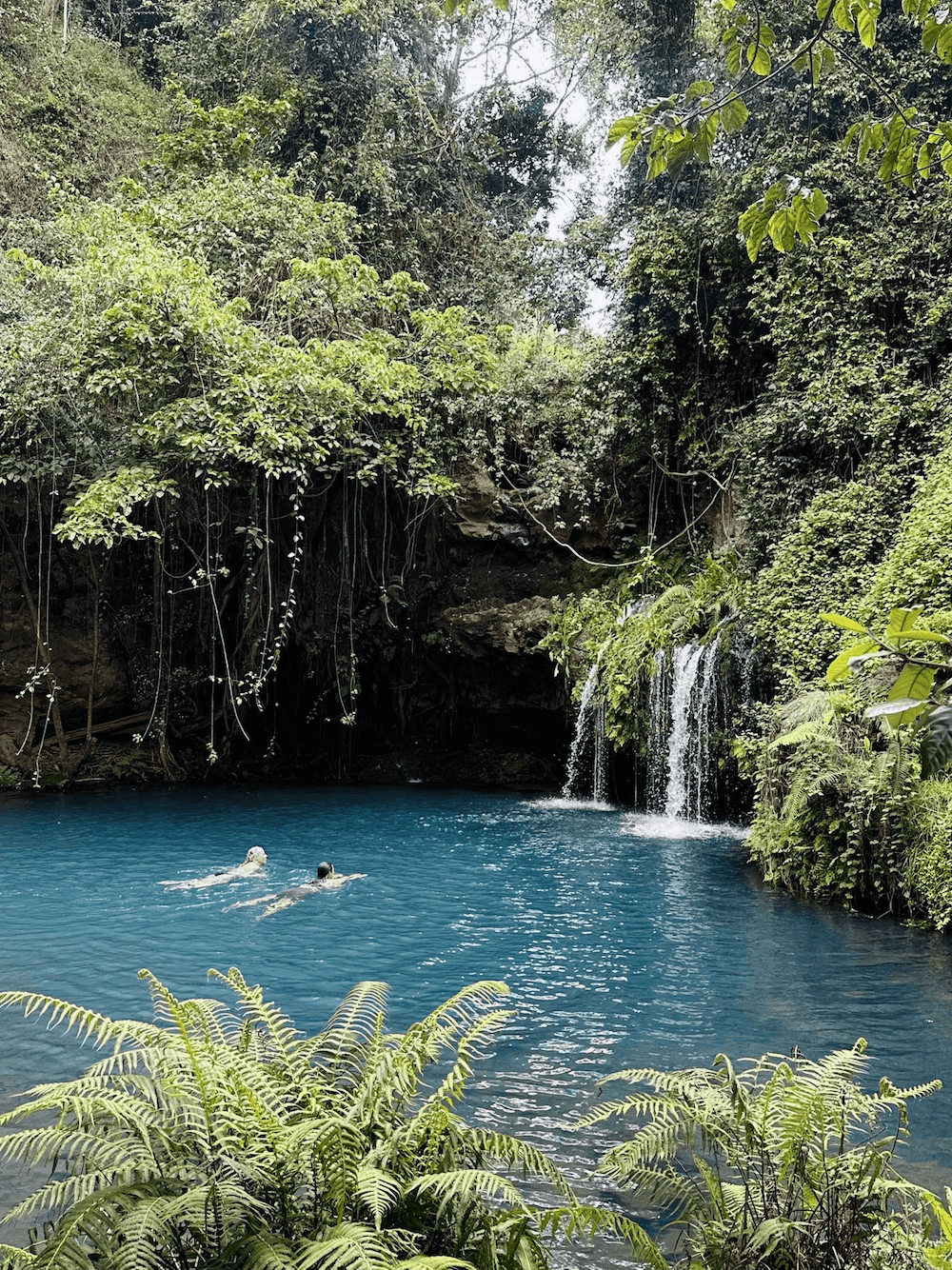
Ngare Ndare Canopy Walkway
You’ll wander 30-45minutes back down the hillside to find the start of the canopy walkway. This is a 450m long bridge elegantly suspended through the trees and where you can wander at leisure looking out for big wildlife like buffalo, giraffe and elephant, birds or just enjoying the views across the forest. The walkway ends at a platform overlooking a swamp below where you may be able to spot resident bushbuck or other wildlife. Descend from the canopy to a picnic lunch with your guide, soaking in this magical, wild forest for a few final moments before your journey home.


Game driving home
The day is far from over! On your drive back you’ll pass through Nanyuki once again and then return through the conservancy gate, stopping to enjoy the wildlife on the way and watching the sun drop below the horizon and lighting up the sky overhead. You’ll arrive for a drink around the fire, unwinding after your adventures and tuck into a delicious hot dinner under the stars. What a day!
Does a day our exploring the beauty of Ngare Ndare sound like just what you need? Read more about our day trips here and book your stay.
A map of Kenya + choosing the best route for your safari
A map of Kenya’s most popular regions and understanding the logistics of getting between them. This blog will help you plan your Kenya safari holiday.
The 582,646sqm beautiful and diverse land of Kenya ranges from the barren wastelands and turquoise waters of Turkana and Sibiloi, to the lush forests and farmlands that surround Mt Kenya, endless plains in the Masai Mara and Amboseli and a sparkling Indian Ocean coastline. The country is rich with culture and history; home to an astonishing 42 tribes including the most famous, Masai tribe and the beautiful Samburu. But access and planning can be tricky across such huge areas, especially when you have limited time for your Kenya safari holiday and what to make the most of every day.
Here's a map of Kenya and some suggestions on how to route your trip, so that you can spend more time enjoying all that Kenya has to offer and less time in transit…
MAP OF KENYA


KENYA SAFARI ROUTE PLANNER
Option 1 (flying): Laikipia – THE Mara – Amboseli (for the wildlife lovers)
This is a flying only route and, with limited time, flying really is the best way to get around the country. Just bear in mind that you’ll have strict baggage limits on local flights (usually 15kgs in soft bags only), but don’t let that deter you; you’ll be surprised how much you can squeeze into your luggage limit.
Start by flying North to Laikipia, there are a number of excellent properties in this area offering a range of different experiences. Ol Pejeta (that’s where you’ll find The Safari Cottages) is most famous for it’s prolific wildlife and it is home to the Big Five including the last two Northern White Rhinos on the planet. Samburu and Lewa are also excellent locations for wildlife lovers.
You can fly directly to the Masai Mara from Nanyuki and, depending on the time of year and your interests and preferences, there are a number of excellent properties in the reserve itself and the surrounding conservancies. Your plane will stop at all the airstrips where passengers are hopping on and off, so expect this flight to work like a bus service and listen out for your stop. Our favourite spots in the Mara are Serian, Spekes Camp and Kicheche Bush Camp.
You’ll then fly directly to Amboseli from the Masai Mara. Another of Kenya’s most famous wildlife areas and by now elephants will feel like family and the call of lions will be just another normal sound in your day! We love Tawi Lodge and Ol Donyo. You can then catch your return flight to Nairobi to board your international flight home.

Option 2 (flying): Laikipia – THE Mara – Diani (safari & beach)
If you’d like to finish your safari with a beach holiday then you’ll be happy to hear that Kenya has incredible, beautiful beaches (the white sands of the South coast easily rival those of Zanzibar), rich culture (check out Lamu) and incredible food (the Swahili/Italian fusion restaurants of Watamu are incredible!). This route is much the same as the above but you will fly to the coast (direct from the Mara) to relax; the perfect finale to your Kenya safari holiday. On the coast, we love Kizingo (Lamu), Kobe Suite Resort (Watamu) and Waterlovers (Diani).
*If you’re short on time and want to skip the Mara you can fly to Nairobi from Nanyuki late morning, and connect with an afternoon flight to Diani in the South Coast.

Option 3 (driving): Laikipia – The North (for the WILD SOULS)
For those who are more adventurous at heart, it’s an easy four hour drive to Ol Pejeta where you can tick off the Big Five and ease into your safari. Then, once you’ve got your wildlife fix (because who goes on a Kenya safari holiday and doesn’t see lions and elephants?) it’s a beautiful drive across the hills and farmlands of Laikipia and down the rift valley escarpment into Samburu to seek out more endangered, Northern species such as generuk, oryx and the beautiful Vulturine guinea fowl. This is also a great spot for leopards so keep your eyes peeled.
You’ll then continue driving further into Kenya’s more secretive Northern frontier to soak up this untouched wilderness and meet the Samburu people who call this land home. In Samburu we love Elephant Bedroom Camp and, in the North, Sarara or Saruni Rhino.

Option 4 (driving): Laikipia – The Lakes – The Mara (a Classic Kenya road trip)
This trip starts just like the one above, but instead of heading North you’ll spend a day driving through the beautiful forests and heathland of the Aberdares National Park. Make sure you stop to enjoy a picnic enroute and take the view! Then you’ll descend into Kenya’s Lake District, to unwind on Elementaita or see the flamingoes of Nakuru. We love Loldia House. Relax on the lake shores, take a canoe to Crescent island or a day trip to Nakuru National Park.
You’ll then continue your adventure into the Masai Mara; around five hours of driving time (depending on where you stay) through farmland, lava fields and villages before you are traversing the epic plains of this world famous wildlife area.
*If you travel to the Mara between July - October you’ll likely witness the great migration! This is peak season in Kenya so if you prefer to steer clear of the crowds then opt for accommodation in the surrounding conservancies rather than in the park itself.

JOINING A GROUP SAFARI
If planning your own Kenya safari holiday feels a little daunting then a great place to start is by joining a group safari. Click here to see the full list up upcoming group safaris that we are hosting and find more details.
We hope to see you soon!

5 family safari holiday myths busted!
If you’re thinking of a Kenya family safari holiday but you’re nervous about traveling with children, especially young children, we’re here to bust a few myths and tell you why taking children on safari is actually a great idea!
If you’re thinking of venturing off into deepest, darkest Africa with the kids this Summer and you’re feeling hesitant then you’re not alone. Jetting off into an unfamiliar destination with your precious family under your care can be intimidating. But you’ll soon find that a family safari holiday, even with (or especially with) young children, will bring you so much joy and excitement and stories that will stick with you for a lifetime.


Here are our top 5 family safari holiday myths and why they simply aren’t true!
Africa is too dangerous for children
Like every other continent and country in the world there are areas that are not recommended for travel and there are parts that are totally safe. Discuss a suitable family-friendly itinerary with your travel agent and you might be surprised to discover just how safe a lot of Africa is for families with children of all ages.
They’re too young to remember it
It’s true, young children and babies won’t remember it, but YOU will - you’ll remember the time your baby snuggled up and snored quietly whilst a lion roared them to sleep. You will remember that they used to cheers you with their milk bottle out on the open plains. You will remember that they said “epant” for the first time when they saw them wandering past at lunch time. Creating memories with your kids starts from day 0. And just imagine being your child and seeing photographs of yourself as a baby on a family safari holiday. Incredible!
I will feel uncomfortable breastfeeding in Africa
Everywhere you look you will see African women breastfeeding their children. It’s the most natural, normal thing to do and to see in Kenya and in Africa at large. And if you’re traveling with a baby who needs to be bottle fed then you’ll be glad to find baby formula is available in most major supermarkets in Kenya too, alongside nappies, wipes and other essentials.
The food won’t be suitable
Babies are born and grow up and thrive in Africa every day and Africans know all about how to feed and care for babies and young children and they love getting stuck in and helping you with your little ones. The art of mothering is a universal gift. And if you have young kids who are picky eaters most lodges and camps will accommodate your child’s dietary needs if you give them enough notice. You might think you’re being difficult, but you’re absolutely not; giving the camp or lodge as much information about your children’s dietary requirements as possible will mean that you’re all much more likely to enjoy your stay.
It’s going to be expensive
Well, we can’t fault you on this, but it’s also not likely to be as expensive as you’d think! When booking your Kenya safari holiday lodging opt for accommodations that give discounted rates or even free stays to children under 3 and under 12. And if you’re heading to the Kenyan coast you can also opt for a private villa stay - this will be especially helpful in managing costs if you’re traveling with two or more older children.
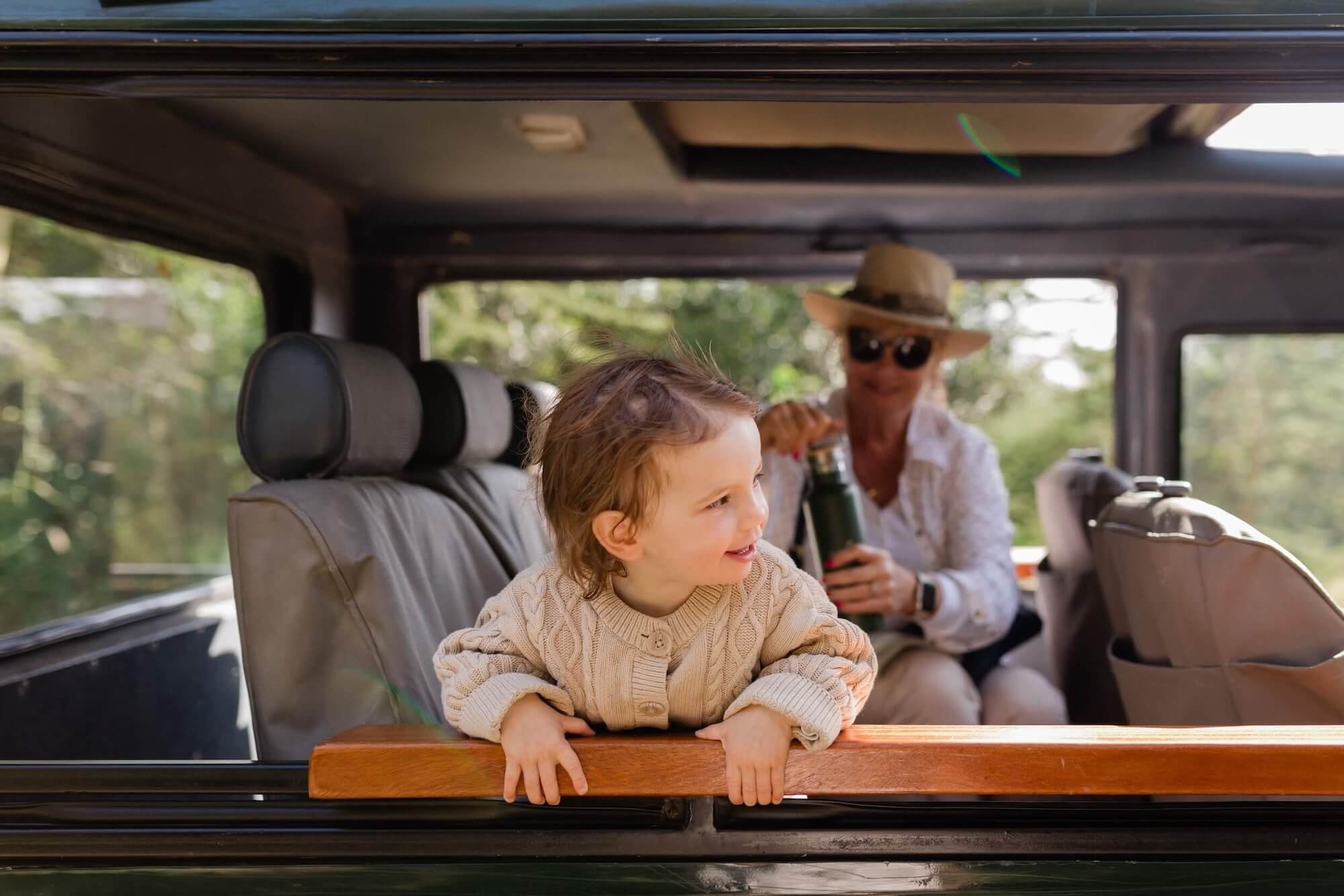
We hope that’s helps to quell some of your fears around taking children to Africa on a family safari holiday. We have raised two children in the African bush and our grandchildren visit us in Kenya every year. They simply love the freedom and space at The Safari Cottages, spending time in the kitchen with our chefs, helping to clear brush with the askaris and naming all the animals on their game drives.
if you’re still not sure, drop us an email - we’re here to help.
“Our family of eight (including boys ages 8 and 12) stayed for three nights at these wonderful cottages. The accommodations were private and well appointed. The meals were superior, one day we gave the cook a standing ovation! Watching the elephants parade past at lunch was a highlight of our stay. There were plenty of place for our boys to explore safely during the day. Each evenings the guard, Peter, made a small bonfire for us and provided marshmallows and stories to entertain us. One evening he brought out a telescope and showed us the stars of the Southern Hemisphere! He is a real treasure.”
- December 2024 -

A safari proposal: Rachel & Pete
Rachel & Pete got engaged during their stay with us; here’s their romantic story.
It was May 2023 and Rachel and Pete joined us for their second visit on a Yoga For The Wild Kenya Yoga Retreat. Ahead of their trip we received the most exciting message; the type we just love to read. Pete was planning to propose to Rachel on their safari and could we help him set it all up? Our team couldn’t have said yes fast enough!
Ol Pejeta’s golden light, the sweetness in the wind, the titillating melody of birds and the quiet moment a family of elephants wanders past you makes Ol Pejeta easily one of the most romantic Kenya holiday destinations we can think of. It’s no wonder so may choose to spend their honeymoons with us and return for wedding anniversaries years down the line.
THE BIG DAY
On the day of Pete’s proposal the group was out on an afternoon game drive whilst our guides were secretly searching for an idyllic backdrop for the proposal. As luck would have it, they found a cheetah lounging around on the plains just down the road from the spot our team had so carefully selected (this particular cheetah had set up camp here and they had seen him almost every day on their trip). Everyone paused for photographs but Mike, key proposal organiser, hurried everyone along as subtly as he could. As you might expect there was a lot of confusion around why they were being rushed to get to a sundowner. But, it became clear very quickly, because they made it to their just spot in time for sunset and one of the group pulled out a camera to photograph the couple in the golden light when Pete dropped to one knee and the group let out a collective gasp!

The wildlife on the game drive to their proposal spot was excellent!
Rachel was completely taken off guard and, upon popping the question got promptly told to “F** off.” Ahhh, romance. We still laugh with Rachel to this day about her reaction to Pete’s declaration of love on their Kenya safari holiday.
She said, “it was a genuine surprise- you only have to look at my face in the picture! I don’t think I even heard him ask me the actual question, I just saw him get down on one knee in this just incredible location and my heart just filled with genuine delight. We were both buzzing for weeks, and it was so glorious to be able to share such a special moment with everyone (including all of zebra, buffalo and giraffe!).”

Rachel was shocked!
Rachel and Pete celebrated with bubbles and a little dance party with our staff that night at dinner. Pete says, “everyone at OPSC were amazing. I had been talking to Kat prior to even setting foot back in Kenya so she was well prepared for what was going to happen and that I wanted to do it at one of the sundowners. This is where all the behind-the-scenes planning took place as when I said “today?” to Kat I could tell Mike, and the rest of the team were on the lookout for something special as we headed out for the sundowner’s drive.


Sundowners are such a special time of the day regardless but the team bringing a bottle of fizz and being fully involved made me so much more at ease and can honestly say relieved a lot of the nerves I may have had. We had a lovely private meal at our cabin one night and all the camp staff were amazing even more so at the camp group dinner where we were treated to a special celebration song and dance by the staff then as our always cherished walk back to our cabin with Peter!”
They were married in the UK in 2024 and our daughter Kat attended the wedding which was a day of incredible love and, as we might expect from these two, so much fun! Rachel and Pete were so moved by their visit to the Northern White Rhinos during their trip that, in place of wedding gifts, they asked for donations to Ol Pejeta’ Northern White Rhino Recovery Program and raised an incredible £220!
Asante sana Rachel and Pete for sharing your love with us and for your infectious joy and unwavering support of our wildlife. We look forward to seeing you again soon.

Rachel & Pete celebrating their engagement with their group
FINAL WORDS FROM RACHEL & PETE
“When I say going to The Safari Cottages feels like being at home I am not exaggerating, everyone in the team is so special and makes it feel like a home away from home (especially Andy and Sonja), a truly loving and welcoming place!” - Pete
“Not only did we feel supported and celebrated, we felt genuinely loved. The team pulled out all of the stops, and everyone seemed truly elated to be part of it. From the cheers and fizz on sundowners, to the hugs from the rest of the team when we got back AND the celebration singing around the dinner table, they couldn’t have made it more special if they tried.” - Rachel
Kenya Safari in May: Why It's One of the Best Months to Visit (And Why Most People Don't Know It)
Think Kenya in May is a bad idea? Think again. The Safari Cottages are open all year on all-weather roads — here's why May might be your best safari yet.
If you've Googled "Kenya safari in May" and come away convinced it's a mistake, you're not alone. The travel internet is full of warnings about the rainy season, closed camps, and muddy roads. Bu the truth is most of it is outdated, overstated, or simply doesn't apply to Ol Pejeta Conservancy.
We've lived and worked here through more than twenty Mays. We know what it actually looks like on the ground. And what it looks like is extraordinary. Here's the truth about a Kenya safari in May — and why it might be the best decision you make this year.
Is May a Good Time for a Kenya Safari?
The honest answer is yes — and in several important ways, it's better than the months everyone fights over. The "long rains" that traditionally defined April and May across Kenya are changing. Our own rainfall records over the past decade show that May — particularly the second half of the month — is now drier than many August days. Climate patterns have shifted, and the blanket advice to avoid East Africa in May simply hasn't caught up with the reality on the ground.
More practically: The Safari Cottages are open throughout May, and we game drive on all-weather roads across Ol Pejeta Conservancy. Whatever the sky decides to do, your game drives happen. The wildlife doesn't take a rain day, and neither do we.
A cheetah wandering the plains of Ol Pejeta in May
5 Reasons a Kenya Safari in May Is Worth Booking
1. The Wildlife Is Exceptional — and Often Unseen
May is one of the most rewarding months for wildlife at Ol Pejeta, and one of the least appreciated.
The recent rains bring an explosion of fresh vegetation across the conservancy — and with it, plains game including giraffe, rhinos, eland, zebra and more are out in enormous numbers. It's one of the most reliable windows of the year for extended, close rhino sightings, including encounters with Ol Pejeta's critically endangered northern white rhinos.
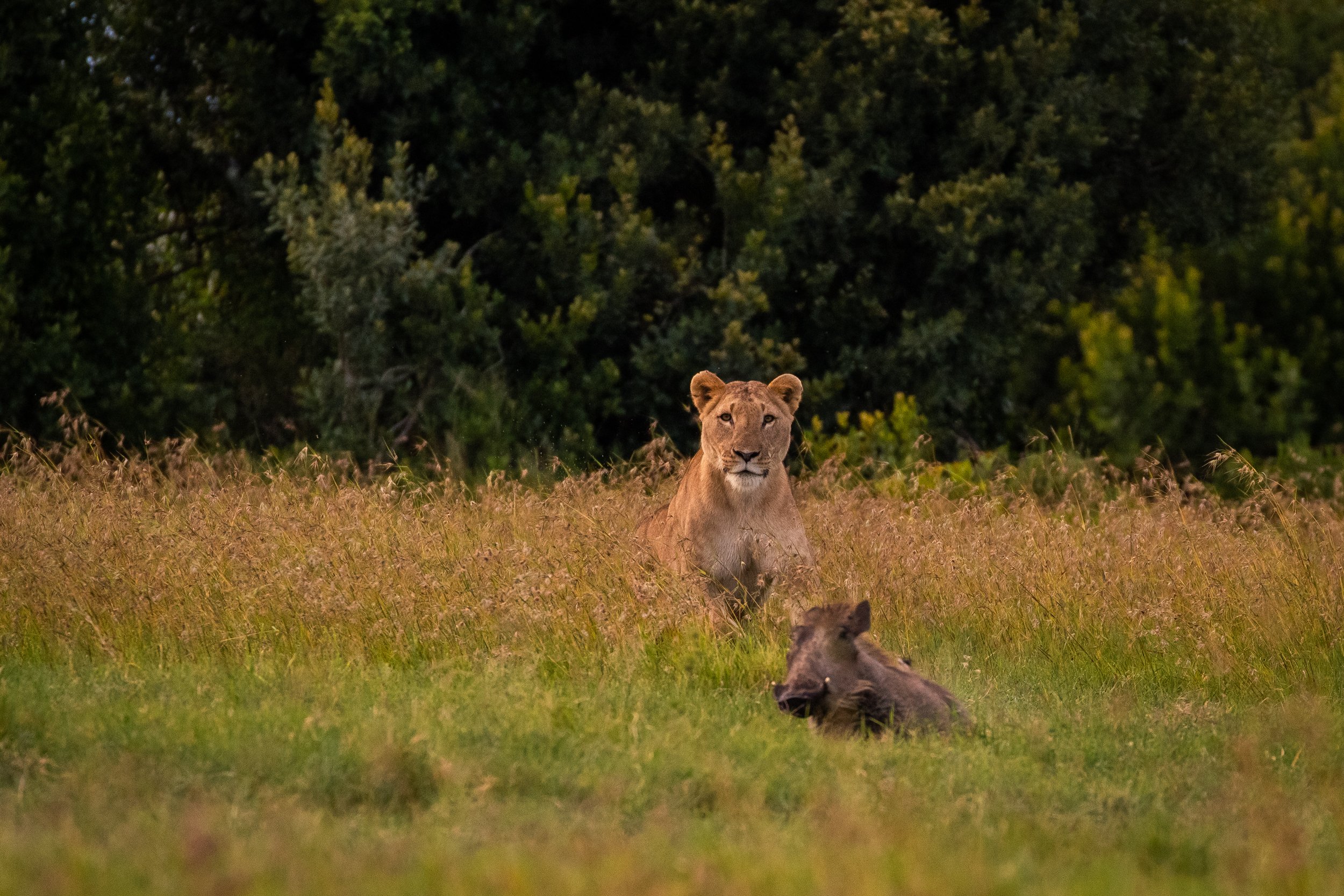
Big cats remain highly active. Lion prides patrol the open plains, cheetahs work the grasslands, and elephant family groups move through the conservancy in relaxed, unhurried herds. There's no shortage of sightings — just a shortage of other people trying to see them.
Which brings us to point two.
2. You'll Have the Conservancy Almost to Yourselves
This is the quiet secret of a May safari: most people aren't here.
Because the travel internet steers visitors away from Kenya in May, the conservancy is at its least crowded. For guests at The Safari Cottages — where every stay is entirely private by design — this means game drives with no other vehicles at sightings, the ability to sit quietly with a lion pride for as long as you like, and a stillness to the bush that peak-season visitors rarely experience.
If you've ever watched a safari video and thought "I wish it was that quiet," a May safari at Ol Pejeta is what you're looking for.
3. It's One of the Best Value Months of the Year
Most properties that remain open in May operate on low season rates, making it one of the most cost-effective times to experience a high-quality Kenya safari. At The Safari Cottages, our low season pricing runs from April through to mid-June — meaning May guests access a fully private, exclusive-use safari experience (private guide, private vehicle, private chef, flexible schedule) at a significantly lower rate than the same experience in July or August.
It's worth being clear about what that means in practice: you're not getting a lesser safari. You're getting the same private guide, the same vehicle, the same chef, the same wildlife — at a lower price, with more of the conservancy to yourself. What’s not to love?
For families, couples, or anyone balancing quality with budget, May is worth looking at seriously.
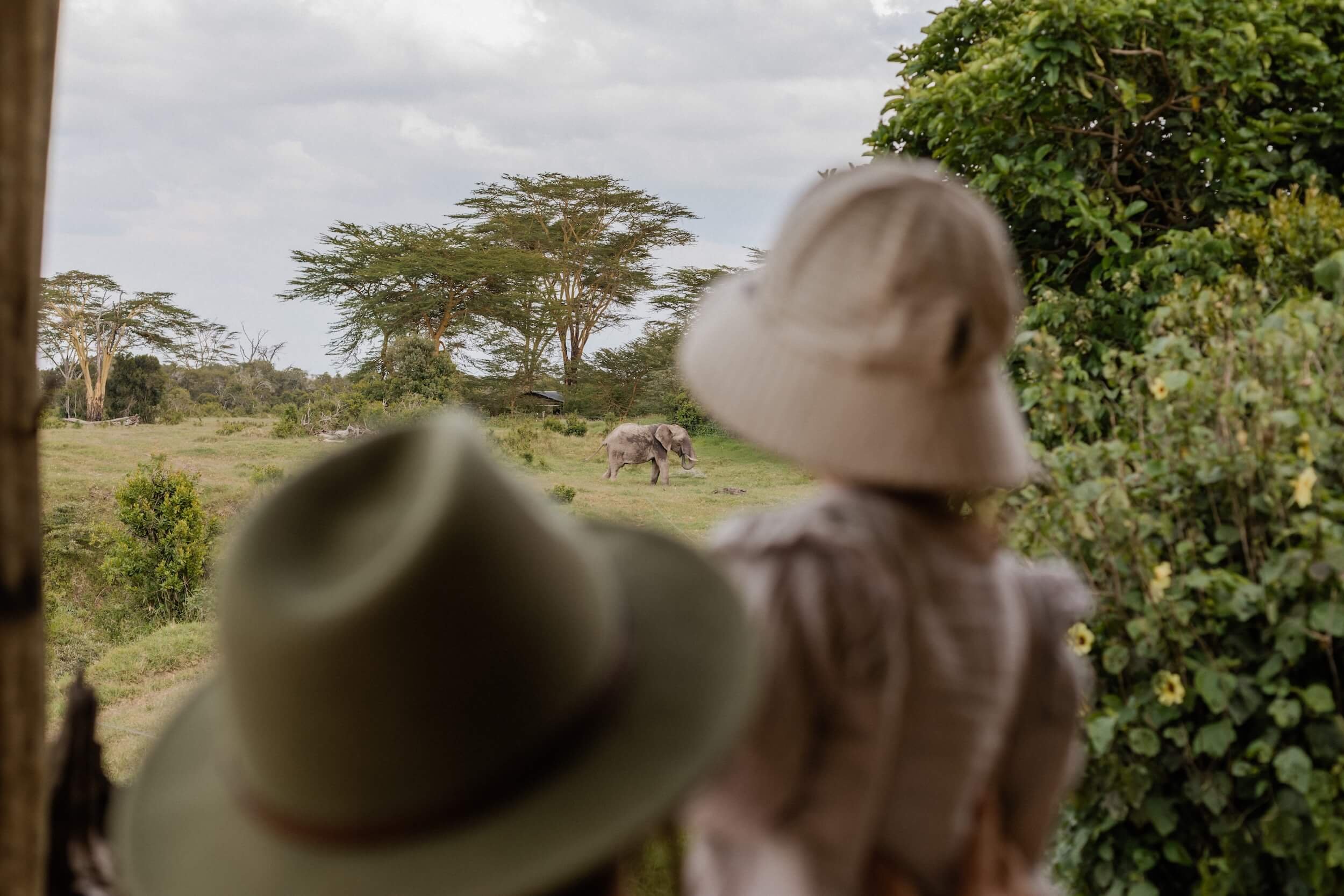
An elephants wanders up the river over lunch at The Safari Cottages
4. Ol Pejeta Is Breathtakingly Beautiful in the Green Season
There are two versions of Ol Pejeta. The dry-season version — golden, dramatic, stripped-back — is the one that fills most safari brochures. The green-season version is something else entirely.
After the April rains, the conservancy transforms. The plains turn a deep, vivid green. Rivers run full. Dams overflow. Wildflowers appear across the grassland. The light softens and so does the pace.
May is arguably the most photogenic month of the year at Ol Pejeta. The rich green backdrop makes wildlife portraits striking. Occassional overcast skies diffuse the harsh midday sun, creating a softbox effect that wildlife photographers love. And the night skies — cleared by the passing rains — are exceptional. Our team of askaris will show you the southern constellations on any clear evening whilst you sip your gin and tonic around the campfire, and there are a lot of them in May.
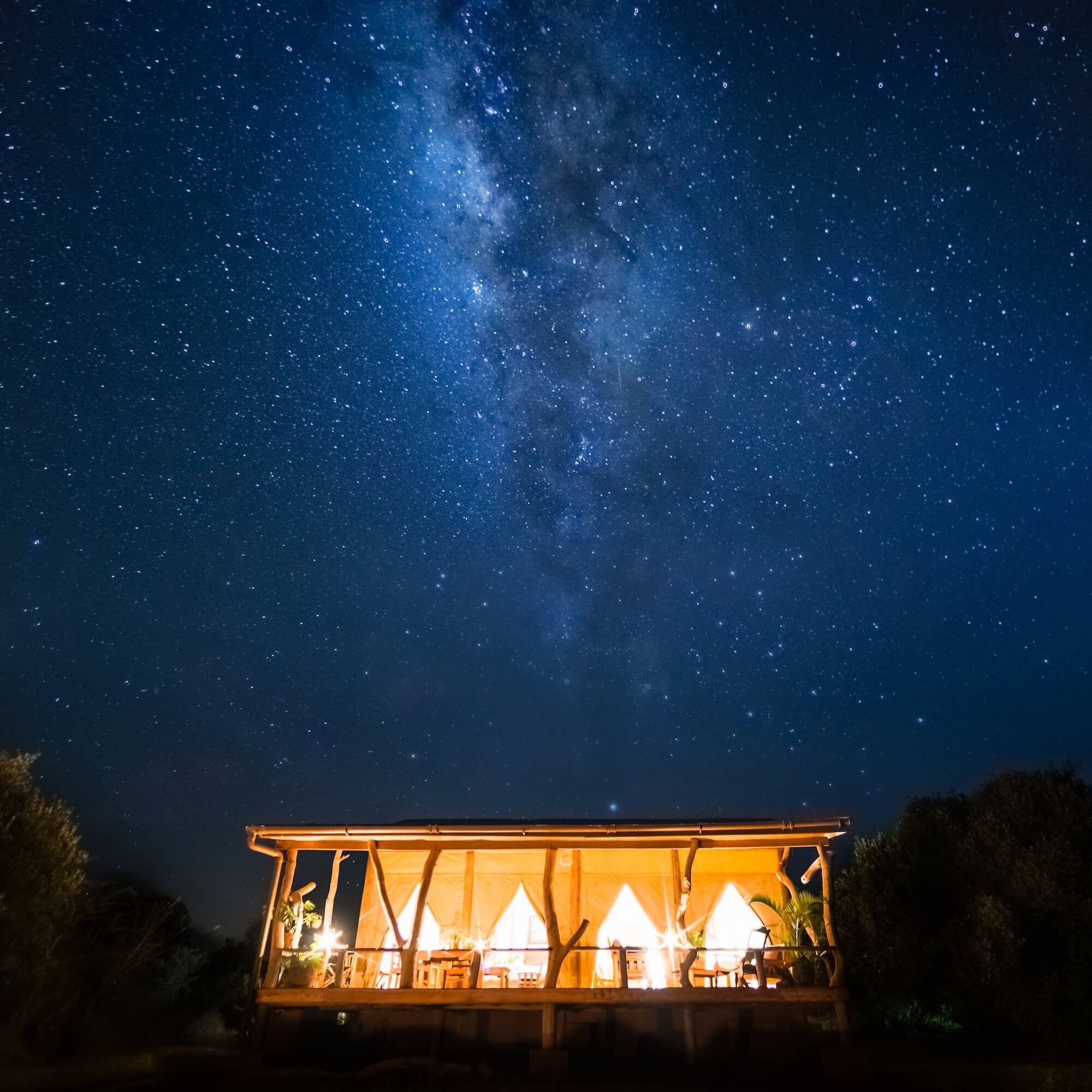
Stars over Ol Pejeta Safari Cottages
5. It's Baby Season
Few things make a game drive more joyful than newborns, and May delivers them in abundance.
The rainfall triggers a wave of births across the conservancy as animals take advantage of the food availability. Baby zebras, still unsteady, stay close to their mothers on the open plains. Hyena cubs tumble around den entrances in the early morning. Elephant calves wade cautiously through the full dams. Warthog piglets sprint behind their parents in single file at impressive speed.
This is the conservancy at its most alive — and for families travelling with children, or anyone who wants their safari to feel genuinely joyful rather than just spectacular, May is quietly one of the best months of the year.


What About the Rain?
It's a fair question, and one worth answering directly.
May can bring rain. Typically in concentrated bursts — often in the afternoon or evening — rather than all-day drizzle. Mornings are frequently clear and cool, which is when most game drives happen. When rain does arrive, it tends to be dramatic and brief, and it passes to leave the air clean, the light extraordinary, and the wildlife moving.
Because The Safari Cottages operate on all-weather roads throughout Ol Pejeta, rain doesn't limit where we can drive or what we can see. Other parts of Kenya are more affected by May weather — particularly areas reliant on dirt tracks or lower-lying terrain. Ol Pejeta's road network and our private vehicle mean the experience is consistent regardless of conditions.
In short: pack a light waterproof, embrace the drama of a Laikipia rainstorm, and don't let the forecast stop you.
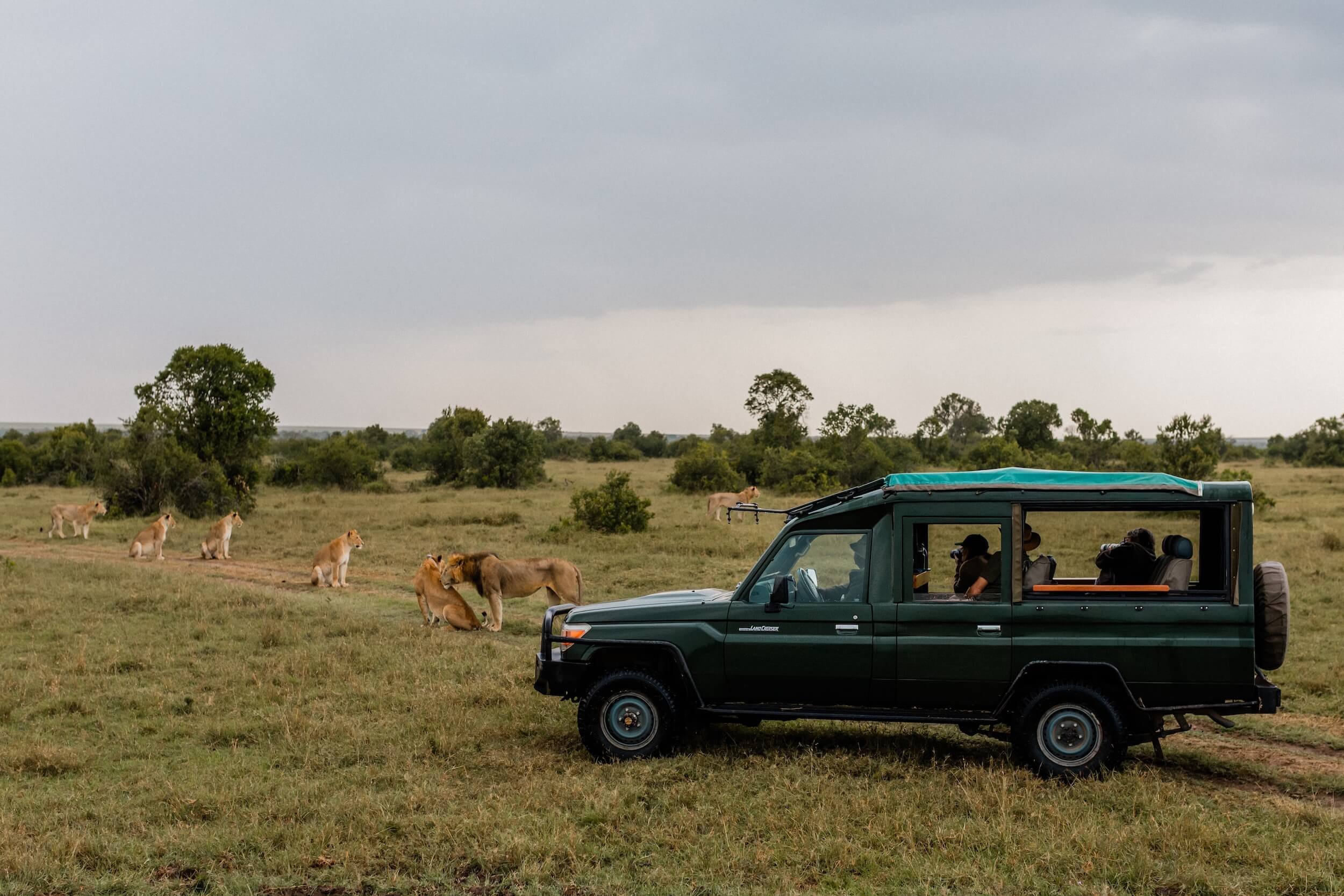
Watching lions on an afternoon game drive - a rain storm building in the background
Why Most Camps Close in May — And Why We Don't
Here's the competitive context that's worth knowing: several of Kenya's well-known safari camps, including some on Ol Pejeta itself, close in May for maintenance or due to access challenges. We don't. The Safari Cottages are open twelve months of the year. Our all-weather road access means we've never had a reason to close, and we've never turned away a May guest due to conditions.
If May is your window — because of school calendars, work schedules, budget, or simply a preference for quieter, more atmospheric travel — there are fewer options than in peak season. We're one of the best ones. And we're open.
What a May Safari Looks Like at The Safari Cottages
Your days in May have a rhythm that feels completely unhurried.
Early morning game drives begin just before sunrise — the air cool, the light extraordinary, the wildlife at its most active. White rhinos graze on open plains. Cheetahs prowl through the long grass. Elephants meander the riverline whilst you sip your morning coffee and joke with your guide.
You return for a late breakfast — prepared by your private chef, served at your pace, on your verandah or in the garden. The mid-morning hours are for coffee, reading, birdwatching from the deck, or simply sitting and listening.
If an afternoon shower arrives, it does so while you're inside, comfortable, and watching the sky change from somewhere you'd want to be anyway. By the time the evening drive rolls around, the plains smell extraordinary and the light is exceptional.
Sundowners in the bush, or perhaps cozied up by your fire at home. Dinner served to your liking, cooked by your private chef.
May at Ol Pejeta is quietly one of the best versions of a Kenya safari. It just doesn't advertise itself loudly enough.
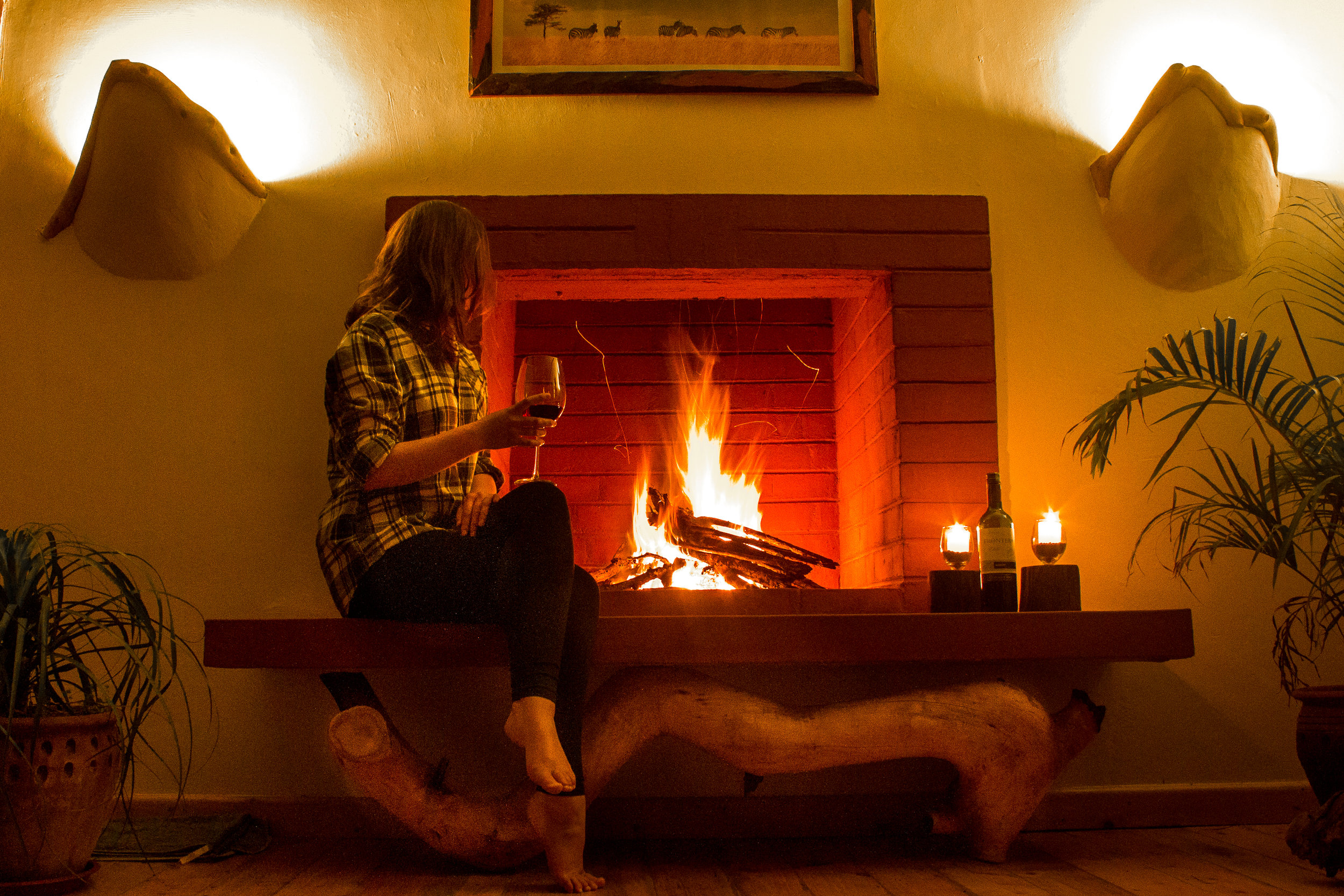
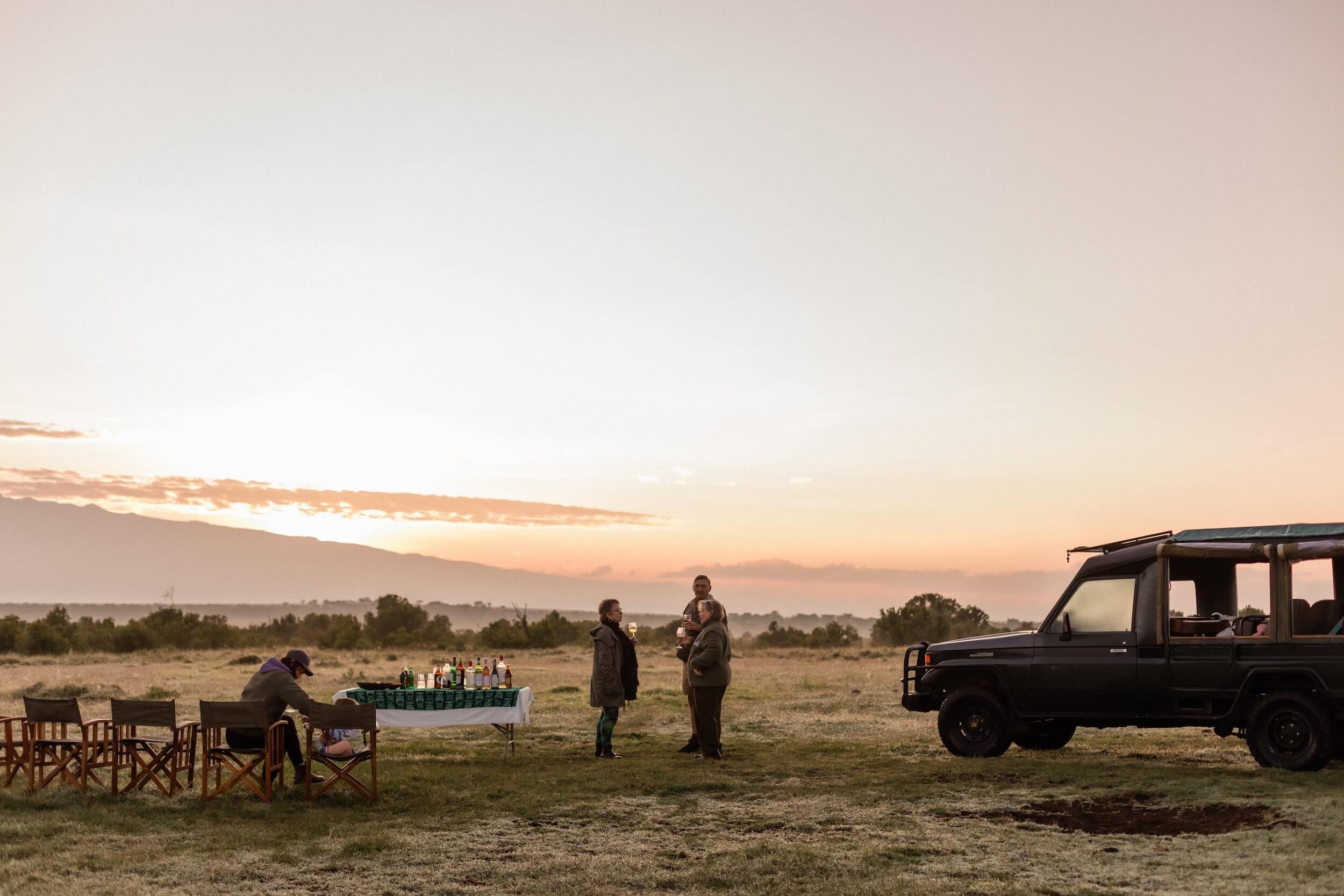
The Safari Cottages are open in May, operating on all-weather roads, with full private guiding, your own vehicle, and low season rates in effect.
VIEW OUR RATES HERE AND CONTACT US TO BOOK YOUR STAY
CONTACT US
KEEP READING
More from the Ol Pejeta Safari Cottages blog
Experience the Ultimate 3-Day Safari at Ol Pejeta Conservancy
Here’s what you can get up to on a 3 day safari on Ol Pejeta when you stay with The Safari Cottages
Discover the magic of a 3-day safari at Ol Pejeta Conservancy, one of Kenya’s premier wildlife sanctuaries nestled between the foothills of Mount Kenya and the Aberdare Mountain Range. This exclusive safari offers an unforgettable adventure into the heart of Laikipia, where you can witness Africa’s iconic wildlife up close, including the Big Five, endangered species like Jackson’s hartebeest and reticulated giraffe and southern black rhino as well as meeting the critically endangered northern white rhino - the last two left in the world reside on Ol Pejeta.
A day on safari can look different for different people and their interests, and it can play out very differently depending on where in the continent you are. So, what can you expect from a day on safari in Ol Pejeta, with The Safari Cottages? Let’s get stuck in!
First off, there’s so much to do and to see here that we recommend a minimum 3 night stay; that’s two full days with the afternoon of your arrival and the morning of your departure adding up to three days. And here’s how we’d suggest you spend your time so you get the most out of your Kenya safari holiday with us.

You’ll have amazing views of Mt Kenya from all around Ol Pejeta
SUGGESTED ITINERARY FOR YOUR 3 DAY SAFARI IN OL PEJETA
DAY ONE
Your safari begins with a scenic drive or a flight from Nairobi to Ol Pejeta, a private conservancy renowned for its conservation efforts and diverse wildlife. As soon as you enter the gates you are on your first game drive, spotting elephants, lions, rhinos, and rare chimpanzees in their natural habitat. The conservancy’s commitment to wildlife protection ensures a rich and authentic safari experience. If you depart from Nairobi in the morning you’ll likely arrive at The Safari Cottages in time for lunch. When you arrive you’ll be met by our team and management will give you a short briefing explaining a little more about the property layout, safety and what you can get up to during your stay.
It’s pretty hot in the middle of the day so you'll have lunch on your verandah, served up by your chef and waiter, before relaxing and unpacking after your travels. We suggest heading out on your first game drive today around 4.30PM and your team can prepare a cup of tea and a snack for you before you go incase you’re feeling peckish. After a game drive and a sundowner (a drink and snacks enjoyed whilst watching the sun set) you can return to camp to an open fire and enjoy dinner on your verandah or under the stars before tucking in for a good night’s sleep.

Returning from your game drive to a roaring fire
DAY TWO
Today is your prime wildlife day! You’ll spend the day exploring Ol Pejeta’s vast landscapes on morning and afternoon game drives. Highlights include visiting the chimpanzee sanctuary and the rhino conservancy, where you can learn about ongoing efforts to protect these endangered species. Evening drives offer a chance to see nocturnal wildlife and enjoy stunning sunsets over the savannah

Lions hunting on a morning game drive
You’ll be gently woken around 6:00 AM with your preferred tea or coffee before heading out just before sunrise — one of the best times for predator activity. You’ll head off just before sunrise at 6.30AM in search of lions, leopards, cheetah, elephant, black and white rhino, giraffe and so much more! The conservancy abounds with an incredible density and variety of game so be sure you’ve packed an extra memory card for your camera - you’re going to need it. As the sun rises and you start to warm up you’ll tuck into a picnic breakfast and a cup of freshly brewed Kenyan coffee or tea.
You’ll meander back through the bush as your game drive continues and the heat of the day really starts to set in, then arrive at your safari cottage to a colourful lunch, a cool drink and a chance to rest.
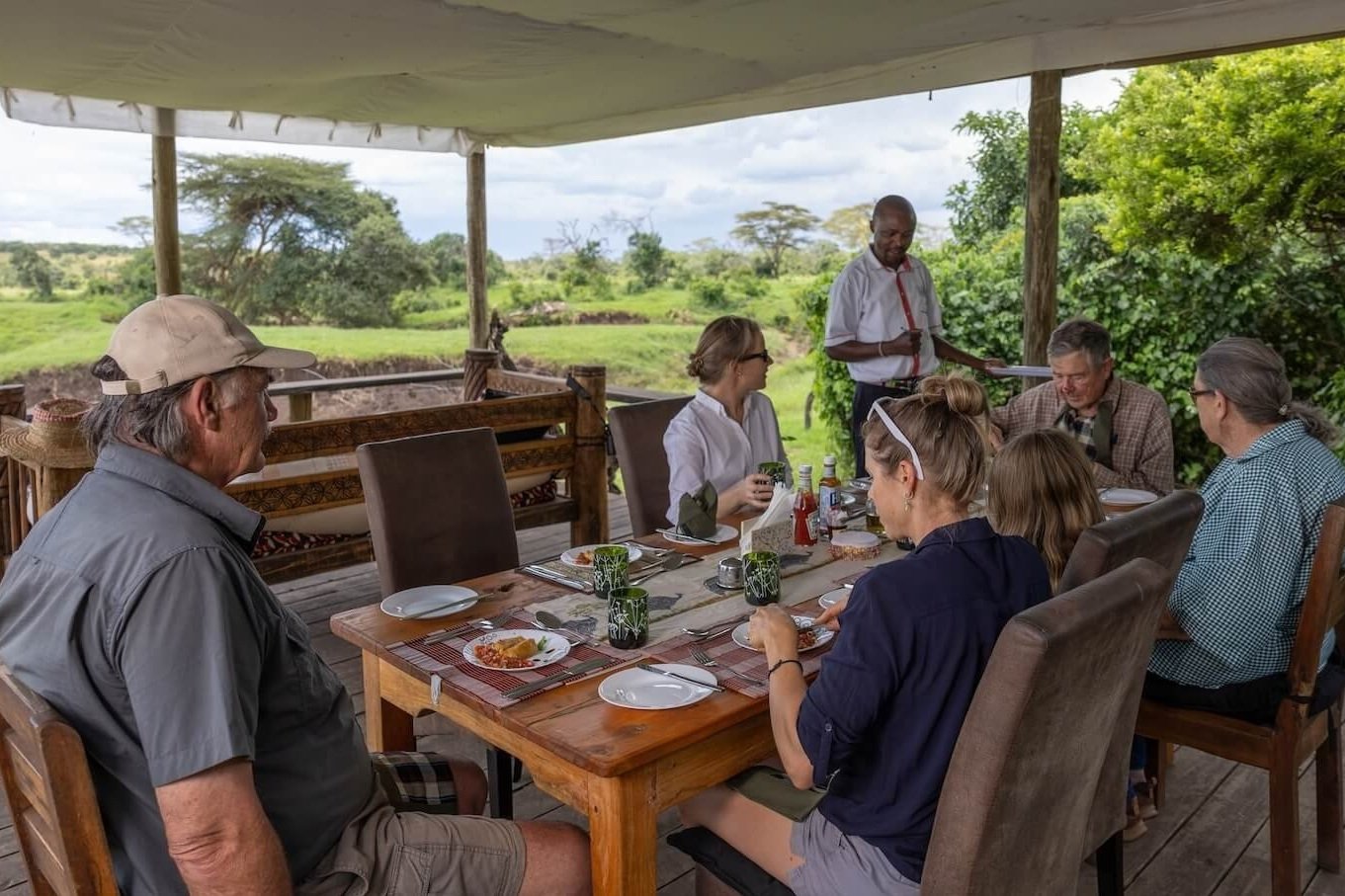
Tucking in to leisurely lunch on the riverside deck
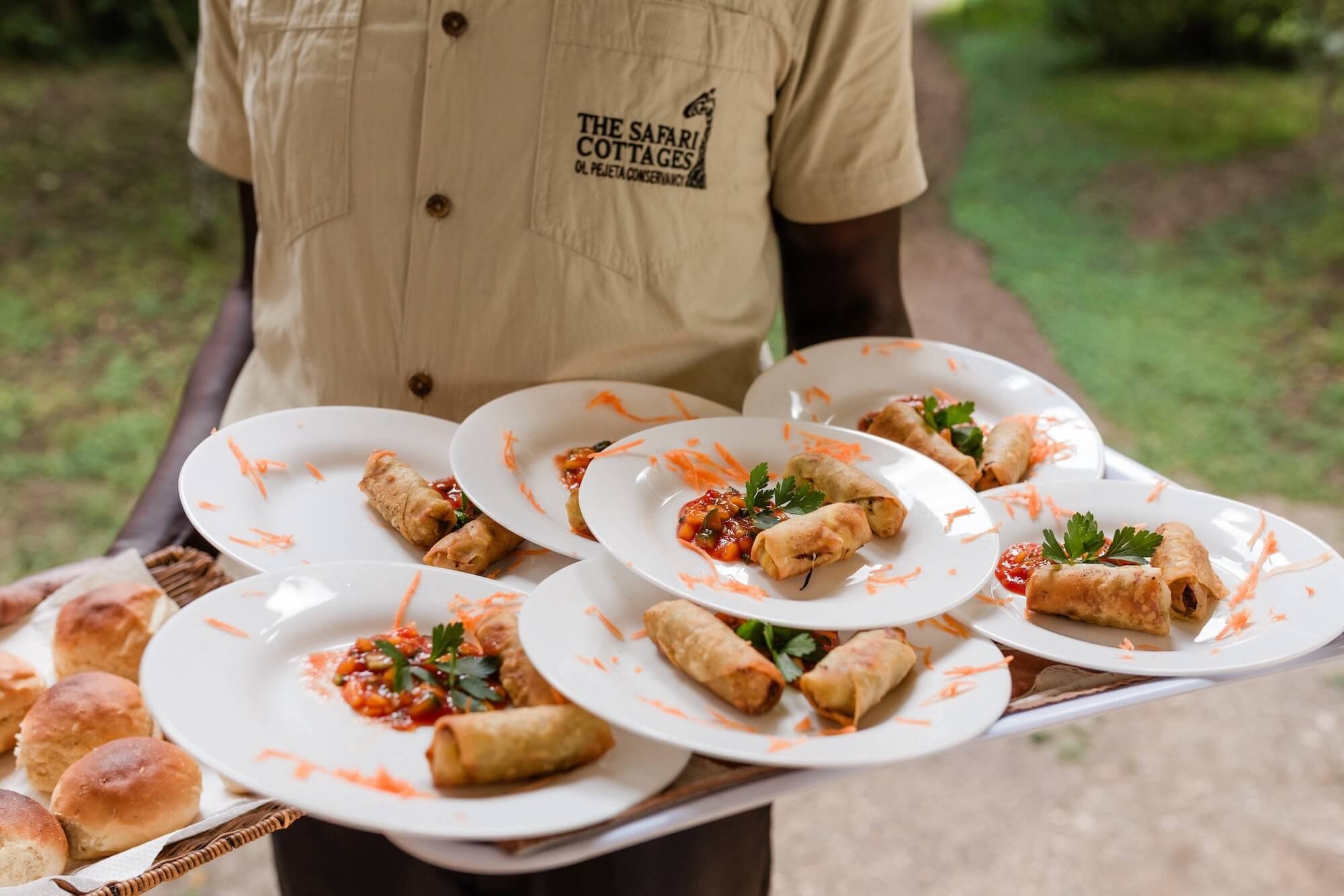
Spring rolls for starters
Midday at The Safari Cottages is a time to rest and recalibrate; animals are usually asleep in the shade of the trees at this time of day so we follow their lead and take the opportunity to relax too. If you’re not a napper then that’s okay too, here are some lovely ways to enjoy midday on the property…
Guided walk and birdwatching around the property: our guide will take you on a walk around the property pointing out birds, plants and tress of note. Elephants and giraffe often linger about the back of camp in the heat of the day so you might spot them on your walk too.
Yoga on the verandah: each safari cottage is provided with yoga mats to help you stretch out and feel great on your safari
Garden tours: our thriving garden is the source of a lot of our salads and fresh herbs and the chefs are very proud of their green fingers
Cooking lessons with your private chef: learn how to make some of our favourite Kenyan staples
Reading or simply soaking in the views: your verandah has lovely views across the river and plains and you never know what you might spot!
This relaxed downtime is one of the biggest advantages of a private safari experience.
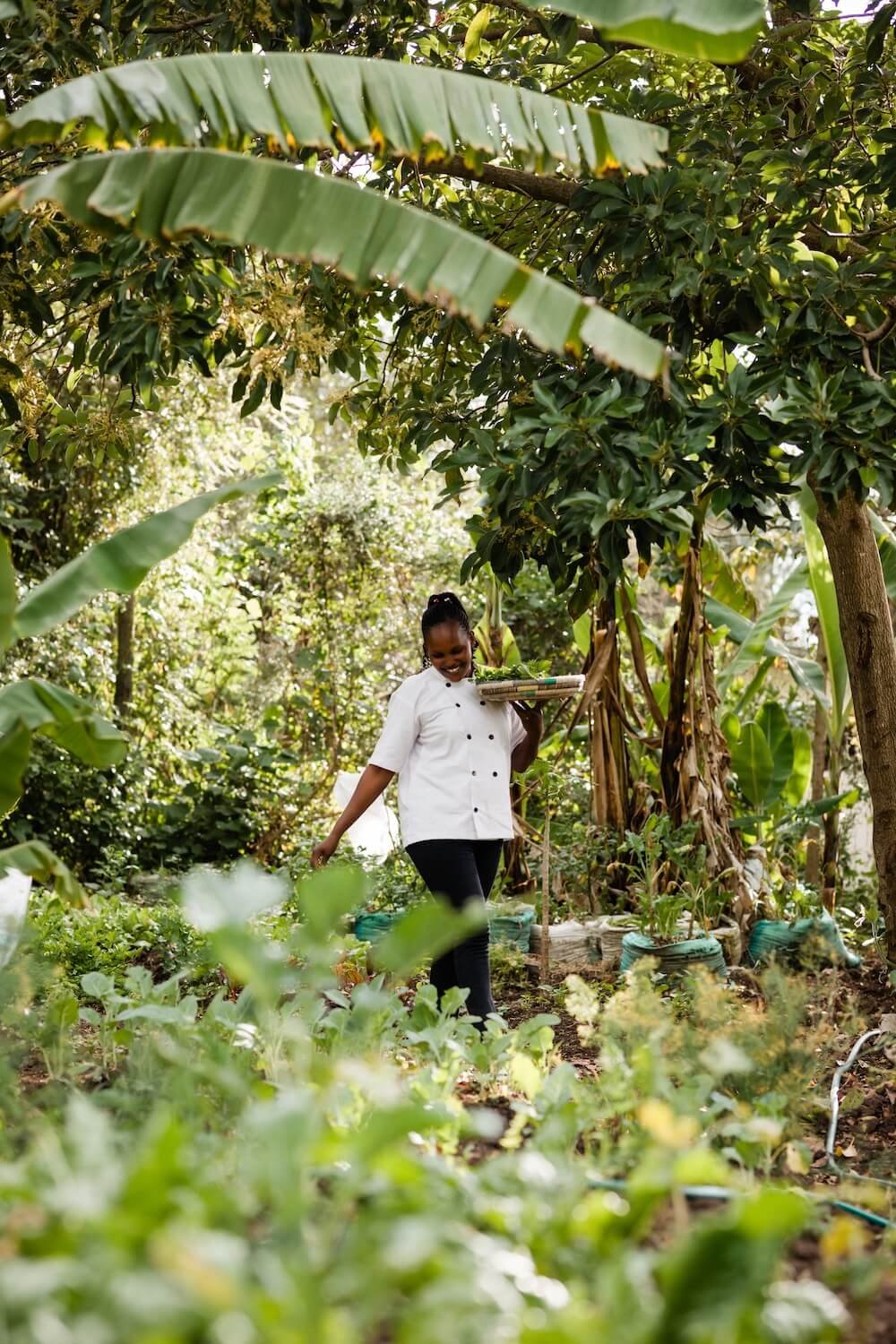
A tour of the garden with Chef Vicky
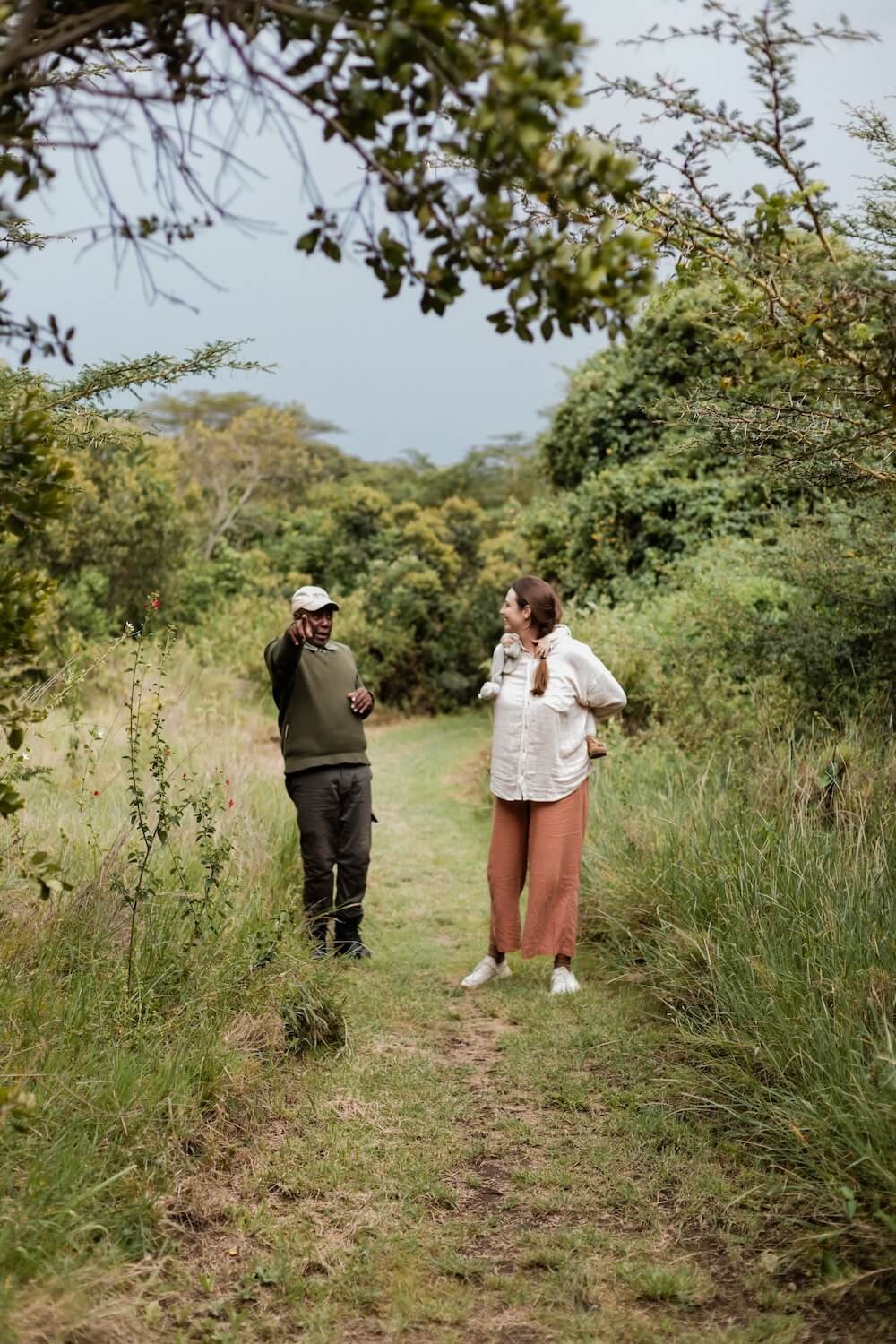
A guided bush walk with Peter
After an afternoon cup of tea you’ll head out again around 4.30PM to see what wonderful wildlife awaits you on the plains surrounding our little spot of heaven in the bush. The golden hour light makes this a favourite drive for photographers. After your sundowner you’ll head back “home” to a roaring fire under the stars and a drink before dinner. If you have a cloudless night consider asking the askaris to share their knowledge of the southern night skies — a memorable and often overlooked experience.
DAY THREE
A highlight unique to Ol Pejeta is the chance to visit Najin and Fatu, the world’s last two northern white rhinos and, this morning, you’ll head off after a light breakfast to meet them. Ol Pejeta’s passionate rhino caretakers will meet you and guide you to the spacious enclosure that Najin and Fatu, a mother and daughter due call their home. They will tell you all about how these gorgeous girls found their way to Kenya and the impressive project that Ol Pejeta and it’s partners have undertaken to bring Northern White rhinos back from the brink of extinction.
This heart-warming and educational conservation experience includes:
Guided visit to the northern white rhino enclosure with expert caretakers who will share Najin and Fatu’s story with you. They will also give you insight into the northern white rhino recovery project; a world-first IVF program
You’ll also have the opportunity to meet Baraka, a blind black rhino rescued by Ol Pejeta who is not averse to a chin scratch
There is a small curio shop on site and an education centre, and if you’d like to make a donation to the Northern White Rhino program you can do that here too
Then, with a heart full, you’ll return back to your bush home for brunch and a chance to relax in the heat of the day or enjoy any of the on-property experiences that you may have missed out on the day before.
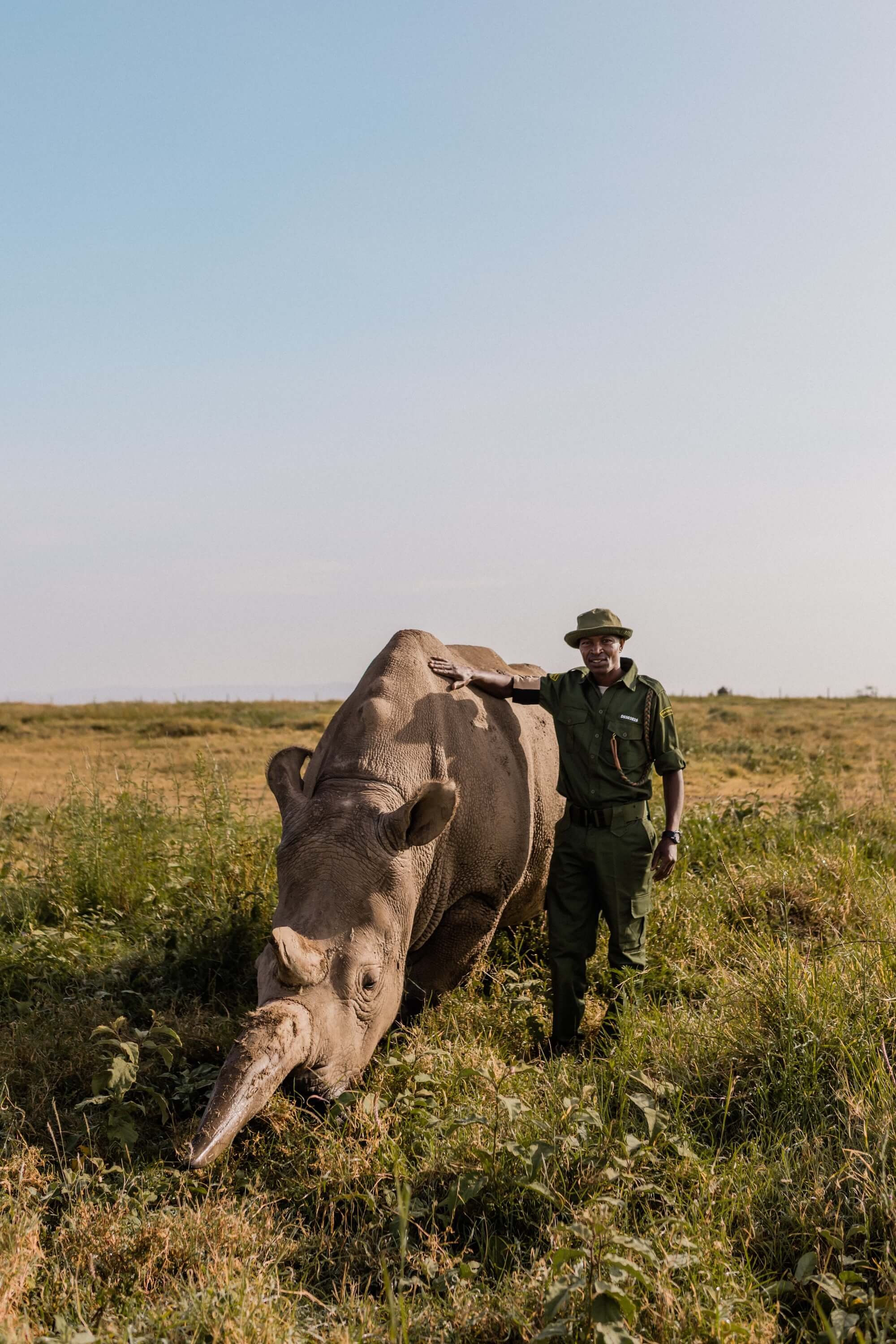
Najin with head caretaker Zachariah Mutai
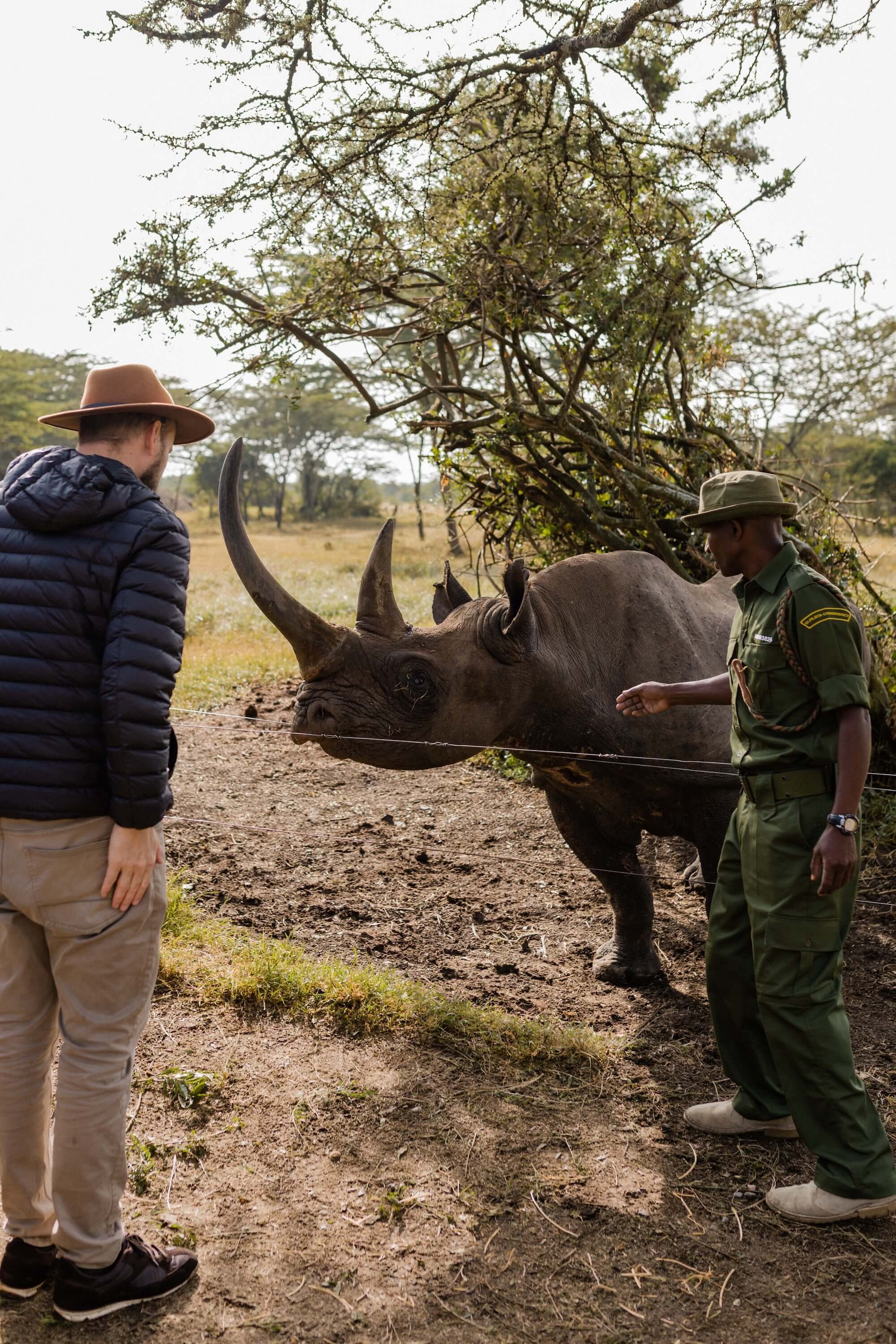
Meeting Baraka with Zachariah
This afternoon you’ll embark on your final evening game drive and sundowner, returning with a spotlight on a night drive in search of Kenya’s more secretive nocturnal species like leopard, aardvarks and white tailed mongoose. Enjoy dinner and a drink around the fire before tucking in for the night.

A big male cheetah posing for the shot on an afternoon game drive
DEPARTURE DAY
After breakfast today your guide will drive you to Nanyuki Airport to meet your flight to your next destination, or drop you off at the Ol Pejeta entrance gate to meet your road transfer back to Nairobi. Your three day safari with us will leave you full to bursting with enthusiasm for the wilderness, wildlife and people that call this corner of the world home and leave you inspired by the hard work and dedication of our conservation team. If you do choose to linger longer you can continue your safari on the conservancy or explore further afield with a day trip to the local town, Aberdares National Park or Ngare Ndare too.
Remember, you have a private guide and vehicle for the duration of your stay with us so this outline is just one idea. You can do as little or as much as you’d like.
ESTIMATED COSTS FOR THIS 3-DAY OL PEJETA SAFARI COTTAGES SAFARI
Mid and Low Season (01 Nov - 15 Dec / 7 Jan - 14 June 2026) - USD2,090 per person
High Season (01 Nov - 15 Dec / 7 Jan - 14 June 2026) - USD2,360 per person
Notes on pricing:
Prices include accommodation, all meals, drinks and a private vehicle and guide. Transport too and from Ol Pejeta is not included.
The above prices are based on 2026 rates and subject to change for 2027
Children under 12 are half prices and under 3 are free
Please contact us with the number of people in your party and the ages of any children + your preferred travel dates for a personal and accurate quote
Want to linger a little longer? Lovely! Here’s our suggested itinerary for a 5-night stay, including prices.
BOOK YOUR SAFARI AT OL PEJETA SAFARI COTTAGES

Sonja's Kitchen: Flakey Kenyan Chapati Recipe
Our classic and much loved Kenyan Chapati recipe fresh from Sonja’s cookbook; Footprints in the Butter
The chapati is a much loved staple of Kenya cuisine and unlike an Indian chapati it is flakey and served alongside curries, stews or with eggs at breakfast time. If you’re sat at home after your safari and craving a little bit of Kenya, cooking up a pile of delicious chapatis and enjoying them along side a plate of githeri or a beef stew is a great way to feel transported right back to Africa! Here’s our much-loved chapati recipe, right from my camp cookbook, Footprints in The Butter.
FLAKEY KENYAN CHAPATI RECIPE
Serves 8
3½ cups plain white or wholemeal
wheat flour
½ tsp salt
1 tbsp margarine, butter or ghee
1⅓ cups warm water
½ cup vegetable oil or shortening
1. Sift flour and salt together, if using shortening rub in with finger tips.
2. Make a well in the centre, pour in half the water and, if using oil pour it in also. Mix with a wooden spoon, gradually adding the remainder of the water until a firm but soft dough forms. Continue kneading with your hands.
3. Divide the dough into 8 balls. Roll out each ball on a circular chapati board or on a lightly floured pastry
board.
4. Coat the surface of each circle of dough generously with margarine. Roll up the circle lightly with your fingers into a sausage, then coil the sausage into a wheel, thus trapping the air inside. Then, with a rolling pin, roll out each wheel into a circle less than ⅛inch thick.
5. Smear a chapati pan or 23cm non stick frying pan with oil. Using low heat, brown the chapatis on both sides
until golden brown. If you press the chapati lightly with a folded tea towel whilst cooking, the air bubbles will quickly rise.
6. Keep warm until served.
Guests mastering our Kenyan chapati recipe WITH OUR CHEFS on a recent group safari with Yoga By Candace


Let us know how your chapatis turned out! You can purchase Sonja’s recipe book Footprints in The Butter here for more of our favourite camp recipes.
KEEP READING
More from the Ol Pejeta Safari Cottages blog
Best Time to Visit Kenya for a Safari: A Month-by-Month Guide
When is the best time to visit Kenya for a safari? Our month-by-month guide covers wildlife, weather, costs and crowds for every season — written by people who live at Ol Pejeta Conservancy year-round.
You've decided Kenya is the destination. Now comes the question everyone asks: when's the best time to go?
The honest answer — and we say this as people who live here twelve months a year — is that Kenya is extraordinary in every season! The wildlife doesn't migrate away from Ol Pejeta. The landscape doesn't stop being spectacular when it rains. But different months absolutely do offer different experiences, and understanding what to expect from each one will help you choose the trip that's right for you.
This is our month-by-month guide to the best time to visit Kenya for a safari.
January to March: Dry, Hot and Excellent for Wildlife
January is a tale of two halves. The first two weeks carry over the festive season's higher prices and visitor numbers, but from mid-January the country quietens, rates drop to mid-season levels and the experience noticeably opens up. February and March are, in our view, some of the most underrated months on the Kenya safari calendar.
What to expect: Dry, warm conditions across most of the country. The grass is beginning to thin after the short rains, which makes wildlife easier to spot. Plains game — zebra, wildebeest, gazelle — give birth in February and March ahead of the April rains, which in turn drives a noticeable uptick in predator activity. Lions, cheetahs and leopards are well-fed and highly visible. Temperatures at Ol Pejeta sit comfortably in the mid-twenties during the day, dropping pleasantly in the evenings.
Wildlife highlight: February and March are among the best months for big cat sightings at Ol Pejeta, The Masai Mara, Samburu region and Amboseli and surrounds. The open plains and active predators make for some of the most compelling game drive experiences of the year.
Crowds and cost: Low to mid-season. Good availability, lower rates than peak, and private conservancies especially feel very spacious.
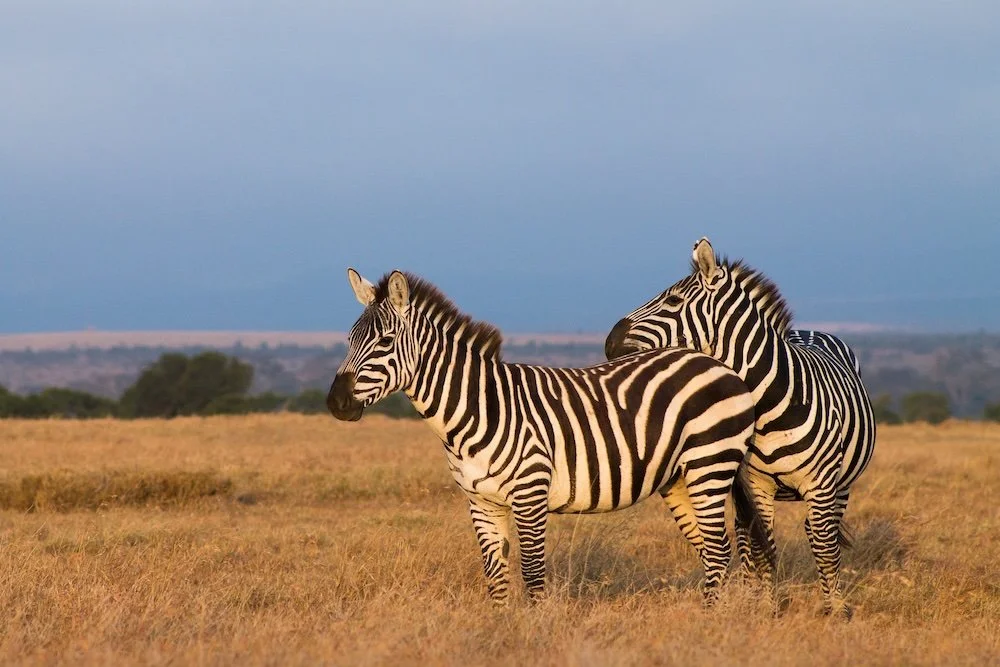
Golden light: March on Ol Pejeta
April to May: The Green Season — and Why It's Worth Reconsidering
April and May have a reputation in Kenya that we'd suggest you consider with an open mind. Historically known as "the long rains," they're still widely treated as a red flag, but global weather patterns are shifting, and this rule doesn't hold as firmly as it did ten years ago.
What to expect: Rains do arrive in April most years, typically as powerful afternoon showers rather than all-day downpours. The conservancy turns a vivid, deep green almost overnight. The plains become lush and photogenic in a way the dry season simply can't match. Drier conditions largely return by mid-May, and by the end of May many properties have reopened for the season. The practical reality is that a lot of camps close in April and May for maintenance, and some more remote locations struggle with road access. At Ol Pejeta, our all-weather roads run regardless of rainfall — game drives go out every morning and afternoon, whatever the forecast. We are open all year.
Wildlife highlight: Green season wildlife photography is extraordinary. Dramatic cloud formations, diffuse light, vivid backdrops and animals in peak condition after abundant water and vegetation. Hyena pups are commonly sighted in April. Birdlife is at its most active and diverse.
Crowds and cost: The lowest rates of the year. Some of our guests choose April and May precisely because they have the stunning wilderness almost entirely to themselves. If that kind of solitude is what you're looking for, this is the window.
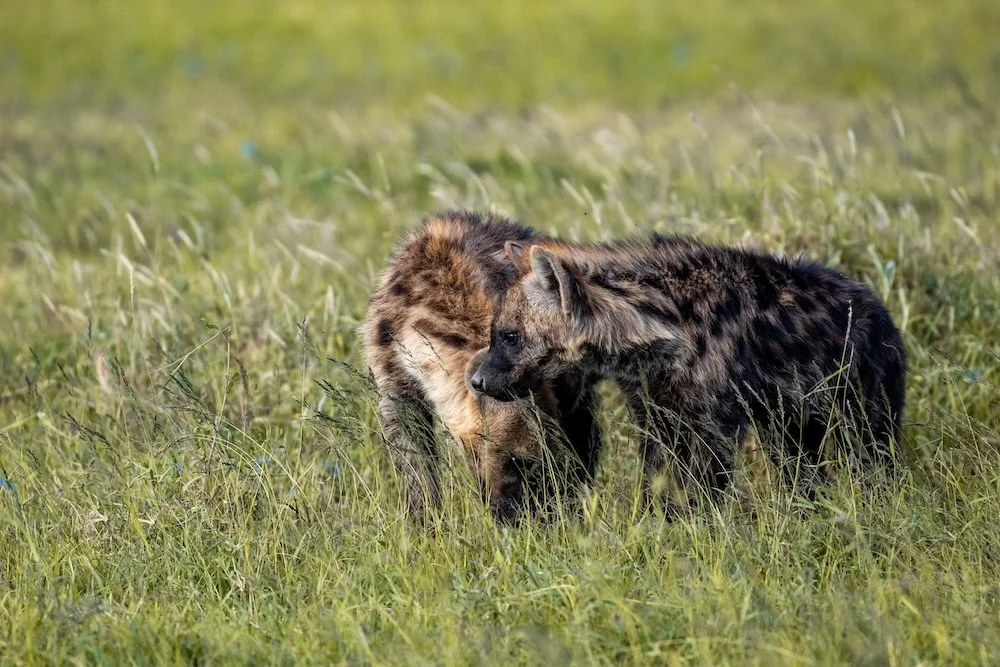
Hyena pups on Ol Pejeta

Kite surfing in Diani
June: Shoulder Season — the Best of Both Worlds
June is an incredibly rewarding month to travel to Kenya, and one of the most underbooked. Following the rains, the landscape is still lush and green but the skies are clearing and the grass is beginning to thin. At Ol Pejeta and around most of the country things are still pretty quiet, rates are still at or near low-season levels, and the dry season conditions that make wildlife viewing so reliable are already beginning to arrive.
What to expect: Comfortable temperatures, clearing skies and increasingly good game viewing as vegetation opens up. Predators are active. The Big Five are consistently present on Ol Pejeta year-round, and June offers them in ideal conditions — not yet the crowds of July and August, not the uncertainty of the rains.
Wildlife highlight: June is excellent for cheetah sightings. As the grass thins, these open-plains hunters become much easier to find and observe. Early June also sees the beginnings of the Great Migration's movement north toward Kenya from Tanzania's Serengeti. No major herd movement yet, but they are starting to trickle in.
A note on the coast: Beaches in northern Kenya — particularly around Watamu — can be affected by seaweed in early June. This is harmless but worth knowing if a beach extension is part of your plan.
Crowds and cost: Shoulder season. Excellent value and good availability before July's surge.
July to October: Peak Season — Kenya's Finest Safari Months
This is Kenya's most celebrated safari window, and the reputation is deserved. The dry season is in full effect, the grass is at its shortest, wildlife concentrates around permanent water sources and the sightings are at their most prolonged and reliable. July also marks the beginning of the Great Wildebeest Migration in the Masai Mara — one of the most spectacular wildlife events on earth — which draws significant numbers of visitors and photographers to Kenya's most famous reserve.
What to expect: Clear skies, warm days and cool nights. At Ol Pejeta, temperatures sit comfortably in the low-to-mid twenties during the day. The conservancy is at its most open, game drives are consistently productive, and the quality of the light — particularly in the late afternoon — is exceptional.
July and August represent peak season at most Kenya properties. Visitor numbers are at their highest and rates reflect that. September and October are, in our view, among the very best months to visit: the dry season conditions remain excellent, the intensity of high summer has eased, and the conservancy is noticeably quieter than it was in August.
Wildlife highlight: The dry season is the best time of year to see the Big Five reliably and repeatedly. Elephants gather in large family groups around river systems. Rhinos — both black and southern white — are consistently visible on the open plains of Ol Pejeta. Lion prides are active and predictable. And guided bush walks are at their most rewarding, with shorter grass giving a clearer view of the landscape on foot.
Crowds and cost: Peak season rates across the board. Advance booking is strongly recommended for July and August in particular.
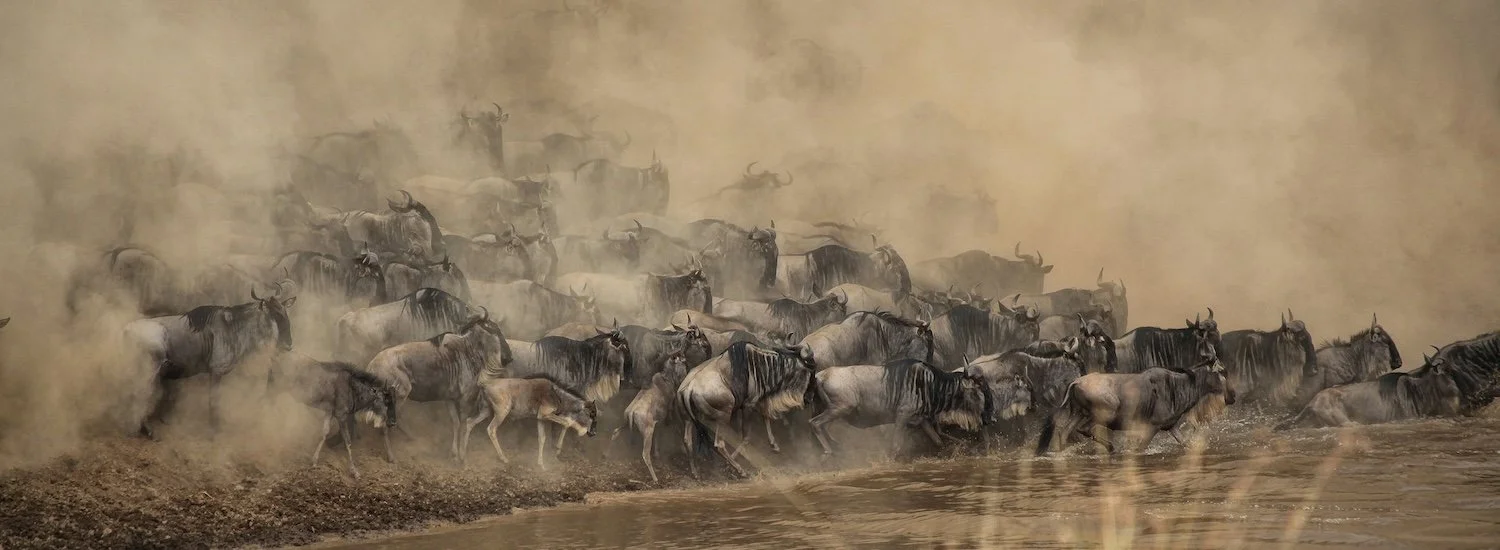
The famous Mara river crossings
November: Short Rains — Dramatic Light and Good Value
November marks the beginning of Kenya's short rains, which typically run through to mid-December. These are shorter and less intense than the long rains — usually concentrated in afternoon showers — and most properties remain fully open throughout.
What to expect: A greening landscape, dramatic skies and light that photographers reliably describe as extraordinary. Afternoon cloud formations build over the plains, and the combination of vivid green grass and dramatic weather makes for genuinely cinematic game drive conditions. Wildlife viewing remains strong throughout November — the resident species at Ol Pejeta are here year-round.
Tourist numbers begin to ease in November as the migration season in the Mara winds down, which means a quieter conservancy and rates that reflect it.
Wildlife highlight: November is excellent for birdwatching. Migratory species arrive in significant numbers from Europe and Asia, joining Ol Pejeta's resident population of over 300 species. If birdwatching is a priority, this is one of the best months.
Crowds and cost: Shoulder to low season. Good availability and value before the December surge.
December: Festive Season — Vibrant, Expensive, and Worth It
December splits neatly in two. Early December is much like November — the short rains are finishing, wildlife is thriving after the rains, and the conservancy is quieter than high season. From mid-December, the festive season begins in earnest. This is the busiest and most expensive time to visit Kenya, but it's also one of the most rewarding: the weather is largely clearing to sunny skies, wildlife is in excellent condition, and the energy of the season — particularly on the coast — is hard to match.
Wildlife highlight: December wildlife viewing is excellent, with the rains having brought the plains to life and predator activity running high. This is also when The Safari Cottages feels particularly special — fires lit in the evenings, Christmas on the verandah, stars over the conservancy.
Crowds and cost: High season rates from mid-December through early January. Book well in advance.

On safari with The Safari Cottages in Ol Pejeta
A Note on Rainfall and Changing Weather Patterns
One thing we'd ask you to take from this guide: Kenya's seasons are not as fixed as they once were. Global weather patterns are shifting, and the calendar rules that held firmly twenty years ago are now guidelines rather than guarantees. We have had dry Aprils and wet Julys. We've had years where the short rains didn't arrive until December.
Our honest advice: travel for the wildlife, not the weather. At Ol Pejeta, the animals are here every month of the year. The experience changes with the season, but it never disappoints.
-
The dry season from July to October offers the most reliable wildlife viewing, with thinning grass, concentrating animals and clear skies. January to March is a quieter, more affordable alternative with excellent conditions. June is an outstanding shoulder-season choice. But here at Ol Pejeta every month is rewarding and we are open all year.
-
April and May are the lowest-priced months at most Kenya properties, including The Safari Cottages. Though bear in mind that a lot of camps will be closed during this time so you may have less options. Rates drop significantly for those that remain open and wildlife areas are at their quietest. November and early December also offer good value with better weather than the long rains.
-
The Great Wildebeest Migration reaches Kenya's Masai Mara from approximately July through October, with the dramatic river crossings typically peaking in August and September. The migration is specific to the Masai Mara region and is not visible from Ol Pejeta in Laikipia.
-
Less so than the conventional wisdom suggests. Rains do arrive in April most years, but at Ol Pejeta our all-weather roads mean game drives run regardless of conditions. The green season offers extraordinary photography, much lower rates and a conservancy almost entirely to yourself. Many of our guests choose April specifically for the solitude.
-
Kenya sits on the equator, which means temperatures are broadly consistent year-round — warm days and cool evenings. Laikipia's altitude (around 1,700 metres) means The Safari Cottages is cooler than the coast, with most morning game drives requiring a fleece. The main variables are rainfall: concentrated in April–May and November–December, and the dryness of the landscape, which affects vegetation and wildlife visibility.
Planning your route around Kenya? Our guide to choosing the best Kenya safari itinerary covers the logistics of combining Ol Pejeta with other destinations.
Keep reading for more travel information to inspire your Kenya safari holiday
Five nights at The Safari Cottages is a different kind of safari altogether. You move from ticking animals off a sighting list to living in rhythm with the bush. The extra days unlock full-day trips out, unhurried night drives and encounters with rhinos you can’t have anywhere else in the world. Here's exactly how to structure it.