


A map of Kenya + choosing the best route for your safari
A map of Kenya’s most popular regions and understanding the logistics of getting between them. This blog will help you plan your Kenya safari holiday.
The 582,646sqm beautiful and diverse land of Kenya ranges from the barren wastelands and turquoise waters of Turkana and Sibiloi, to the lush forests and farmlands that surround Mt Kenya, endless plains in the Masai Mara and Amboseli and a sparkling Indian Ocean coastline. The country is rich with culture and history; home to an astonishing 42 tribes including the most famous, Masai tribe and the beautiful Samburu. But access and planning can be tricky across such huge areas, especially when you have limited time for your Kenya safari holiday and what to make the most of every day.
Here's a map of Kenya and some suggestions on how to route your trip, so that you can spend more time enjoying all that Kenya has to offer and less time in transit…
MAP OF KENYA


KENYA SAFARI ROUTE PLANNER
Option 1 (flying): Laikipia – THE Mara – Amboseli (for the wildlife lovers)
This is a flying only route and, with limited time, flying really is the best way to get around the country. Just bear in mind that you’ll have strict baggage limits on local flights (usually 15kgs in soft bags only), but don’t let that deter you; you’ll be surprised how much you can squeeze into your luggage limit.
Start by flying North to Laikipia, there are a number of excellent properties in this area offering a range of different experiences. Ol Pejeta (that’s where you’ll find The Safari Cottages) is most famous for it’s prolific wildlife and it is home to the Big Five including the last two Northern White Rhinos on the planet. Samburu and Lewa are also excellent locations for wildlife lovers.
You can fly directly to the Masai Mara from Nanyuki and, depending on the time of year and your interests and preferences, there are a number of excellent properties in the reserve itself and the surrounding conservancies. Your plane will stop at all the airstrips where passengers are hopping on and off, so expect this flight to work like a bus service and listen out for your stop. Our favourite spots in the Mara are Serian, Spekes Camp and Kicheche Bush Camp.
You’ll then fly directly to Amboseli from the Masai Mara. Another of Kenya’s most famous wildlife areas and by now elephants will feel like family and the call of lions will be just another normal sound in your day! We love Tawi Lodge and Ol Donyo. You can then catch your return flight to Nairobi to board your international flight home.

Option 2 (flying): Laikipia – THE Mara – Diani (safari & beach)
If you’d like to finish your safari with a beach holiday then you’ll be happy to hear that Kenya has incredible, beautiful beaches (the white sands of the South coast easily rival those of Zanzibar), rich culture (check out Lamu) and incredible food (the Swahili/Italian fusion restaurants of Watamu are incredible!). This route is much the same as the above but you will fly to the coast (direct from the Mara) to relax; the perfect finale to your Kenya safari holiday. On the coast, we love Kizingo (Lamu), Kobe Suite Resort (Watamu) and Waterlovers (Diani).
*If you’re short on time and want to skip the Mara you can fly to Nairobi from Nanyuki late morning, and connect with an afternoon flight to Diani in the South Coast.

Option 3 (driving): Laikipia – The North (for the WILD SOULS)
For those who are more adventurous at heart, it’s an easy four hour drive to Ol Pejeta where you can tick off the Big Five and ease into your safari. Then, once you’ve got your wildlife fix (because who goes on a Kenya safari holiday and doesn’t see lions and elephants?) it’s a beautiful drive across the hills and farmlands of Laikipia and down the rift valley escarpment into Samburu to seek out more endangered, Northern species such as generuk, oryx and the beautiful Vulturine guinea fowl. This is also a great spot for leopards so keep your eyes peeled.
You’ll then continue driving further into Kenya’s more secretive Northern frontier to soak up this untouched wilderness and meet the Samburu people who call this land home. In Samburu we love Elephant Bedroom Camp and, in the North, Sarara or Saruni Rhino.

Option 4 (driving): Laikipia – The Lakes – The Mara (a Classic Kenya road trip)
This trip starts just like the one above, but instead of heading North you’ll spend a day driving through the beautiful forests and heathland of the Aberdares National Park. Make sure you stop to enjoy a picnic enroute and take the view! Then you’ll descend into Kenya’s Lake District, to unwind on Elementaita or see the flamingoes of Nakuru. We love Loldia House. Relax on the lake shores, take a canoe to Crescent island or a day trip to Nakuru National Park.
You’ll then continue your adventure into the Masai Mara; around five hours of driving time (depending on where you stay) through farmland, lava fields and villages before you are traversing the epic plains of this world famous wildlife area.
*If you travel to the Mara between July - October you’ll likely witness the great migration! This is peak season in Kenya so if you prefer to steer clear of the crowds then opt for accommodation in the surrounding conservancies rather than in the park itself.

JOINING A GROUP SAFARI
If planning your own Kenya safari holiday feels a little daunting then a great place to start is by joining a group safari. Click here to see the full list up upcoming group safaris that we are hosting and find more details.
We hope to see you soon!


5 family safari holiday myths busted!
If you’re thinking of a Kenya family safari holiday but you’re nervous about traveling with children, especially young children, we’re here to bust a few myths and tell you why taking children on safari is actually a great idea!
If you’re thinking of venturing off into deepest, darkest Africa with the kids this Summer and you’re feeling hesitant then you’re not alone. Jetting off into an unfamiliar destination with your precious family under your care can be intimidating. But you’ll soon find that a family safari holiday, even with (or especially with) young children, will bring you so much joy and excitement and stories that will stick with you for a lifetime.


Here are our top 5 family safari holiday myths and why they simply aren’t true!
Africa is too dangerous for children
Like every other continent and country in the world there are areas that are not recommended for travel and there are parts that are totally safe. Discuss a suitable family-friendly itinerary with your travel agent and you might be surprised to discover just how safe a lot of Africa is for families with children of all ages.
They’re too young to remember it
It’s true, young children and babies won’t remember it, but YOU will - you’ll remember the time your baby snuggled up and snored quietly whilst a lion roared them to sleep. You will remember that they used to cheers you with their milk bottle out on the open plains. You will remember that they said “epant” for the first time when they saw them wandering past at lunch time. Creating memories with your kids starts from day 0. And just imagine being your child and seeing photographs of yourself as a baby on a family safari holiday. Incredible!
I will feel uncomfortable breastfeeding in Africa
Everywhere you look you will see African women breastfeeding their children. It’s the most natural, normal thing to do and to see in Kenya and in Africa at large. And if you’re traveling with a baby who needs to be bottle fed then you’ll be glad to find baby formula is available in most major supermarkets in Kenya too, alongside nappies, wipes and other essentials.
The food won’t be suitable
Babies are born and grow up and thrive in Africa every day and Africans know all about how to feed and care for babies and young children and they love getting stuck in and helping you with your little ones. The art of mothering is a universal gift. And if you have young kids who are picky eaters most lodges and camps will accommodate your child’s dietary needs if you give them enough notice. You might think you’re being difficult, but you’re absolutely not; giving the camp or lodge as much information about your children’s dietary requirements as possible will mean that you’re all much more likely to enjoy your stay.
It’s going to be expensive
Well, we can’t fault you on this, but it’s also not likely to be as expensive as you’d think! When booking your Kenya safari holiday lodging opt for accommodations that give discounted rates or even free stays to children under 3 and under 12. And if you’re heading to the Kenyan coast you can also opt for a private villa stay - this will be especially helpful in managing costs if you’re traveling with two or more older children.
We hope that’s helps to quell some of your fears around taking children to Africa on a family safari holiday. We have raised two children in the African bush and our grandchildren visit us in Kenya every year. They simply love the freedom and space at The Safari Cottages, spending time in the kitchen with our chefs, helping to clear brush with the askaris and naming all the animals on their game drives.
if you’re still not sure, drop us an email - we’re here to help.
“Our family of eight (including boys ages 8 and 12) stayed for three nights at these wonderful cottages. The accommodations were private and well appointed. The meals were superior, one day we gave the cook a standing ovation! Watching the elephants parade past at lunch was a highlight of our stay. There were plenty of place for our boys to explore safely during the day. Each evenings the guard, Peter, made a small bonfire for us and provided marshmallows and stories to entertain us. One evening he brought out a telescope and showed us the stars of the Southern Hemisphere! He is a real treasure.”
- December 2024 -

A safari proposal: Rachel & Pete
Rachel & Pete got engaged during their stay with us; here’s their romantic story.
It was May 2023 and Rachel and Pete joined us for their second visit on a Yoga For The Wild Kenya Yoga Retreat. Ahead of their trip we received the most exciting message; the type we just love to read. Pete was planning to propose to Rachel on their safari and could we help him set it all up? Our team couldn’t have said yes fast enough!
Ol Pejeta’s golden light, the sweetness in the wind, the titillating melody of birds and the quiet moment a family of elephants wanders past you makes Ol Pejeta easily one of the most romantic Kenya holiday destinations we can think of. It’s no wonder so may choose to spend their honeymoons with us and return for wedding anniversaries years down the line.
THE BIG DAY
On the day of Pete’s proposal the group was out on an afternoon game drive whilst our guides were secretly searching for an idyllic backdrop for the proposal. As luck would have it, they found a cheetah lounging around on the plains just down the road from the spot our team had so carefully selected (this particular cheetah had set up camp here and they had seen him almost every day on their trip). Everyone paused for photographs but Mike, key proposal organiser, hurried everyone along as subtly as he could. As you might expect there was a lot of confusion around why they were being rushed to get to a sundowner. But, it became clear very quickly, because they made it to their just spot in time for sunset and one of the group pulled out a camera to photograph the couple in the golden light when Pete dropped to one knee and the group let out a collective gasp!

The wildlife on the game drive to their proposal spot was excellent!
Rachel was completely taken off guard and, upon popping the question got promptly told to “F** off.” Ahhh, romance. We still laugh with Rachel to this day about her reaction to Pete’s declaration of love on their Kenya safari holiday.
She said, “it was a genuine surprise- you only have to look at my face in the picture! I don’t think I even heard him ask me the actual question, I just saw him get down on one knee in this just incredible location and my heart just filled with genuine delight. We were both buzzing for weeks, and it was so glorious to be able to share such a special moment with everyone (including all of zebra, buffalo and giraffe!).”

Rachel was shocked!
Rachel and Pete celebrated with bubbles and a little dance party with our staff that night at dinner. Pete says, “everyone at OPSC were amazing. I had been talking to Kat prior to even setting foot back in Kenya so she was well prepared for what was going to happen and that I wanted to do it at one of the sundowners. This is where all the behind-the-scenes planning took place as when I said “today?” to Kat I could tell Mike, and the rest of the team were on the lookout for something special as we headed out for the sundowner’s drive.


Sundowners are such a special time of the day regardless but the team bringing a bottle of fizz and being fully involved made me so much more at ease and can honestly say relieved a lot of the nerves I may have had. We had a lovely private meal at our cabin one night and all the camp staff were amazing even more so at the camp group dinner where we were treated to a special celebration song and dance by the staff then as our always cherished walk back to our cabin with Peter!”
They were married in the UK in 2024 and our daughter Kat attended the wedding which was a day of incredible love and, as we might expect from these two, so much fun! Rachel and Pete were so moved by their visit to the Northern White Rhinos during their trip that, in place of wedding gifts, they asked for donations to Ol Pejeta’ Northern White Rhino Recovery Program and raised an incredible £220!
Asante sana Rachel and Pete for sharing your love with us and for your infectious joy and unwavering support of our wildlife. We look forward to seeing you again soon.

Rachel & Pete celebrating their engagement with their group
FINAL WORDS FROM RACHEL & PETE
“When I say going to The Safari Cottages feels like being at home I am not exaggerating, everyone in the team is so special and makes it feel like a home away from home (especially Andy and Sonja), a truly loving and welcoming place!” - Pete
“Not only did we feel supported and celebrated, we felt genuinely loved. The team pulled out all of the stops, and everyone seemed truly elated to be part of it. From the cheers and fizz on sundowners, to the hugs from the rest of the team when we got back AND the celebration singing around the dinner table, they couldn’t have made it more special if they tried.” - Rachel

Kenya Safari in May: Why It's One of the Best Months to Visit (And Why Most People Don't Know It)
Think Kenya in May is a bad idea? Think again. The Safari Cottages are open all year on all-weather roads — here's why May might be your best safari yet.
If you've Googled "Kenya safari in May" and come away convinced it's a mistake, you're not alone. The travel internet is full of warnings about the rainy season, closed camps, and muddy roads. Bu the truth is most of it is outdated, overstated, or simply doesn't apply to Ol Pejeta Conservancy.
We've lived and worked here through more than twenty Mays. We know what it actually looks like on the ground. And what it looks like is extraordinary. Here's the truth about a Kenya safari in May — and why it might be the best decision you make this year.
Is May a Good Time for a Kenya Safari?
The honest answer is yes — and in several important ways, it's better than the months everyone fights over. The "long rains" that traditionally defined April and May across Kenya are changing. Our own rainfall records over the past decade show that May — particularly the second half of the month — is now drier than many August days. Climate patterns have shifted, and the blanket advice to avoid East Africa in May simply hasn't caught up with the reality on the ground.
More practically: The Safari Cottages are open throughout May, and we game drive on all-weather roads across Ol Pejeta Conservancy. Whatever the sky decides to do, your game drives happen. The wildlife doesn't take a rain day, and neither do we.
A cheetah wandering the plains of Ol Pejeta in May
5 Reasons a Kenya Safari in May Is Worth Booking
1. The Wildlife Is Exceptional — and Often Unseen
May is one of the most rewarding months for wildlife at Ol Pejeta, and one of the least appreciated.
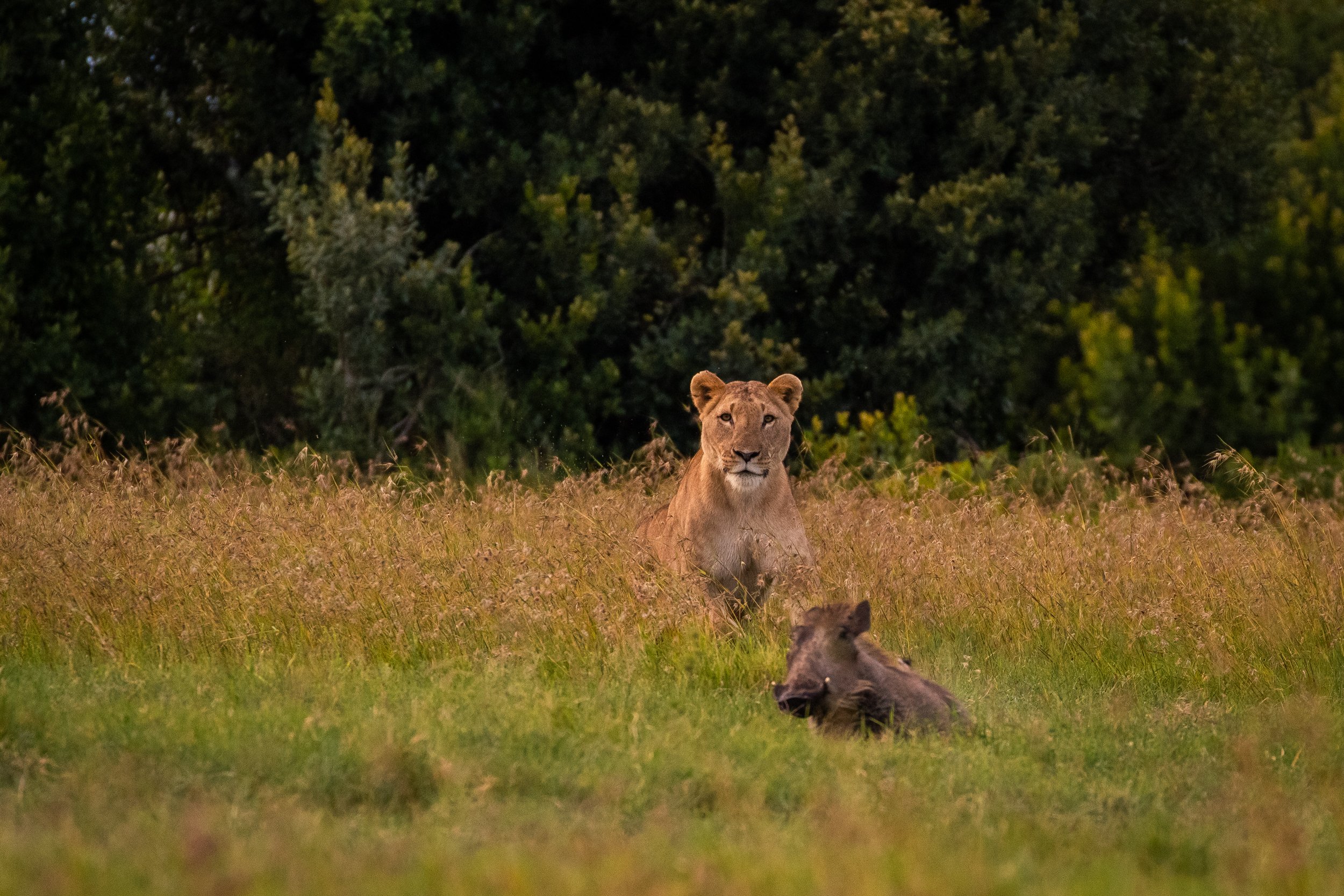
The recent rains bring an explosion of fresh vegetation across the conservancy — and with it, plains game including giraffe, rhinos, eland, zebra and more are out in enormous numbers. It's one of the most reliable windows of the year for extended, close rhino sightings, including encounters with Ol Pejeta's critically endangered northern white rhinos.
Big cats remain highly active. Lion prides patrol the open plains, cheetahs work the grasslands, and elephant family groups move through the conservancy in relaxed, unhurried herds. There's no shortage of sightings — just a shortage of other people trying to see them.
Which brings us to point two.
2. You'll Have the Conservancy Almost to Yourselves
This is the quiet secret of a May safari: most people aren't here.
Because the travel internet steers visitors away from Kenya in May, the conservancy is at its least crowded. For guests at The Safari Cottages — where every stay is entirely private by design — this means game drives with no other vehicles at sightings, the ability to sit quietly with a lion pride for as long as you like, and a stillness to the bush that peak-season visitors rarely experience.
If you've ever watched a safari video and thought "I wish it was that quiet," a May safari at Ol Pejeta is what you're looking for.
3. It's One of the Best Value Months of the Year
Most properties that remain open in May operate on low season rates, making it one of the most cost-effective times to experience a high-quality Kenya safari. At The Safari Cottages, our low season pricing runs from April through to mid-June — meaning May guests access a fully private, exclusive-use safari experience (private guide, private vehicle, private chef, flexible schedule) at a significantly lower rate than the same experience in July or August.
It's worth being clear about what that means in practice: you're not getting a lesser safari. You're getting the same private guide, the same vehicle, the same chef, the same wildlife — at a lower price, with more of the conservancy to yourself. What’s not to love?
For families, couples, or anyone balancing quality with budget, May is worth looking at seriously.
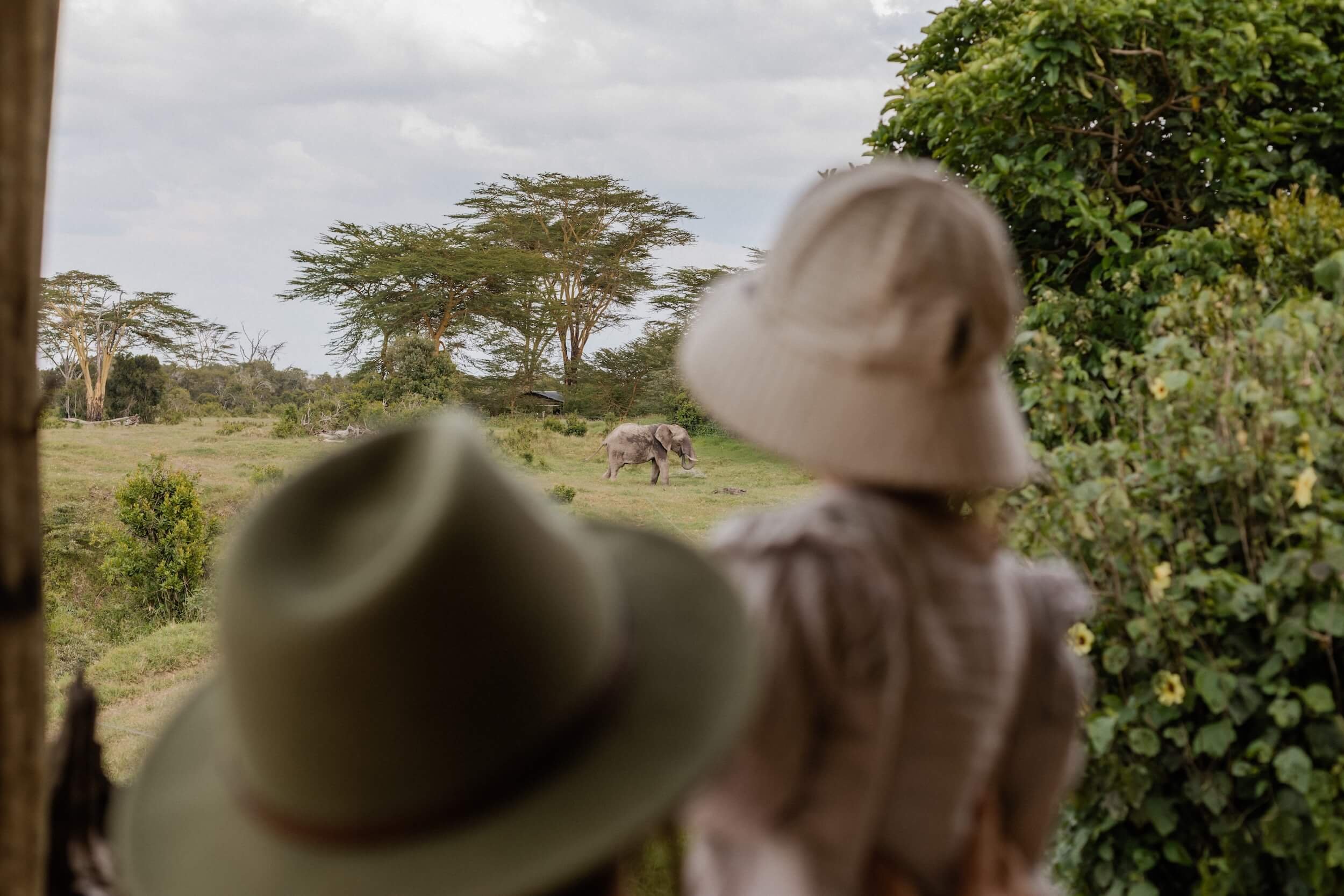
An elephants wanders up the river over lunch at The Safari Cottages
4. Ol Pejeta Is Breathtakingly Beautiful in the Green Season
There are two versions of Ol Pejeta. The dry-season version — golden, dramatic, stripped-back — is the one that fills most safari brochures. The green-season version is something else entirely.
After the April rains, the conservancy transforms. The plains turn a deep, vivid green. Rivers run full. Dams overflow. Wildflowers appear across the grassland. The light softens and so does the pace.
May is arguably the most photogenic month of the year at Ol Pejeta. The rich green backdrop makes wildlife portraits striking. Occassional overcast skies diffuse the harsh midday sun, creating a softbox effect that wildlife photographers love. And the night skies — cleared by the passing rains — are exceptional. Our team of askaris will show you the southern constellations on any clear evening whilst you sip your gin and tonic around the campfire, and there are a lot of them in May.
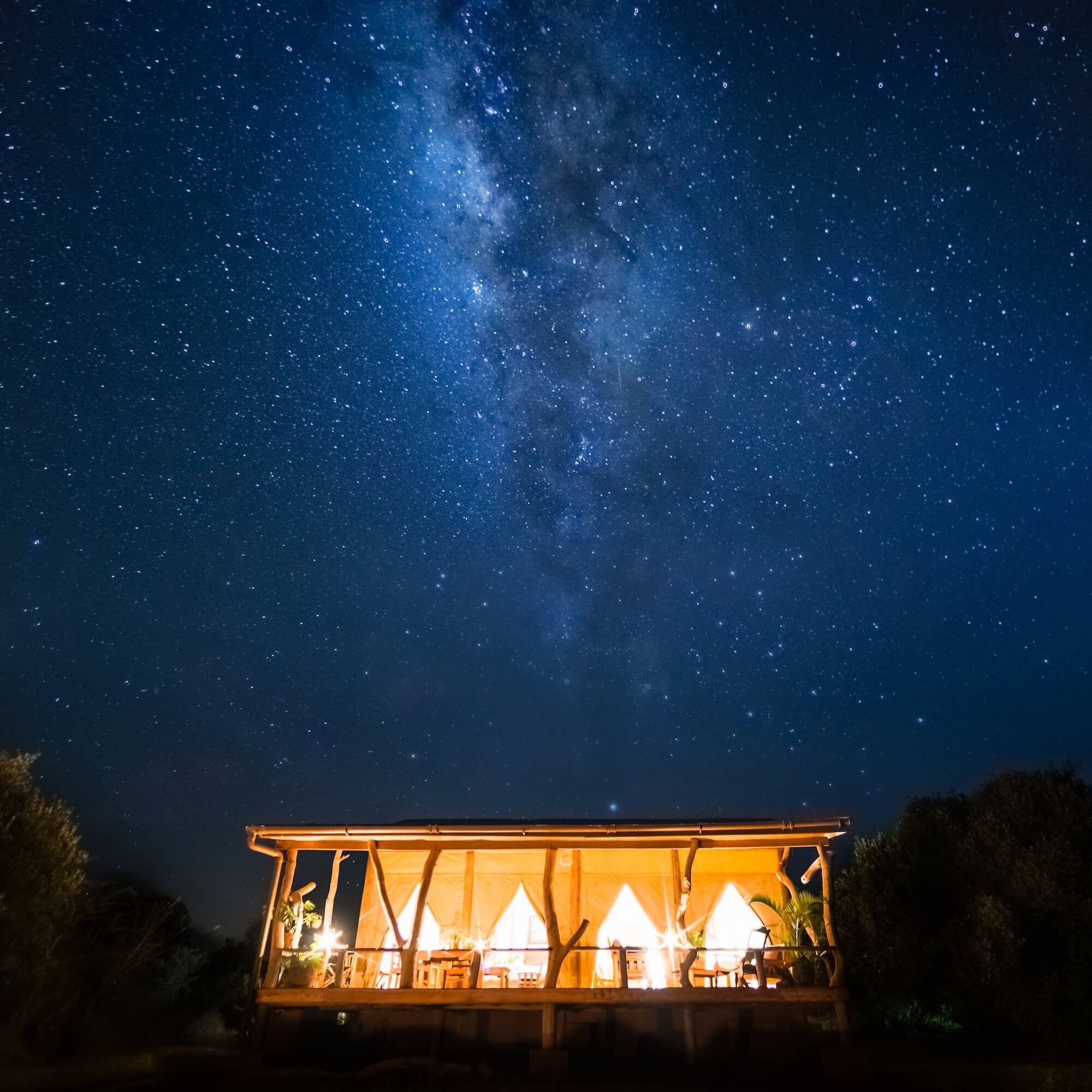
Stars over Ol Pejeta Safari Cottages
5. It's Baby Season
Few things make a game drive more joyful than newborns, and May delivers them in abundance.
The rainfall triggers a wave of births across the conservancy as animals take advantage of the food availability. Baby zebras, still unsteady, stay close to their mothers on the open plains. Hyena cubs tumble around den entrances in the early morning. Elephant calves wade cautiously through the full dams. Warthog piglets sprint behind their parents in single file at impressive speed.
This is the conservancy at its most alive — and for families travelling with children, or anyone who wants their safari to feel genuinely joyful rather than just spectacular, May is quietly one of the best months of the year.


What About the Rain?
It's a fair question, and one worth answering directly.
May can bring rain. Typically in concentrated bursts — often in the afternoon or evening — rather than all-day drizzle. Mornings are frequently clear and cool, which is when most game drives happen. When rain does arrive, it tends to be dramatic and brief, and it passes to leave the air clean, the light extraordinary, and the wildlife moving.
Because The Safari Cottages operate on all-weather roads throughout Ol Pejeta, rain doesn't limit where we can drive or what we can see. Other parts of Kenya are more affected by May weather — particularly areas reliant on dirt tracks or lower-lying terrain. Ol Pejeta's road network and our private vehicle mean the experience is consistent regardless of conditions.
In short: pack a light waterproof, embrace the drama of a Laikipia rainstorm, and don't let the forecast stop you.
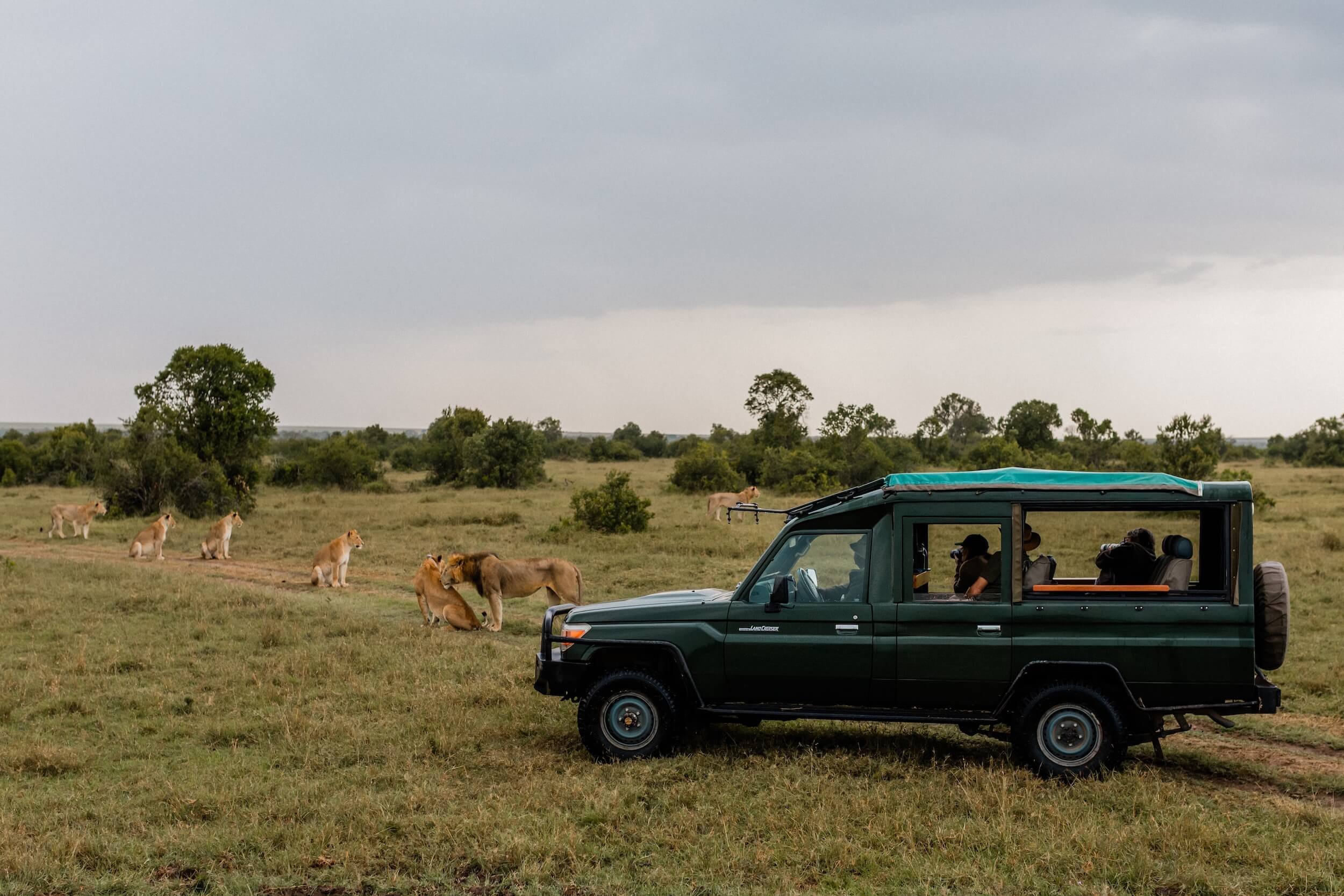
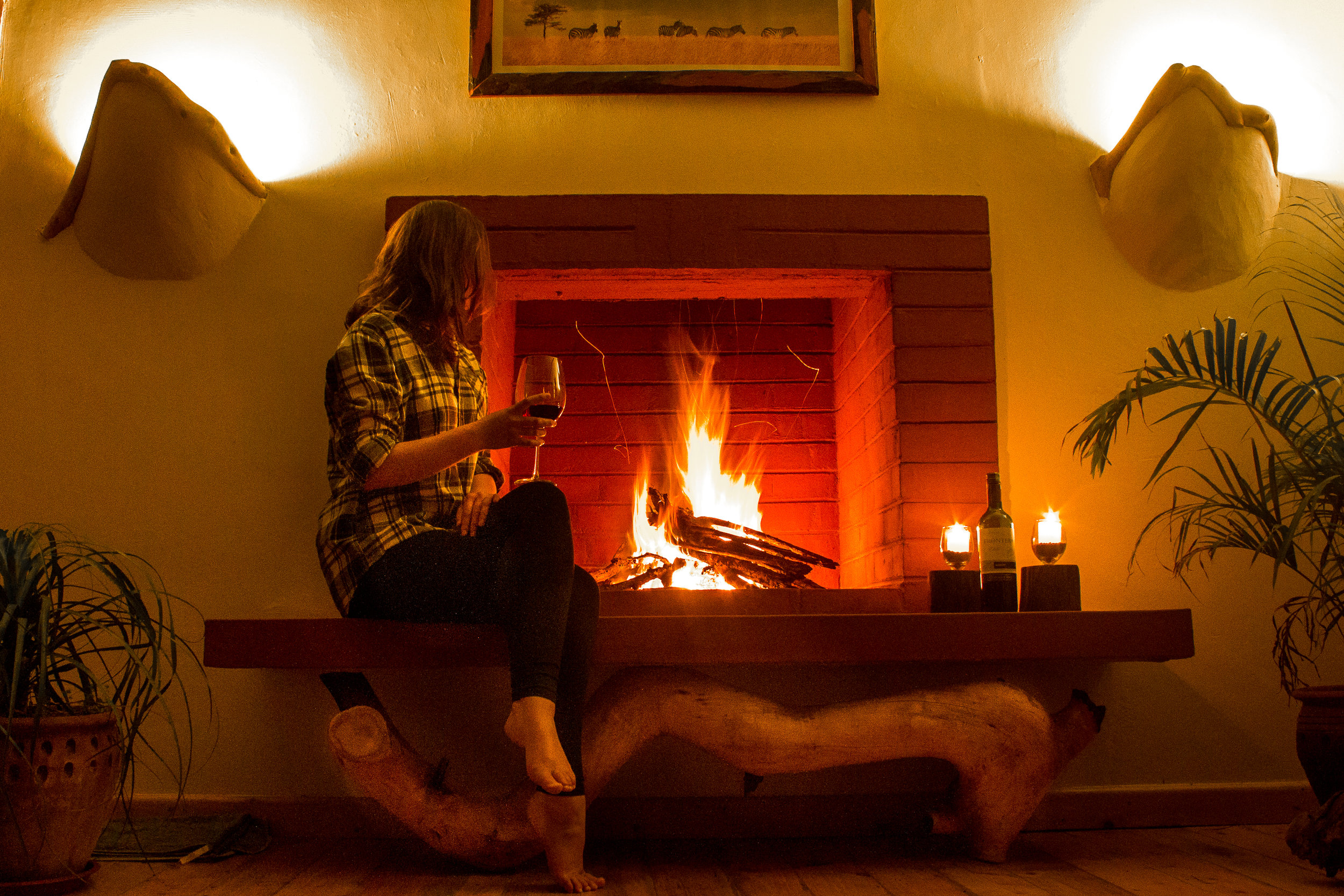
Watching lions on an afternoon game drive - a rain storm building in the background
Why Most Camps Close in May — And Why We Don't
Here's the competitive context that's worth knowing: several of Kenya's well-known safari camps, including some on Ol Pejeta itself, close in May for maintenance or due to access challenges. We don't. The Safari Cottages are open twelve months of the year. Our all-weather road access means we've never had a reason to close, and we've never turned away a May guest due to conditions.
If May is your window — because of school calendars, work schedules, budget, or simply a preference for quieter, more atmospheric travel — there are fewer options than in peak season. We're one of the best ones. And we're open.
What a May Safari Looks Like at The Safari Cottages
Your days in May have a rhythm that feels completely unhurried.
Early morning game drives begin just before sunrise — the air cool, the light extraordinary, the wildlife at its most active. White rhinos graze on open plains. Cheetahs prowl through the long grass. Elephants meander the riverline whilst you sip your morning coffee and joke with your guide.
You return for a late breakfast — prepared by your private chef, served at your pace, on your verandah or in the garden. The mid-morning hours are for coffee, reading, birdwatching from the deck, or simply sitting and listening.
If an afternoon shower arrives, it does so while you're inside, comfortable, and watching the sky change from somewhere you'd want to be anyway. By the time the evening drive rolls around, the plains smell extraordinary and the light is exceptional.
Sundowners in the bush, or perhaps cozied up by your fire at home. Dinner served to your liking, cooked by your private chef.
May at Ol Pejeta is quietly one of the best versions of a Kenya safari. It just doesn't advertise itself loudly enough.
The Safari Cottages are open in May, operating on all-weather roads, with full private guiding, your own vehicle, and low season rates in effect.
VIEW OUR RATES HERE AND CONTACT US TO BOOK YOUR STAY
CONTACT US
KEEP READING
More from the Ol Pejeta Safari Cottages blog
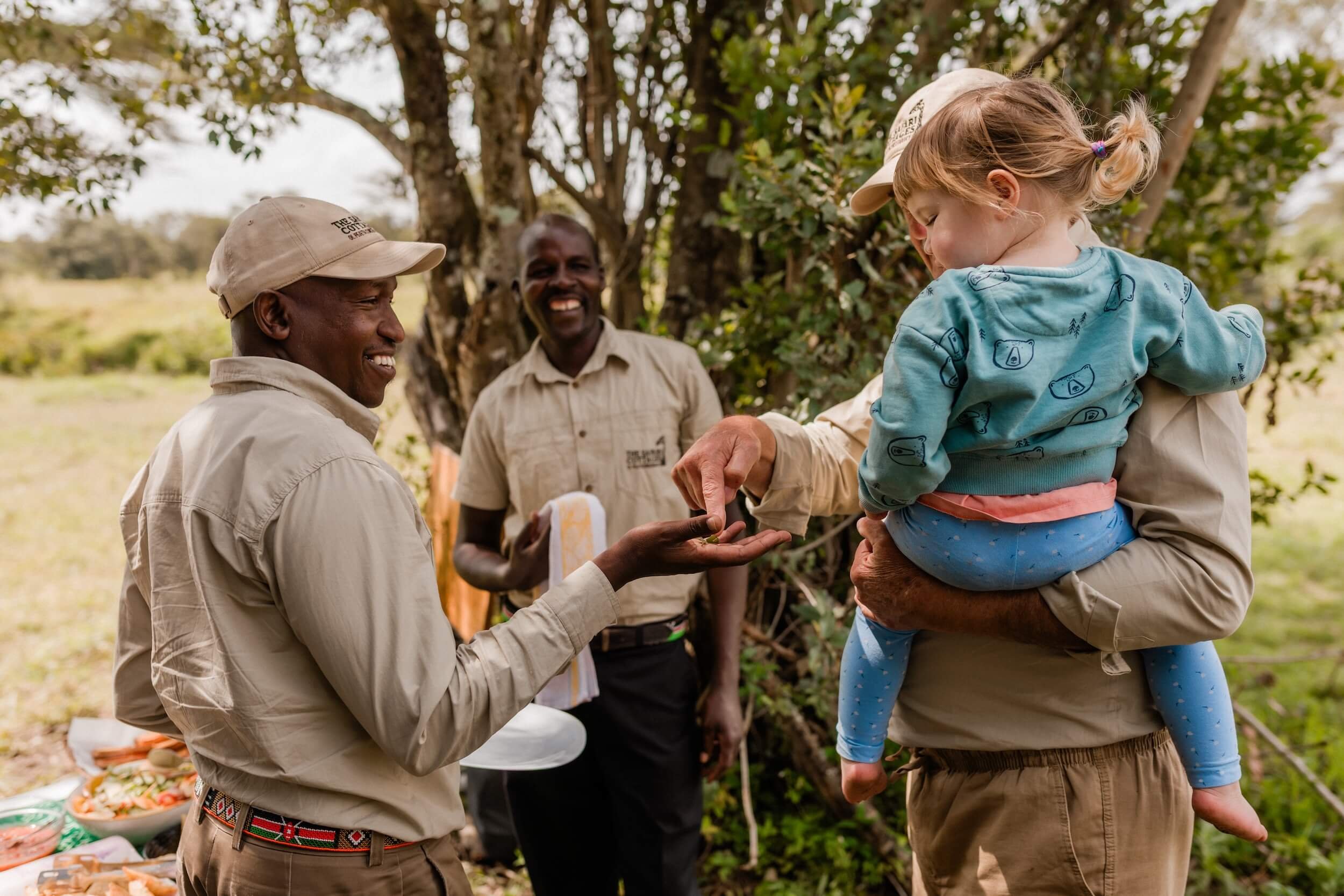
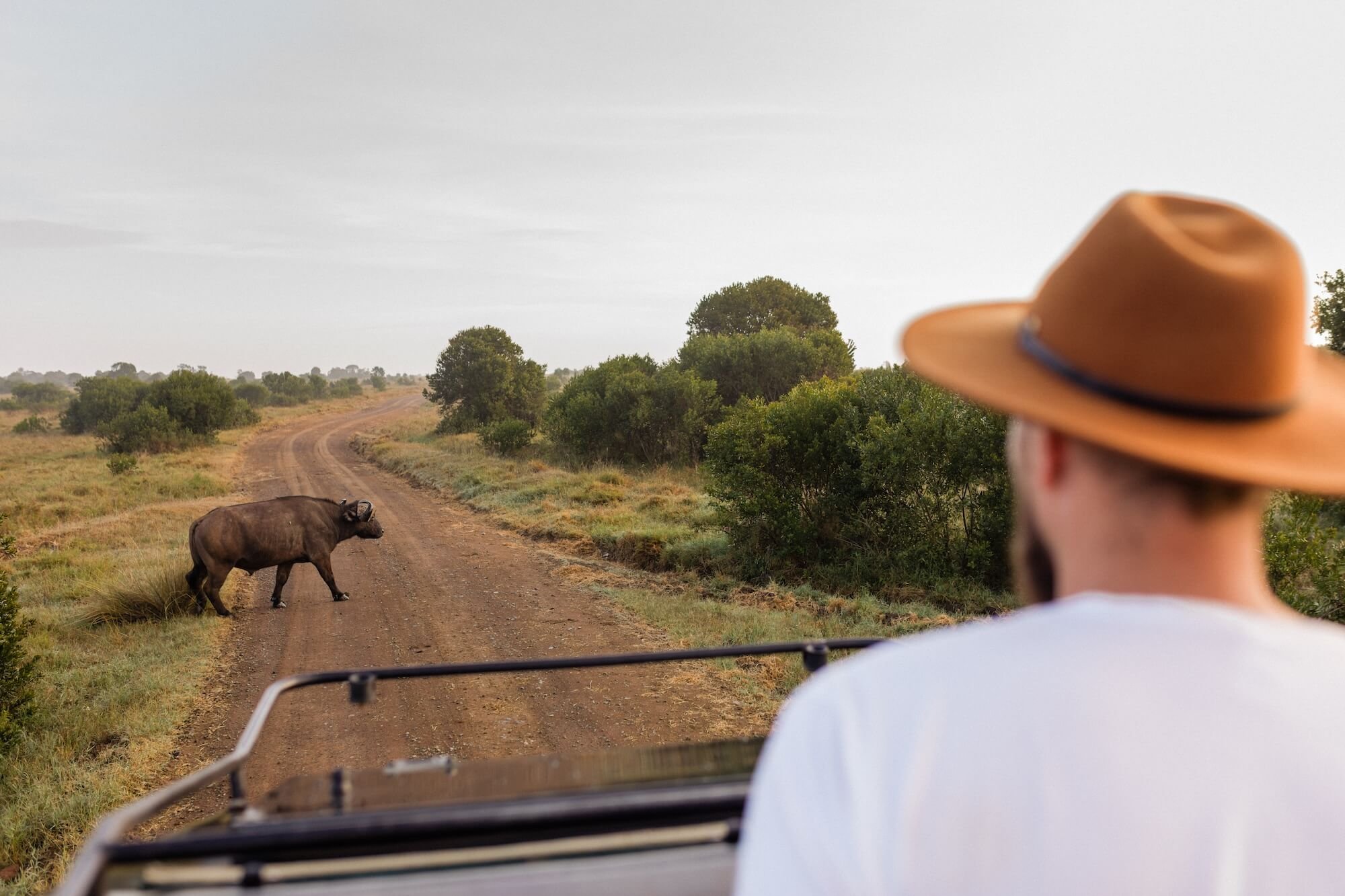
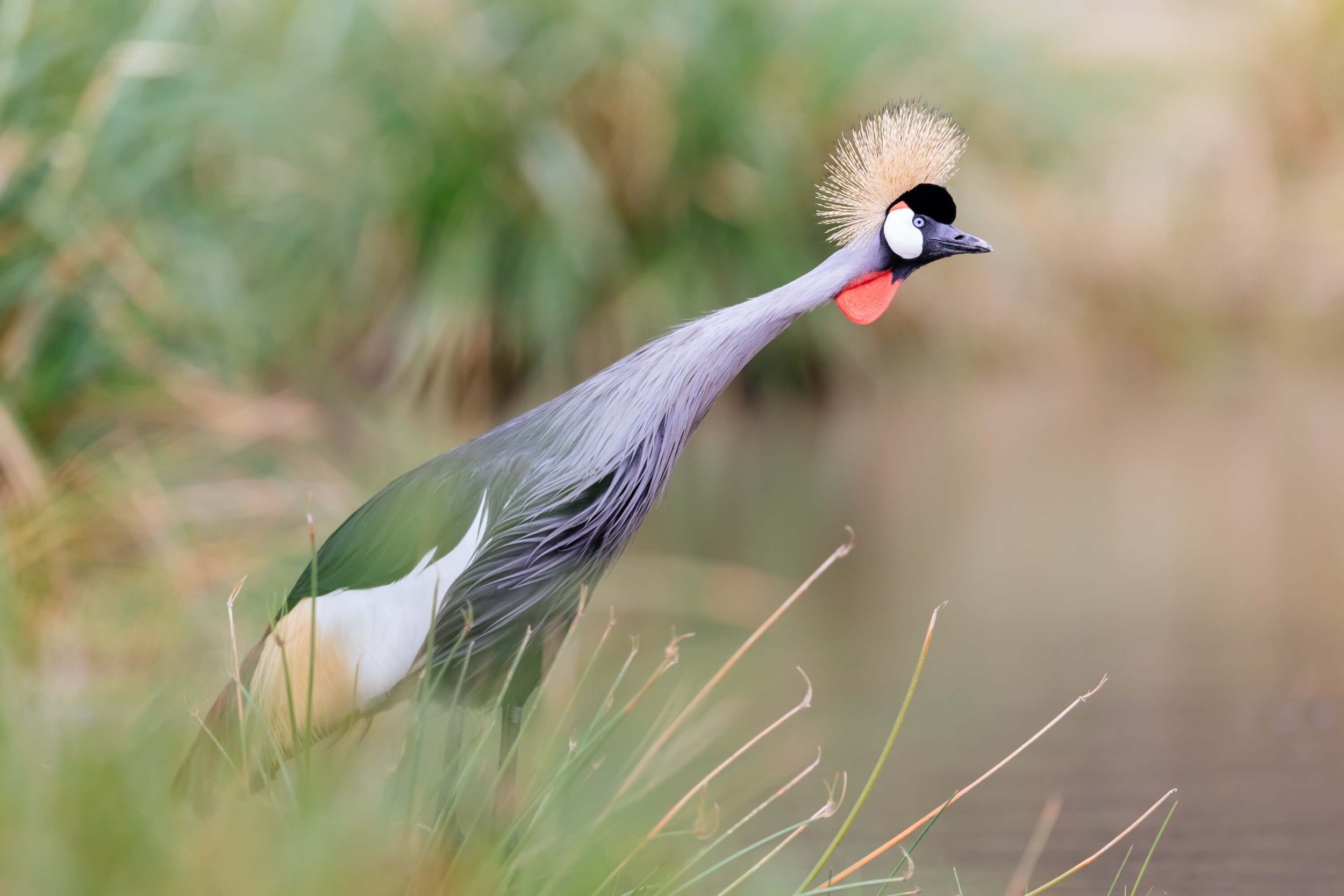


Experience the Ultimate 3-Day Safari at Ol Pejeta Conservancy
Here’s what you can get up to on a 3 day safari on Ol Pejeta when you stay with The Safari Cottages
Discover the magic of a 3-day safari at Ol Pejeta Conservancy, one of Kenya’s premier wildlife sanctuaries nestled between the foothills of Mount Kenya and the Aberdare Mountain Range. This exclusive safari offers an unforgettable adventure into the heart of Laikipia, where you can witness Africa’s iconic wildlife up close, including the Big Five, endangered species like Jackson’s hartebeest and reticulated giraffe and southern black rhino as well as meeting the critically endangered northern white rhino - the last two left in the world reside on Ol Pejeta.
A day on safari can look different for different people and their interests, and it can play out very differently depending on where in the continent you are. So, what can you expect from a day on safari in Ol Pejeta, with The Safari Cottages? Let’s get stuck in!
First off, there’s so much to do and to see here that we recommend a minimum 3 night stay; that’s two full days with the afternoon of your arrival and the morning of your departure adding up to three days. And here’s how we’d suggest you spend your time so you get the most out of your Kenya safari holiday with us.

You’ll have amazing views of Mt Kenya from all around Ol Pejeta
SUGGESTED ITINERARY FOR YOUR 3 DAY SAFARI IN OL PEJETA
DAY ONE
Your safari begins with a scenic drive or a flight from Nairobi to Ol Pejeta, a private conservancy renowned for its conservation efforts and diverse wildlife. As soon as you enter the gates you are on your first game drive, spotting elephants, lions, rhinos, and rare chimpanzees in their natural habitat. The conservancy’s commitment to wildlife protection ensures a rich and authentic safari experience. If you depart from Nairobi in the morning you’ll likely arrive at The Safari Cottages in time for lunch. When you arrive you’ll be met by our team and management will give you a short briefing explaining a little more about the property layout, safety and what you can get up to during your stay.
It’s pretty hot in the middle of the day so you'll have lunch on your verandah, served up by your chef and waiter, before relaxing and unpacking after your travels. We suggest heading out on your first game drive today around 4.30PM and your team can prepare a cup of tea and a snack for you before you go incase you’re feeling peckish. After a game drive and a sundowner (a drink and snacks enjoyed whilst watching the sun set) you can return to camp to an open fire and enjoy dinner on your verandah or under the stars before tucking in for a good night’s sleep.

Returning from your game drive to a roaring fire
DAY TWO
Today is your prime wildlife day! You’ll spend the day exploring Ol Pejeta’s vast landscapes on morning and afternoon game drives. Highlights include visiting the chimpanzee sanctuary and the rhino conservancy, where you can learn about ongoing efforts to protect these endangered species. Evening drives offer a chance to see nocturnal wildlife and enjoy stunning sunsets over the savannah

Lions hunting on a morning game drive
You’ll be gently woken around 6:00 AM with your preferred tea or coffee before heading out just before sunrise — one of the best times for predator activity. You’ll head off just before sunrise at 6.30AM in search of lions, leopards, cheetah, elephant, black and white rhino, giraffe and so much more! The conservancy abounds with an incredible density and variety of game so be sure you’ve packed an extra memory card for your camera - you’re going to need it. As the sun rises and you start to warm up you’ll tuck into a picnic breakfast and a cup of freshly brewed Kenyan coffee or tea.
You’ll meander back through the bush as your game drive continues and the heat of the day really starts to set in, then arrive at your safari cottage to a colourful lunch, a cool drink and a chance to rest.
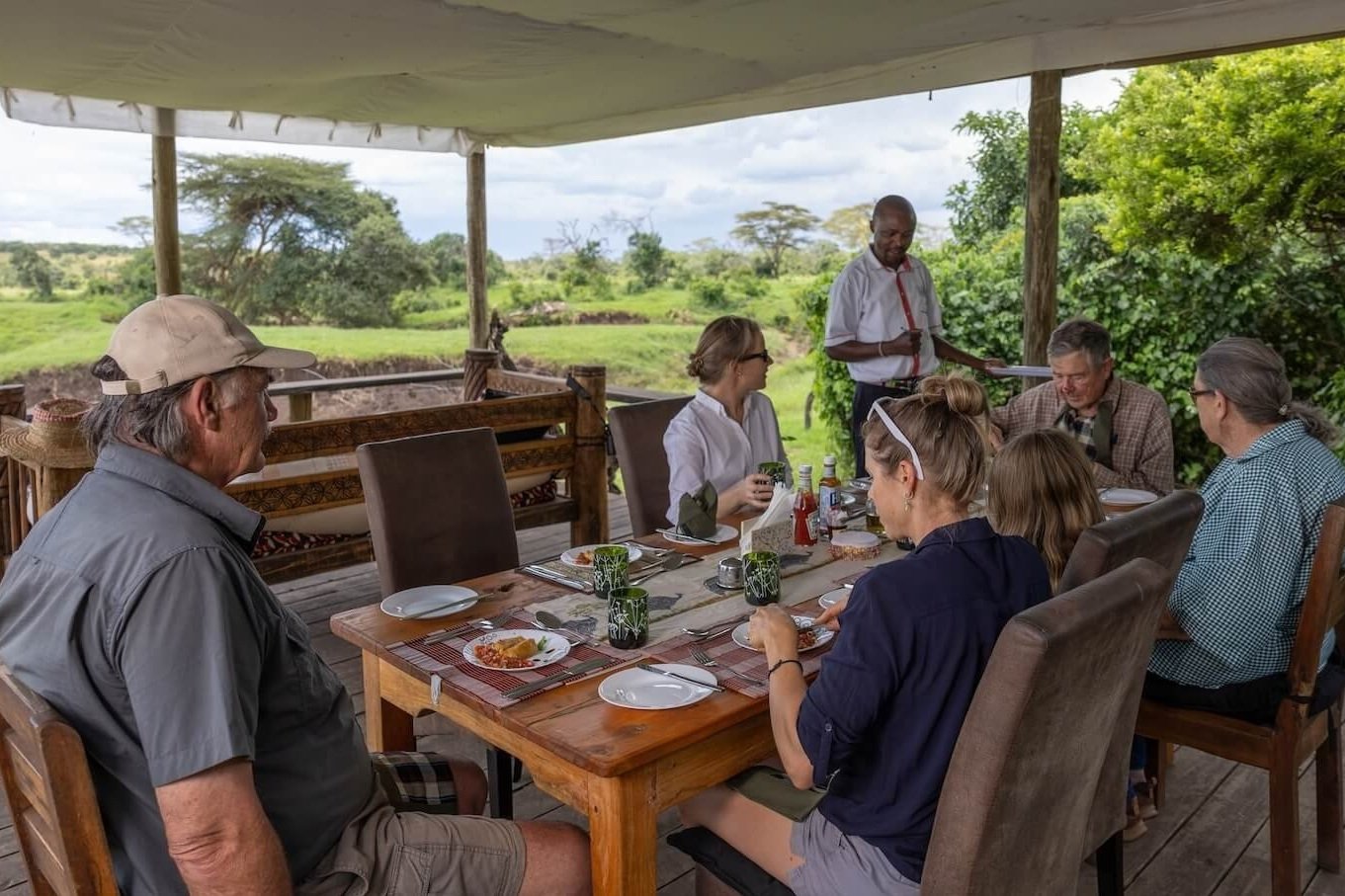
Tucking in to leisurely lunch on the riverside deck
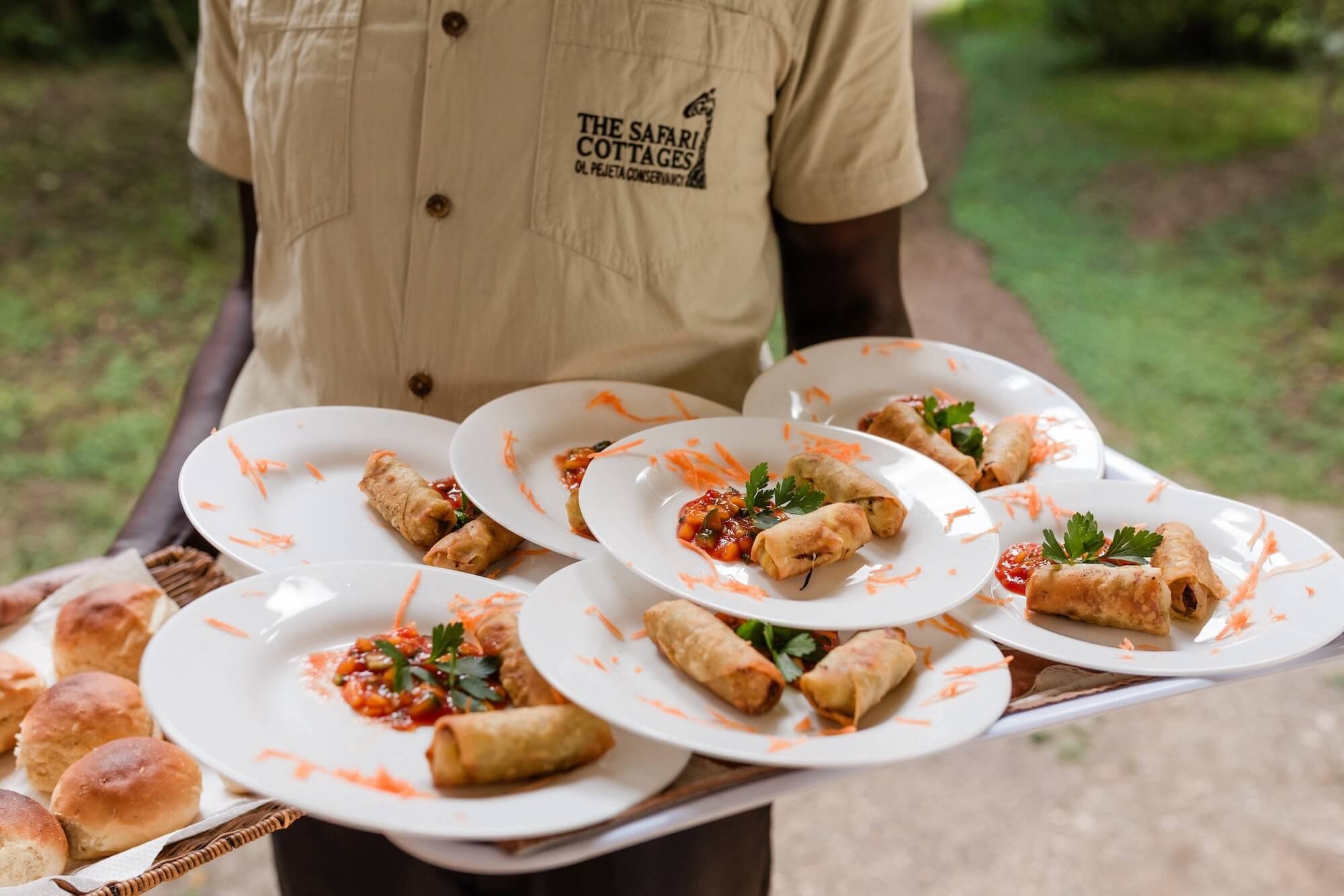
Spring rolls for starters
Midday at The Safari Cottages is a time to rest and recalibrate; animals are usually asleep in the shade of the trees at this time of day so we follow their lead and take the opportunity to relax too. If you’re not a napper then that’s okay too, here are some lovely ways to enjoy midday on the property…
Guided walk and birdwatching around the property: our guide will take you on a walk around the property pointing out birds, plants and tress of note. Elephants and giraffe often linger about the back of camp in the heat of the day so you might spot them on your walk too.
Yoga on the verandah: each safari cottage is provided with yoga mats to help you stretch out and feel great on your safari
Garden tours: our thriving garden is the source of a lot of our salads and fresh herbs and the chefs are very proud of their green fingers
Cooking lessons with your private chef: learn how to make some of our favourite Kenyan staples
Reading or simply soaking in the views: your verandah has lovely views across the river and plains and you never know what you might spot!
This relaxed downtime is one of the biggest advantages of a private safari experience.
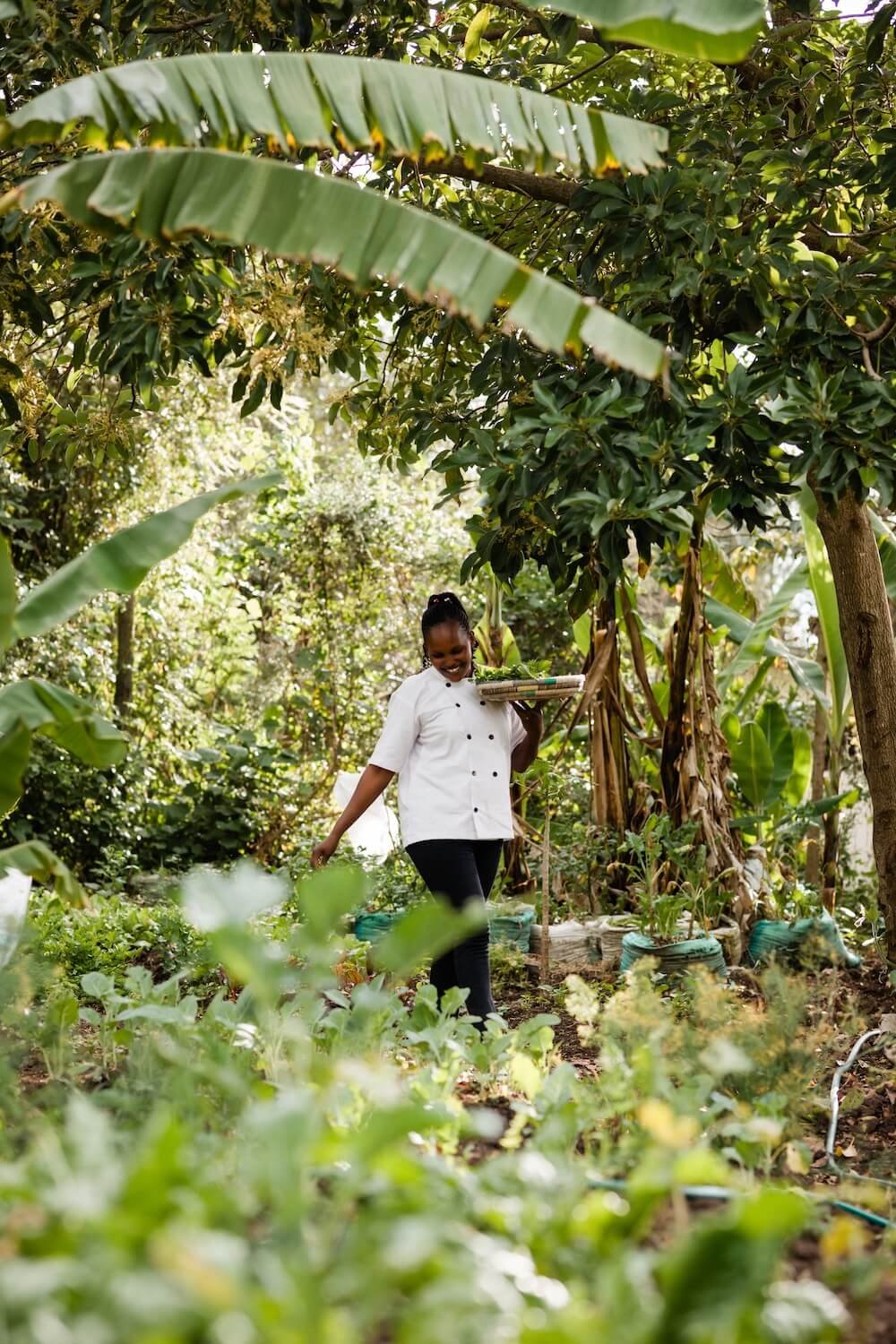
A tour of the garden with Chef Vicky
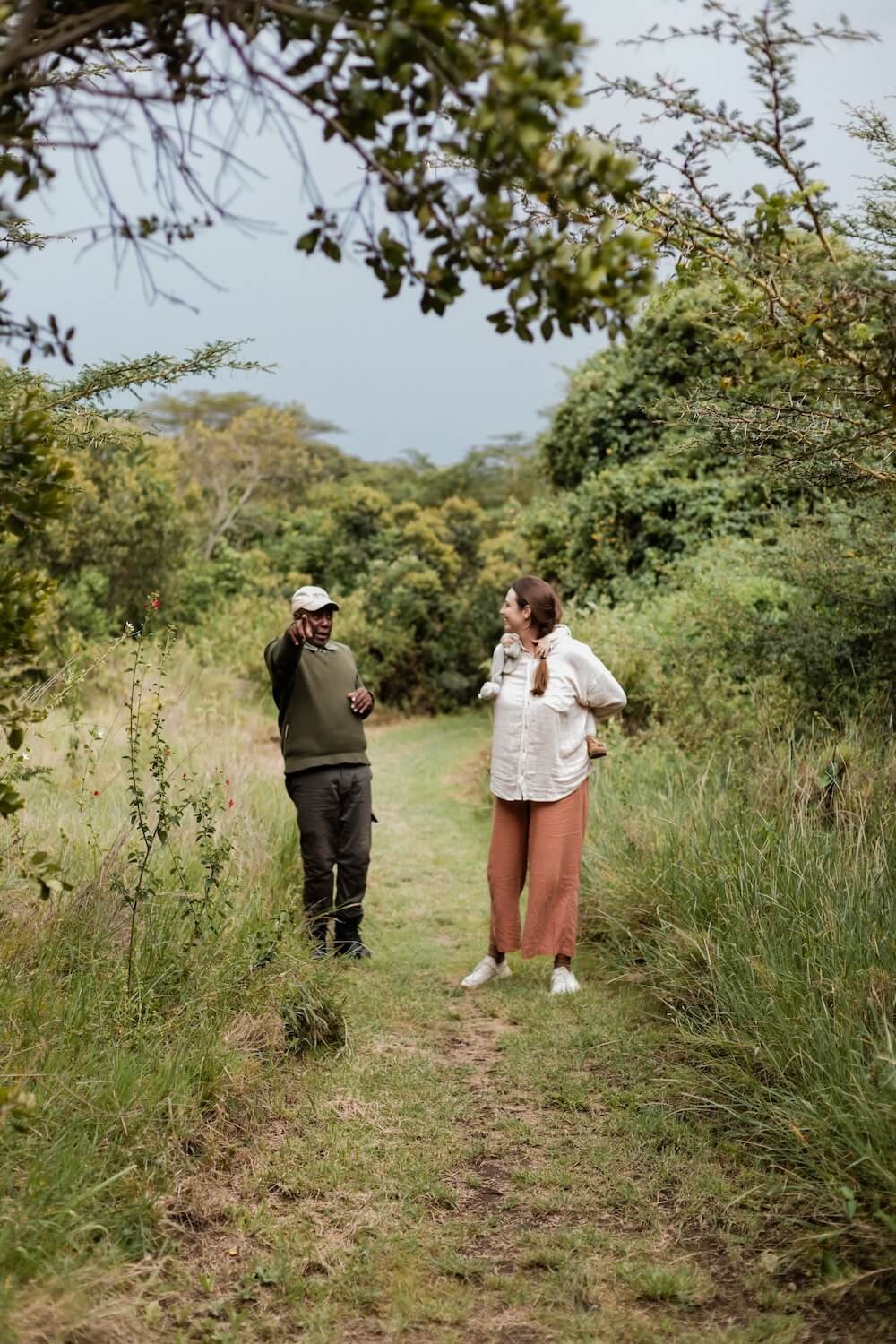
A guided bush walk with Peter
After an afternoon cup of tea you’ll head out again around 4.30PM to see what wonderful wildlife awaits you on the plains surrounding our little spot of heaven in the bush. The golden hour light makes this a favourite drive for photographers. After your sundowner you’ll head back “home” to a roaring fire under the stars and a drink before dinner. If you have a cloudless night consider asking the askaris to share their knowledge of the southern night skies — a memorable and often overlooked experience.
DAY THREE
A highlight unique to Ol Pejeta is the chance to visit Najin and Fatu, the world’s last two northern white rhinos and, this morning, you’ll head off after a light breakfast to meet them. Ol Pejeta’s passionate rhino caretakers will meet you and guide you to the spacious enclosure that Najin and Fatu, a mother and daughter due call their home. They will tell you all about how these gorgeous girls found their way to Kenya and the impressive project that Ol Pejeta and it’s partners have undertaken to bring Northern White rhinos back from the brink of extinction.
This heart-warming and educational conservation experience includes:
Guided visit to the northern white rhino enclosure with expert caretakers who will share Najin and Fatu’s story with you. They will also give you insight into the northern white rhino recovery project; a world-first IVF program
You’ll also have the opportunity to meet Baraka, a blind black rhino rescued by Ol Pejeta who is not averse to a chin scratch
There is a small curio shop on site and an education centre, and if you’d like to make a donation to the Northern White Rhino program you can do that here too
Then, with a heart full, you’ll return back to your bush home for brunch and a chance to relax in the heat of the day or enjoy any of the on-property experiences that you may have missed out on the day before.
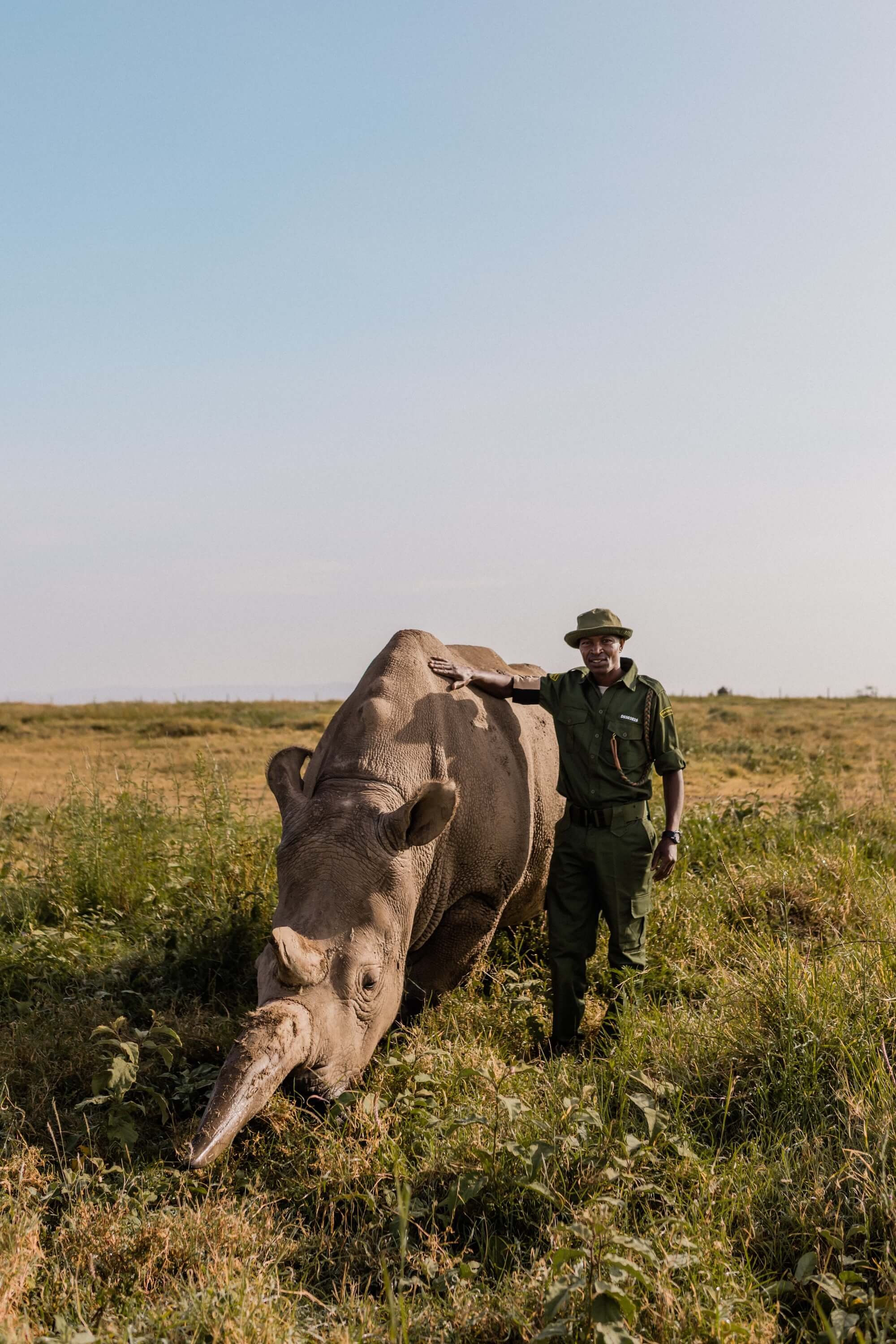
Najin with head caretaker Zachariah Mutai
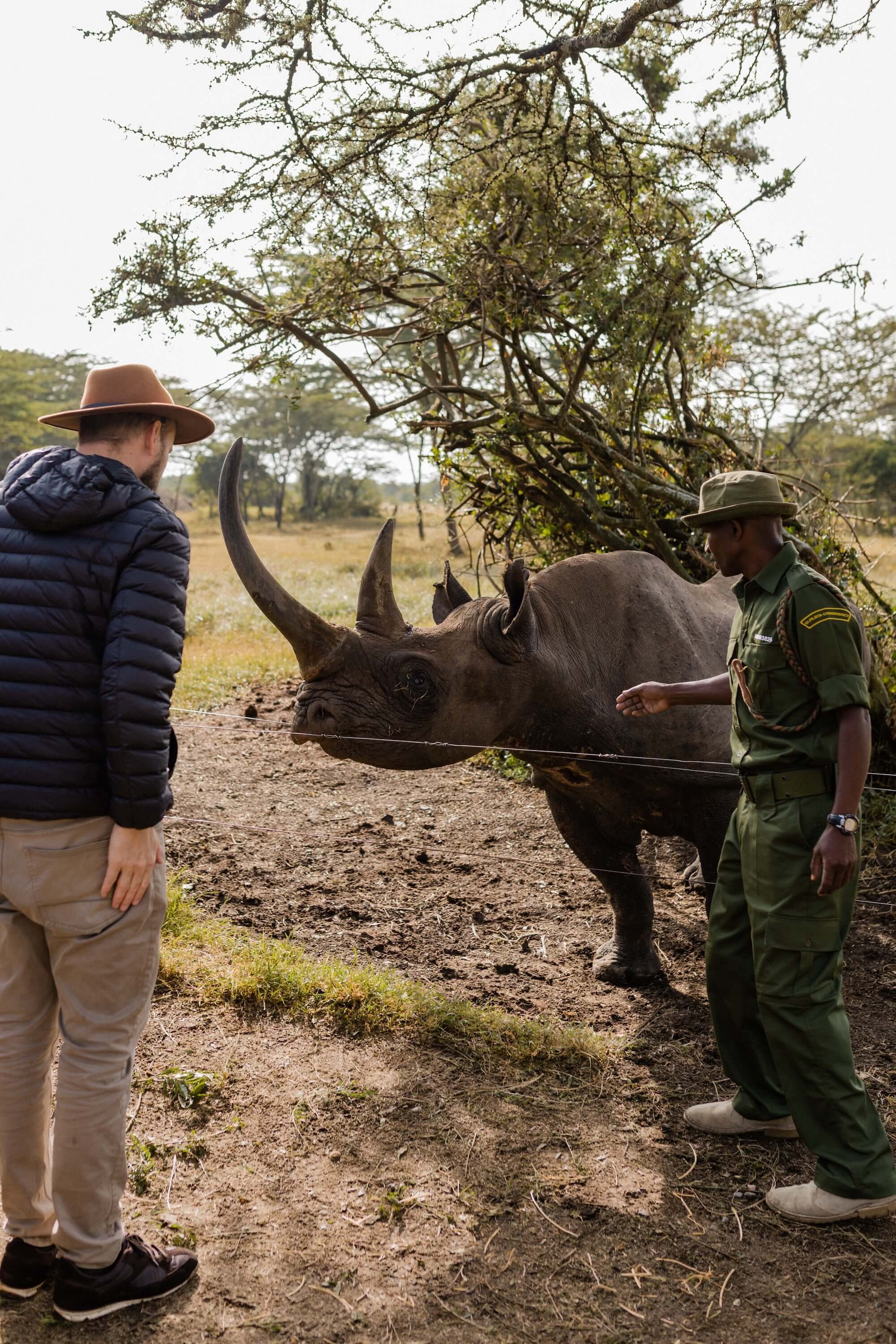
Meeting Baraka with Zachariah
This afternoon you’ll embark on your final evening game drive and sundowner, returning with a spotlight on a night drive in search of Kenya’s more secretive nocturnal species like leopard, aardvarks and white tailed mongoose. Enjoy dinner and a drink around the fire before tucking in for the night.

A big male cheetah posing for the shot on an afternoon game drive
DEPARTURE DAY
After breakfast today your guide will drive you to Nanyuki Airport to meet your flight to your next destination, or drop you off at the Ol Pejeta entrance gate to meet your road transfer back to Nairobi. Your three day safari with us will leave you full to bursting with enthusiasm for the wilderness, wildlife and people that call this corner of the world home and leave you inspired by the hard work and dedication of our conservation team. If you do choose to linger longer you can continue your safari on the conservancy or explore further afield with a day trip to the local town, Aberdares National Park or Ngare Ndare too.
Remember, you have a private guide and vehicle for the duration of your stay with us so this outline is just one idea. You can do as little or as much as you’d like.
ESTIMATED COSTS FOR THIS 3-DAY OL PEJETA SAFARI COTTAGES SAFARI
Mid and Low Season (01 Nov - 15 Dec / 7 Jan - 14 June 2026) - USD2,090 per person
High Season (01 Nov - 15 Dec / 7 Jan - 14 June 2026) - USD2,360 per person
Notes on pricing:
Prices include accommodation, all meals, drinks and a private vehicle and guide. Transport too and from Ol Pejeta is not included.
The above prices are based on 2026 rates and subject to change for 2027
Children under 12 are half prices and under 3 are free
Please contact us with the number of people in your party and the ages of any children + your preferred travel dates for a personal and accurate quote
BOOK YOUR 3-DAY SAFARI AT OL PEJETA SAFARI COTTAGES
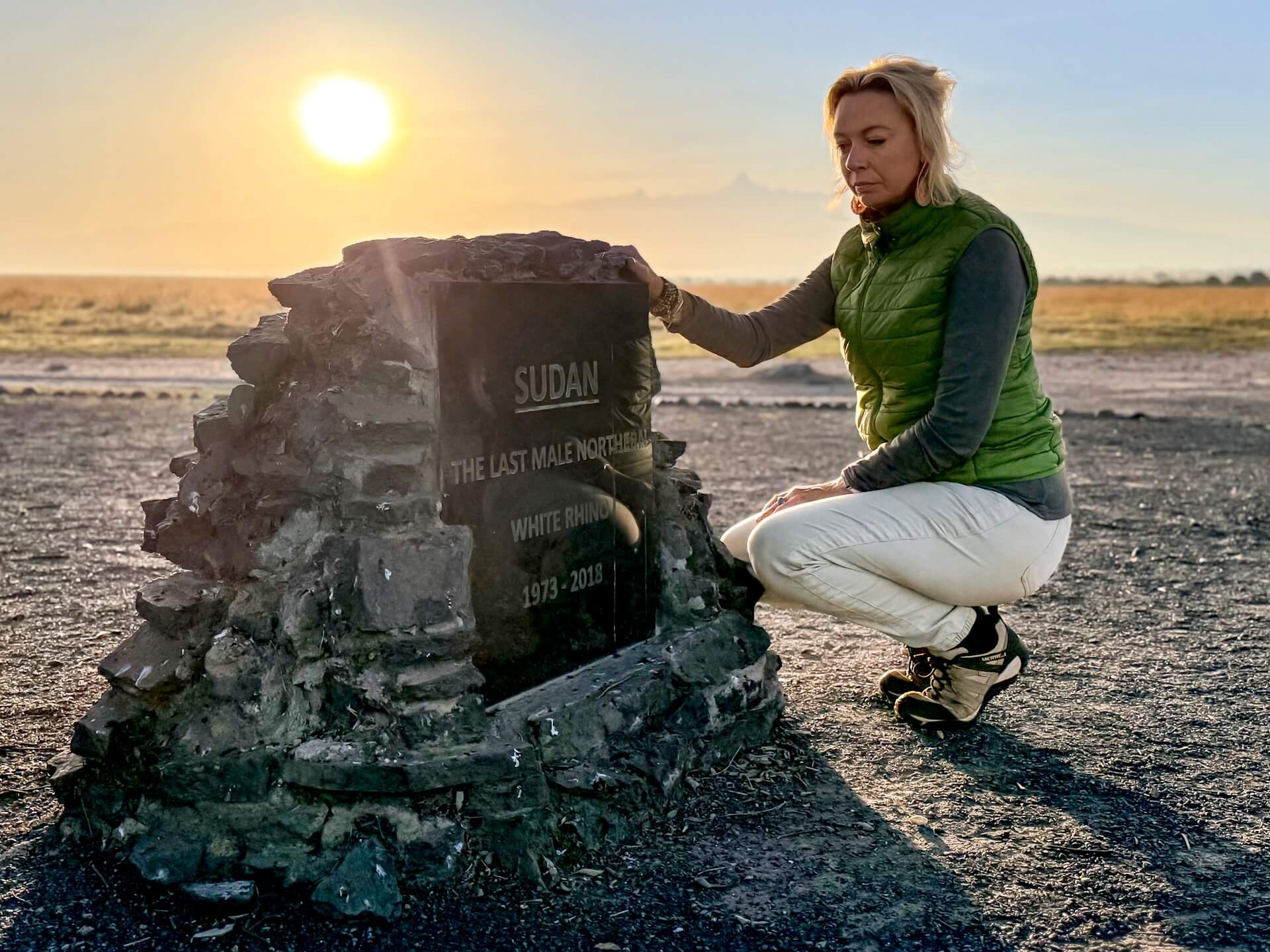


Sonja's Kitchen: Flakey Kenyan Chapati Recipe
Our classic and much loved Kenyan Chapati recipe fresh from Sonja’s cookbook; Footprints in the Butter
The chapati is a much loved staple of Kenya cuisine and unlike an Indian chapati it is flakey and served alongside curries, stews or with eggs at breakfast time. If you’re sat at home after your safari and craving a little bit of Kenya, cooking up a pile of delicious chapatis and enjoying them along side a plate of githeri or a beef stew is a great way to feel transported right back to Africa! Here’s our much-loved chapati recipe, right from my camp cookbook, Footprints in The Butter.
FLAKEY KENYAN CHAPATI RECIPE
Serves 8
3½ cups plain white or wholemeal
wheat flour
½ tsp salt
1 tbsp margarine, butter or ghee
1⅓ cups warm water
½ cup vegetable oil or shortening
1. Sift flour and salt together, if using shortening rub in with finger tips.
2. Make a well in the centre, pour in half the water and, if using oil pour it in also. Mix with a wooden spoon, gradually adding the remainder of the water until a firm but soft dough forms. Continue kneading with your hands.
3. Divide the dough into 8 balls. Roll out each ball on a circular chapati board or on a lightly floured pastry
board.
4. Coat the surface of each circle of dough generously with margarine. Roll up the circle lightly with your fingers into a sausage, then coil the sausage into a wheel, thus trapping the air inside. Then, with a rolling pin, roll out each wheel into a circle less than ⅛inch thick.
5. Smear a chapati pan or 23cm non stick frying pan with oil. Using low heat, brown the chapatis on both sides
until golden brown. If you press the chapati lightly with a folded tea towel whilst cooking, the air bubbles will quickly rise.
6. Keep warm until served.
Guests mastering our Kenyan chapati recipe WITH OUR CHEFS on a recent group safari with Yoga By Candace


Let us know how your chapatis turned out! You can purchase Sonja’s recipe book Footprints in The Butter here for more of our favourite camp recipes.
KEEP READING
More from the Ol Pejeta Safari Cottages blog
Kenya: When to Go & What to Expect
Learn all about Kenya: when to go, what to expect and more, from our guide written by people on the ground living in and exploring the country for the last fifteen years.
You’re excited to pack your binoculars, lock the front door behind you and head off to Kenya to meet the country’s iconic wildlife, experience it’s beautiful and warm culture and take in the epic scenery. But, when’s best to embark on this adventure? We’re here to share all we know about Kenya; when to go and what expect, right from the horse’s mouth… or the zebra’s mouth shall we say.
JANUARY – MARCH
Early January sees the tail end of the busy festive season and so prices stay high and crowds linger but start to disperse around mid-January. This also marks the start of low or mid-season in Kenya so you can expect lower prices and fewer crowds. It’s often dry and hot at this time of year too across the country, so wildlife viewing is excellent as animals tend to congregate around water sources. Ahead of the April rains, February and March often welcome lots of little ones from plains game such as zebra, wildebeest and gazelles and this, in turn, can cause an uptick in predator activities.
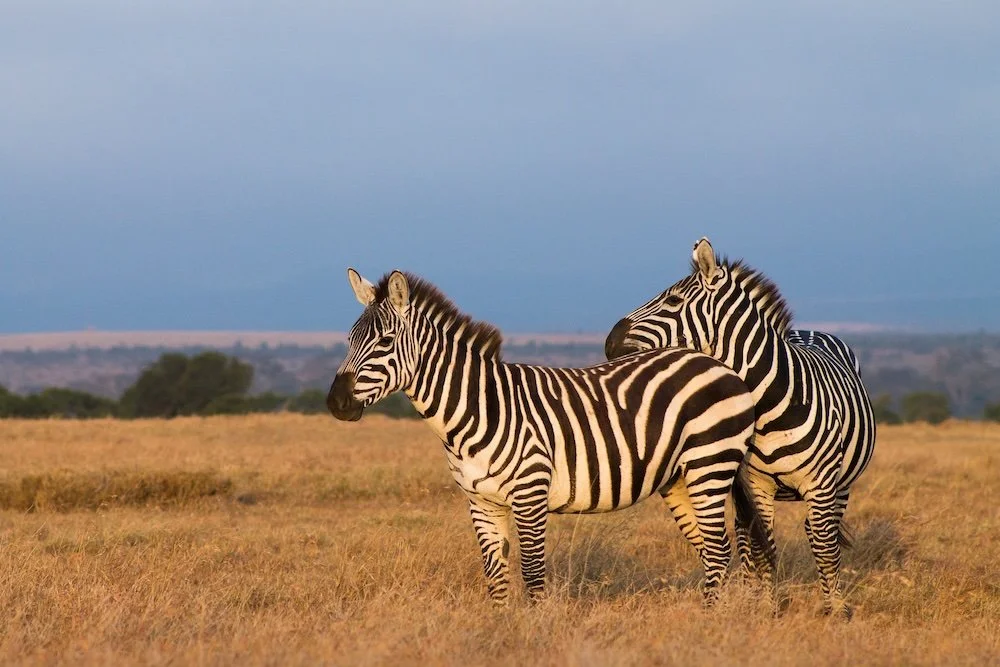
Golden light: March on Ol Pejeta
APRIL – MAY
Historically known as “the long rains,” April, May in Kenya is still considered a red flag, but global weather patterns are shifting, and this rule does not hold as firmly as it did ten years ago. Rains do arrive in April most years, but dryer weather has largely returned by mid-May. Even so, a lot of camps continue to close over this time for maintenance and some, more remote locations, struggle to provide reliable access in April and May. So, whilst your options might be limited camps that do remain open over this period often provide excellent discounted rates, The Safari Cottages included. This also means fewer crowds, cooler temperatures and enjoying vast tracks of wilderness to yourself.
If you’re traveling to the coast, the Kusi trade winds cause bigger swells, so Kenya in April and May is a great time for windsurfers and sailings but not ideal for snorkelling and diving. This is also a cooler time of year on the coast due to wind and rainfall, which is otherwise up to over 34 degrees Celsius in the day and the cooler temperatures can be a relief for some, but frustrating for those seeking heat and all day sunshine.
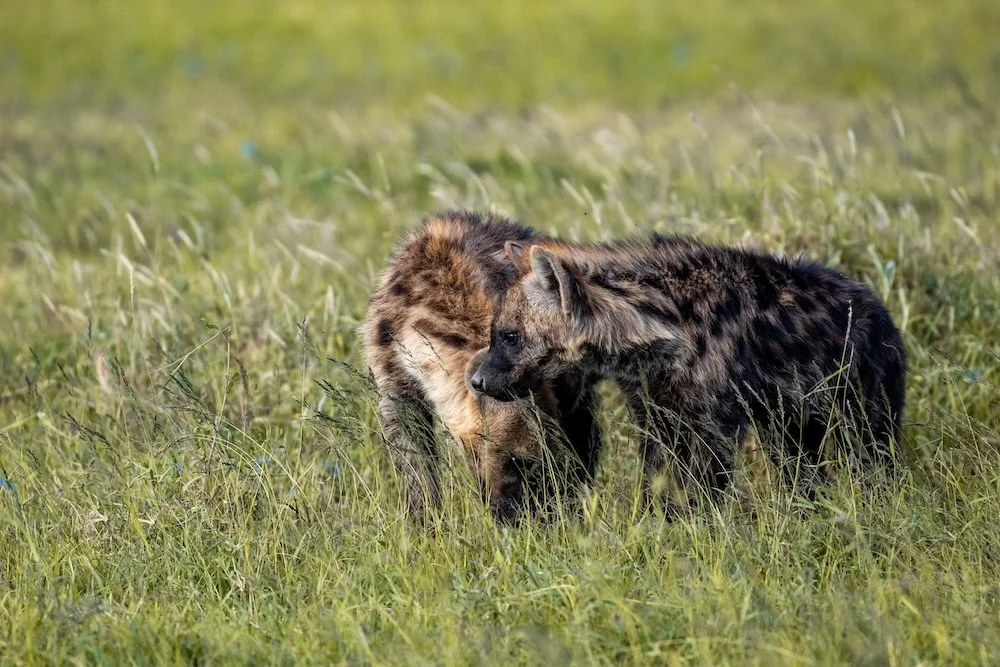
Hyena pups on Ol Pejeta

Kite surfing in Diani
JUNE
Following the rains the landscape is often lush and green, and youngsters have a little prance in their step. June is largely considered shoulder season as camps reopen and tourist numbers begin to increase. It’s still very quiet on Ol Pejeta so an ideal time to plan your Kenya safari holiday if you’re looking for less crowds, lots of lovely greenery and lower prices. If you’re planning a beach extension in June however, it’s worth noting that coastal beaches, especially in the North, are often affected by seaweed well into June which washes up onto the beaches and rainfall can liger longer here too. The seaweed is harmless but does affect the appearance of Kenya’s otherwise postcard perfect white sand beaches.
JULY – OCTOBER
July marks the start of the great migration in the Masai Mara, where millions of wildebeest congregate on the plains and photographers flock to the Mara to witness the famous river crossings. Due to the popularity of this event, combined with Summer holidays abroad, this is a busy and expensive time of year to travel but for those eager to witness the migration it’s the best time. When considering when to go to Kenya it’s important to know that, historically, this was a predictably dry time of year but these days you can expect the odd afternoon shower or thunderstorm to add to the drama.
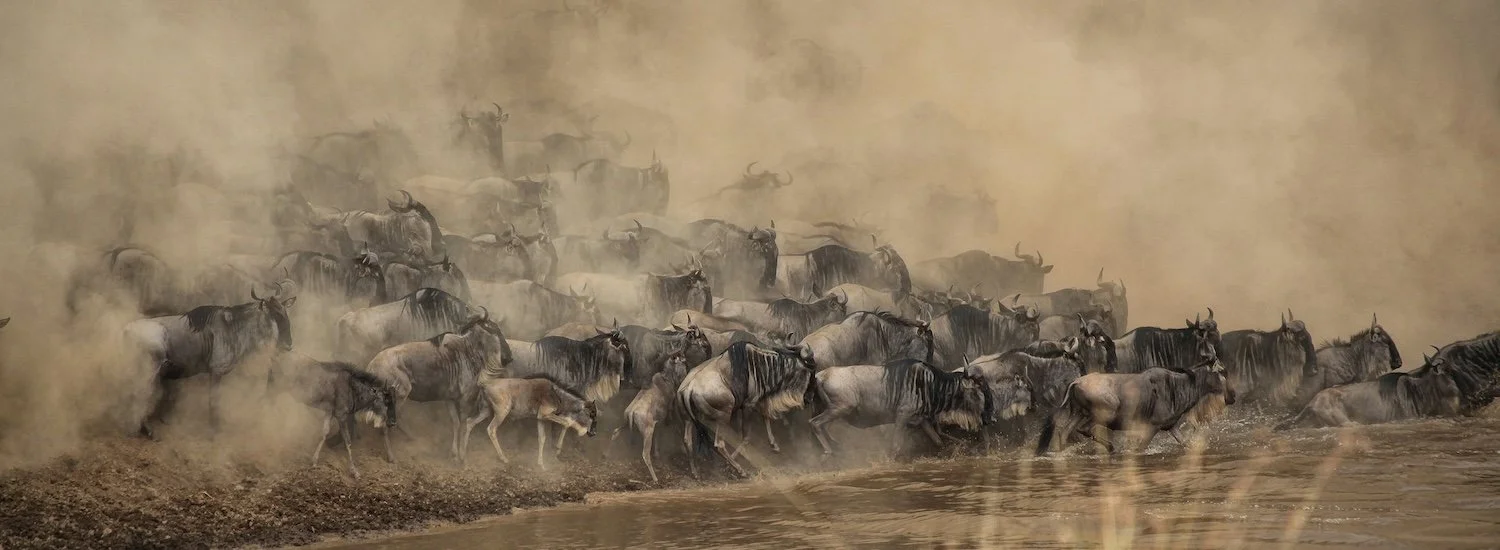
The famous Mara river crossings
NOVEMBER
November until mid-December is considered the “short rains.” You can expect afternoon showers and the odd cloudy day but properties largely remain open and afternoon showers make for dramatic images so photographers tend to enjoy traveling at this time too. Some areas or activities become restricted however due to access in the rains and tourist numbers in bigger wildlife parks and in Ol Pejeta Conservancy and the surrounding Laikipia area start to quieten down as the herds move back into the neighbouring Serengeti. On the coast, early December marks the turning of the winds and brings about higher temperatures and humidity.
DECEMBER
Whilst the first half of December is much the same as November across the country, mid-December marks the start of the festive season. This is the busiest and most expensive time to travel to Kenya but also the most rewarding to see the festivities in action (especially on the coast) – Kenyans love a good party. Wildlife is usually thriving after the short rains and the weather is largely drying up making for glorious sunny skies.

On safari with The Safari Cottages in Ol Pejeta
A NOTE ON RAINFALL IN KENYA
When considering when to go to Kenya it’s important to bear in mind that rainfall is not as predictable as it once was and seasons are not as clear cut as they used to be. We always say; travel for the wildlife not the weather and you won’t be disappointed because wildlife in Kenya and certainly in Ol Pejeta is excellent year-round!
WONDERING HOW TO ROUTE YOUR ITINERARY? READ THIS BLOG ABOUT CHOOSING THE BEST ROUTE FOR YOUR KENYA SAFARI.
That’s a wrap on our Kenya when to go guide and we hope it gives you a little more clarity when you’re planning and booking your Kenya safari holiday.
Keep reading for more travel information to inspire your Kenya safari holiday
Get top tips for your safari to Ol Pejeta Conservancy from award-winning wildlife photographer and conservationist Margot Raggett MBE. Learn about cameras, lenses, the best time of day to shoot and everything you need to know to get the most out of your wildlife and safari photography.