


Experience the Ultimate 3-Day Safari at Ol Pejeta Conservancy
Here’s what you can get up to on a 3 day safari on Ol Pejeta when you stay with The Safari Cottages
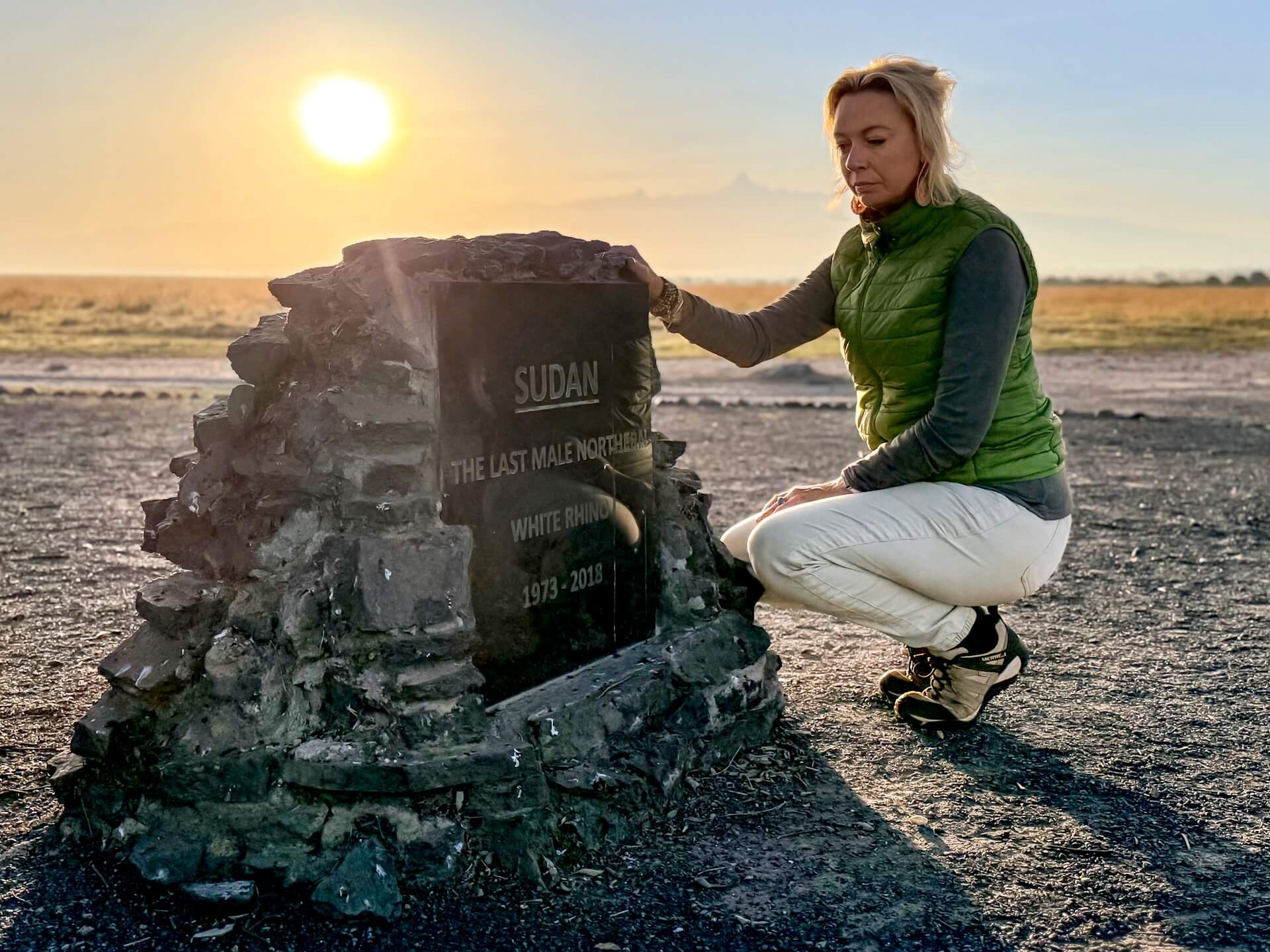
Discover the magic of a 3-day safari at Ol Pejeta Conservancy, one of Kenya’s premier wildlife sanctuaries nestled between the foothills of Mount Kenya and the Aberdare Mountain Range. This exclusive safari offers an unforgettable adventure into the heart of Laikipia, where you can witness Africa’s iconic wildlife up close, including the Big Five, endangered species like Jackson’s hartebeest and reticulated giraffe and southern black rhino as well as meeting the critically endangered northern white rhino - the last two left in the world reside on Ol Pejeta.
A day on safari can look different for different people and their interests, and it can play out very differently depending on where in the continent you are. So, what can you expect from a day on safari in Ol Pejeta, with The Safari Cottages? Let’s get stuck in!
First off, there’s so much to do and to see here that we recommend a minimum 3 night stay; that’s two full days with the afternoon of your arrival and the morning of your departure adding up to three days. And here’s how we’d suggest you spend your time so you get the most out of your Kenya safari holiday with us.

You’ll have amazing views of Mt Kenya from all around Ol Pejeta
SUGGESTED ITINERARY FOR YOUR 3 DAY SAFARI IN OL PEJETA
DAY ONE
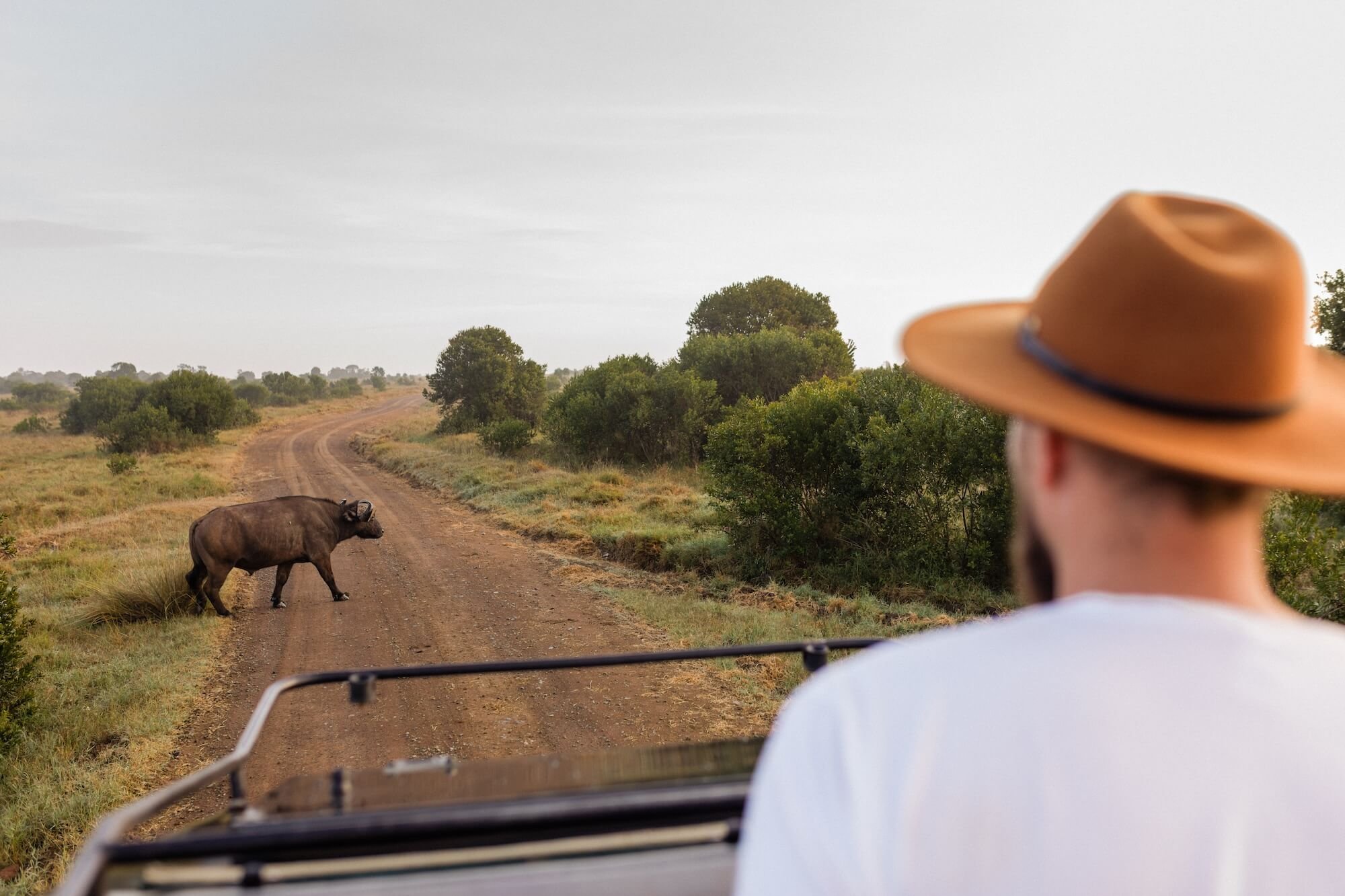
Your safari begins with a scenic drive or a flight from Nairobi to Ol Pejeta, a private conservancy renowned for its conservation efforts and diverse wildlife. As soon as you enter the gates you are on your first game drive, spotting elephants, lions, rhinos, and rare chimpanzees in their natural habitat. The conservancy’s commitment to wildlife protection ensures a rich and authentic safari experience. If you depart from Nairobi in the morning you’ll likely arrive at The Safari Cottages in time for lunch. When you arrive you’ll be met by our team and management will give you a short briefing explaining a little more about the property layout, safety and what you can get up to during your stay.
It’s pretty hot in the middle of the day so you'll have lunch on your verandah, served up by your chef and waiter, before relaxing and unpacking after your travels. We suggest heading out on your first game drive today around 4.30PM and your team can prepare a cup of tea and a snack for you before you go incase you’re feeling peckish. After a game drive and a sundowner (a drink and snacks enjoyed whilst watching the sun set) you can return to camp to an open fire and enjoy dinner on your verandah or under the stars before tucking in for a good night’s sleep.

Returning from your game drive to a roaring fire
DAY TWO
Today is your prime wildlife day! You’ll spend the day exploring Ol Pejeta’s vast landscapes on morning and afternoon game drives. Highlights include visiting the chimpanzee sanctuary and the rhino conservancy, where you can learn about ongoing efforts to protect these endangered species. Evening drives offer a chance to see nocturnal wildlife and enjoy stunning sunsets over the savannah

Lions hunting on a morning game drive
You’ll be gently woken around 6:00 AM with your preferred tea or coffee before heading out just before sunrise — one of the best times for predator activity. You’ll head off just before sunrise at 6.30AM in search of lions, leopards, cheetah, elephant, black and white rhino, giraffe and so much more! The conservancy abounds with an incredible density and variety of game so be sure you’ve packed an extra memory card for your camera - you’re going to need it. As the sun rises and you start to warm up you’ll tuck into a picnic breakfast and a cup of freshly brewed Kenyan coffee or tea.
You’ll meander back through the bush as your game drive continues and the heat of the day really starts to set in, then arrive at your safari cottage to a colourful lunch, a cool drink and a chance to rest.
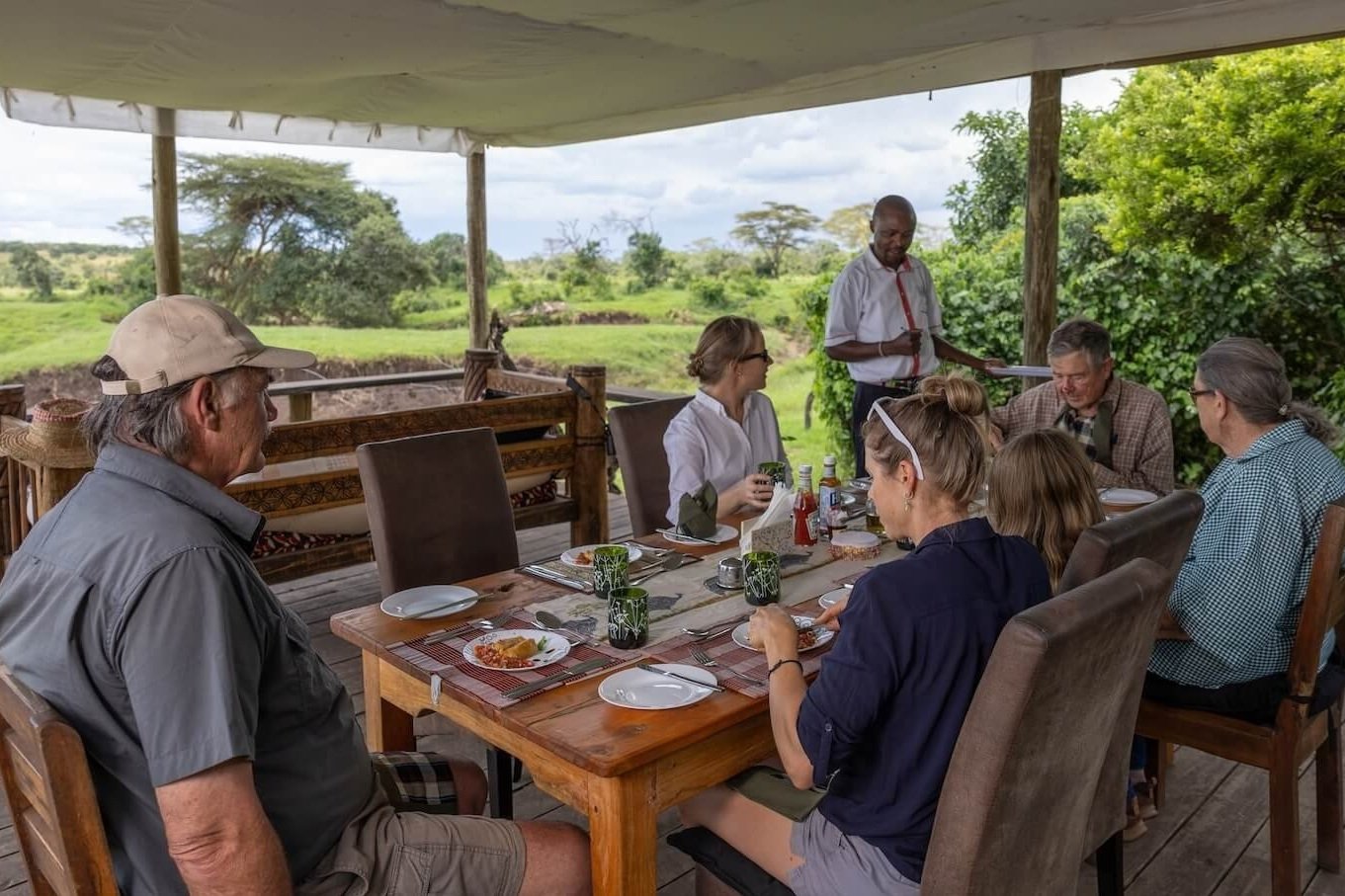
Tucking in to leisurely lunch on the riverside deck
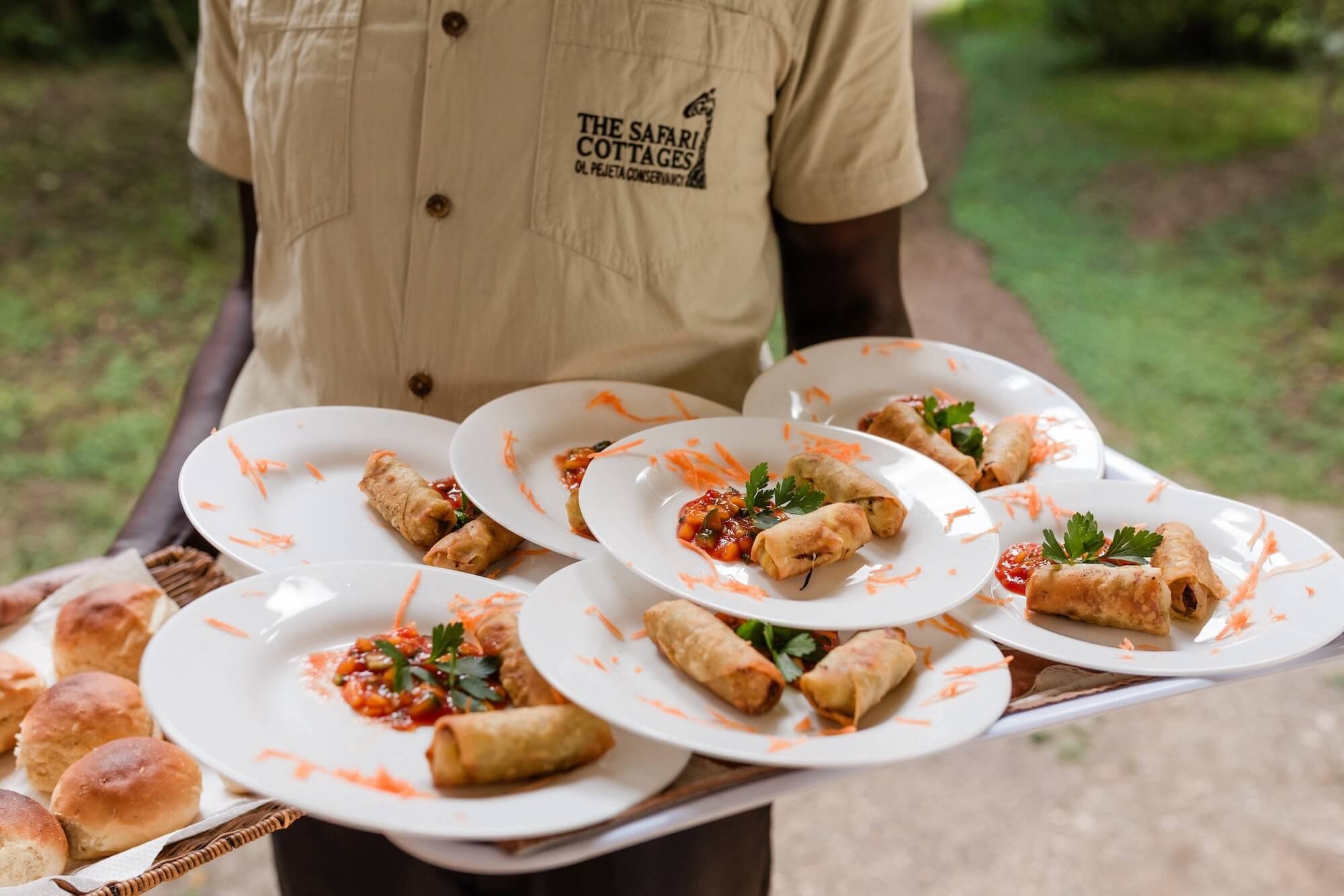
Spring rolls for starters
Midday at The Safari Cottages is a time to rest and recalibrate; animals are usually asleep in the shade of the trees at this time of day so we follow their lead and take the opportunity to relax too. If you’re not a napper then that’s okay too, here are some lovely ways to enjoy midday on the property…
Guided walk and birdwatching around the property: our guide will take you on a walk around the property pointing out birds, plants and tress of note. Elephants and giraffe often linger about the back of camp in the heat of the day so you might spot them on your walk too.
Yoga on the verandah: each safari cottage is provided with yoga mats to help you stretch out and feel great on your safari
Garden tours: our thriving garden is the source of a lot of our salads and fresh herbs and the chefs are very proud of their green fingers
Cooking lessons with your private chef: learn how to make some of our favourite Kenyan staples
Reading or simply soaking in the views: your verandah has lovely views across the river and plains and you never know what you might spot!
This relaxed downtime is one of the biggest advantages of a private safari experience.
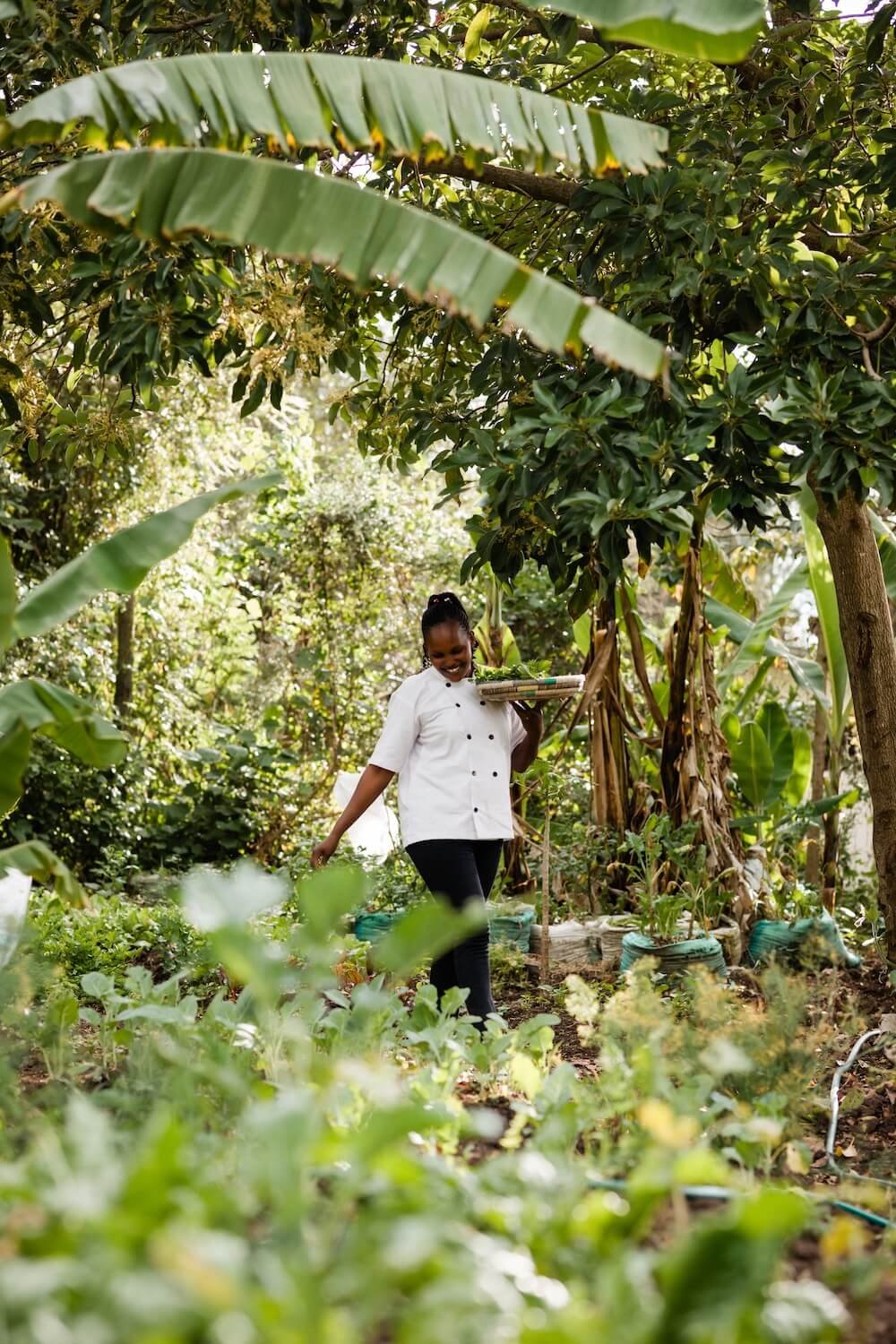
A tour of the garden with Chef Vicky
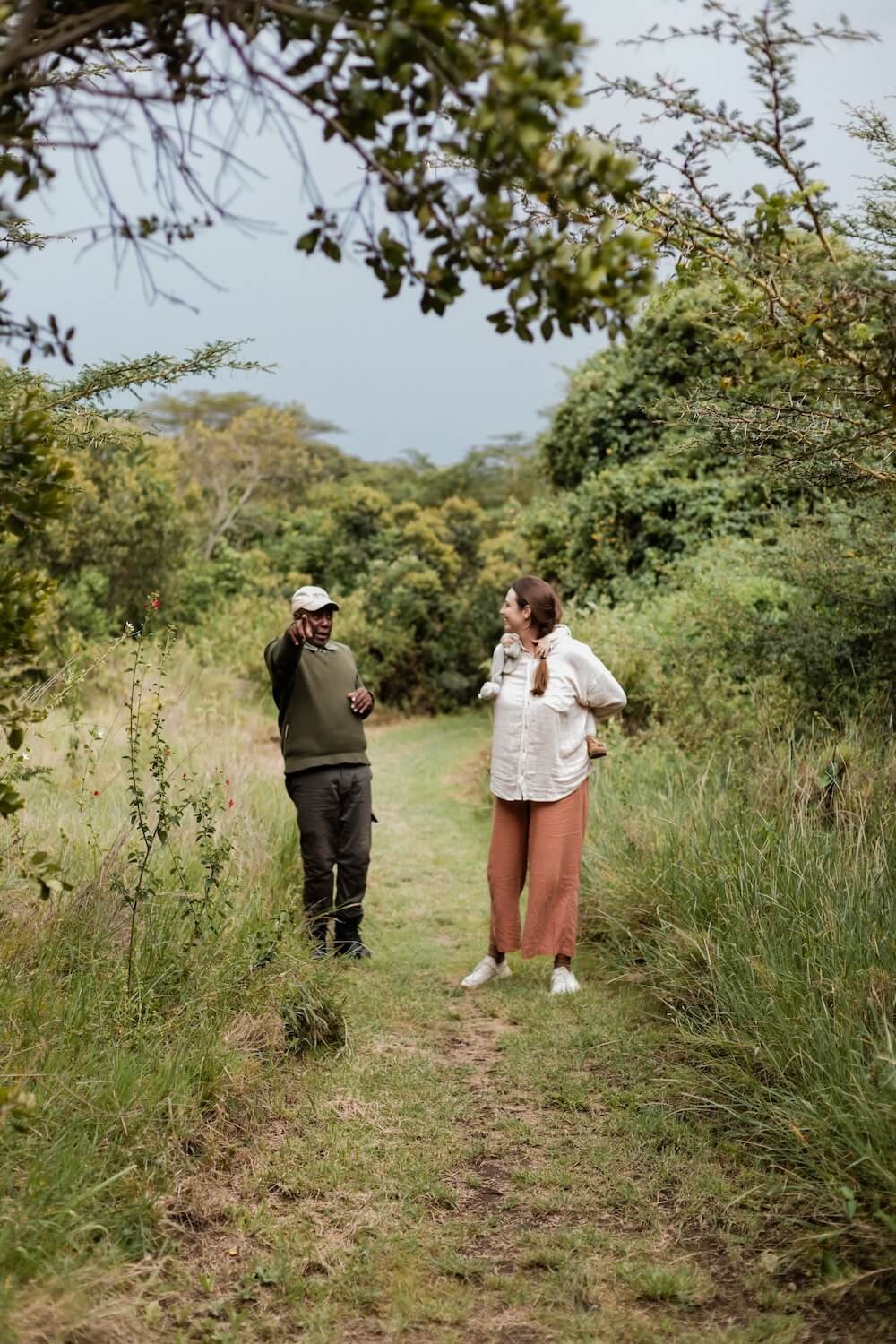
A guided bush walk with Peter
After an afternoon cup of tea you’ll head out again around 4.30PM to see what wonderful wildlife awaits you on the plains surrounding our little spot of heaven in the bush. The golden hour light makes this a favourite drive for photographers. After your sundowner you’ll head back “home” to a roaring fire under the stars and a drink before dinner. If you have a cloudless night consider asking the askaris to share their knowledge of the southern night skies — a memorable and often overlooked experience.
DAY THREE
A highlight unique to Ol Pejeta is the chance to visit Najin and Fatu, the world’s last two northern white rhinos and, this morning, you’ll head off after a light breakfast to meet them. Ol Pejeta’s passionate rhino caretakers will meet you and guide you to the spacious enclosure that Najin and Fatu, a mother and daughter due call their home. They will tell you all about how these gorgeous girls found their way to Kenya and the impressive project that Ol Pejeta and it’s partners have undertaken to bring Northern White rhinos back from the brink of extinction.
This heart-warming and educational conservation experience includes:
Guided visit to the northern white rhino enclosure with expert caretakers who will share Najin and Fatu’s story with you. They will also give you insight into the northern white rhino recovery project; a world-first IVF program
You’ll also have the opportunity to meet Baraka, a blind black rhino rescued by Ol Pejeta who is not averse to a chin scratch
There is a small curio shop on site and an education centre, and if you’d like to make a donation to the Northern White Rhino program you can do that here too
Then, with a heart full, you’ll return back to your bush home for brunch and a chance to relax in the heat of the day or enjoy any of the on-property experiences that you may have missed out on the day before.
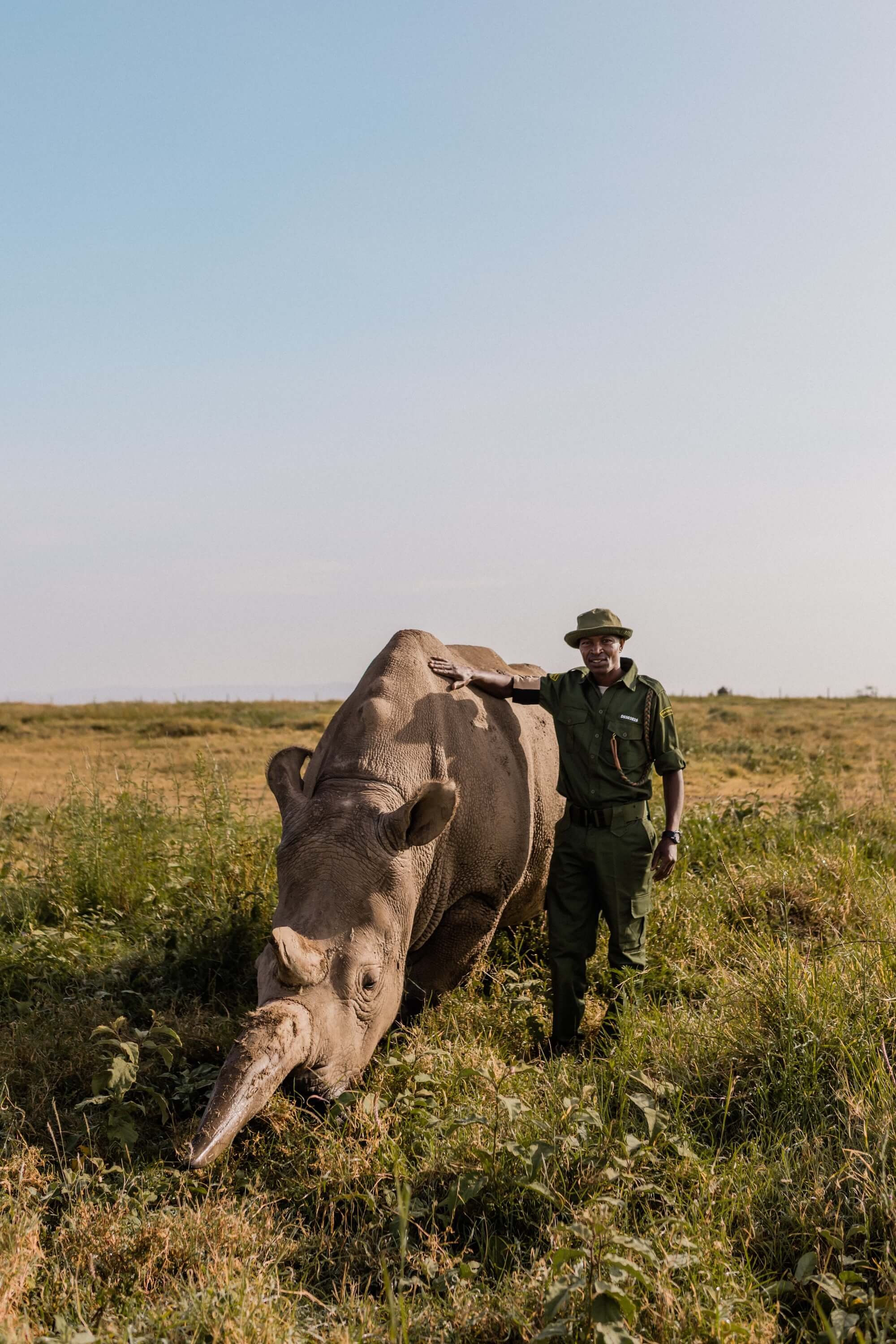
Najin with head caretaker Zachariah Mutai
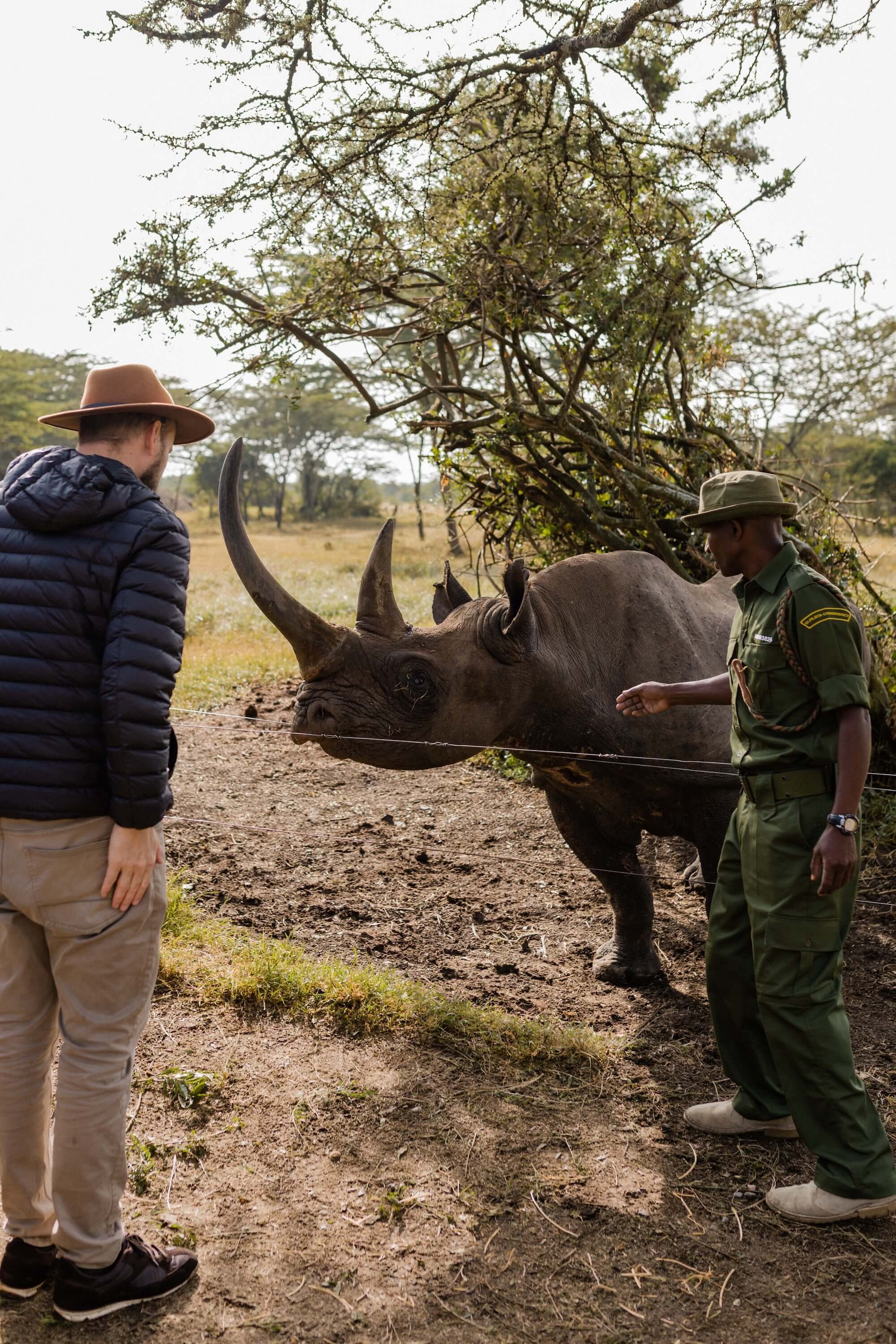
Meeting Baraka with Zachariah
This afternoon you’ll embark on your final evening game drive and sundowner, returning with a spotlight on a night drive in search of Kenya’s more secretive nocturnal species like leopard, aardvarks and white tailed mongoose. Enjoy dinner and a drink around the fire before tucking in for the night.

A big male cheetah posing for the shot on an afternoon game drive
DEPARTURE DAY
After breakfast today your guide will drive you to Nanyuki Airport to meet your flight to your next destination, or drop you off at the Ol Pejeta entrance gate to meet your road transfer back to Nairobi. Your three day safari with us will leave you full to bursting with enthusiasm for the wilderness, wildlife and people that call this corner of the world home and leave you inspired by the hard work and dedication of our conservation team. If you do choose to linger longer you can continue your safari on the conservancy or explore further afield with a day trip to the local town, Aberdares National Park or Ngare Ndare too.
Remember, you have a private guide and vehicle for the duration of your stay with us so this outline is just one idea. You can do as little or as much as you’d like.
ESTIMATED COSTS FOR THIS 3-DAY OL PEJETA SAFARI COTTAGES SAFARI
Mid and Low Season (01 Nov - 15 Dec / 7 Jan - 14 June 2026) - USD2,090 per person
High Season (01 Nov - 15 Dec / 7 Jan - 14 June 2026) - USD2,360 per person
Notes on pricing:
Prices include accommodation, all meals, drinks and a private vehicle and guide. Transport too and from Ol Pejeta is not included.
The above prices are based on 2026 rates and subject to change for 2027
Children under 12 are half prices and under 3 are free
Please contact us with the number of people in your party and the ages of any children + your preferred travel dates for a personal and accurate quote
BOOK YOUR 3-DAY SAFARI AT OL PEJETA SAFARI COTTAGES


Sonja's Kitchen: Flakey Kenyan Chapati Recipe
Our classic and much loved Kenyan Chapati recipe fresh from Sonja’s cookbook; Footprints in the Butter
The chapati is a much loved staple of Kenya cuisine and unlike an Indian chapati it is flakey and served alongside curries, stews or with eggs at breakfast time. If you’re sat at home after your safari and craving a little bit of Kenya, cooking up a pile of delicious chapatis and enjoying them along side a plate of githeri or a beef stew is a great way to feel transported right back to Africa! Here’s our much-loved chapati recipe, right from my camp cookbook, Footprints in The Butter.
FLAKEY KENYAN CHAPATI RECIPE
Serves 8
3½ cups plain white or wholemeal
wheat flour
½ tsp salt
1 tbsp margarine, butter or ghee
1⅓ cups warm water
½ cup vegetable oil or shortening
1. Sift flour and salt together, if using shortening rub in with finger tips.
2. Make a well in the centre, pour in half the water and, if using oil pour it in also. Mix with a wooden spoon, gradually adding the remainder of the water until a firm but soft dough forms. Continue kneading with your hands.
3. Divide the dough into 8 balls. Roll out each ball on a circular chapati board or on a lightly floured pastry
board.
4. Coat the surface of each circle of dough generously with margarine. Roll up the circle lightly with your fingers into a sausage, then coil the sausage into a wheel, thus trapping the air inside. Then, with a rolling pin, roll out each wheel into a circle less than ⅛inch thick.
5. Smear a chapati pan or 23cm non stick frying pan with oil. Using low heat, brown the chapatis on both sides
until golden brown. If you press the chapati lightly with a folded tea towel whilst cooking, the air bubbles will quickly rise.
6. Keep warm until served.
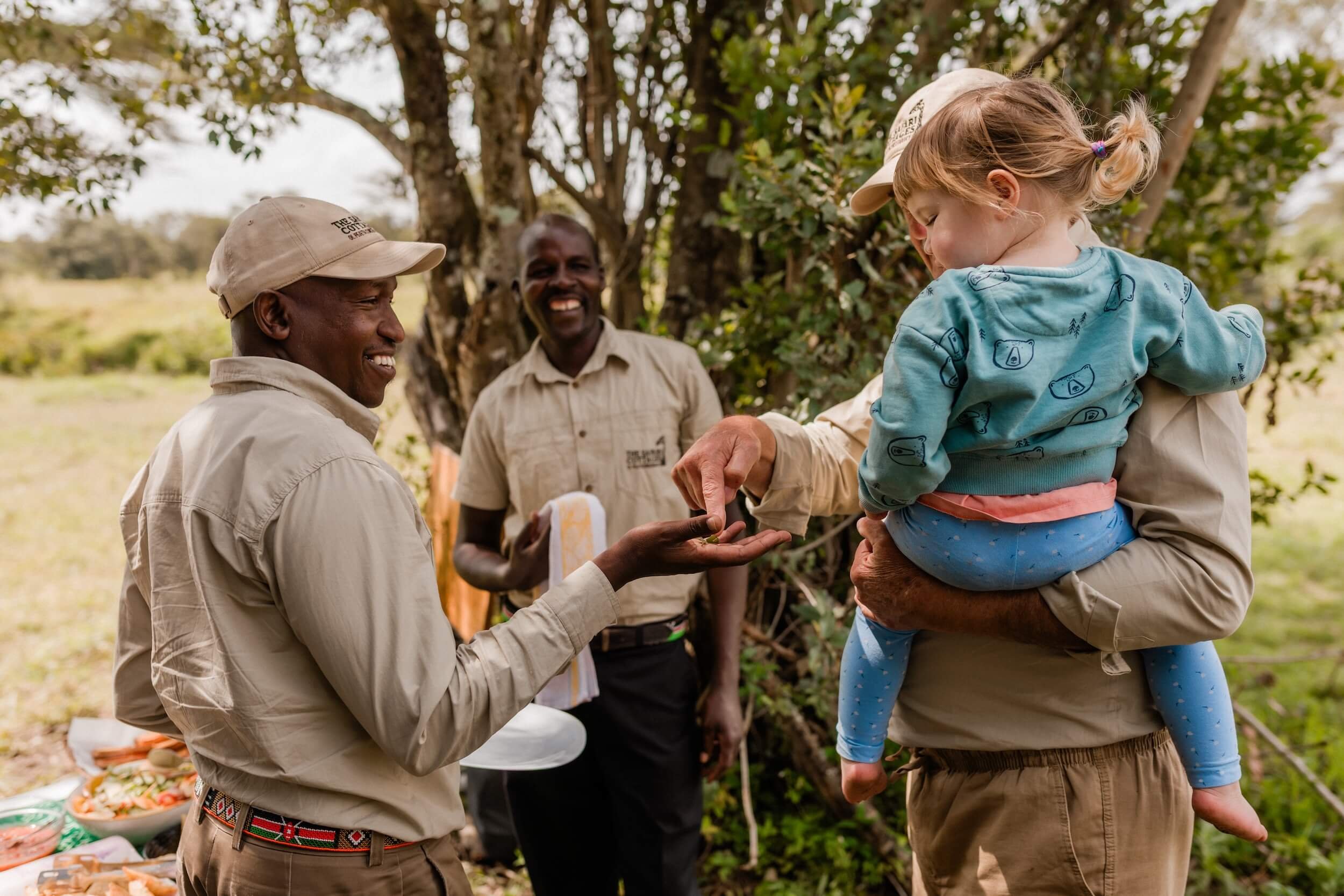
Guests mastering our Kenyan chapati recipe WITH OUR CHEFS on a recent group safari with Yoga By Candace


Let us know how your chapatis turned out! You can purchase Sonja’s recipe book Footprints in The Butter here for more of our favourite camp recipes.
KEEP READING
More from the Ol Pejeta Safari Cottages blog

Kenya: When to Go & What to Expect
Learn all about Kenya: when to go, what to expect and more, from our guide written by people on the ground living in and exploring the country for the last fifteen years.
You’re excited to pack your binoculars, lock the front door behind you and head off to Kenya to meet the country’s iconic wildlife, experience it’s beautiful and warm culture and take in the epic scenery. But, when’s best to embark on this adventure? We’re here to share all we know about Kenya; when to go and what expect, right from the horse’s mouth… or the zebra’s mouth shall we say.
JANUARY – MARCH
Early January sees the tail end of the busy festive season and so prices stay high and crowds linger but start to disperse around mid-January. This also marks the start of low or mid-season in Kenya so you can expect lower prices and fewer crowds. It’s often dry and hot at this time of year too across the country, so wildlife viewing is excellent as animals tend to congregate around water sources. Ahead of the April rains, February and March often welcome lots of little ones from plains game such as zebra, wildebeest and gazelles and this, in turn, can cause an uptick in predator activities.
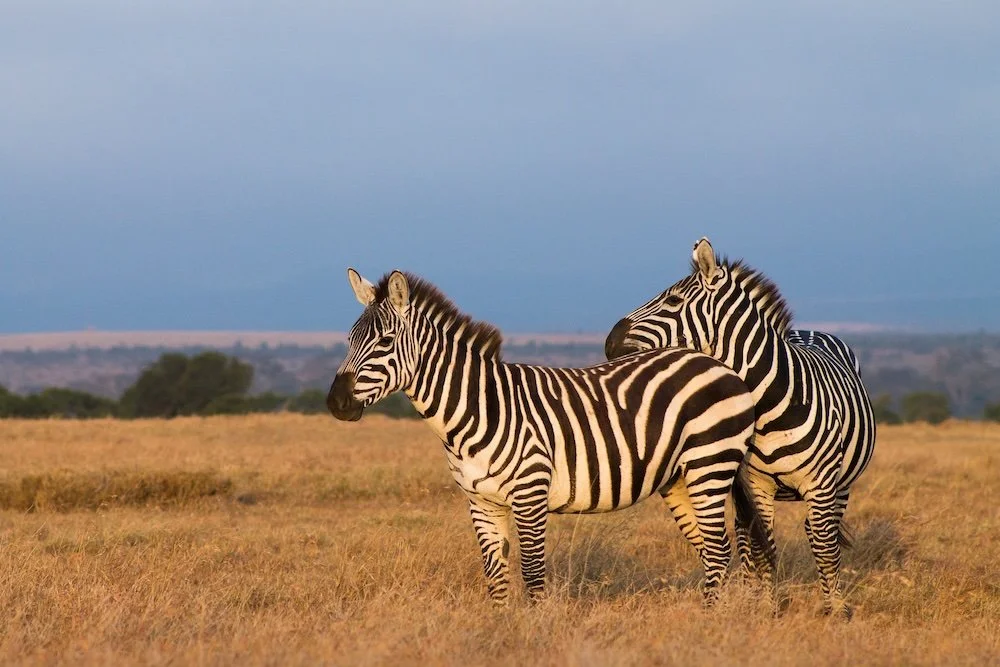
Golden light: March on Ol Pejeta
APRIL – MAY
Historically known as “the long rains,” April, May in Kenya is still considered a red flag, but global weather patterns are shifting, and this rule does not hold as firmly as it did ten years ago. Rains do arrive in April most years, but dryer weather has largely returned by mid-May. Even so, a lot of camps continue to close over this time for maintenance and some, more remote locations, struggle to provide reliable access in April and May. So, whilst your options might be limited camps that do remain open over this period often provide excellent discounted rates, The Safari Cottages included. This also means fewer crowds, cooler temperatures and enjoying vast tracks of wilderness to yourself.
If you’re traveling to the coast, the Kusi trade winds cause bigger swells, so Kenya in April and May is a great time for windsurfers and sailings but not ideal for snorkelling and diving. This is also a cooler time of year on the coast due to wind and rainfall, which is otherwise up to over 34 degrees Celsius in the day and the cooler temperatures can be a relief for some, but frustrating for those seeking heat and all day sunshine.
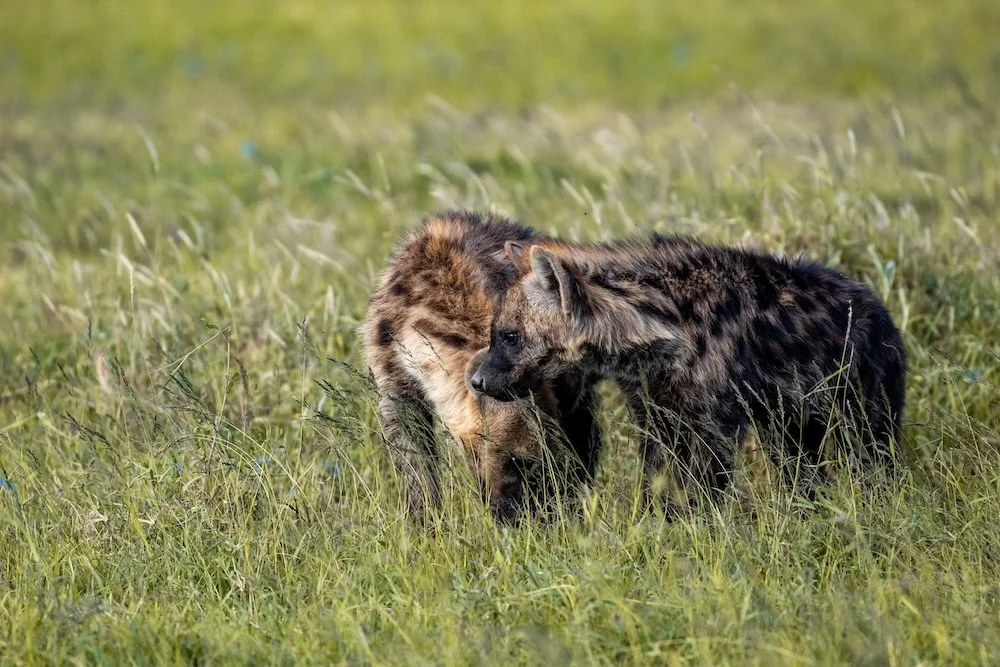
Hyena pups on Ol Pejeta

Kite surfing in Diani
JUNE
Following the rains the landscape is often lush and green, and youngsters have a little prance in their step. June is largely considered shoulder season as camps reopen and tourist numbers begin to increase. It’s still very quiet on Ol Pejeta so an ideal time to plan your Kenya safari holiday if you’re looking for less crowds, lots of lovely greenery and lower prices. If you’re planning a beach extension in June however, it’s worth noting that coastal beaches, especially in the North, are often affected by seaweed well into June which washes up onto the beaches and rainfall can liger longer here too. The seaweed is harmless but does affect the appearance of Kenya’s otherwise postcard perfect white sand beaches.
JULY – OCTOBER
July marks the start of the great migration in the Masai Mara, where millions of wildebeest congregate on the plains and photographers flock to the Mara to witness the famous river crossings. Due to the popularity of this event, combined with Summer holidays abroad, this is a busy and expensive time of year to travel but for those eager to witness the migration it’s the best time. When considering when to go to Kenya it’s important to know that, historically, this was a predictably dry time of year but these days you can expect the odd afternoon shower or thunderstorm to add to the drama.
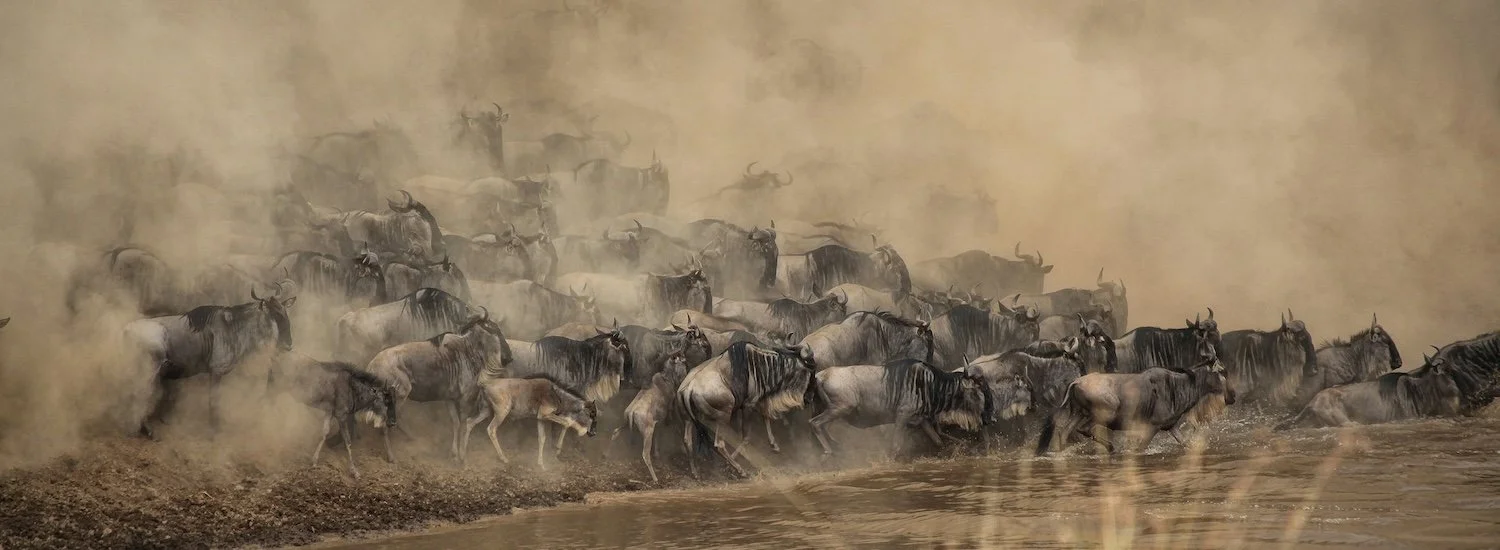
The famous Mara river crossings
NOVEMBER
November until mid-December is considered the “short rains.” You can expect afternoon showers and the odd cloudy day but properties largely remain open and afternoon showers make for dramatic images so photographers tend to enjoy traveling at this time too. Some areas or activities become restricted however due to access in the rains and tourist numbers in bigger wildlife parks and in Ol Pejeta Conservancy and the surrounding Laikipia area start to quieten down as the herds move back into the neighbouring Serengeti. On the coast, early December marks the turning of the winds and brings about higher temperatures and humidity.
DECEMBER
Whilst the first half of December is much the same as November across the country, mid-December marks the start of the festive season. This is the busiest and most expensive time to travel to Kenya but also the most rewarding to see the festivities in action (especially on the coast) – Kenyans love a good party. Wildlife is usually thriving after the short rains and the weather is largely drying up making for glorious sunny skies.

On safari with The Safari Cottages in Ol Pejeta
A NOTE ON RAINFALL IN KENYA
When considering when to go to Kenya it’s important to bear in mind that rainfall is not as predictable as it once was and seasons are not as clear cut as they used to be. We always say; travel for the wildlife not the weather and you won’t be disappointed because wildlife in Kenya and certainly in Ol Pejeta is excellent year-round!
WONDERING HOW TO ROUTE YOUR ITINERARY? READ THIS BLOG ABOUT CHOOSING THE BEST ROUTE FOR YOUR KENYA SAFARI.
That’s a wrap on our Kenya when to go guide and we hope it gives you a little more clarity when you’re planning and booking your Kenya safari holiday.
Keep reading for more travel information to inspire your Kenya safari holiday
June sits at Kenya's perfect sweet spot — dry season conditions, extraordinary wildlife, cooler temperatures and quieter conservancy roads, before the peak season crowds arrive. Here's why we love it.